As an Amazon Associate, I earn from qualifying purchases. If you make a purchase through links on this website, we may get a small share of the sale from Amazon — at no extra cost to you.
Top 10 Best Cheap Projectors for Gaming 2026 — Low Input Lag Picks
A big screen changes gaming. A 65-inch TV feels cinematic until you’ve played on a 120-inch projected image — then there’s no going back. But here’s the catch most buyers learn too late: the best cheap projector for gaming isn’t the brightest or the sharpest one. It’s the one with the lowest input lag — the delay between pressing a button and seeing the action on screen.
A projector with 50ms of input lag will make every game feel sluggish, no matter how pretty the picture. A projector with 16ms or less feels instant. That’s the entire buying decision in one number — and it’s the number most projector listings bury or skip entirely.
We researched the 2026 lineup and ranked the ten best value gaming projectors by what actually matters for play: verified input lag figures, refresh rate support, Game Mode quality, brightness for real rooms, and honest value. No $3,000 flagships here — every pick earns its place on performance per dollar.
Best Cheap Gaming Projectors 2026 — Comparison Table
Input Lag vs Refresh Rate: What Actually Matters for Gaming
Input lag is the delay (in milliseconds) between your controller input and the action appearing on screen. Refresh rate (Hz) is how many new frames the projector draws per second. Both matter, but lag matters more: a 240Hz projector with 50ms lag still feels sluggish, while a 60Hz projector with 8ms lag feels instant.
Rule of thumb:under 20ms is excellent for competitive play (shooters, fighters, racing), 20–40ms is fine for casual and story-driven games, and above 40ms you’ll feel the delay. Always enable Game Mode — it bypasses image processing that adds lag.
Best Cheap Projectors for Gaming 2026 — Detailed Reviews
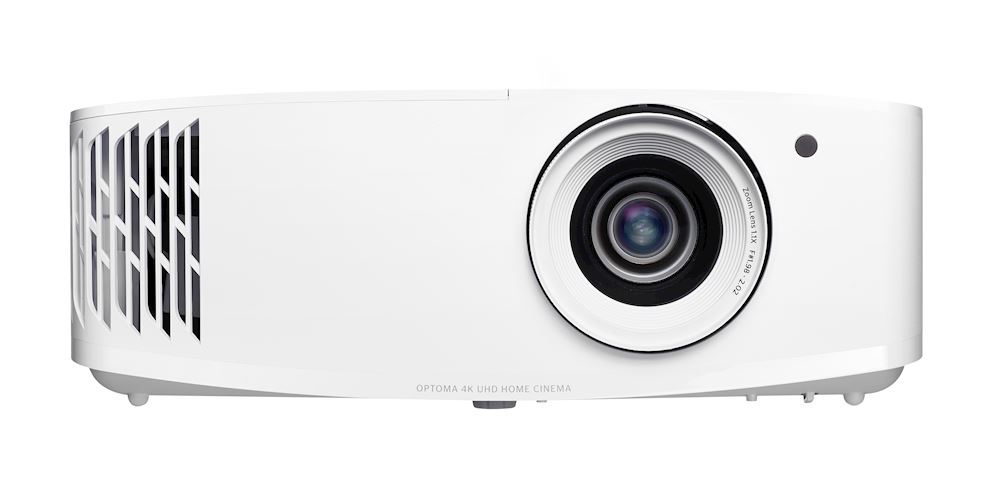
1. Optoma UHD38 — Best Overall Cheap 4K Gaming Projector
The UHD38 is the rare projector that gives gamers everything without the flagship price: true 4K resolution, a blazing 4,000 lumens, and a 4.2ms input lag at 1080p/240Hz that embarrasses projectors costing twice as much. At 4K/60 the lag is higher, but still firmly in gaming territory — this is the one projector on this list with no meaningful weakness for play.
What sets it apart for gaming specifically is the combination of speed AND brightness. Most low-lag projectors are dim; most bright projectors are laggy. The UHD38’s 4,000-lumen lamp means you can game with the lights on — no blacked-out room required — and HDR10/HLG support gives games proper dynamic range. Competitive shooters at 1080p/240Hz feel instantaneous; cinematic single-player games at 4K look superb.
The trade-offs are the usual DLP ones: a rainbow effect that bothers a small minority of viewers, fan noise in bright lamp mode, and no built-in smart platform — but gamers don’t care about that last one, because the console IS the smart platform. For PS5, Xbox Series X, and PC gaming on a huge screen, this is the value king.
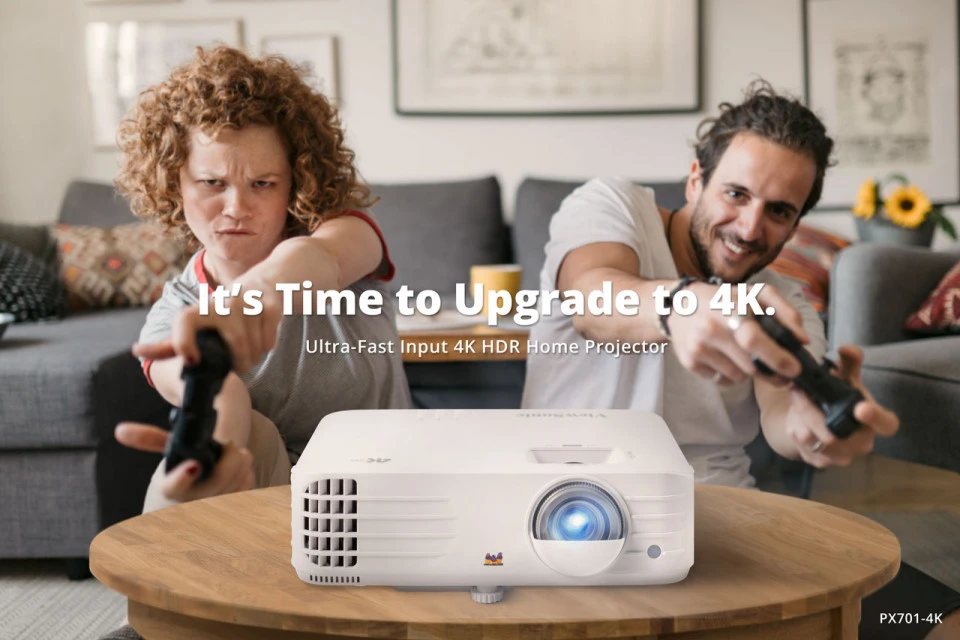
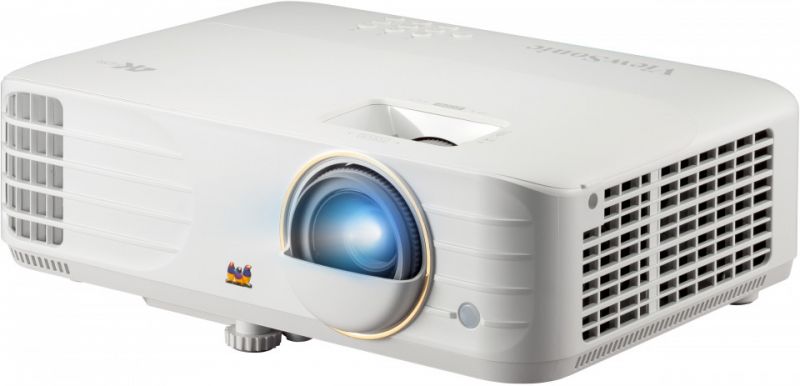
2. ViewSonic PX701-4K — Best Value 4K Gaming Projector
The PX701-4K proves you don’t need to spend four figures for a capable 4K gaming projector. It matches the UHD38’s headline gaming spec — 4.2ms input lag at 1080p/240Hz — with 3,200 ANSI lumens of brightness and 4K UHD resolution via pixel-shifting, at a price well under the flagship tier.
For competitive gaming, the 240Hz mode is the story: motion clarity is superb, with minimal blur during fast camera movements in shooters and racing games. At 4K/60 the lag rises to around 18ms — still excellent, and fine for everything short of tournament-level twitch shooters. ViewSonic’s SuperColor technology delivers vibrant, punchy color that makes game worlds pop.
It’s a no-frills machine: no smart apps, a limited 1.1x zoom, and audible fan noise in quiet scenes. But none of that matters when you’re gaming — the console handles apps, and you’ll be wearing a headset or using speakers anyway. For the gamer who wants 4K and 240Hz on a budget, this is the smartest money on the list.
3. BenQ TK700STi — Best Short-Throw 4K Gaming Projector
Small room? The TK700STi is the answer: a short-throw 4K gaming projector that throws a 100-inch image from about six and a half feet away. No more rearranging furniture to get the projector far enough back — it sits on the coffee table in front of your couch and fills the wall.
Gaming credentials are serious: 16ms input lag at 4K, dedicated Game Modes tuned for different genres (FPS mode brightens dark corners so campers can’t hide; RPG mode boosts color), and 3,000 ANSI lumens. Android TV is built in with licensed apps, so it doubles as the living-room streamer when the controller’s down.
The short throw is the whole pitch, and it costs a little brightness versus standard-throw rivals — but 3,000 lumens is still plenty for a dark or dim room. If your gaming space is a bedroom or small apartment, this is the only 4K gaming projector here that actually fits.
Key specs: 4K UHD · 16ms input lag (4K/60) · short throw (100″ from ~6.5 ft) · 3,000 ANSI lumens · Android TV · genre-specific Game Modes
✓ Pros
Big 4K image from very close — ideal for small rooms
Genuinely useful Game Modes (FPS dark-scene boost)
Built-in Android TV for non-gaming use
Low 16ms lag at full 4K resolution
✗ Cons
Slightly dimmer than standard-throw rivals
Premium over basic 1080p gaming projectors
Needs a clear table surface in front of seating
Why buy it: The only pick that puts 4K gaming on a 100-inch screen in a small room. Small space, huge game.
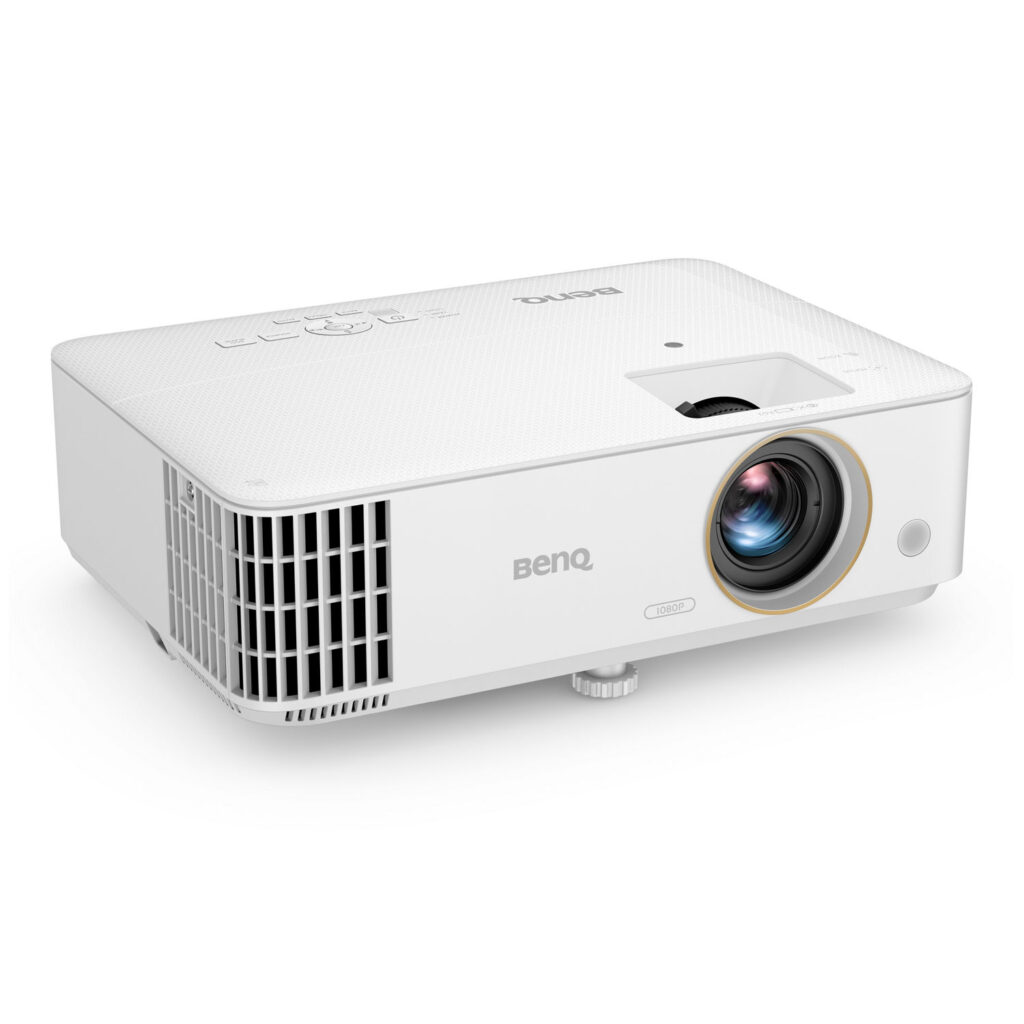
4. BenQ TH685P — Best Bright-Room 1080p Gaming Projector
Not everyone games in a cave. The TH685P is for living rooms with windows: 3,500 lumens of brightness — more than projectors costing twice as much — paired with an 8.3ms low input lag that keeps competitive play feeling instant.
At 1080p it skips the 4K tax entirely, and for fast-paced games that’s arguably the right call: 1080p at high frame rates with 8.3ms lag beats 4K at 30ms every time for shooters and fighters. BenQ’s Game Mode enhances dark-scene detail, and color accuracy is excellent out of the box.
What you don’t get: 4K, smart apps, or battery power. This is a plug-in workhorse — pair it with your console and go. For the gamer whose room has ambient light and whose priority is responsiveness over pixel count, nothing near this price touches it.
Key specs: 1080p · 3,500 lumens · 8.3ms input lag · Game Mode with dark-scene enhancement · 1.2x zoom
✓ Pros
Outstanding brightness per dollar — game with lights on
8.3ms lag is excellent for competitive play
Accurate BenQ color, great for sports too
Simple, reliable, no-nonsense operation
✗ Cons
1080p, not 4K
No built-in smart apps
Needs AC power
Why buy it: The brightest responsive gaming image for the money. If your room has windows, this is your projector.
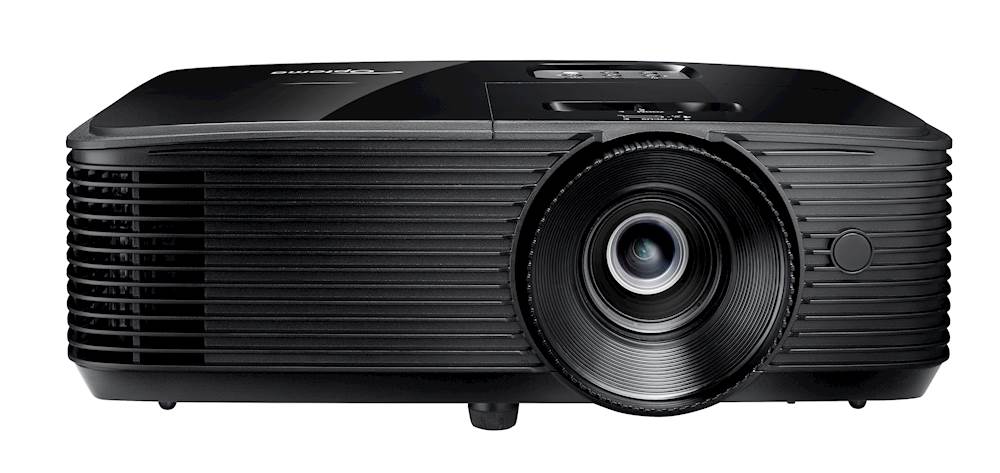
5. Optoma HD146X — Best Budget 1080p Gaming Projector
The HD146X is the budget gamer’s sweet spot: a 16ms Enhanced Gaming Mode, 3,600 lumens, and a 25,000:1 contrast ratio — specs that were flagship-tier a few years ago, now at an entry-level price.
Optoma built this one for players. The Enhanced Gaming Mode drops input lag to 16ms (about one frame at 60Hz — imperceptible in practice), while Game Display Mode boosts shadows and dark scenes so you spot enemies hiding in dim corners. The 3,600-lumen lamp keeps the image punchy even with some ambient light, and the 15,000-hour eco lamp life means years of use before a replacement.
It’s 1080p, not 4K, and there’s no smart platform — but at this price you’re buying a gaming monitor replacement, not a media hub. For PS5 and Xbox gaming at 1080p/60, it delivers 95% of the experience of projectors costing twice as much.
Key specs: 1080p · 3,600 ANSI lumens · 16ms input lag (Enhanced Gaming Mode) · Game Display Mode · 25,000:1 contrast · up to 15,000-hr lamp (eco)
✓ Pros
16ms gaming mode at a budget price
Very bright — flexible room lighting
Game Display Mode for dark-scene visibility
Long lamp life, low ownership cost
✗ Cons
1080p only
No smart apps built in
DLP rainbow effect possible for sensitive viewers
Why buy it: Maximum gaming performance per dollar in 1080p. The budget pick that doesn’t feel like a compromise.
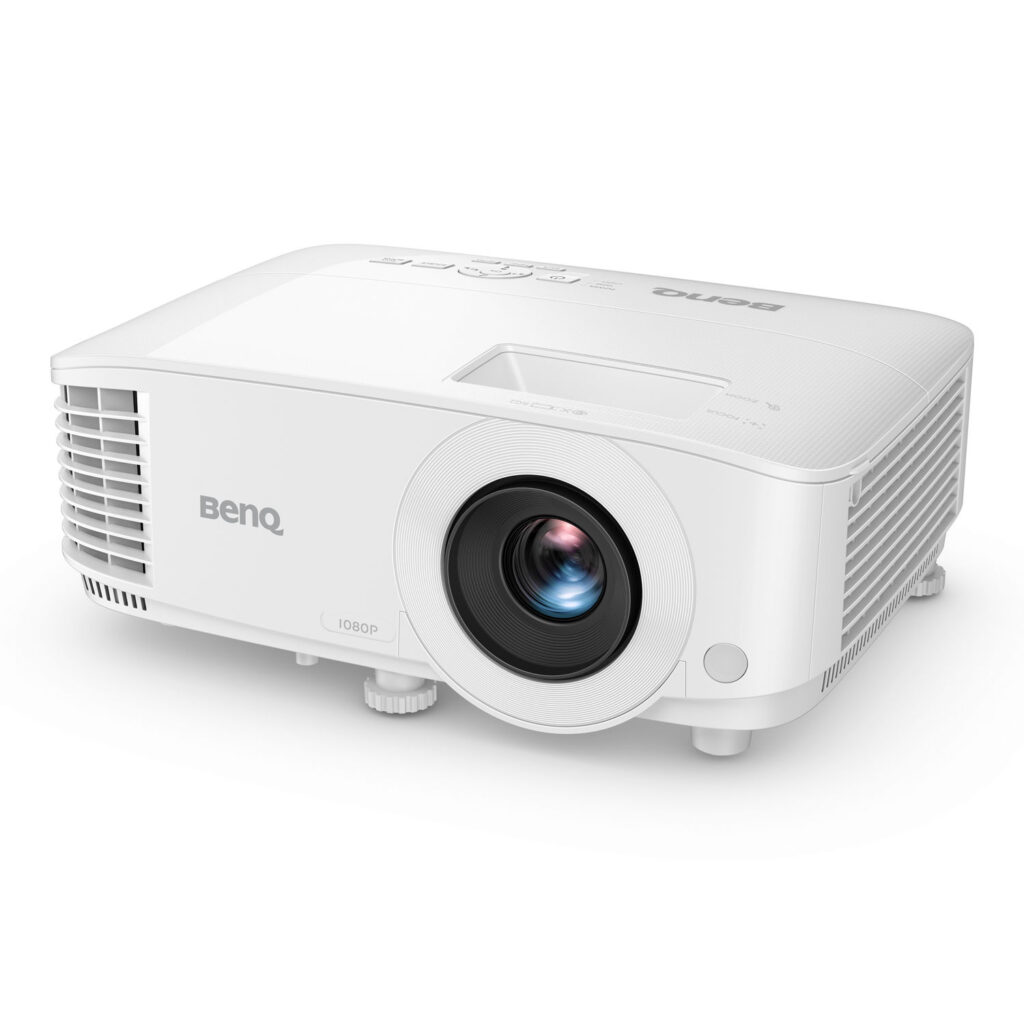
The TH575 is BenQ’s purpose-built gaming projector for shared spaces: 3,800 ANSI lumens (one of the brightest 1080p projectors anywhere near this price), a 16.7ms input lag at 1080p/60Hz, and an exclusive Game Mode that fine-tunes dark and shadowy scenes for better visibility.
That brightness is the differentiator. Most gaming projectors demand a dark room; the TH575 delivers a vibrant 120-inch image even with the lights on, making it the rare gaming projector the whole family can use for movies and sports too. The Game Mode’s dark-scene enhancement is genuinely useful in practice — spotting campers in shadowed corners is a real competitive advantage, not marketing fluff.
It’s a lamp-based 1080p projector with no smart OS, so budget a streaming stick for movie nights. But for the gamer whose projector lives in the living room and needs to handle everything, the combination of brightness, low lag, and BenQ reliability is hard to beat.
7. ViewSonic PX748-4K — Best Bright 4K Gaming Projector
If your gaming room has ambient light and you still want 4K, the PX748-4K is the pick: a true 4K projector with 4,000 ANSI lumens — the brightest 4K gaming projector in its price class — and an ultra-low 4.2ms input lag at 1080p (around 16ms at 4K/60, 8ms at 1080p/120).
The brightness is transformative for gaming: HDR games look properly punchy, and you never have to choose between seeing the screen and seeing your controller. The 240Hz refresh rate at 1080p delivers elite motion clarity for competitive titles, while 4K/60 handles cinematic games beautifully.
Bonus features gamers actually use: USB-C input for direct Nintendo Switch connection (no dock needed), warping and auto keystone for easy setup, and a 1.3x zoom. It’s the most versatile projector on this list — equally at home with a PS5, a gaming PC, or a Switch.
8. Optoma GT1080HDR — Best Short-Throw 1080p Gaming Projector
The GT1080HDR solves the small-room problem for 1080p gamers: a 0.50 throw ratio that projects a 100-inch image from just over three feet away. It sits on the coffee table in front of you — no ceiling mount, no long throw distance, no shadows when someone stands up.
Gaming specs are strong: 8.4ms input lag, 3,800 lumens, and HDR compatibility. The short throw also has a hidden gaming benefit — the projector sits close to the screen and away from the seating, so fan noise is less noticeable and there’s no hot lamp near your head.
It’s 1080p rather than 4K, but paired with the short throw it makes an unbeatable bedroom or dorm gaming setup. For the gamer in a small space who wants a huge responsive image, this is the practical choice.
Key specs: 1080p · 0.50 short throw (100″ from ~3.3 ft) · 8.4ms input lag · 3,800 lumens · HDR compatible
✓ Pros
Huge image from just feet away — perfect for small rooms
8.4ms lag is great for competitive play
Very bright for the price
Fan noise audible at full brightness
Why buy it: Big-screen gaming in rooms where a normal projector can’t fit. Small room, zero compromise on speed.
9. ViewSonic PX704HD — Best for Bright Rooms on a Budget
Sometimes the room dictates the projector. The PX704HD brings a staggering 4,000 ANSI lumens and a 16ms input lag to the budget tier — if you game in a bright room and refuse to pay the 4K premium, this is the value answer.
Two HDMI inputs are a thoughtful touch gamers appreciate: PS5 and Xbox (or PC and Switch) stay connected simultaneously, no cable juggling. ViewSonic’s SuperColor processing keeps the image vibrant, and the 16ms lag handles everything up to serious competitive play.
There’s no smart OS — but that’s a non-issue for a gaming projector, since your consoles already stream everything. This is a specialist: maximum brightness and low lag per dollar, nothing wasted on features gamers don’t need.
10. Epson Home Cinema 1080 — Best Casual Big-Brand Gaming Pick
Not every gamer needs 4.2ms. If your library is RPGs, strategy games, and story-driven adventures — where a few extra milliseconds don’t matter — the Epson Home Cinema 1080 is the comfortable big-brand choice, with an input lag around 30ms that’s perfectly fine for casual play.
What you get instead of esports-grade speed: Epson’s 3LCD technology with equal color and white brightness (3,400 lumens), which means no rainbow effect and more accurate, vibrant color than single-chip DLP rivals. For colorful games like platformers and RPGs, the image quality advantage is visible.
Be honest with yourself about the trade: this is NOT the pick for competitive shooters or fighting games — the ~30ms lag will be felt. But for the gamer who also wants a great movie projector from a brand with superb support and reliability, it’s the relaxed, no-drama choice.
Key specs: 1080p · 3,400 lumens (3LCD, equal color/white) · ~30ms input lag · 16,000:1 contrast · no rainbow effect
✓ Pros
Superb color accuracy — no rainbow effect (3LCD)
Great brand support and reliability
Excellent for RPGs, strategy, and story games
Doubles as a fine movie projector
✗ Cons
~30ms lag — not for competitive gaming
1080p, not 4K
Weak 2W speaker — external audio essential
Why buy it: For casual gamers who value color and brand trust over esports speed. The relaxed gamer’s projector.
How We Selected the Best Cheap Gaming Projectors for 2026
We ranked every candidate on what actually decides gaming performance: verified input lag figures (from manufacturer specs and ProjectorCentral’s independent measurements — not marketing claims), refresh rate support (120Hz/240Hz modes), Game Mode quality (does it just cut processing, or add real gaming features?), brightness for real rooms, and value — performance per dollar, since “cheap” is the brief.
We excluded projectors without a verifiable input lag figure, discontinued 2023-era models, and anything above the value tier. Every pick is currently available and gaming-capable in 2026 — no filler.
Gaming Projector Buyer’s Guide 2026
Input lag explained: the one number that matters
Input lag is the time between your controller input and the result appearing on screen, measured in milliseconds. It comes from image processing — scaling, keystone correction, motion smoothing — that the projector applies before displaying each frame.
Under 20ms: excellent — competitive shooters, fighters, and racing feel instant
20–40ms: fine for casual play, RPGs, and story-driven games
Above 40ms: you’ll feel the delay; avoid for any serious gaming
Always enable Game Mode — it bypasses most processing and is usually worth 10–30ms on its own. Also disable digital keystone if you can: it adds lag. Physical placement beats digital correction for gamers.
1080p/120Hz vs 4K/60Hz: which is better for gaming?
It depends on what you play. Competitive gamers should choose 1080p at 120Hz or 240Hz: higher frame rates mean smoother motion and lower lag, and at gaming distances the resolution difference is subtle. Cinematic gamers (story-driven, open-world) will prefer 4K/60 for the detail and HDR.
The sweet spot picks on this list (UHD38, PX701-4K, PX748-4K) do both: 4K/60 for cinematic games, 1080p/240Hz for competitive ones. If you can only have one projector, that’s the versatility to look for.
Game Mode: what it actually does
Game Mode isn’t a marketing label — it switches off the image processing pipeline (noise reduction, motion interpolation, heavy scaling) that adds lag. Some manufacturers go further: BenQ’s genre-specific modes brighten dark FPS scenes, Optoma’s Game Display Mode boosts shadow detail. When comparing, check the lag figure with Game Mode on — that’s the number you’ll actually play with.
Small room? The TK700STi is the answer: a short-throw 4K gaming projector that throws a 100-inch image from about six and a half feet away. No more rearranging furniture to get the projector far enough back — it sits on the coffee table in front of your couch and fills the wall.
Frequently Asked Questions
What input lag is good for a gaming projector?
Under 20ms is excellent for competitive gaming (shooters, fighters, racing). Between 20–40ms is fine for casual play and story-driven games. Above 40ms you’ll notice the delay — enable Game Mode and disable digital keystone to cut it down.
Can I play PS5 on a projector?
Absolutely — the PS5 works great with gaming projectors. Most projectors accept 4K/60 or 1080p/120Hz over HDMI. Note that almost no projector currently accepts 4K/120Hz (that needs full-bandwidth HDMI 2.1), so you’ll choose between 4K resolution and 120Hz smoothness — the projectors on this list handle both modes.
Is 1080p enough for gaming on a projector?
For competitive gaming, yes — arguably it’s better: 1080p at 120Hz/240Hz with low lag beats 4K at higher lag for shooters and fighters. For cinematic single-player games, 4K adds visible detail. The most versatile picks do both.
Do gaming projectors work in bright rooms?
Yes, if they’re bright enough — look for 3,000+ ANSI lumens for rooms with ambient light. The BenQ TH685P (3,500), Optoma HD146X (3,600), ViewSonic PX704HD (4,000), and PX748-4K (4,000) on this list are all built for exactly that.
Why does my projector feel laggy when gaming?
Three usual culprits: Game Mode is off (enabling it typically saves 10–30ms), digital keystone correction is adding processing lag (fix placement physically instead), or you’re using Bluetooth audio (which adds its own 100–200ms delay — use wired audio for gaming).
Projector vs TV for gaming — which is better?
Projectors win on immersion and screen size per dollar — a 120-inch gaming image for the price of a 55-inch TV. TVs win on response time (OLEDs hit under 10ms easily), brightness, and HDR punch. For cinematic immersion on a budget, projectors are unbeatable; for tournament-level competition, a monitor still rules.
Do I need HDMI 2.1 for PS5 gaming on a projector?
No — and this trips up a lot of buyers. The PS5’s headline 4K/120Hz mode needs HDMI 2.1, which virtually no projector supports yet. What you actually get is 4K/60 or 1080p/120Hz over HDMI 2.0, which covers the vast majority of games beautifully. Don’t pay extra for an “HDMI 2.1” projector claim unless the full 48Gbps bandwidth is specified.
Final Verdict
The best cheap projector for gaming in 2026 is the Optoma UHD38 — true 4K, 4,000 lumens, and 4.2ms lag with no real weakness for play. Best value 4K alternative: the ViewSonic PX701-4K. Small room? BenQ TK700STi (4K short throw) or Optoma GT1080HDR (1080p short throw). Bright living room? BenQ TH685P or ViewSonic PX704HD. Tightest budget? Optoma HD146X — 16ms gaming at an entry-level price. Casual gamer who values color? Epson Home Cinema 1080.
One rule: check the input lag figure before anything else. A fast 1080p projector always beats a laggy “4K gaming” one.
In this era of buying gadgets and recent advances in technology with updates now and then, it becomes very hard not to burden your pocket. Of course, buying gadgets has not always been affordable. While looking for a top-rated projector that comes with all the latest specifications and an affordable budget, you must go for the best…
Are you searching for a projector that suits the grace of your church, right? Or maybe you want the best projector for church that delivers immense sound frequency plus the best picture quality to avoid any blurriness or shaking effects. So, here we are with the projectors for normal people, which are fully controlled and…
Technological advancements have changed the era completely. It has made human life a lot easier. Watching movies and playing video games provide the best entertainment. For enjoying these things, the best projector under 400 dollars serves the purpose. The cheap projector displays images and videos on the screen with sharp and bright colors. Everyone wants to…
Are you having trouble with smudges on your projector screen? If your answer is YES, you have reached the right place. We are covering in detail how to clean a projector screen. If you are a projector maniac, just like me, everything about projectors is fun and games. Maintenance of your backyard projector and its…
Imagine this, having your best mates at your place to watch the movie of the year. But, the projector you own is not the perfect projector to make your night worth remembering. Sad, right? To stud your night with perfection, here’s a guide on how to choose a projector for home theater. Grab a drink,…
As an Amazon Associate, I earn from qualifying purchases. If you make a purchase through links on this website, we may get a small share of the sale from Amazon — at no extra cost to you. Top 10 Best Projectors Under $500 in 2026 — Reviews & Buying Guide Finding the best projector under…
This website uses cookies to improve your experience. We'll assume you're ok with this, ACCEPT but you can opt-out if you wish to find out how to delete cookies Read More.
Privacy & Cookies Policy
Privacy Overview
This website uses cookies to improve your experience while you navigate through the website. Out of these cookies, the cookies that are categorized as necessary are stored on your browser as they are essential for the working of basic functionalities of the website. We also use third-party cookies that help us analyze and understand how you use this website. These cookies will be stored in your browser only with your consent. You also have the option to opt-out of these cookies. But opting out of some of these cookies may have an effect on your browsing experience.
Necessary cookies are absolutely essential for the website to function properly. This category only includes cookies that ensures basic functionalities and security features of the website. These cookies do not store any personal information.
Any cookies that may not be particularly necessary for the website to function and is used specifically to collect user personal data via analytics, ads, other embedded contents are termed as non-necessary cookies. It is mandatory to procure user consent prior to running these cookies on your website.