Best Projectors Under $1000 2026 — Top 10 Reviews & Buyer’s Guide
A thousand dollars used to buy you a compromise. In 2026, it buys you a genuine home theater. The sub-$1000 projector market has matured into the industry’s sweet spot: real 4K resolution (via pixel-shifting), 3,000+ lumens for living rooms, single-digit-millisecond input lag for gaming, and built-in smart streaming —all without crossing four figures.
But the price bracket is also crowded, and the spec sheets are full of traps. “4K-supported” that isn’t 4K. Lumen figures that aren’t ANSI lumens. Gaming modes with 50ms of lag hiding behind a “120Hz” badge. This guide cuts through all of it with ten picks that are actually worth your money in 2026, matched to real use cases: dedicated dark-room theaters, bright living rooms, competitive gaming, and all-in-one smart setups.
Rule of thumb for this price range: in a dark room, prioritize contrast and color accuracy; in a living room with ambient light, prioritize brightness (3,000+ ANSI lumens); for gaming, prioritize input lag under 20ms.
TOP 10 Projectors Under $1000 in 2026 — Comparison Table
| Projector | Resolution | Brightness | Best For | Buy |
|---|---|---|---|---|
| ViewSonic PX701-4K | 4K UHD (pixel-shift) | 3,200 ANSI lumens | Best overall under $1000 | Buy from Amazon |
| BenQ HT2060 | 1080p | 2,300 lumens | Best for dedicated home theater | Buy from Amazon |
| Epson EX3290 | WXGA | 4,000 lumens | Best for bright rooms | Buy from Amazon |
| XGIMI Horizon Pro | 4K UHD (pixel-shift) | 2,200 ANSI lumens | Best 4K smart projector | Buy from Amazon |
| XGIMI Halo+ | 1080p | 700 ISO lumens | Best portable smart | Buy from Amazon |
| Optoma HD146X | 1080p | 3,600 lumens | Best budget pick | Buy from Amazon |
| BenQ TH685P | 1080p | 3,500 lumens | Best for bright living rooms | Buy from Amazon |
| BenQ TH575 | 1080p | 3,800 ANSI lumens | Best for competitive gaming | Buy from Amazon |
| Epson Home Cinema 980 | 1080p | 4,000 lumens | Best value Epson | Buy from Amazon |
| BenQ TH671ST | 1080p | 3,000 lumens | Best short-throw | Buy from Amazon |
Best Projectors Under $1000 — Detailed Reviews
1. ViewSonic PX701-4K — Best Overall Projector Under $1000 in 2026
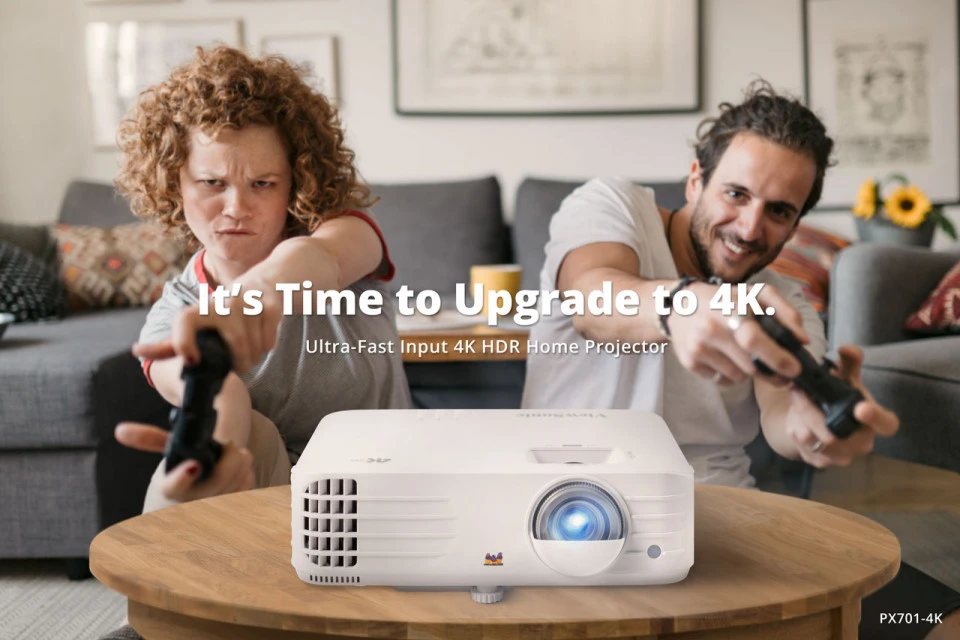
If you buy one projector from this list without overthinking it, make it this one. The ViewSonic PX701-4K is the rare sub-$1000 projector that doesn’t ask you to pick a compromise: genuine 4K UHD resolution (via pixel-shifting), a bright 3,200 ANSI lumens for rooms that aren’t caves, HDR10 and HLG support, and gaming-grade 4.2ms input lag at 1080p/240Hz. It’s the best all-round value in the bracket.
In a dark room, it delivers a sharp, punchy 4K image that embarrasses projectors costing twice as much from a few years ago. In a living room with some ambient light, the brightness keeps the image watchable where dimmer “home theater” models wash out. Gamers get the standout feature: that 4.2ms lag figure is among the lowest in the price class, making it genuinely viable for fast-paced console and PC gaming.
The trade-offs are honest ones. Out-of-the-box color accuracy favors brightness over finesse (a quick calibration pass fixes most of it), black levels won’t trouble a dedicated theater purist, and there’s no built-in smart platform — budget for a Fire TV Stick. The 1.1x zoom is also on the tight side, so measure your throw distance before buying.
Key specs: 4K UHD (3840×2160, pixel-shift) · 3,200 ANSI lumens · HDR10/HLG · 4.2ms input lag (1080p/240Hz) · dual HDMI · up to 300″ image
✓ Pros
- True 4K resolution under $1000 — the cheapest credible way into 4K
- Very bright; works with ambient light
- Elite input lag for gaming
- Strong Amazon review history (4.2★ from 700+ ratings)
✗ Cons
- No smart apps built in — add a streaming stick
- Color accuracy needs calibration for purists
- Modest 1.1x zoom limits placement flexibility
Why buy it: The safest, most versatile pick under $1000. 4K, bright, and fast — it does everything well.
2. BenQ HT2060 — Best for Dedicated Home Theater
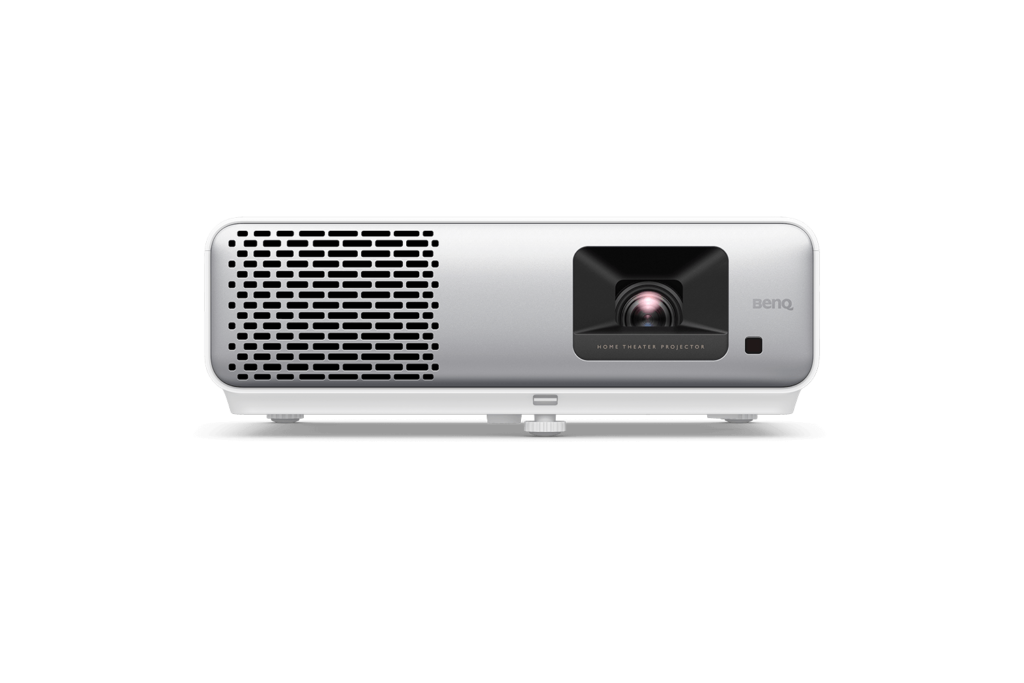
For the viewer building a proper dark-room theater, the HT2060 is the connoisseur’s choice under $1000. Where the ViewSonic chases brightness, the BenQ chases image quality: superb out-of-the-box color accuracy, strong native contrast, and an LED light source rated for 20,000–30,000 hours — meaning you’ll likely never buy a replacement lamp.
It sits right at the top of the budget, and it earns it where it counts for movie lovers. Colors look right without calibration, skin tones are natural, and the LED engine holds its color balance over years in a way lamps slowly don’t. The 120Hz refresh rate and low input lag make it a capable gaming projector too, and setup flexibility (1.3x zoom, vertical lens shift) is generous for the price.
The honest limitations: 2,300 lumens means this is a dark-room projector — put it in a bright living room, and it will look dim next to the 3,500-lumen models here. There’s no smart platform, and it’s physically on the larger side. But if your room has light control, nothing under $1000 looks more “cinema.”
Key specs: 1080p (1920×1080) · 2,300 lumens · LED (20,000–30,000 hr) · HDR10/HLG · 120Hz · 1.3x zoom + lens shift · dual HDMI
✓ Pros
- Best out-of-the-box color accuracy under $1000
- LED light source — effectively no lamp replacements
- Strong contrast for dark-room movie watching
- Good gaming performance (120Hz, low lag)
✗ Cons
- Not bright enough for lit rooms
- No smart TV platform
- 1080p, not 4K (though the image quality largely compensates)
Why buy it: For a light-controlled theater room, this is the best-looking image your $1000 can buy.
3. Epson EX3290 — Best for Bright Rooms & Presentations
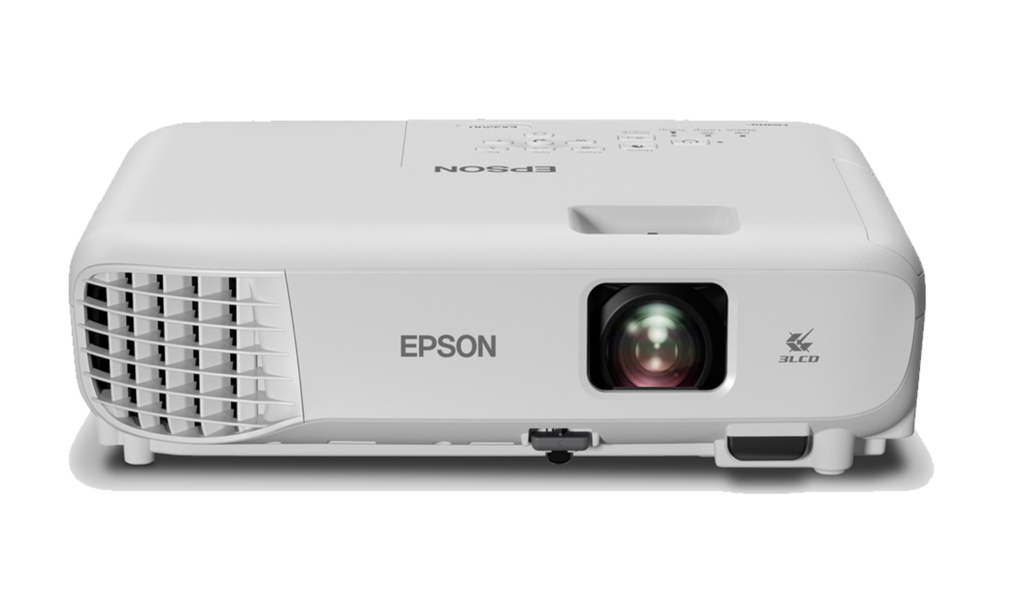
The Epson EX3290 is the brightness champion of this list. With 4,000 lumens of both color and white brightness, it powers through ambient light that would wash out lesser projectors — making it ideal for living rooms, offices, and classrooms where you can’t always kill the lights.
Epson’s 3-chip 3LCD technology is the real story here. Unlike single-chip DLP projectors that can produce a “rainbow effect,” the EX3290 displays 100% of the RGB color signal for every frame. Colors look accurate and natural, not oversaturated or washed out.
At WXGA (1280×800) resolution, it’s not the sharpest on this list — but for presentations, sports, and casual movie watching in bright rooms, brightness matters more than pixel count. The 16,000:1 contrast ratio keeps text sharp and images punchy.
Setup is hassle-free: automatic vertical keystone correction squares the image, two HDMI ports handle your laptop and streaming stick simultaneously, and the built-in speaker means you’re up and running with zero extra gear.
Key specs: 3-Chip 3LCD · WXGA (1280×800) · 4,000 lumens color + white · 16,000:1 contrast · 2× HDMI · 5.2 lbs
✓ Pros
- 4,000 lumens — brightest in class
- 3LCD, no rainbow effect
- Great for well-lit rooms
- Two HDMI ports
✗ Cons
- WXGA, not 1080p
- Basic 2W speaker
- Not ideal for dark-room cinema
Why buy it: The brightest projector under $1000. If your room has windows, this is the one.
4. XGIMI Horizon Pro — Best 4K Smart Projector
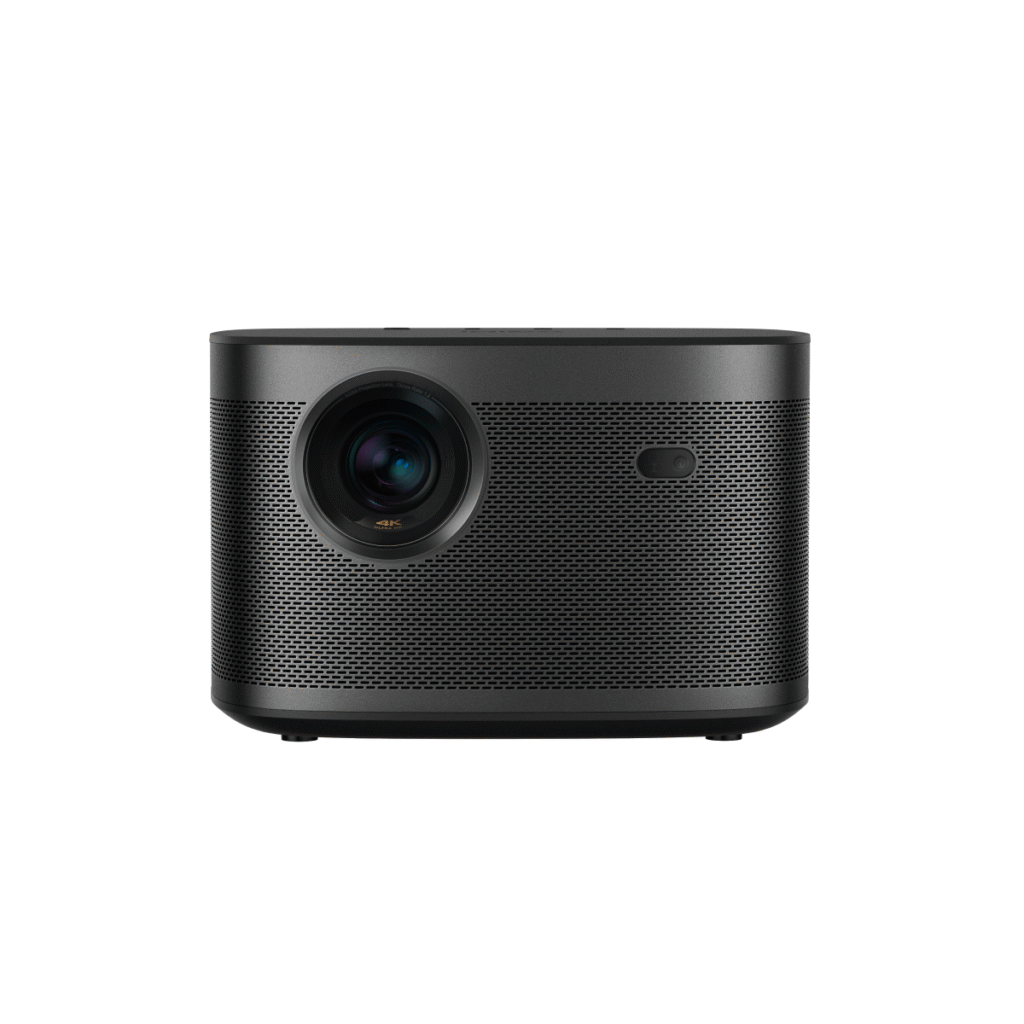
The Horizon Pro is the “it just works” 4K pick: pixel-shifted 4K UHD, 2,200 ANSI lumens, Android TV, Harman Kardon speakers, and XGIMI’s Intelligent Screen Adaptation — autofocus, auto keystone, and obstacle avoidance that squares the image in seconds. List price hovers above this bracket, but it regularly discounts under $1000.
What sets it apart from the traditional brands is the experience. You set it on a table, it focuses itself, straightens the image, dodges the bookshelf in the way, and you’re watching Netflix in under a minute. The 4K image is sharp and vivid, the Harman Kardon audio is the best built-in sound in this roundup, and the compact design looks at home in a living room rather than a man cave.
Trade-offs: 2,200 ANSI lumens is modest — this is a dark-to-dim-room projector, not a bright-living-room fighter. Hardcore gamers should note input lag is merely okay, not class-leading. And MEMC motion smoothing can introduce artifacts (turn it off for films).
Key specs: 4K UHD (3840×2160, pixel-shift) · 2,200 ANSI lumens · Android TV · Harman Kardon speakers · ISA auto-setup (autofocus, auto keystone, obstacle avoidance)
✓ Pros
- Effortless setup — the smartest projector here
- Genuine 4K with vivid color
- Best built-in speakers in the roundup
- Compact, living-room-friendly design
✗ Cons
- Brightness is modest — needs a dim room
- Input lag is okay, not great for competitive gaming
- Price fluctuates; buy on sale under $1000
Why buy it: The easiest path to a 4K big screen. Set it down, and it handles the rest.
5. XGIMI Halo+ — Best Portable Smart Projector
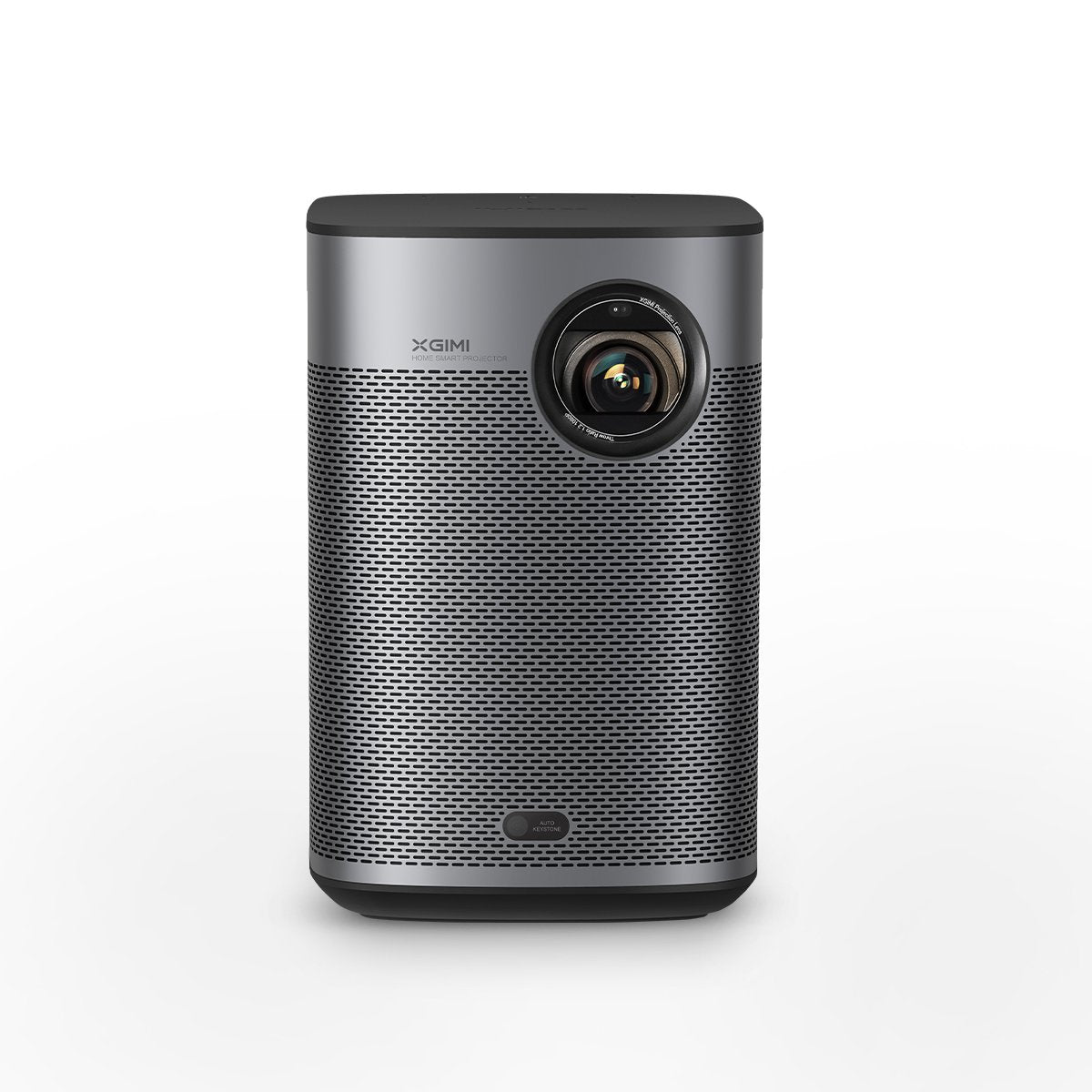
The XGIMI Halo+ is the projector you grab when the adventure calls. This compact powerhouse packs a 1080p Full HD image, 700 ISO lumens of brightness, and a built-in battery that runs for up to 2.5 hours — enough for a full movie under the stars with no power cord in sight.
What sets the Halo+ apart is XGIMI’s Intelligent Screen Adaption. Point it at a wall and it automatically handles focus, keystone correction, screen alignment, and even obstacle avoidance. Setup takes seconds, not minutes. The 1.2:1 throw ratio delivers up to a 200-inch image from a reasonable distance.
Sound is a standout: dual 5W Harman Kardon speakers with DTS and Dolby support produce room-filling audio that embarrasses most built-in projector speakers. You won’t need an external Bluetooth speaker for casual viewing.
Android TV is built in, so Netflix, YouTube, and your other apps are ready out of the box (Chromecast included). The 700 ISO lumens won’t compete with dedicated home theater projectors in bright rooms, but in dim or dark environments, the image is crisp and vibrant.
At 3.5 pounds, it’s genuinely portable — toss it in a backpack for camping trips, backyard movie nights, or impromptu presentations.
Key specs: DLP · 1080p Full HD · 700 ISO lumens · 2× 5W Harman Kardon · Android TV · built-in battery (2.5 hrs) · 3.5 lbs
✓ Pros
- Truly portable with battery
- Autofocus + keystone + obstacle avoidance
- Excellent Harman Kardon sound
- Android TV built-in
✗ Cons
- 700 lumens needs dim room
- Battery lasts ~2 hours in practice
- Premium price for portable
Why buy it: The best portable projector under $1000. Grab it and go — no setup headaches.
6. Optoma HD146X — Best Budget Pick
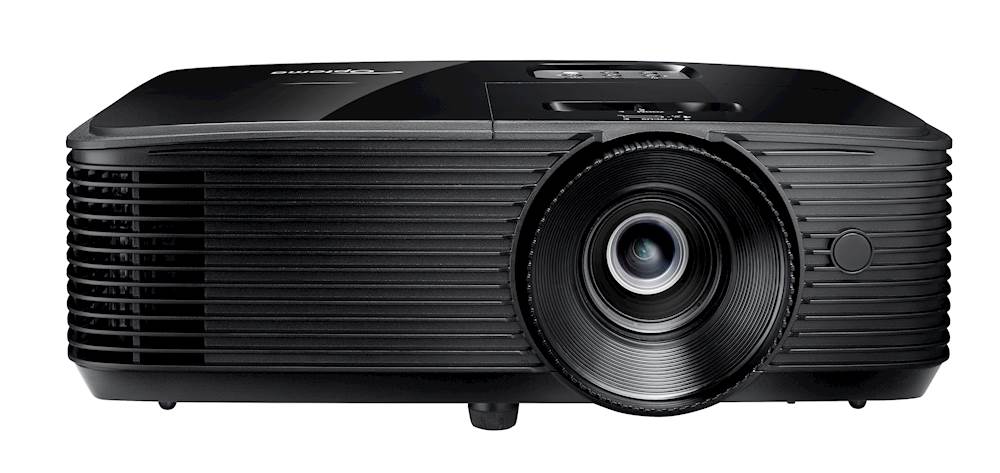
The HD146X is the value king of traditional home theater projectors: 3,600 lumens, 1080p, a 16ms gaming mode. It’s been a bestseller for years for one reason — it delivers a big, bright, punchy image for hundreds less than anything else here.
That brightness makes it the most versatile budget pick: it holds up in living rooms with the lights half-on, where dimmer theater models fade. The 16ms input lag in gaming mode is genuinely good for casual and even semi-competitive gaming. And Optoma’s DLP color is vivid and punchy out of the box.
What you sacrifice: black levels and contrast are merely decent (this is a bright-room projector, not a theater-room one), there’s no smart platform, and the 10W speaker is basic. Lamp life is rated around 15,000 hours in eco mode — fine, but a replacement lamp down the line is a real cost to factor in.
Key specs: 1080p (1920×1080) · 3,600 lumens · 16ms gaming mode · 25,000:1 contrast · dual HDMI (HDMI-CEC) · 10W speaker
✓ Pros
- Enormous brightness for the price — best lumens-per-dollar here
- Good gaming mode (16ms)
- Proven bestseller with a long track record
- Leaves budget for a screen and streaming stick
✗ Cons
- Contrast and black levels are just okay
- No smart apps
- Basic built-in speaker; lamp replacements cost money eventually
Why buy it: The cheapest way into a genuinely big, bright home theater. Unbeatable value.
7. BenQ TH685P — Best for Bright Living Rooms
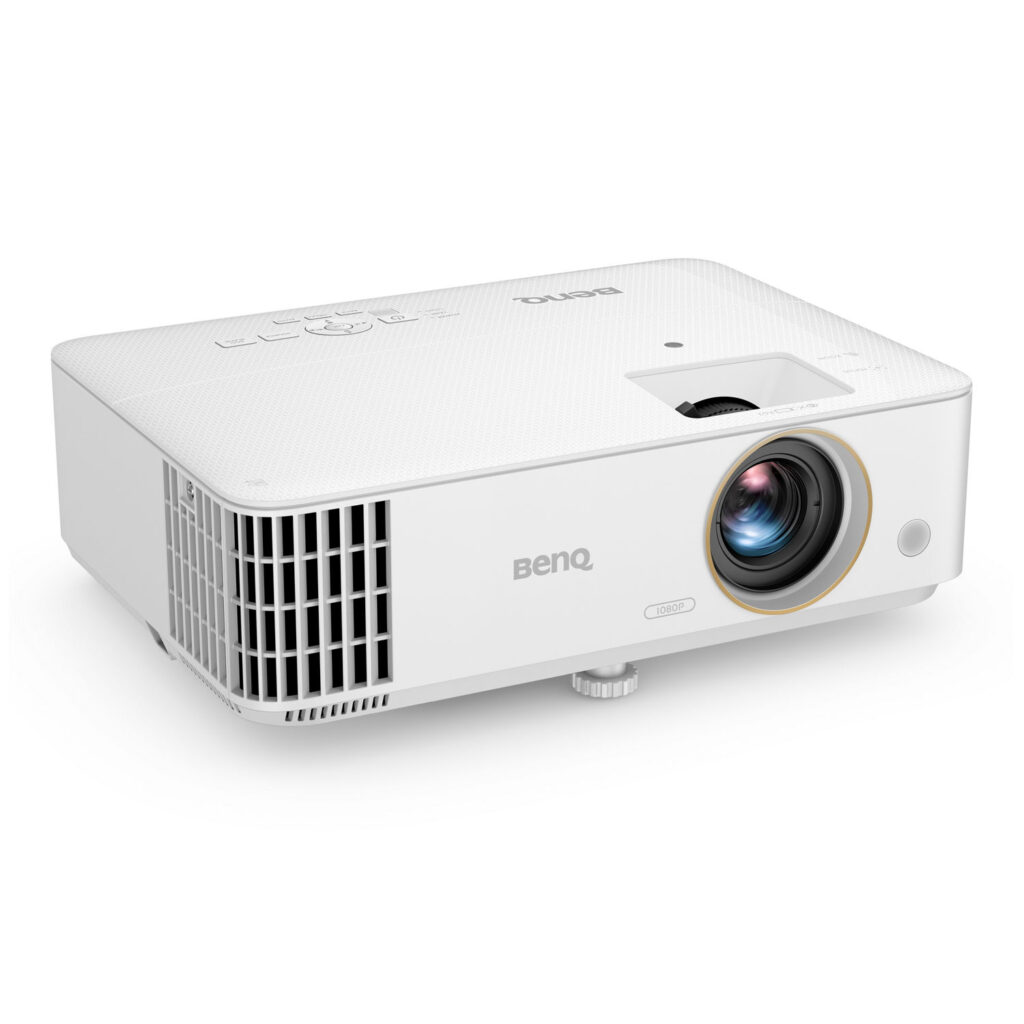
If your projector has to fight daylight, the TH685P is purpose-built for the job: 3,500 lumens. That’s flagship-level brightness at a mid-range price, and in a living room with windows, brightness is the entire ballgame.
BenQ tunes this one for sports and gaming as much as movies: the 8.3ms input lag mode is among the fastest here, colors stay accurate even in bright modes (many projectors turn greenish when cranked), and the 1.2x zoom plus straightforward setup make it living-room friendly. It’s the projector we’d put in front of a Super Bowl party without hesitation.
Limitations are the usual for the class: 1080p rather than 4K, no smart platform (add a streaming stick), and fan noise is noticeable when it’s working hard. But for the specific job of “big bright picture in a real living room,” nothing under $1000 does it better per dollar.
Key specs: 1080p (1920×1080) · 3,500 lumens · 8.3ms gaming mode · 1.2x zoom · up to 15,000-hour lamp life (eco)
✓ Pros
- Outstanding brightness for the price
- Excellent for sports and gaming (fast input lag)
- Good color accuracy even in bright modes
- Simple, reliable operation
✗ Cons
- 1080p, not 4K
- No smart apps — budget for a streaming stick
- Audible fan at full brightness
Why buy it: Your room has windows, and you watch during the day? This is your projector.
8. BenQ TH575 — Best for Competitive Gaming
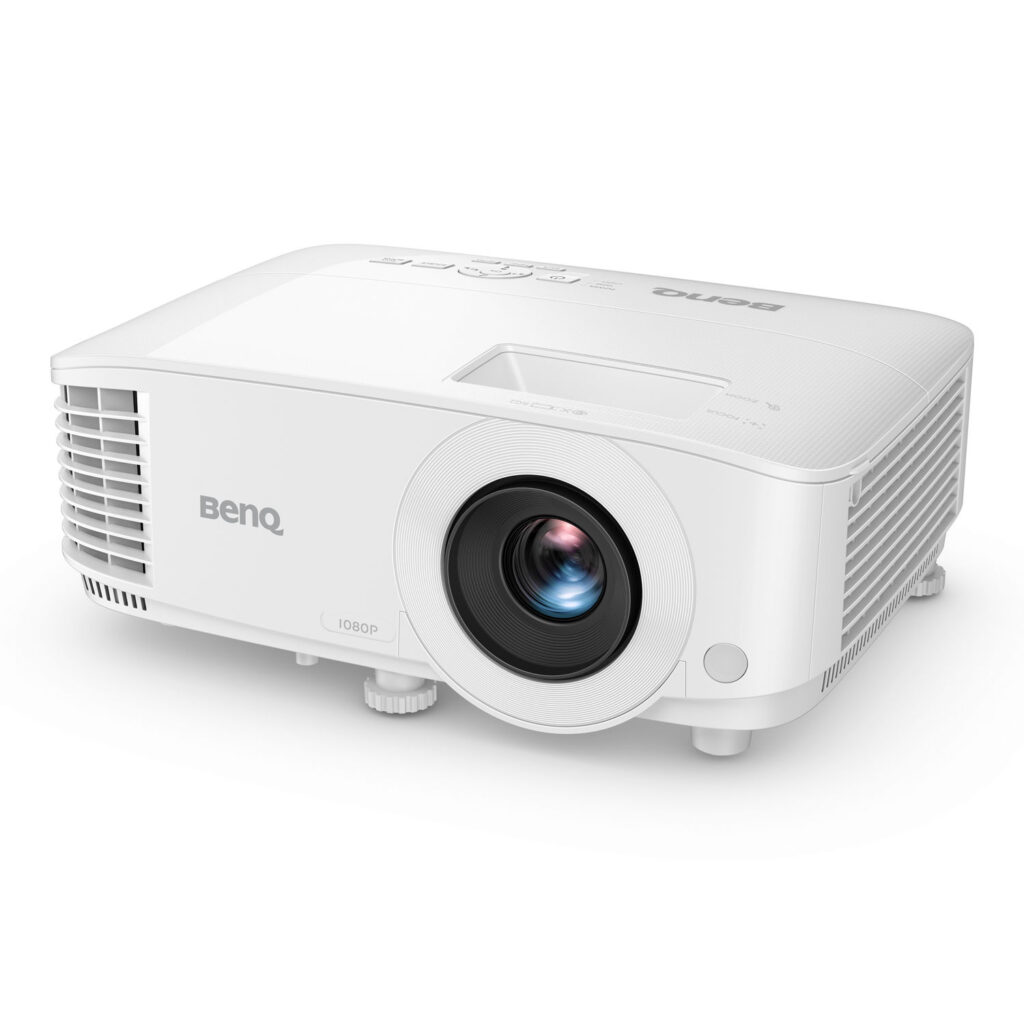
The TH575 is the sleeper gaming pick: 3,800 ANSI lumens, 1080p, and a dedicated game mode tuned for responsiveness. While everyone argues about 4K, competitive gamers know the truth — at 100+ inches, low lag and high brightness win matches, not extra pixels.
BenQ’s game mode enhances shadow detail (spotting campers in dark corners is a genuine competitive advantage), and the high brightness means you don’t have to play in a cave. Dual HDMI inputs handle console plus PC without cable-swapping, and the 15,000-hour eco lamp life keeps running costs sane.
As a movie projector, it’s merely good rather than great — contrast and color finesse trail the HT2060. There’s no smart platform. But if the primary use is PS5, Xbox, or PC gaming on a giant screen, this is the most performance per dollar in the roundup.
Key specs: 1080p (1920×1080) · 3,800 ANSI lumens · dedicated game mode (low input lag, shadow enhancement) · dual HDMI · 15,000-hour eco lamp life
✓ Pros
- Blazing brightness — game in a lit room
- Game-tuned mode with shadow detail boost
- Great price for the performance
- Long lamp life
✗ Cons
- Movie image quality is good, not exceptional
- No smart apps
- Fan noise under load
Why buy it: For big-screen gaming, nothing under $1000 gives you more speed and brightness per dollar.
9. Epson Home Cinema 980 — Best Value Epson Pro
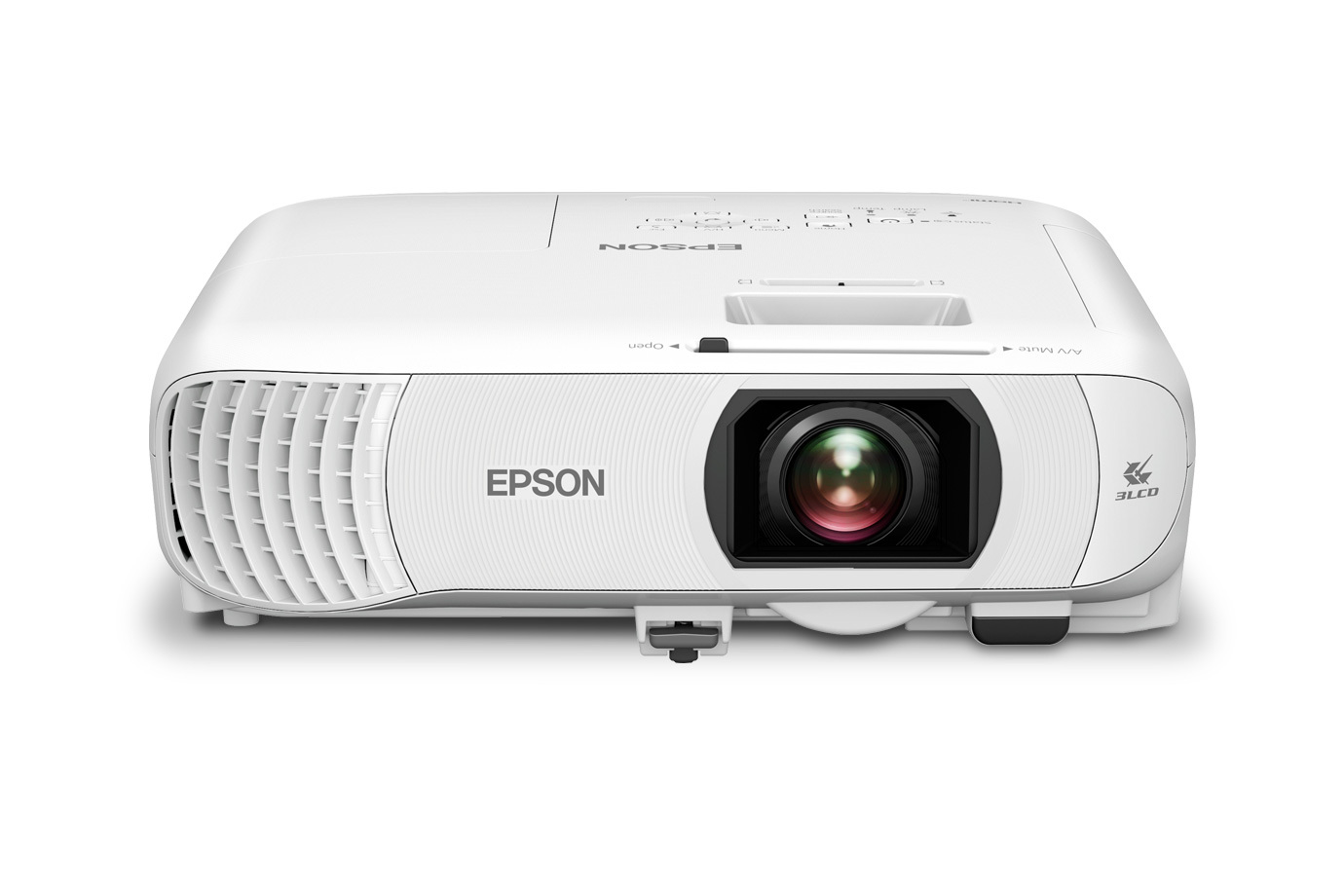
The Epson Home Cinema 980 hits a sweet spot that few projectors manage: full 1080p resolution, 4,000 lumens of brightness, and 3-chip 3LCD color accuracy — all at a price that leaves room in your budget for a screen and sound system.
Like its sibling the EX3290, the HC980 uses Epson’s 3LCD technology to deliver 4,000 lumens of both color and white brightness. That means vibrant, accurate colors even with the lights on. The 16,000:1 dynamic contrast ratio adds depth to dark scenes, a noticeable step up from budget DLP competitors.
The 1080p (1920×1080) resolution is the key upgrade over the EX3290. Movies, sports, and games look sharp and detailed on screens up to 337 inches. The 1.21-1.45 throw ratio is flexible for most rooms.
Connectivity covers the basics well: two HDMI ports (one for your streaming device, one for gaming console), USB for powering a Fire Stick, and a 3.5mm audio out for external speakers. The built-in 2W speaker handles casual viewing, but you’ll want a soundbar for movie nights.
Epson backs it with a 2-year warranty and their renowned customer support — a real advantage over lesser-known brands in this price range.
Key specs: 3-Chip 3LCD · 1080p Full HD · 4,000 lumens color + white · 16,000:1 contrast · 2× HDMI · 6.8 lbs · 2-year warranty
✓ Pros
- 1080p + 4,000 lumens combo
- 3LCD, no rainbow effect
- 2-year Epson warranty
- Great for mixed-use (movies + sports)
✗ Cons
- No smart platform built in
- Basic 2W speaker
- Lamp (not LED/laser) — replacements needed
Why buy it: The best Epson value under $1000. Bright, sharp, and backed by a 2-year warranty.
10. BenQ TH671ST — Best Short-Throw
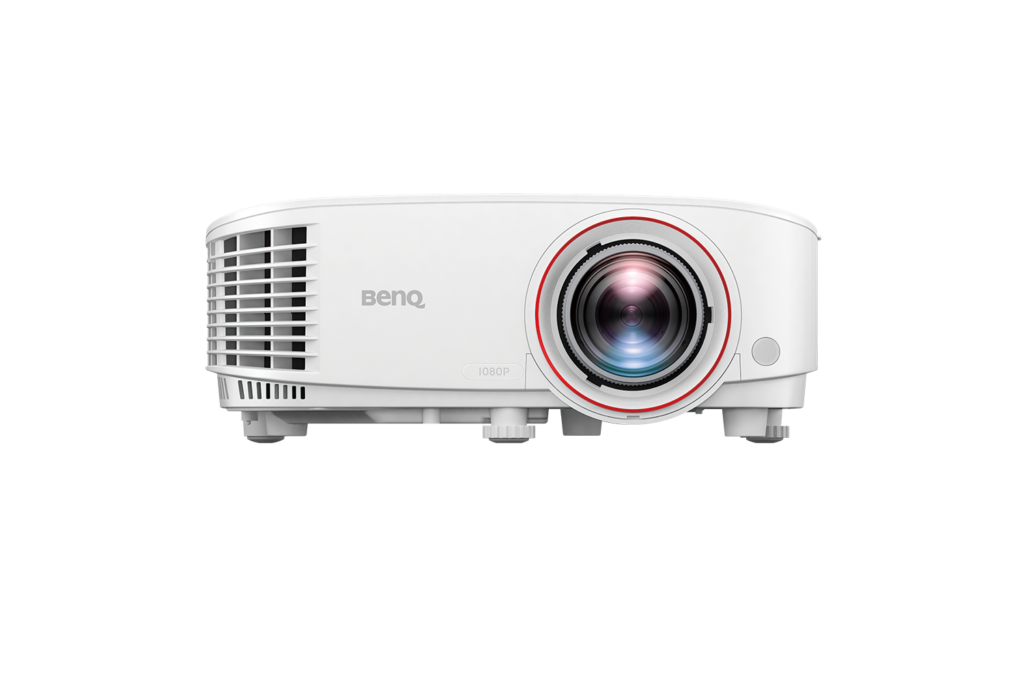
Small room? The TH671ST is a short-throw projector: it throws a 100-inch image from about 5 feet away. That means it can sit on a coffee table in front of the couch instead of being ceiling-mounted behind it — a game-changer for apartments, bedrooms, and dorms.
Beyond the throw ratio, it’s a solid all-rounder: 3,000 lumens (bright enough for moderate ambient light), 1080p, and a 16ms gaming mode that makes it genuinely good for console gaming. BenQ’s color is accurate, and the compact chassis disappears into a room.
The short-throw lens is the whole point, so if you have a big room with mounting options, the standard-throw models here give you more for the money. There’s no smart platform, and placement is less flexible in the other direction (you can’t put it far away). But for tight spaces, it’s the only pick on this list that fits.
Key specs: 1080p (1920×1080) · 3,000 lumens · short-throw (100″ from ~5 ft) · 16ms gaming mode · compact chassis
✓ Pros
- Short-throw lens — huge image in small rooms, no ceiling mount needed
- Bright enough for moderate ambient light
- Good for gaming (16ms)
- Compact and affordable
✗ Cons
- Only makes sense for small rooms
- No smart apps
- Less placement flexibility than standard-throw models
Why buy it: Your room is too small for a normal projector? This is the fix.
How We Selected the Best Projectors Under $1000 for 2026
Every pick was judged on what actually matters at this price: verified ANSI-lumen brightness (not marketing lumens), native resolution (with pixel-shifting 4K clearly labeled as such), input lag for gaming claims, contrast and color for theater use, smart platform quality where present, and current street price under $1000 on Amazon. We excluded discontinued models (like the Optoma HD39HDRx, dropped from the lineup), fantasy brightness specs, and anything without a verifiable 2026 price.
Projector Under $1000 Buyer’s Guide 2026
4K vs 1080p: what does $1000 actually buy?
Here’s the honest breakdown. True native 4K chips are still too expensive for this bracket — every “4K” projector under $1000 uses pixel-shifting (rapidly shifting a 1080p chip to simulate 4K). Good pixel-shifting (ViewSonic PX701-4K, Epson 2350) looks genuinely close to native 4K on movies. Cheap implementations look soft.
The practical advice: if you sit 10+ feet from a 100–120″ screen, a great 1080p projector (HT2060, TH685P) will look as good as a mediocre “4K” one — and cost less. Buy 4K here for the sharpness on text and fine detail, not as a magic upgrade.
Brightness: match it to your room
This is the decision that matters most:
– Dark, light-controlled room: 1,500–2,500 lumens is plenty — prioritize contrast and color (HT2060)
– Living room, some ambient light: 3,000+ lumens — prioritize brightness (TH685P, HD146X, TH575)
– Daylight or bright room: 3,500+ lumens minimum, and consider an ALR (ambient light rejecting) screen
And the golden rule: only trust ANSI lumens. “LED lumens” and plain “lumens” figures are marketing numbers, often 2–3x inflated.
Gaming: what to actually look for
Marketing loves “120Hz” and “game mode” badges. What matters is measured input lag: under 20ms is good for most gaming, under 10ms is excellent. Also check that the low-lag mode works at the resolution you’ll use (some projectors only hit their best lag figures at 1080p, not 4K). The TH575, PX701-4K, and TH685P are the standouts here.
Throw distance: measure before you buy
The most common buyer’s mistake is skipping this. Standard projectors need 8–12 feet for a 100″ image. Measure your room: seating position, where the projector can sit, where the screen goes. Small room? That’s what the short-throw TH671ST is for. Also note zoom range — 1.3x zoom (HT2060) gives far more placement wiggle room than 1.1x (PX701-4K).
Smart platforms: built-in vs streaming stick
Built-in Android/Google TV (XGIMI Horizon, Epson 2350) means one remote and no dongle — genuinely convenient, especially for bedrooms where you want minimal clutter. But a Fire TV Stick on a “dumb” projector (PX701-4K, BenQ models) is often faster, gets software updates longer, and can move to your next projector when you upgrade. Don’t pay a big premium for built-in smarts; do appreciate it when it’s included.
Lamp vs LED vs laser at this price
- Lamp (most picks here): cheapest upfront, brightest per dollar — but replacement lamps are a real ongoing cost every few thousand hours
- LED (HT2060): 20,000–30,000 hours, effectively lamp-free, but dimmer per dollar
- Laser: rare under $1000; the closest options stretch the budget
If you’ll use the projector daily, LED’s zero lamp cost wins long-term. For weekend movie nights, lamp brightness per dollar wins.
Frequently Asked Questions
Can you get a true 4K projector for under $1000?
Mostly no — and it’s worth being clear-eyed about it. Every sub-$1000 “4K” projector uses pixel-shifting rather than a native 4K chip. Good pixel-shifting (ViewSonic PX701-4K, Epson 2350) looks very close to native 4K on movies. If true native 4K is non-negotiable, plan to spend a little over $1,000.
What is the best projector under $1000 for a bright living room?
The BenQ TH685P (3,500 lumens) or BenQ TH575 (3,800 lumens). In rooms with ambient light, brightness beats every other spec — and both leave budget for a streaming stick and a screen.
What is the best projector under $1000 for gaming?
The BenQ TH575 for competitive play (brightness + game-tuned mode), or the ViewSonic PX701-4K if you want 4K sharpness with elite 4.2ms input lag. Both are genuinely viable for fast-paced console and PC gaming.
How many lumens do I need for a home theater projector?
In a dark, light-controlled room, 1,500–2,500 lumens is plenty — and lower-brightness models usually have better contrast. For a living room with ambient light, aim for 3,000+ ANSI lumens. Always check the ANSI figure, not marketing lumens.
Do I need a screen, or is a wall fine?
A smooth white or light-gray wall works surprisingly well to start. But a dedicated screen — especially an ALR screen in bright rooms — noticeably improves contrast and brightness uniformity. It’s one of the best affordable upgrades after the projector itself.
Lamp vs LED: which lasts longer?
LED (like the BenQ HT2060’s light source) lasts 20,000–30,000 hours — effectively the life of the projector. Lamps last 3,000–6,000 hours (up to 15,000 in eco mode) and are a real ongoing cost to replace. Heavy daily users should lean LED; weekend viewers are fine with lamp.
Are the cheap “4K” projectors on Amazon worth it?
Be careful. Many sub-$300 listings advertise “4K” and tens of thousands of “lumens” — these are 1080p (or lower) panels with 4K input support and inflated brightness claims. Stick to the ANSI-lumen rule and the brands on this list.
Final Verdict
Under $1000, there’s no single “best” — there’s the best for your room. Dark theater room? BenQ HT2060. Want 4K everything? ViewSonic PX701-4K. Bright living room? BenQ TH685P. Gaming? BenQ TH575. Easiest experience? XGIMI Horizon. Tightest budget? Optoma HD146X.
If forced to pick one for most people: the ViewSonic PX701-4K does the most things well — 4K, bright, and fast — at a street price that leaves room for a screen and a streaming stick.
One last piece of advice: whatever projector you choose, budget a little beyond it for a screen and a streaming stick if needed. A cheaper projector on a proper screen looks better than a pricier projector on a wrinkled bedsheet — the accessories complete the theater.