Honest expectations first, because this is where most projector sites lie to you.
No projector beats direct sunlight. Not a 4,000-lumen lamp monster, not a triple-laser flagship. If the sun is hitting your screen directly, even the brightest projector on this list will look washed out. That’s physics, not a product flaw.
What a bright projector
can do is deliver a watchable image in a bright living room, a shaded patio, or a late-afternoon backyard — where a dim portable would be invisible. The gap between 2,000 and 4,000 lumens in ambient light is the gap between “why did I buy this” and “this actually works.”
One more trap: lumen numbers aren’t measured the same way. A “3,800-lumen” budget DLP and a “2,300 ISO lumen” laser aren’t as far apart as they look — budget brands quote marketing lumens, serious brands quote ANSI or ISO. Every figure below names its standard.
The golden rule: control what you can. Close blinds near the screen, keep direct sun off the projection surface. A 2,500-lumen projector in a managed room beats a 4,000-lumen one fighting direct sunlight.
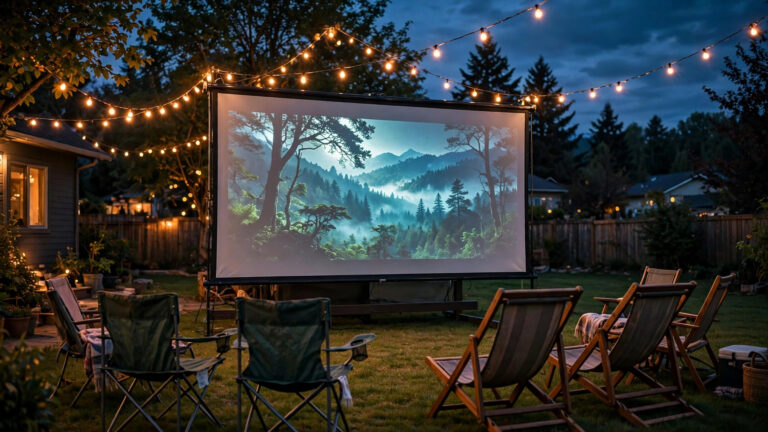
For dedicated nighttime backyard movies, our
best outdoor projectors guide covers dimmer models that shine after dark. This list is for people who need brightness first.
Top 10 Daylight Projectors 2026 — Comparison Table
| Product |
Brightness |
Resolution |
Best For |
Buy |
| Optoma UHD38 |
4,000 lumens |
4K UHD |
Overall daylight performance |
Buy from Amazon |
| JMGO N1S Ultra 4K |
3,000 ANSI lumens |
4K UHD |
Triple-laser brightness |
Buy from Amazon |
| Hisense-Vidda C3 Ultra |
3,200 CVIA lumens |
4K UHD |
Premium laser + Dolby Vision |
Buy from Amazon |
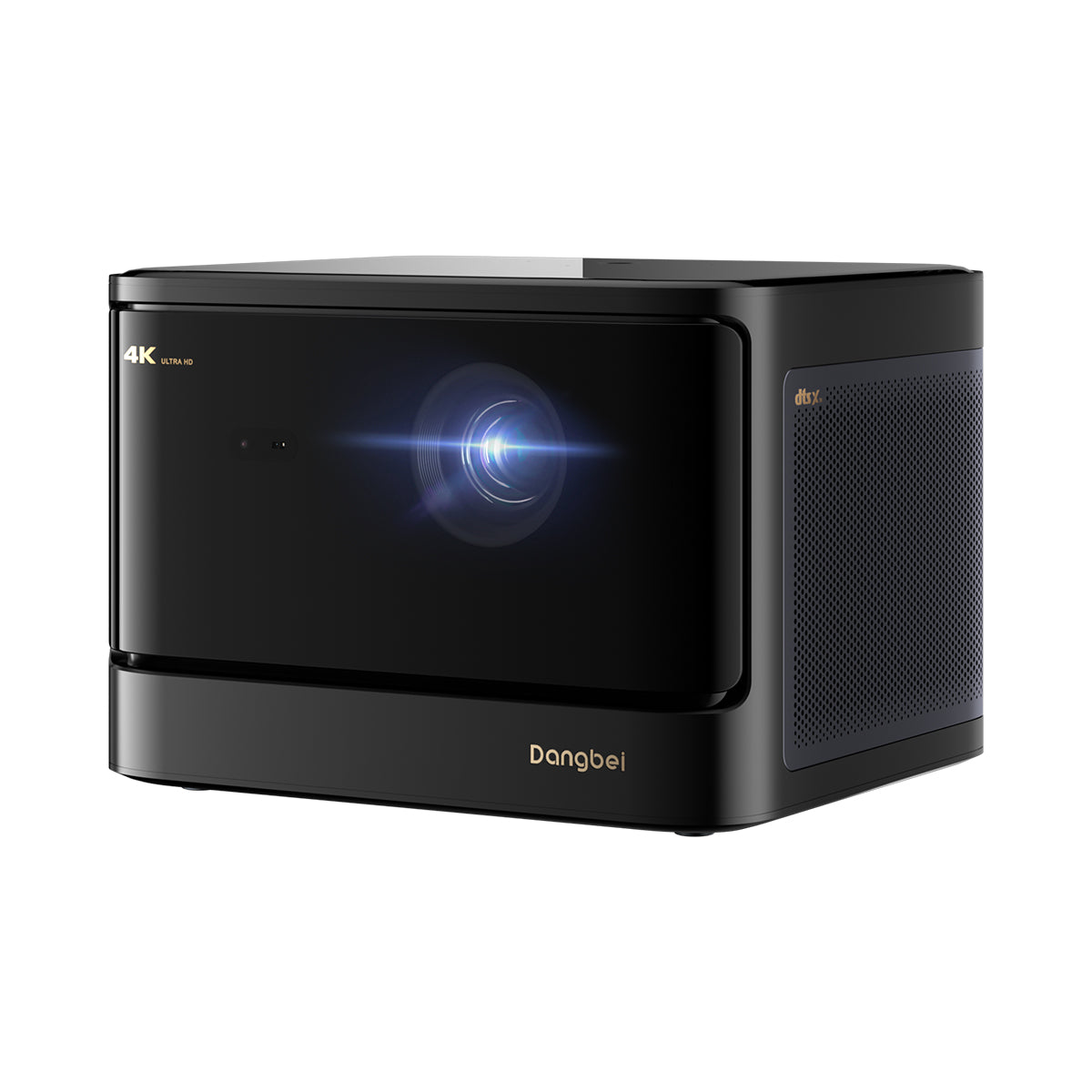
| Dangbei Mars Pro 2 |
2,450 ISO lumens |
4K UHD |
Smart laser all-rounder |
Buy from Amazon |
| XGIMI Horizon Ultra |
2,300 ISO lumens |
4K UHD |
Dual-light color quality |
Buy from Amazon |
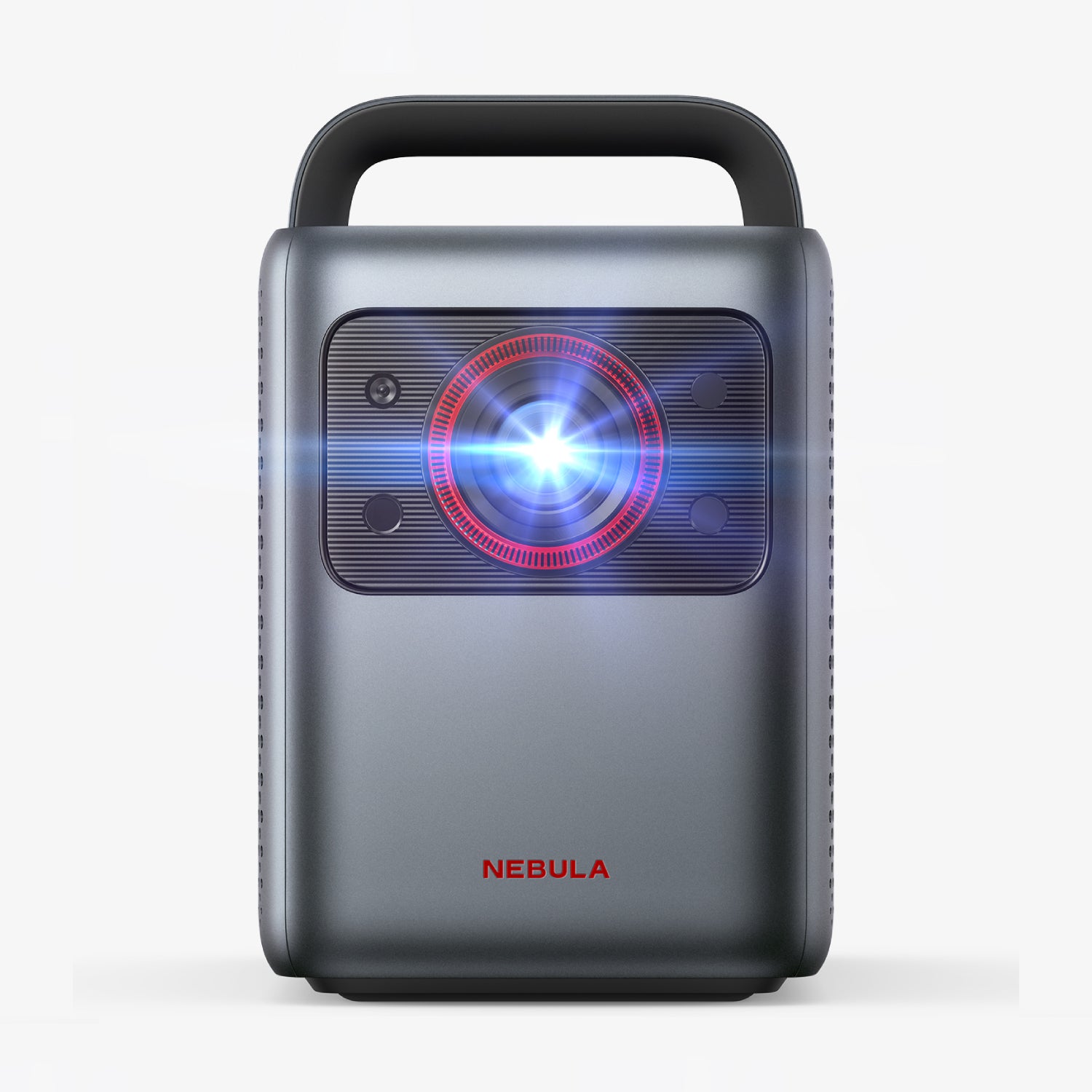
| Anker Nebula Cosmos Laser 4K |
2,200 ANSI lumens |
4K UHD |
Laser value pick |
Buy from Amazon |
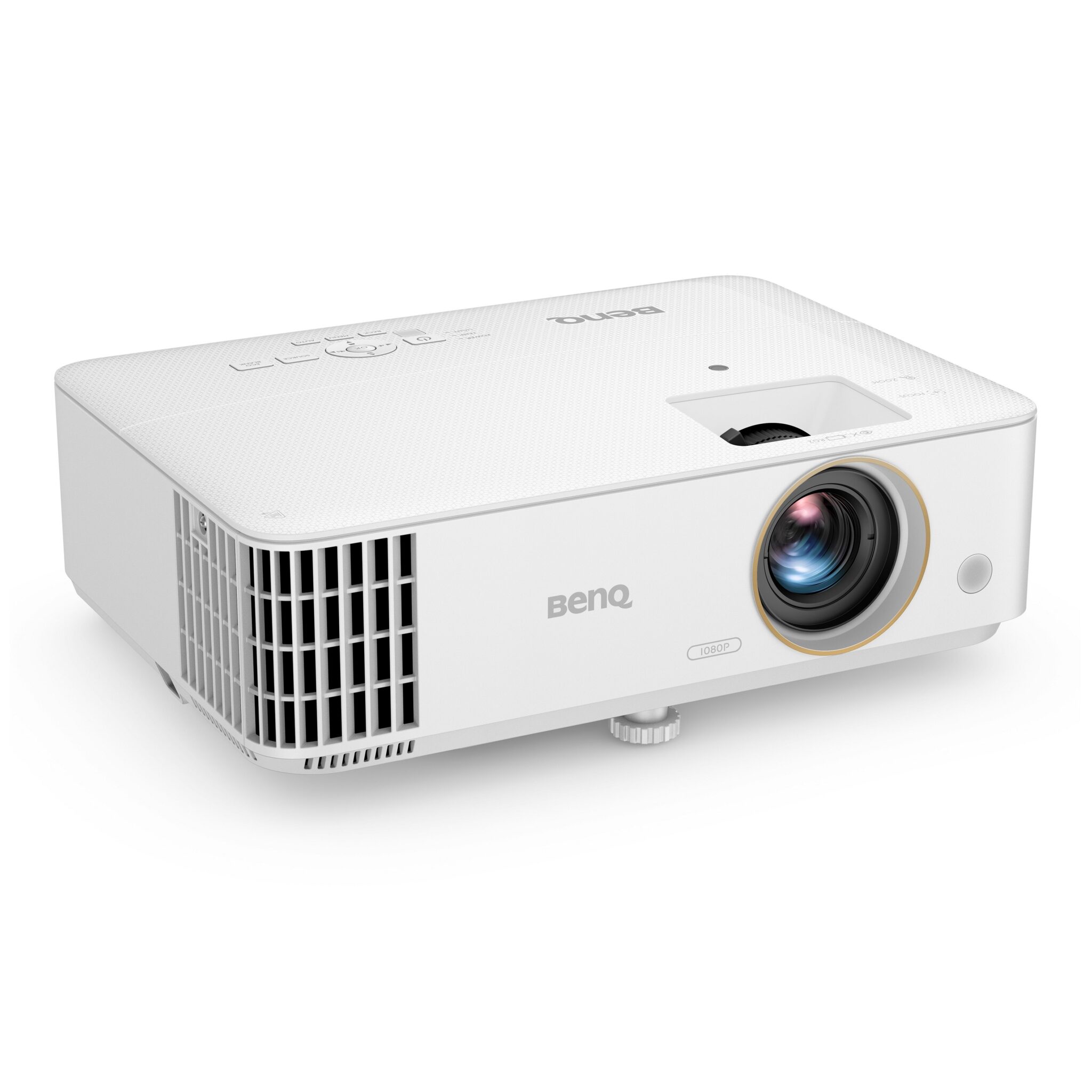
| BenQ TH685P |
3,500 ANSI lumens |
1080p Full HD |
Bright-room gaming |
Buy from Amazon |
| Epson Home Cinema 2350 |
2,800 lumens |
4K PRO-UHD |
3LCD color brightness |
Buy from Amazon |
| ViewSonic PA503W |
3,800 lumens |
WXGA (1280×800) |
Budget bright |
Buy from Amazon |
| Epson EpiqVision Flex CO-W01 |
3,000 lumens |
WXGA (1280×800) |
Ultra-budget bright |
Buy from Amazon |
Top 10 Best Daylight Projectors 2026 — Detailed Reviews
1. Optoma UHD38 — Best Overall Daylight Projector

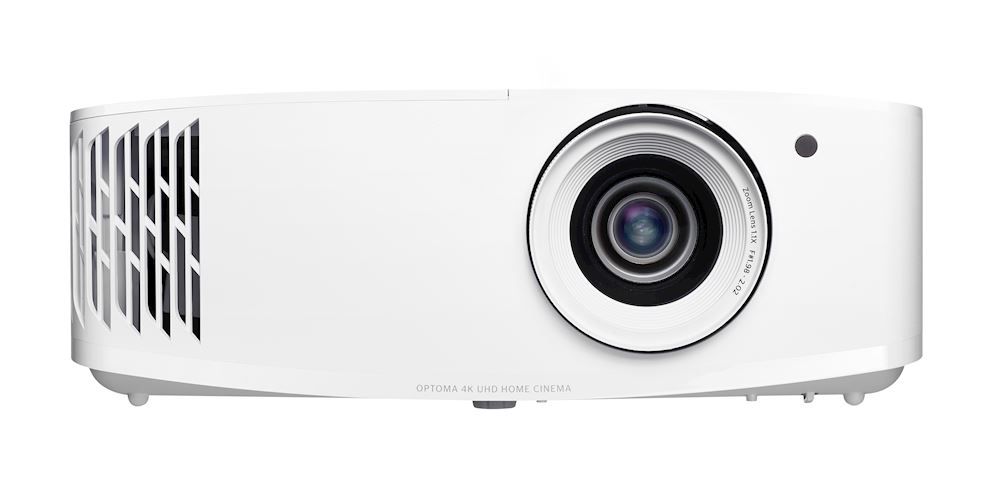
The UHD38 is the blunt instrument of daylight projection — sometimes exactly what you need. At 4,000 lumens, it overpowers ambient light better than anything near its price, without sacrificing true 4K. For daytime sports, bright-room movies, and office presentations, it’s the most capable all-rounder.
The cost is classic lamp economics: fading brightness, paid lamp replacements, audible fan at full power. Evening-first viewers should pick a dimmer laser for contrast. But if your room is bright more often than dark, raw output wins.
- Brightness: 4,000 lumens
- Resolution: 4K UHD (3840 × 2160)
- Throw ratio: 1.47:1 – 1.62:1
- Light source: Lamp (UHP, ~15,000 hrs eco)
✓ Pros
- Brightest 4K image in its class — genuinely watchable with lights on
- True 4K resolution with HDR10 and HLG support
- 240Hz gaming mode with low input lag
- Strong value for the brightness class
✗ Cons
- Lamp dims over time, and replacements cost real money
- Fan gets loud at full brightness
- Mediocre black levels and contrast
- No usable built-in smart OS — plan on a streaming stick
The UHD38 is the blunt instrument of daylight projection — sometimes exactly what you need. At 4,000 lumens, it overpowers ambient light better than anything near its price, without sacrificing true 4K. For daytime sports, bright-room movies, and office presentations, it’s the most capable all-rounder.
The cost is classic lamp economics: fading brightness, paid lamp replacements, audible fan at full power. Evening-first viewers should pick a dimmer laser for contrast. But if your room is bright more often than dark, raw output wins.
Buy from Amazon
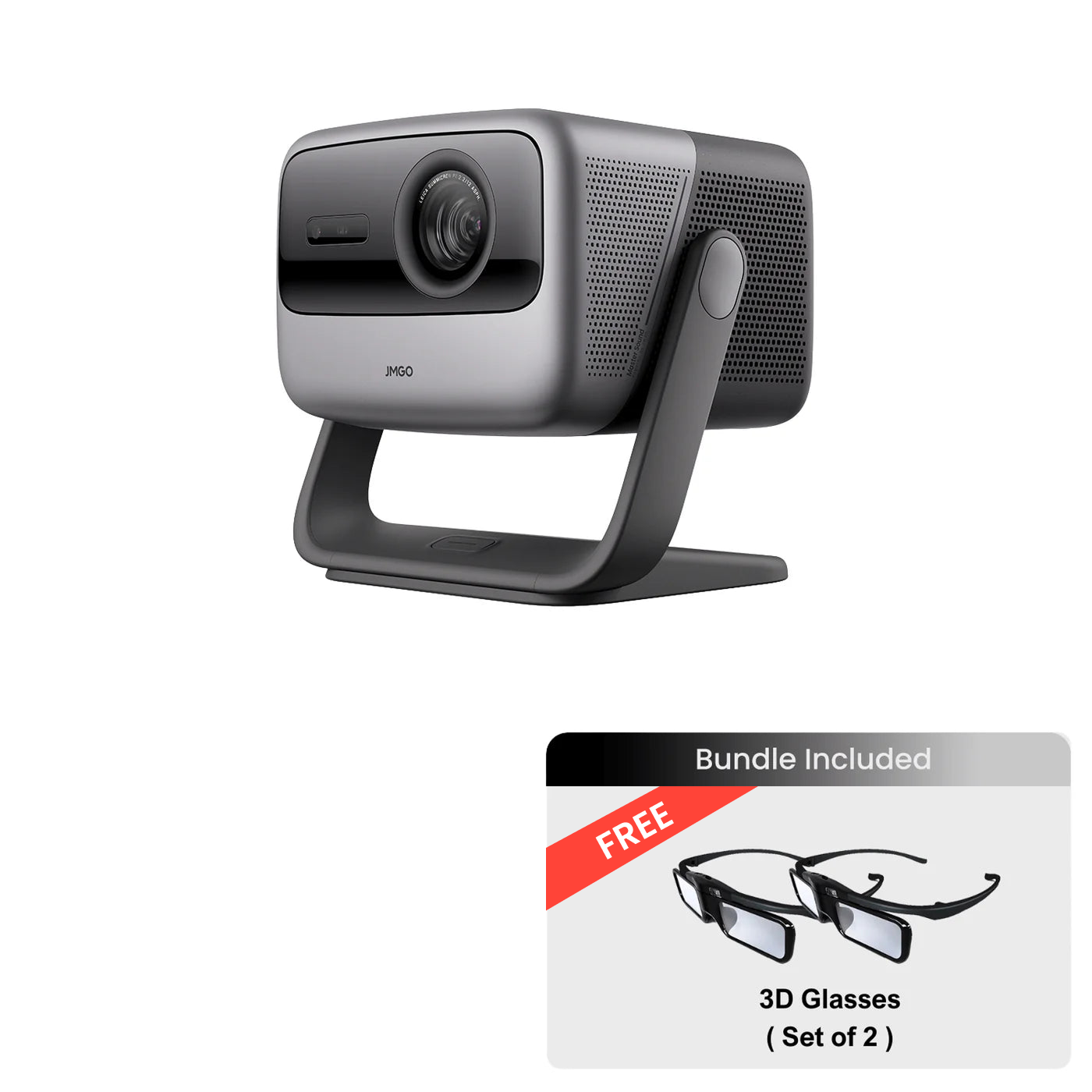
The N1S Ultra takes brightness seriously with modern tech instead of a bigger bulb. Three laser modules deliver a genuine 3,000 ANSI lumens — measured to a standard, not marketing math — and laser output stays consistent for 30,000 hours instead of dimming like a lamp. Triple-laser color also holds saturation in ambient light, where washed-out color is usually the first casualty.
The gimbal stand is genuinely useful: re-aiming at a shaded wall takes seconds. Downsides are real — no optical zoom, so the fixed 1.2:1 throw dictates placement, and some laser speckle remains. Still, for bright-room 4K that stays bright for years, this is the laser pick to beat.
- Brightness: 3,000 ANSI lumens
- Resolution: 4K UHD (3840 × 2160)
- Throw ratio: 1.2:1
- Light source: Triple RGB laser (30,000 hrs)
✓ Pros
- 3,000 ANSI lumens from a laser engine — brightness that doesn’t fade like a lamp
- Gorgeous triple-laser color: 110% BT.2020 coverage
- Integrated gimbal stand makes aiming effortless
- Google TV with licensed Netflix built in
✗ Cons
- Laser speckle is reduced but still visible on bright flat fields
- Fixed 1.2:1 throw — no optical zoom, limited placement flexibility
- Premium pricing for the brightness class
- 1,600:1 native contrast is modest for movie nights
The N1S Ultra takes brightness seriously with modern tech instead of a bigger bulb. Three laser modules deliver a genuine 3,000 ANSI lumens — measured to a standard, not marketing math — and laser output stays consistent for 30,000 hours instead of dimming like a lamp. Triple-laser color also holds saturation in ambient light, where washed-out color is usually the first casualty.
The gimbal stand is genuinely useful: re-aiming at a shaded wall takes seconds. Downsides are real — no optical zoom, so the fixed 1.2:1 throw dictates placement, and some laser speckle remains. Still, for bright-room 4K that stays bright for years, this is the laser pick to beat.
Buy from Amazon
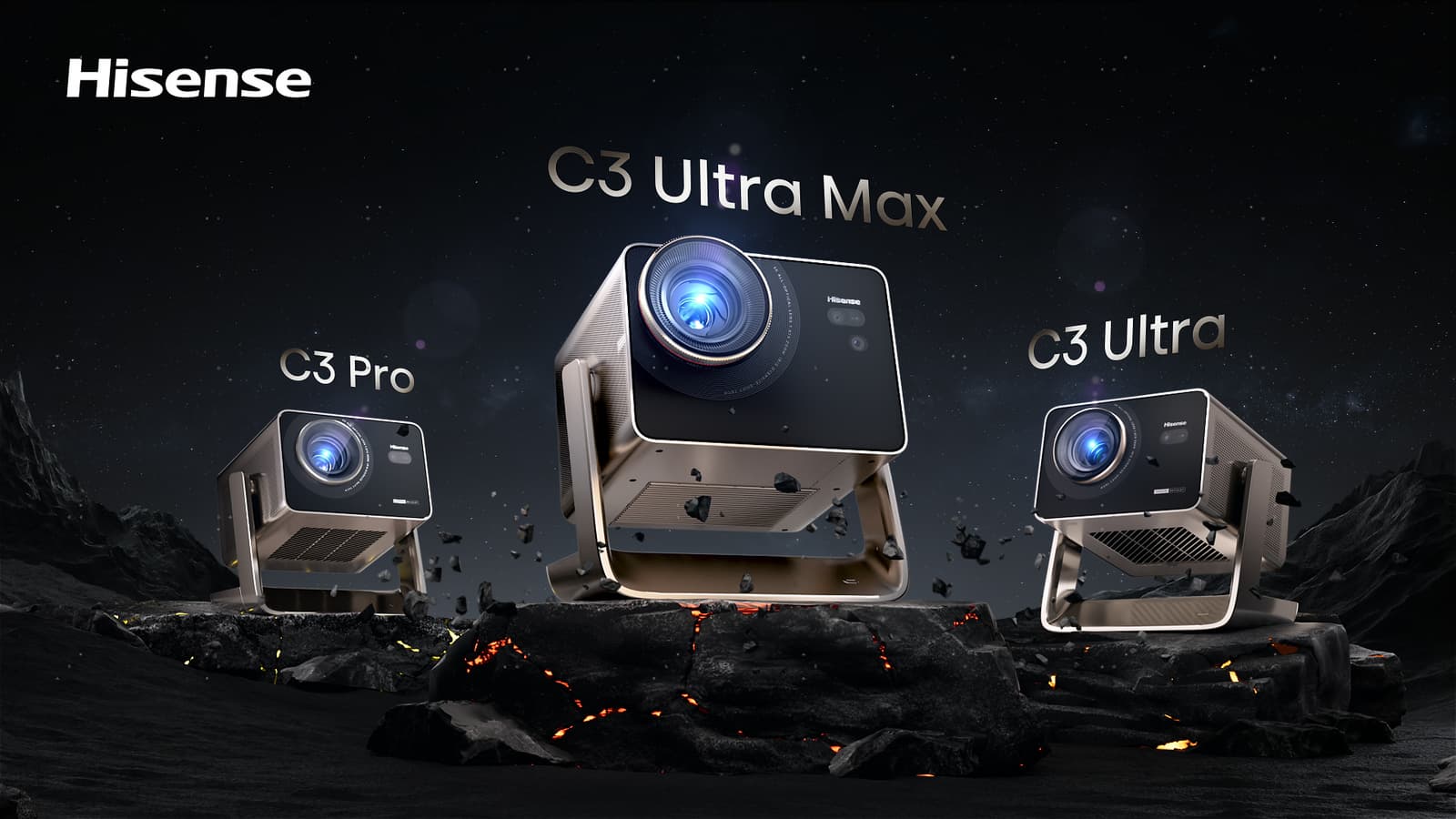
The C3 Ultra is the enthusiast’s daylight projector: triple-laser light, the industry’s widest optical zoom (1.67x), and genuine Dolby Vision, with color accuracy that embarrasses pricier rivals. That zoom is a placement superpower — 100 inches from 2 meters, 150 without moving the projector — ideal when the shelf location is non-negotiable.
Honest caveats: 3,200 CVIA converts to roughly 2,600–2,800 ANSI — don’t compare the headline number with ANSI rivals. And it launched in China first, so international stock is inconsistent; verify OS and warranty before buying. Get a clean unit: best image quality per lumen here.
- Brightness: 3,200 CVIA lumens (~2,600+ ANSI)
- Resolution: 4K UHD (3840 × 2160)
- Throw ratio: 0.9:1 – 1.5:1 (1.67x optical zoom)
- Light source: Triple laser (30,000 hrs)
✓ Pros
- Dolby Vision + HDR10+ + IMAX Enhanced — the full HDR stack
- Enormous 1.67x optical zoom; easiest laser projector to place
- Outstanding color accuracy (ΔE < 0.9), 110% BT.2020
- JBL-tuned audio with a real subwoofer in the gimbal base
✗ Cons
- CVIA lumens need mental conversion — roughly 2,600+ ANSI, not 3,200
- Availability is spotty outside China; many units are imports
- VIDAA OS on non-global variants limits app choice
- Heavy for a “portable” — an install piece at 17+ lbs
The C3 Ultra is the enthusiast’s daylight projector: triple-laser light, the industry’s widest optical zoom (1.67x), and genuine Dolby Vision, with color accuracy that embarrasses pricier rivals. That zoom is a placement superpower — 100 inches from 2 meters, 150 without moving the projector — ideal when the shelf location is non-negotiable.
Honest caveats: 3,200 CVIA converts to roughly 2,600–2,800 ANSI — don’t compare the headline number with ANSI rivals. And it launched in China first, so international stock is inconsistent; verify OS and warranty before buying. Get a clean unit: best image quality per lumen here.
Buy from Amazon
The Mars Pro 2 is the “it just works” laser projector: Google TV with licensed Netflix, autofocus and keystone that solve setup in seconds, genuinely quiet operation. At 2,450 ISO lumens it covers shaded patios, curtained living rooms, and daytime viewing away from windows — the most common real-world scenarios.
Against direct sun, the brighter triple-laser models above pull ahead visibly, and the ALPD blue-laser engine can’t match RGB triple-laser color. This is the best bright-room projector for people who value software and convenience as much as lumens — which is most people.
- Brightness: 2,450 ISO lumens
- Resolution: 4K UHD (3840 × 2160)
- Throw ratio: 1.27:1
- Light source: ALPD laser (30,000 hrs)
✓ Pros
- Google TV 4K laser projector with licensed Netflix
- Excellent auto-setup: autofocus, auto keystone, screen fit, obstacle avoidance
- Whisper-quiet at under 24dB
- HDR10+ support and 240Hz gaming mode
✗ Cons
- 2,450 ISO lumens is good, not great — struggles against strong direct light
- No Dolby Vision (HDR10+ only)
- Digital zoom only — no optical zoom
- ALPD blue-laser color isn’t as rich as triple-laser rivals
The Mars Pro 2 is the “it just works” laser projector: Google TV with licensed Netflix, autofocus and keystone that solve setup in seconds, genuinely quiet operation. At 2,450 ISO lumens it covers shaded patios, curtained living rooms, and daytime viewing away from windows — the most common real-world scenarios.
Against direct sun, the brighter triple-laser models above pull ahead visibly, and the ALPD blue-laser engine can’t match RGB triple-laser color. This is the best bright-room projector for people who value software and convenience as much as lumens — which is most people.
Buy from Amazon
5. XGIMI Horizon Ultra — Best Dual-Light 4K for Mixed Lighting
XGIMI’s Dual Light pairs a laser with LEDs to fill color and kill speckle, giving the most natural image here — smooth and film-like, with Dolby Vision that holds highlights together. With curtains half-drawn, it looks fantastic.
But 2,300 ISO lumens is the dimmest laser here — plenty for evening and moderate ambient light, not a sunlight fighter. It’s premium-priced for mid-pack brightness with Android TV instead of Google TV. Buy it for image quality across mixed lighting, not brightness wars.
- Brightness: 2,300 ISO lumens
- Resolution: 4K UHD (3840 × 2160)
- Throw ratio: 1.2:1 – 1.5:1 (optical zoom)
- Light source: Dual Light (LED + laser)
✓ Pros
- Dual Light engine: laser brightness with LED color smoothness, minimal speckle
- Dolby Vision support — rare at this brightness
- Optical zoom plus excellent auto keystone and wall-color adaptation
- Very quiet operation and premium build
✗ Cons
- 2,300 ISO lumens is the dimmest laser here — managed ambient light only
- Premium price for mid-pack brightness
- Android TV, not Google TV — Netflix needs a workaround or external stick
- Heavier than it looks; not a grab-and-go portable
XGIMI’s Dual Light pairs a laser with LEDs to fill color and kill speckle, giving the most natural image here — smooth and film-like, with Dolby Vision that holds highlights together. With curtains half-drawn, it looks fantastic.
But 2,300 ISO lumens is the dimmest laser here — plenty for evening and moderate ambient light, not a sunlight fighter. It’s premium-priced for mid-pack brightness with Android TV instead of Google TV. Buy it for image quality across mixed lighting, not brightness wars.
Buy from Amazon
The Cosmos Laser 4K is the pragmatic laser choice: laser longevity and a genuinely bright 4K image without the flagship price. With typical daytime ambient light — blinds down, no direct sun on screen — 2,200 ANSI lumens holds up well at 100 inches, and Anker’s design suits a living-room shelf.
Don’t expect it to fight the sun — this is a bright-room projector, not a strict daylight one, and there’s no licensed Netflix on Android TV. Within those honest boundaries, it’s among the best-value laser 4K projectors available.
- Brightness: 2,200 ANSI lumens
- Resolution: 4K UHD (3840 × 2160)
- Throw ratio: 1.27:1
- Light source: Laser (30,000 hrs)
✓ Pros
- Laser brightness and 30,000-hour life at a mid-range price
- Compact, good-looking design that suits a living room shelf
- Decent built-in speakers for casual viewing
- Straightforward setup with autofocus and keystone
✗ Cons
- 2,200 ANSI lumens is marginal for true daylight — bright rooms, not sun
- Android TV with no native Netflix — budget for a streaming stick
- No Dolby Vision
- Single-laser color can’t match triple-laser saturation
The Cosmos Laser 4K is the pragmatic laser choice: laser longevity and a genuinely bright 4K image without the flagship price. With typical daytime ambient light — blinds down, no direct sun on screen — 2,200 ANSI lumens holds up well at 100 inches, and Anker’s design suits a living-room shelf.
Don’t expect it to fight the sun — this is a bright-room projector, not a strict daylight one, and there’s no licensed Netflix on Android TV. Within those honest boundaries, it’s among the best-value laser 4K projectors available.
Buy from Amazon
7. BenQ TH685P — Best for Bright-Room Gaming
For bright-room gaming — console or PC in a sunlit living room, daytime games at 120 inches — the TH685P is the smartest pick here. 3,500 ANSI lumens keeps the image punchy with lights on, and 8.3ms input lag at 120Hz is competitive-monitor territory. Most bright projectors treat gaming as an afterthought; BenQ built this one for it (
official TH685P page).
1080p is the deliberate trade: bigger, brighter, cheaper-to-drive pixels than 4K — exactly why it’s brighter and more responsive than 4K rivals near its price. For movies the gap matters less than spec sheets suggest; for gaming, the brightness and speed advantage is immediate.
- Brightness: 3,500 ANSI lumens
- Resolution: 1080p Full HD (1920 × 1080)
- Throw ratio: 1.13:1 – 1.46:1
- Light source: Lamp (UHP)
✓ Pros
- 3,500 ANSI lumens — extremely bright for the money
- 8.3ms input lag at 1080p/120Hz — superb for gaming
- Dedicated Game Mode and Game Sound Mode
- HDR10 with 4K signal compatibility
✗ Cons
- 1080p, not 4K — resolution is the compromise
- Lamp-based with replacement costs and fan noise
- No smart OS — bring your own console or stick
- Short throw range limits placement in big rooms
For bright-room gaming — console or PC in a sunlit living room, daytime games at 120 inches — the TH685P is the smartest pick here. 3,500 ANSI lumens keeps the image punchy with lights on, and 8.3ms input lag at 120Hz is competitive-monitor territory. Most bright projectors treat gaming as an afterthought; BenQ built this one for it (
official TH685P page).
1080p is the deliberate trade: bigger, brighter, cheaper-to-drive pixels than 4K — exactly why it’s brighter and more responsive than 4K rivals near its price. For movies the gap matters less than spec sheets suggest; for gaming, the brightness and speed advantage is immediate.
Buy from Amazon
Here’s the spec most buyers miss, and why the 2350 makes this list despite the lowest lumen number: on single-chip DLPs the advertised figure is
white brightness, and color brightness can be far lower. Epson’s 3LCD delivers 2,800 lumens of color
and white. In a bright room — where washed-out color is what you notice — the 2350 often looks richer than a “3,500-lumen” DLP at half color power.
It’s also the placement champion: 2.1x zoom and generous lens shift fit rooms where fixed-throw projectors can’t work. Best for a bright living room with mixed day/evening use, not for fighting noon sun — for that reality, its color honesty and flexibility win.
- Brightness: 2,800 lumens (color & white)
- Resolution: 4K PRO-UHD (pixel-shift)
- Throw ratio: 1.35:1 – 2.84:1
- Light source: Lamp (Epson UHE)
✓ Pros
- 3LCD: color brightness equals white brightness — colors stay vivid in ambient light
- Huge zoom range and lens shift: easiest lamp projector to place
- Android TV built in with proper app support
- Excellent out-of-box color accuracy
✗ Cons
- 2,800 lumens is the lowest here — needs managed light, not direct sun
- Pixel-shift 4K, not native 4K
- Lamp brightness fades; replacements cost money
- Gaming input lag is merely okay
Here’s the spec most buyers miss, and why the 2350 makes this list despite the lowest lumen number: on single-chip DLPs the advertised figure is
white brightness, and color brightness can be far lower. Epson’s 3LCD delivers 2,800 lumens of color
and white. In a bright room — where washed-out color is what you notice — the 2350 often looks richer than a “3,500-lumen” DLP at half color power.
It’s also the placement champion: 2.1x zoom and generous lens shift fit rooms where fixed-throw projectors can’t work. Best for a bright living room with mixed day/evening use, not for fighting noon sun — for that reality, its color honesty and flexibility win.
Buy from Amazon
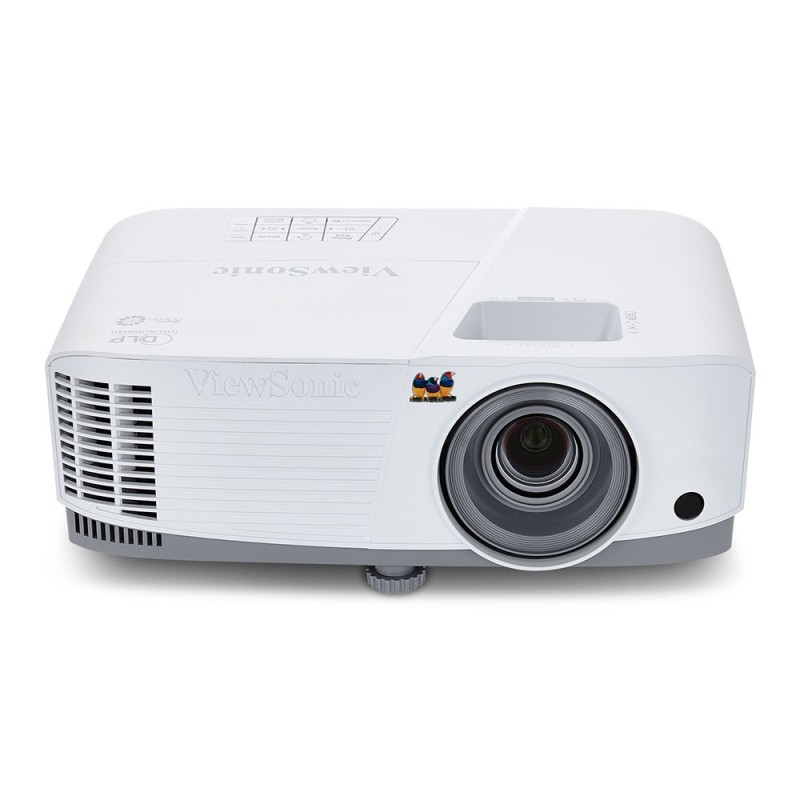
9. ViewSonic PA503W — Best Budget Bright Projector
Blunt truth: the PA503W is a presentation projector, not a home theater one — but it’s among the brightest things you can buy for the money. Afternoon backyard sports, a bright garage, a classroom with uncurtained windows: 3,800 lumens of “good enough” beats 2,000 lumens of beautiful-but-invisible.
For movies, WXGA resolution and business-tuned color are real limits. But for sheer visibility per dollar, nothing near this price throws this much light.
- Brightness: 3,800 lumens
- Resolution: WXGA (1280 × 800)
- Throw ratio: 1.55:1 – 1.70:1
- Light source: Lamp (UHP)
✓ Pros
- 3,800 lumens at a budget price — unmatched brightness per dollar
- Rock-solid reliability; a classroom and office workhorse
- Simple operation with good connectivity (HDMI, VGA)
- Long lamp life in eco mode
✗ Cons
- WXGA (1280×800) resolution — visibly soft for movies
- Single-chip DLP rainbow effect bothers sensitive viewers
- Business-grade color, not cinema-grade
- Loud fan and bulky chassis
Blunt truth: the PA503W is a presentation projector, not a home theater one — but it’s among the brightest things you can buy for the money. Afternoon backyard sports, a bright garage, a classroom with uncurtained windows: 3,800 lumens of “good enough” beats 2,000 lumens of beautiful-but-invisible.
For movies, WXGA resolution and business-tuned color are real limits. But for sheer visibility per dollar, nothing near this price throws this much light.
Buy from Amazon
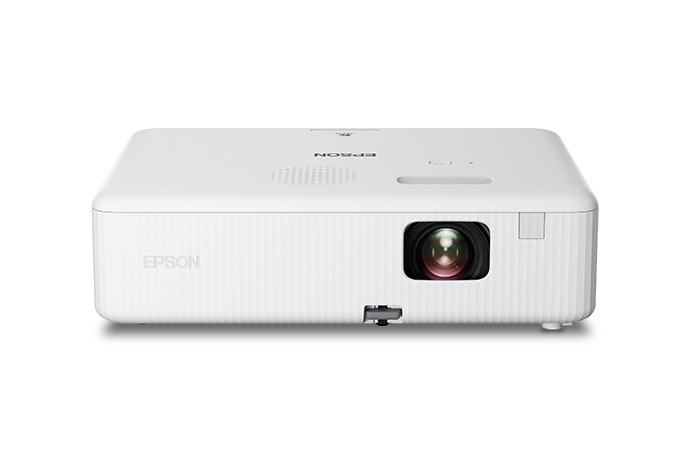
The CO-W01 is the cheapest honest 3,000 lumens from a name brand. Epson’s 3LCD means that brightness covers color as well as white — a real edge over budget DLPs with big white-lumen numbers and dull color. At 5.3 lbs, it’s genuinely portable, and Android TV makes it a standalone streamer (
official CO-W01 page).
Expectations: WXGA with manual focus for big, bright, casual images — vibe-over-pixels movie nights, daytime sports, kids’ gaming. Excellent value inside that brief.
- Brightness: 3,000 lumens (color & white)
- Resolution: WXGA (1280 × 800)
- Throw ratio: 1.27:1 – 1.71:1
- Light source: Lamp (UHE, 6,000 / 12,000 hrs)
✓ Pros
- 3,000 lumens of 3LCD color-accurate brightness at an entry price
- Compact and portable at just 5.3 lbs
- Android TV built in — no extra streaming device needed
- Up to 300-inch image for big rooms and outdoor use
✗ Cons
- WXGA resolution — fine for casual viewing, not for videophiles
- Manual focus and no optical zoom — setup takes patience
- Basic contrast; blacks go gray in ambient light
- 5W mono speaker is strictly backup-grade
The CO-W01 is the cheapest honest 3,000 lumens from a name brand. Epson’s 3LCD means that brightness covers color as well as white — a real edge over budget DLPs with big white-lumen numbers and dull color. At 5.3 lbs, it’s genuinely portable, and Android TV makes it a standalone streamer (
official CO-W01 page).
Expectations: WXGA with manual focus for big, bright, casual images — vibe-over-pixels movie nights, daytime sports, kids’ gaming. Excellent value inside that brief.
Buy from Amazon
Daylight Projector Buyer’s Guide 2026
ANSI vs ISO vs CVIA vs “LED Lumens” — Read the Fine Print
Brightness comes in at least four different “lumens” — not interchangeable:
- ANSI lumens — the honest standard, measured with a defined 9-point test pattern.
- ISO lumens — the international equivalent. Roughly 1:1 with ANSI; treat 2,300 ISO ≈ 2,300 ANSI.
- CVIA lumens — a Chinese standard worth roughly 80–85% in ANSI terms.
- “LED lumens” — not a standard at all; often 2–3x the ANSI equivalent. Ignore these numbers.
Only compare numbers sharing a standard. ANSI ≈ ISO; shave ~20% off CVIA; disregard “LED lumens.”
Get an ALR Screen — Worth More Than Extra Lumens
An ambient-light-rejecting (ALR) screen is the highest-ROI upgrade in daylight projection. Its optical layers reflect the projector’s beam toward viewers while absorbing off-axis room light — effectively adding 1,000+ “lumens” of perceived contrast. For a dedicated bright-room setup, ALR plus a mid-brightness projector beats max brightness on a white wall. Our
outdoor projector screen guide covers the options.
Room Treatment: Free Brightness
Before spending on lumens, spend nothing on the room. Close blinds near the screen wall. Paint it matte neutral gray — perceived blacks deepen enormously. Keep lamps and windows behind the seating. Run a smaller image in daylight: brightness per square inch is what your eyes see. These free steps routinely beat a 500-lumen upgrade. See our
living room projector guide for more.
Set Realistic Expectations
Even the best setup here won’t match a TV in a sunlit room — a TV emits light directly, while projector light makes a round trip to the screen and back, losing at every step. What you’re buying is a 100–150-inch image that’s enjoyable in bright conditions, which no sane-priced TV can offer. Judge against that bar — big, bright, watchable — not against a 65-inch OLED.
Lamp vs laser: lamps (UHD38, TH685P, PA503W) give the most lumens per dollar but dim and need paid replacements. Lasers hold brightness for 30,000 hours and run quieter — for heavy bright-room use, laser’s total cost of ownership often wins.
Contrast Ratio: The Daylight Spec Nobody Talks About
Everyone shops by lumens, but contrast ratio decides whether a bright image actually looks good. In a sunlit room, ambient light washes out blacks first — a projector with 3,000 lumens but a weak 2,000:1 contrast ratio will look flat and gray, while a 2,500-lumen model with 50,000:1 dynamic contrast keeps picture quality punchy. DLP models like the Optoma UHD38 use dynamic black tech to claw back contrast; 3LCD models like the Epson 2350 lean on superior color brightness instead. For image clarity in daylight, prioritize contrast alongside raw brightness — spec sheets that hide the contrast number are telling you something.
Screen Size, Screen Gain & Throw Distance
Brightness is relative to screen size: the same 3,000 lumens spread over 150 inches looks dimmer than over 100 inches. In bright rooms, consider running a slightly smaller image — it is the cheapest brightness upgrade there is. Screen gain multiplies the effect: a high-gain screen (1.3–1.5 gain) focuses reflected light toward your seats, effectively boosting perceived brightness by 30–50% versus a standard 1.0-gain white screen. Pair it with an ALR surface for the best of both worlds. Also check throw distance before buying — measure your room and confirm the projector can fill your desired screen size from where you will mount it. Short-throw models simplify projector placement in tight living rooms.
Light Control Beats Lumens: Curtains, Glare & Seating
No projector out-muscles direct natural light on the screen. Light control is free performance: blackout curtains on windows facing the screen wall, blinds angled to bounce daylight at the ceiling, and seating arranged so no window sits behind viewers (that is the main source of window glare on screen). Even partial control — closing one set of curtains — can matter more than 500 extra lumens. Also mind the viewing angle: high-gain and ALR screens are directional, so keep primary seats within roughly 30 degrees of center for the brightest image.
LED vs Laser vs Lamp for Bright Rooms
Each light source has a daylight trade-off. Lamp projectors (UHP) deliver the most lumens per dollar but dim over time and need paid replacements. Laser projectors hold brightness for 20,000–30,000 hours and run quieter — the best long-term pick for daily bright-room use. LED projectors are compact, silent, and instant-on, but most top out at lower brightness, making them better for controlled lighting than true daylight duty. Match the light source to how many hours a day the projector will fight ambient light.
Don’t Ignore Native Resolution
A bright blurry image is still blurry. Native resolution — the projector’s true pixel count, not pixel-shifting claims — sets the ceiling for detail. For daylight viewing at 100+ inches, true 4K (or quality pixel-shifted 4K) keeps text and fine detail crisp even when ambient light softens perceived sharpness. Do not sacrifice resolution for lumens alone; the best daylight projectors on this list balance both.
Daylight Projector FAQs
Can you actually watch a projector in daylight?
Yes, with managed conditions. A 2,500+ lumen projector in a curtained room, or outdoors in shade or late afternoon, gives a watchable image. Direct sunlight on the screen defeats everything — shade the screen and even mid-brightness models perform.
How many lumens do I need for a bright room?
Curtained living room: 2,500+ ANSI/ISO lumens minimum, 3,000+ comfortable. Shaded outdoor: 2,000+ works on smaller screens. Fighting real ambient light: 3,500–4,000. Always compare within the same lumen standard.
Are “LED lumens” the same as ANSI lumens?
No. ANSI/ISO lumens follow published standards and compare across brands. “LED lumens” is marketing with no standard — often 2–3x the ANSI equivalent. If the brightness looks too good for the price, check which standard the number uses.
Do I need a special screen for daytime viewing?
Not required, but an ALR screen is the biggest image-quality upgrade for bright rooms — it rejects off-axis room light while reflecting the projector’s beam to viewers. On a white wall, even bright projectors wash out faster.
Should I just buy a TV instead for a bright room?
At 55–75 inches in extreme brightness, a TV wins outright. A projector’s case is size: 100–150 inches of watchable image in bright conditions, which no sane-priced TV matches. If the big screen is the point, buy lumens and manage the light.
Conclusion: Which Daylight Projector Should You Buy?
For most buyers, the
Optoma UHD38 is the rational pick — 4,000 lumens of true 4K is the most daylight capability per dollar. Want laser longevity? The
JMGO N1S Ultra 4K holds 3,000 ANSI lumens for 30,000 hours; the
Hisense-Vidda C3 Ultra adds Dolby Vision and the best placement flexibility. Bright-room gamers:
BenQ TH685P, no contest. Tight budgets:
ViewSonic PA503W or
Epson CO-W01 for honest brightness.
Manage the light you can, buy lumens for what you can’t — and for after-dark viewing, our
best outdoor projectors guide has you covered.