Best Home Theater Projector for the Money 2026 — Top 10 Reviews & Buying Guide
Finding the best home theater projector for the money isn’t about buying the cheapest projector — it’s about finding where each extra dollar stops buying you visible picture quality. A well-chosen mid-range projector in a dark room will embarrass a flagship in a bright one, and the difference between a good 1080p projector and a great one is mostly contrast, color accuracy, and black levels — not the resolution number on the box.
We’ve researched the 2026 lineup and ranked the ten projectors that deliver the most cinematic image per dollar — from budget 1080p workhorses to 4K flagships that punch far above their weight. No ultra-premium halo products here: every pick earns its place on value.
Top 10 Best Home Theater Projectors for the Money 2026 — Comparison Table
| Projector | Resolution | Brightness | Best For | Buy |
|---|---|---|---|---|
| Epson Home Cinema 3800 | 4K PRO-UHD | 3,000 lumens | Best overall value | Buy from Amazon |
| BenQ HT3560 | True 4K DLP | 2,200 ANSI lumens | Best for dedicated dark rooms | Buy from Amazon |
| Epson Home Cinema 2350 | 4K PRO-UHD | 2,800 lumens | Best mid-range all-rounder | Buy from Amazon |
| Optoma UHD38 | True 4K DLP | 4,000 lumens | Best bright 4K value | Buy from Amazon |
| ViewSonic PX701-4K | 4K UHD | 3,200 ANSI lumens | Best 4K gaming value | Buy from Amazon |
| BenQ HT2060 | 1080p | 2,300 ANSI lumens | Best 1080p LED home theater | Buy from Amazon |
| BenQ TH575 | 1080p | 3,800 ANSI lumens | Best bright-room value | Buy from Amazon |
| Optoma HD146X | 1080p | 3,600 lumens | Best budget 1080p theater | Buy from Amazon |
| XGIMI Horizon Pro | 4K (pixel-shift) | 1,500 ISO lumens | Best smart 4K all-rounder | Buy from Amazon |
| Anker Nebula Cosmos 4K SE | 4K UHD | ~1,800 ANSI lumens | Best value smart 4K laser | Buy from Amazon |
Best Home Theater Projector for the Money 2026 — Detailed Reviews
1. Epson Home Cinema 3800 — Best Overall Home Theater Value 2026
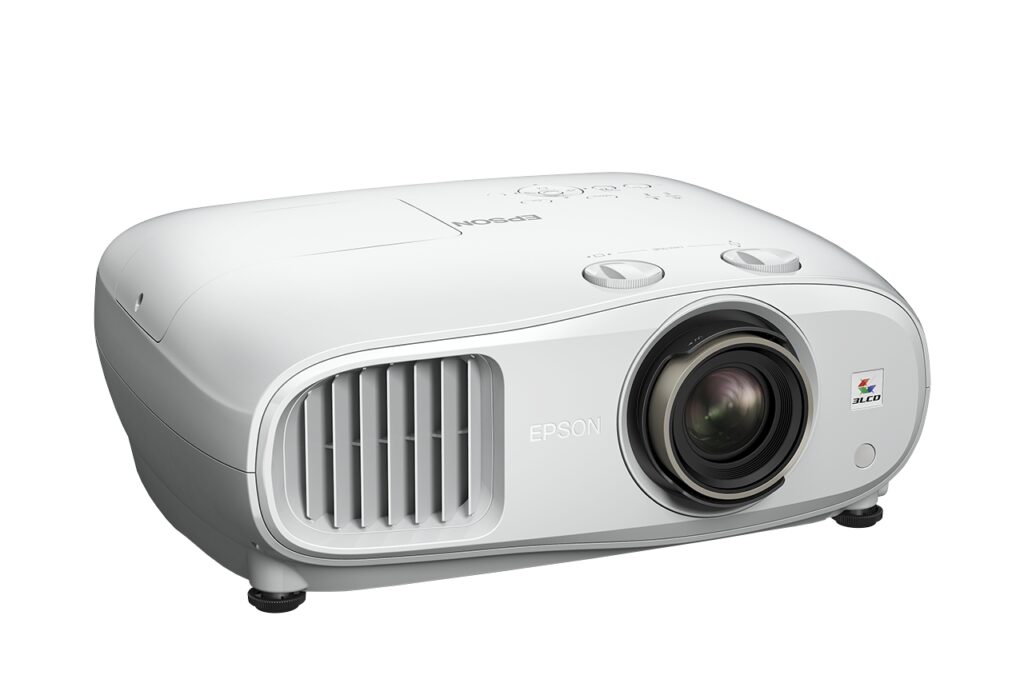
Year after year, the Epson Home Cinema 3800 remains the projector we recommend to the most people — because it’s the rare product where the safe choice is also the smart-money choice. Its 4K PRO-UHD image (pixel-shifted 1080p chips producing a true 4K on screen) delivers the sharpness 4K buyers expect, while Epson’s 3-chip 3LCD engine does something most DLP rivals at this level can’t: rich, accurate color with zero rainbow effect.
What makes it the value king for home theater specifically is the combination of 3,000 lumens and a 100,000:1 dynamic contrast ratio. In a dark room, black levels are deep enough that letterbox bars genuinely disappear, and shadow detail in dark scenes — the thing that separates “watching a movie” from “watching a bright rectangle” — is excellent. Color accuracy out of the box is superb; this is a projector that looks right without a calibration disc.
See our Best Projectors Under $500 and Best 4K Projectors Under $2000 guides.
Placement flexibility seals it: generous zoom plus vertical and horizontal lens shift means you can mount it off-center and still get a perfectly squared image — a huge deal in real living rooms where the ideal ceiling spot is never where you want it. Downsides are honest ones: it’s a large chassis that needs a dedicated spot, the fan is audible in whisper-quiet scenes, and built-in speakers are basic (but you’d never use projector speakers in a real theater anyway).
Key specs: 4K PRO-UHD · 3,000 lumens · 3LCD (no rainbow effect) · 100,000:1 contrast · HDR10/HLG · zoom + lens shift
✓ Pros
- Superb color accuracy — the enthusiast’s benchmark at this level
- No rainbow effect (3LCD), great for sensitive viewers
- Bright enough for some ambient light, superb in the dark
- Flexible placement with zoom and lens shift
✗ Cons
- Large chassis — needs a dedicated spot
- Fan audible in very quiet scenes
- Basic built-in speakers (plan external audio)
Why buy it: The best picture-per-dollar in home theater, full stop. If you buy one projector from this list blind, make it this one.
2. BenQ HT3560 — Best for Dedicated Dark Rooms
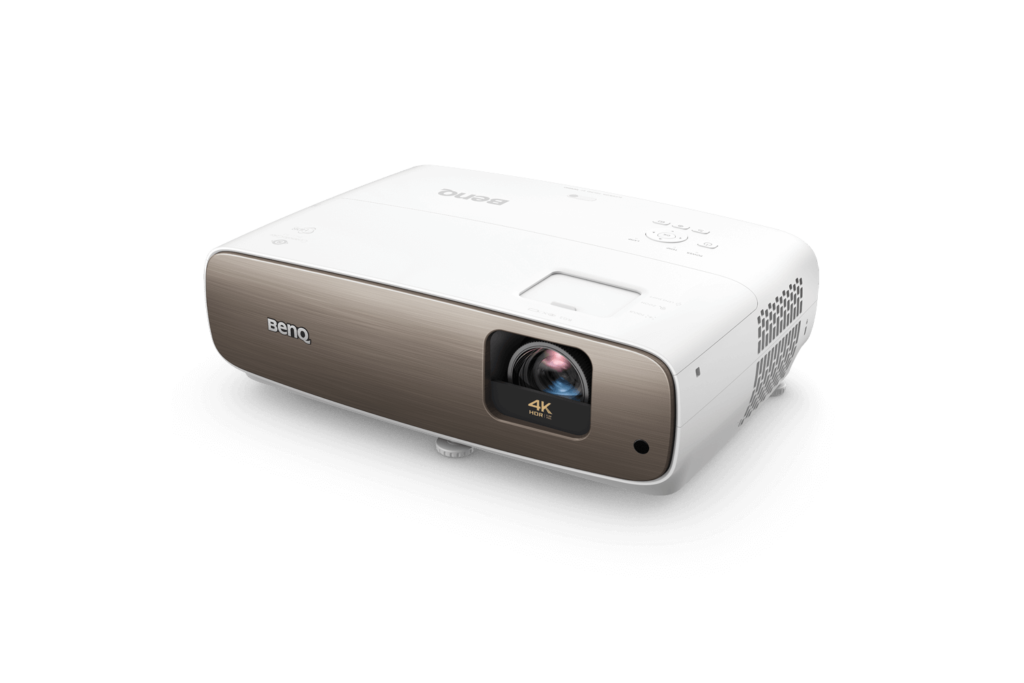
If you have a light-controlled room — and for movies, you should — the BenQ HT3560 delivers the most film-like image for the money. It’s a true 4K DLP projector built around a six-segment RGB color wheel, which trades some brightness for dramatically better color: 95% DCI-P3 coverage, the wide color gamut used for actual cinema masters. In a dark room, movies look the way the colorist intended — rich, saturated, and natural.
At 2,200 ANSI lumens, it’s deliberately not a brightness champion. BenQ made the right trade for movie lovers: sacrifice lumens you’ll never use in a dark room, spend them on color depth and black levels instead. The result is the best contrast and shadow detail of any projector near this tier — dark scenes in prestige TV and film noir look genuinely cinematic rather than muddy gray.
HDR-PRO tone mapping handles HDR10 and HLG content intelligently, and BenQ’s calibration controls are the most comprehensive at this level if you ever want to dial it in. The honest caveats: this projector belongs in a dark room (ambient light kills what makes it special), it’s a lamp-based design with replacement costs down the road, and single-chip DLP means a small minority of viewers will see rainbow artifacts.
Key specs: True 4K DLP · 2,200 ANSI lumens · 95% DCI-P3 · RGBRGB color wheel · HDR-PRO · HDR10/HLG
✓ Pros
- Most cinematic color at this level — true DCI-P3
- Excellent black levels and shadow detail in dark rooms
- Outstanding calibration controls
- True 4K sharpness
✗ Cons
- Needs a dark room — not for bright living rooms
- Lamp-based (replacement costs over time)
- Possible rainbow effect for sensitive viewers
Why buy it: For dedicated dark-room movie watching, nothing delivers more film-like image per dollar.
3. Epson Home Cinema 2350 — Best Mid-Range All-Rounder
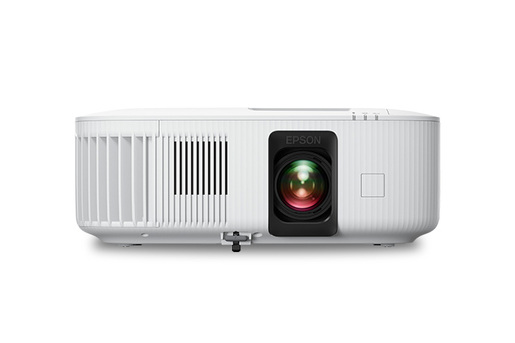
The Home Cinema 2350 is the “one projector” answer — the pick for the buyer who wants movies, sports, streaming, and the occasional game from a single box without fussing over settings. It pairs Epson’s 4K PRO-UHD pixel-shifting with 2,800 lumens of 3LCD brightness and built-in Android TV, which means it works in a dark theater room and survives a living room with the lamps on.
For home theater duty, the 3LCD engine is the star: accurate, vibrant color with no rainbow effect, and strong contrast for the class. The pixel-shifted 4K image is visibly sharper than plain 1080p on a 120-inch screen — not quite native-4K crisp, but close enough that most viewers won’t care. Android TV with licensed apps means no streaming stick dangling off the back; it behaves like a big smart TV.
Placement is forgiving thanks to zoom and lens shift, and it doubles as an excellent everyday projector — bright enough for daytime sports, refined enough for movie night. The trade-offs: fan noise is noticeable in quiet dialogue scenes (eco mode helps), black levels are good rather than class-leading, and like all lamp projectors, you’ll eventually buy a replacement bulb.
Key specs: 4K PRO-UHD (pixel-shift) · 2,800 lumens · 3LCD · Android TV · zoom + lens shift
✓ Pros
- Great all-rounder: movies, sports, streaming in one box
- No rainbow effect, superb 3LCD color
- Built-in Android TV — no dongle needed
- Flexible placement
✗ Cons
- Fan audible in quiet scenes
- Black levels good, not class-leading
- Lamp replacements down the road
Why buy it: The smartest single purchase for most people — one projector that does everything well.
4. Optoma UHD38 — Best Bright 4K Value
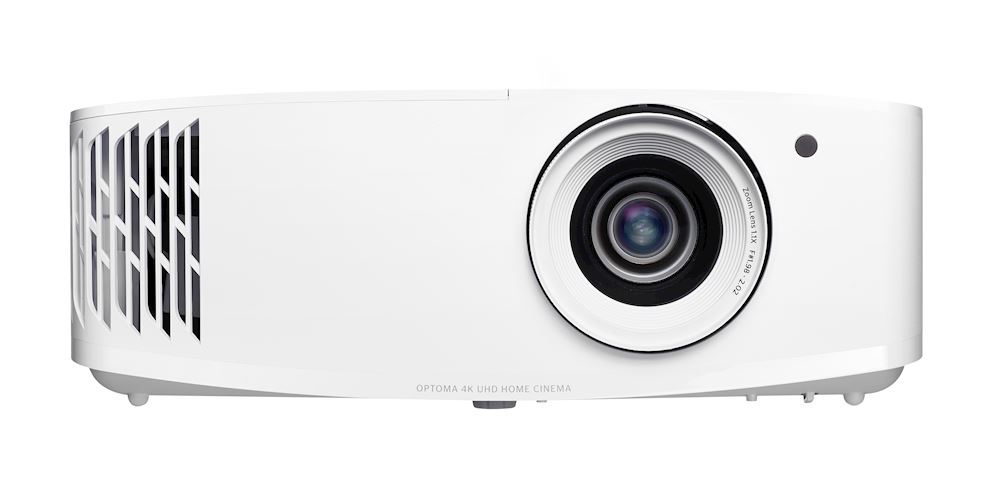
The UHD38 is the answer to the most common home theater problem: the room isn’t perfectly dark. With 4,000 lumens of true 4K DLP brightness, it powers through ambient light that would wash out dimmer “cinema” projectors — and in a dark room, that headroom translates into punchy HDR highlights and a big, vivid image up to 150 inches and beyond.
For movies specifically, the picture is sharp (true 4K, not pixel-shift), colors are lively, and the 4.2ms input lag at 1080p/240Hz makes it a genuine dual-purpose pick for gamers — movie night and game night from one box. HDR10 and HLG support round out the spec sheet.
The honest framing: this is a brightness-first projector, not a black-level specialist. In a pitch-black dedicated theater, the BenQ HT3560’s contrast will look more cinematic. But most people don’t have a bat cave — they have a living room with windows — and in the real world, the UHD38’s brightness delivers the more satisfying image more of the time. Single-chip DLP means possible rainbow artifacts for sensitive viewers, and there’s no smart platform built in.
Key specs: True 4K DLP · 4,000 lumens · 4.2ms input lag (1080p/240Hz) · HDR10/HLG
✓ Pros
- Enormous brightness — handles ambient light with ease
- True 4K sharpness, great for big screens
- Excellent for gaming too (4.2ms lag)
- Strong value for the spec sheet
✗ Cons
- Black levels lag behind dark-room specialists
- No built-in smart apps
- Possible rainbow effect for sensitive viewers
Why buy it: Maximum 4K brightness per dollar — the living-room home theater champion.
5. ViewSonic PX701-4K — Best 4K Gaming Value
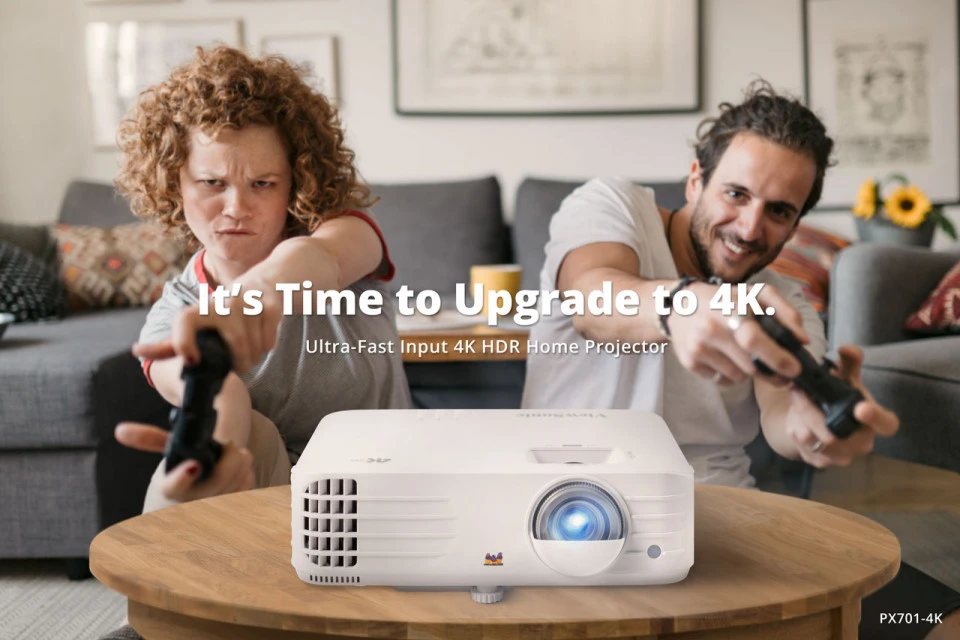
The PX701-4K earns its place on a home theater list because modern home theaters do double duty — and this is the projector that refuses to compromise on either. For movies: sharp 4K UHD, 3,200 ANSI lumens, and HDR support on screens up to 150 inches. For gaming: a 240Hz refresh rate with 4.2ms input lag at 1080p (around 18ms at 4K/60) — numbers that embarrass projectors costing far more.
In dark-room movie viewing, the image is crisp and punchy, with good color out of the box and enough brightness to keep HDR highlights lively. It’s not the contrast king — dedicated cinema projectors dig deeper blacks — but at this level of brightness and speed, the overall package is remarkable.
Setup is straightforward with auto keystone, and dual HDMI ports cover a console plus a streaming box simultaneously. The caveats are the usual DLP ones: possible rainbow artifacts, no smart platform (add a Fire TV Stick), and fan noise under load. But as a movies-plus-gaming value play, it’s nearly unbeatable.
Key specs: 4K UHD · 3,200 ANSI lumens · 240Hz / 4.2ms gaming · HDR · dual HDMI
✓ Pros
- Superb gaming specs at a home theater price
- Bright, sharp 4K image for movies
- Great for big screens (up to 150″)
- Strong overall value
✗ Cons
- Contrast not class-leading
- No smart apps built in
- Fan noise in quiet scenes
Why buy it: The best projector for households where movie night and game night share the same screen.
6. BenQ HT2060 — Best 1080p LED Home Theater
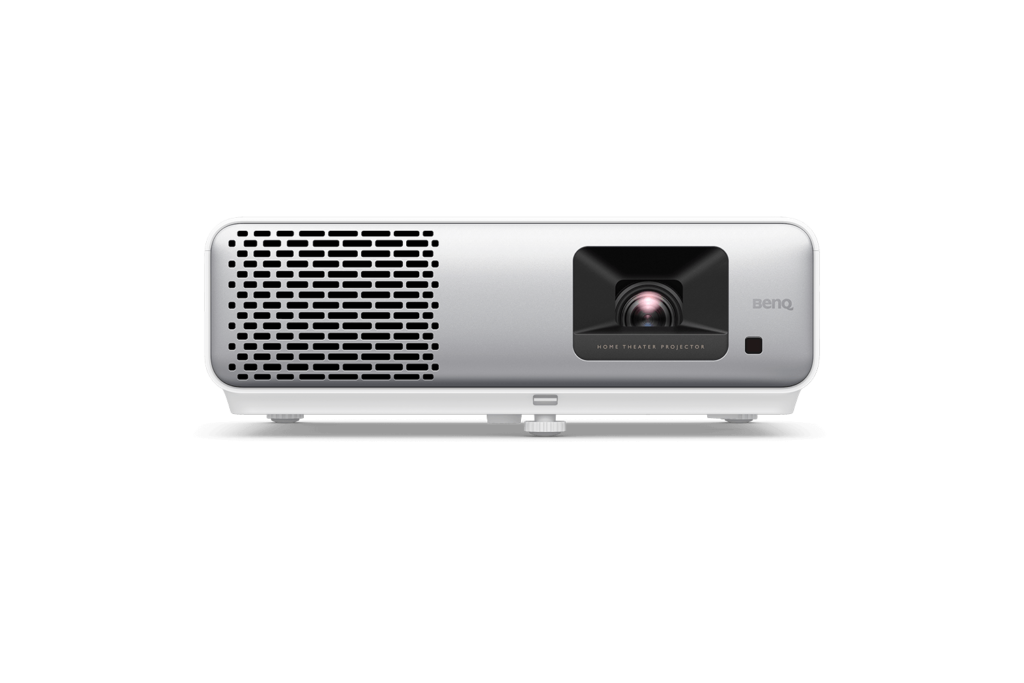
Here’s the contrarian pick that home theater veterans quietly love: the BenQ HT2060 proves that in a dark room, a superb 1080p image beats a mediocre 4K one. Its 4LED light source delivers 2,300 ANSI lumens with 98% Rec.709 color coverage, 20,000-hour lifespan, and — critically for movie night — instant on/off with no lamp warm-up or cool-down.
Why it belongs on a value list: the LED engine means consistent brightness and color for years with zero lamp costs, and BenQ’s CinematicColor tuning gives it genuinely film-like color that embarrasses brighter but cruder rivals. Contrast is strong for the class (15,000:1), black levels are respectable, and the 16.7ms input lag at 1080p makes it perfectly capable for casual gaming.
The LED advantage most reviews underplay: fan noise. LED projectors run cooler and quieter than lamp equivalents, and in a quiet dialogue scene, silence is a feature. Downsides are straightforward: it’s 1080p in a 4K world (fine at typical viewing distances on screens under ~120 inches), there’s no smart TV platform, and maximum brightness won’t fight daylight — this is a dark-room projector, proudly.
Key specs: 1080p · 2,300 ANSI lumens · 4LED (20,000-hr) · 98% Rec.709 · 16.7ms gaming · lens shift
✓ Pros
- Superb 1080p color — film-like image
- 20,000-hour LED life, zero lamp costs
- Quiet running — great for dialogue-heavy films
- Excellent setup flexibility (lens shift, zoom)
✗ Cons
- 1080p, not 4K
- Dark-room only — modest brightness
- No smart TV platform
Why buy it: The connoisseur’s budget pick — LED longevity, quiet operation, and color that punches above its resolution.
7. BenQ TH575 — Best Bright-Room Value
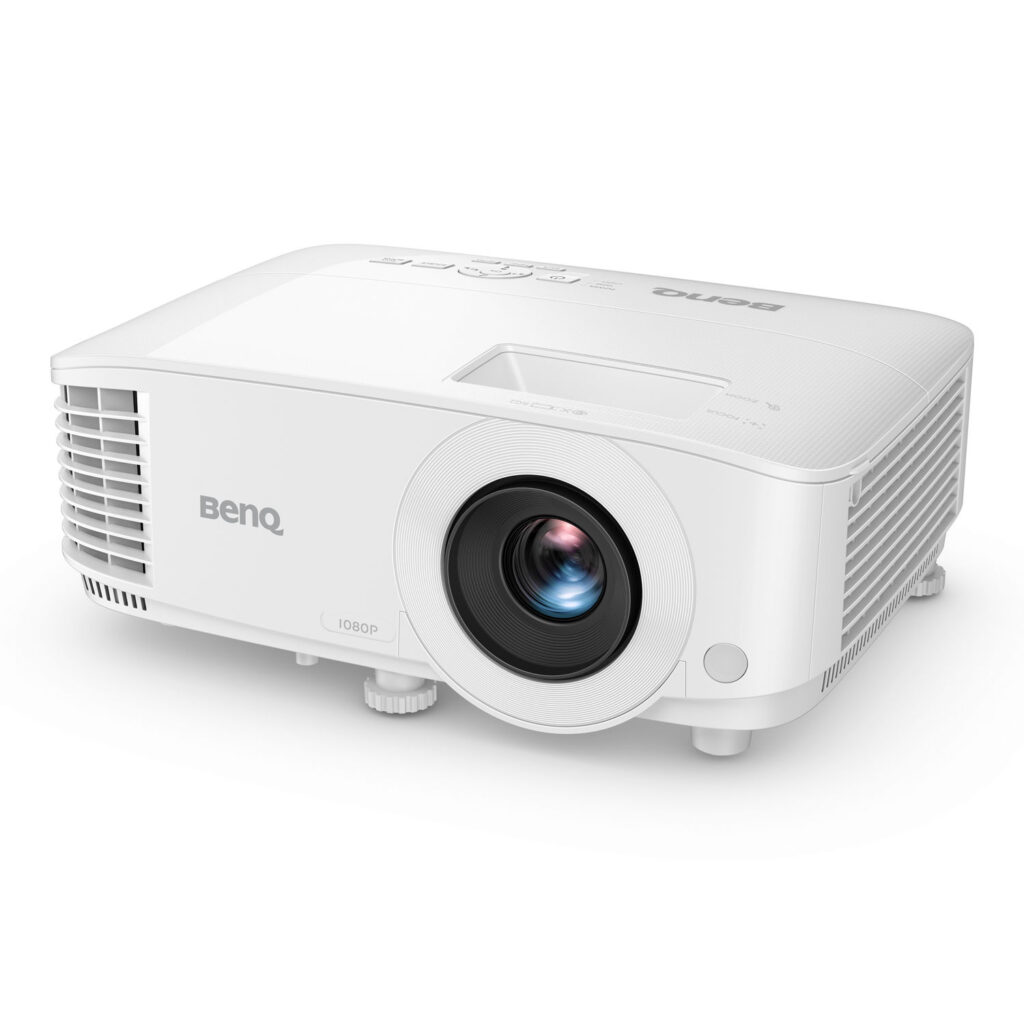
Not everyone has a dark room — and the TH575 is the projector for everyone else. With 3,800 ANSI lumens, it’s one of the brightest home theater-capable projectors anywhere near its tier, which means movies, sports, and shows stay punchy with the curtains open and the lights half-on. For family rooms and multi-use spaces, that practicality beats theoretical contrast every time.
The image itself is classic BenQ: accurate colors, clean 1080p sharpness, and a low-lag mode (16.7ms) that keeps it viable for gaming. Sports look fantastic — bright, vivid, with clean motion on a huge screen. It’s the projector that turns Sunday football into an event.
The value framing is honest: you’re buying lumens, not black levels. In a dark room, a contrast specialist will look more cinematic. But value is about your room, not a test lab — and for bright rooms, nothing near this level touches it. No smart apps (budget a streaming stick), and it’s a lamp projector, so factor in eventual bulb costs.
Key specs: 1080p · 3,800 ANSI lumens · 16.7ms low input lag · 1.2x zoom
✓ Pros
- Outstanding brightness for the money
- Great for sports and daytime viewing
- Accurate BenQ color out of the box
- Good gaming performance
✗ Cons
- Black levels are modest — not a dark-room specialist
- No smart apps built in
- Lamp-based (replacement costs over time)
Why buy it: If your room has windows, this is the value pick — brightness you can actually use.
8. Optoma HD146X — Best Budget 1080p Theater
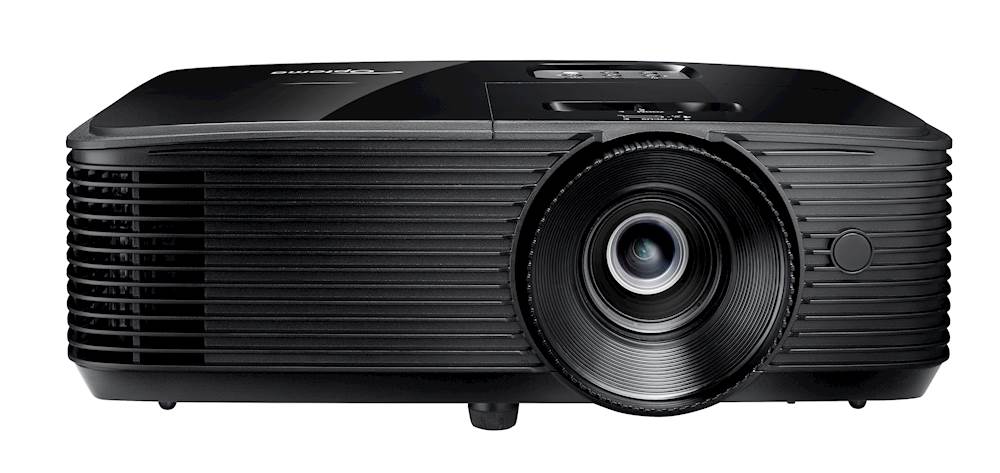
The HD146X is the entry ticket to real home theater: a 1080p projector with 3,600 lumens, a 25,000:1 contrast ratio, and Optoma’s Enhanced Gaming Mode (16ms) — the classic formula that has made it a perennial bestseller. For a first dedicated theater room on a tight budget, it’s genuinely hard to beat.
What you get for the money is remarkable: a bright, sharp image that fills 120+ inches, punchy colors, and enough contrast that movies look like movies, not presentations. The gaming mode makes it a legitimate dual-purpose pick for console players. Lamp life stretches to 15,000 hours in eco mode, keeping running costs low.
The honest limits: it’s 1080p (perfectly fine for the money, but know what you’re buying), single-chip DLP with possible rainbow artifacts, no smart platform, and black levels that are good-for-the-tier rather than great. But as a first projector — the one that gets someone hooked on big-screen cinema — it’s the value benchmark everything else is measured against.
Key specs: 1080p · 3,600 lumens · 25,000:1 contrast · 16ms Enhanced Gaming Mode · 15,000-hr lamp (eco)
✓ Pros
- Tremendous value — real theater image, entry-level outlay
- Bright enough for some ambient light
- Good gaming performance
- Long lamp life keeps costs down
✗ Cons
- 1080p resolution
- Black levels good, not great
- No smart apps; possible rainbow effect
Why buy it: The classic first home theater projector — maximum cinema per dollar at the entry level.
9. XGIMI Horizon Pro — Best Smart 4K All-Rounder
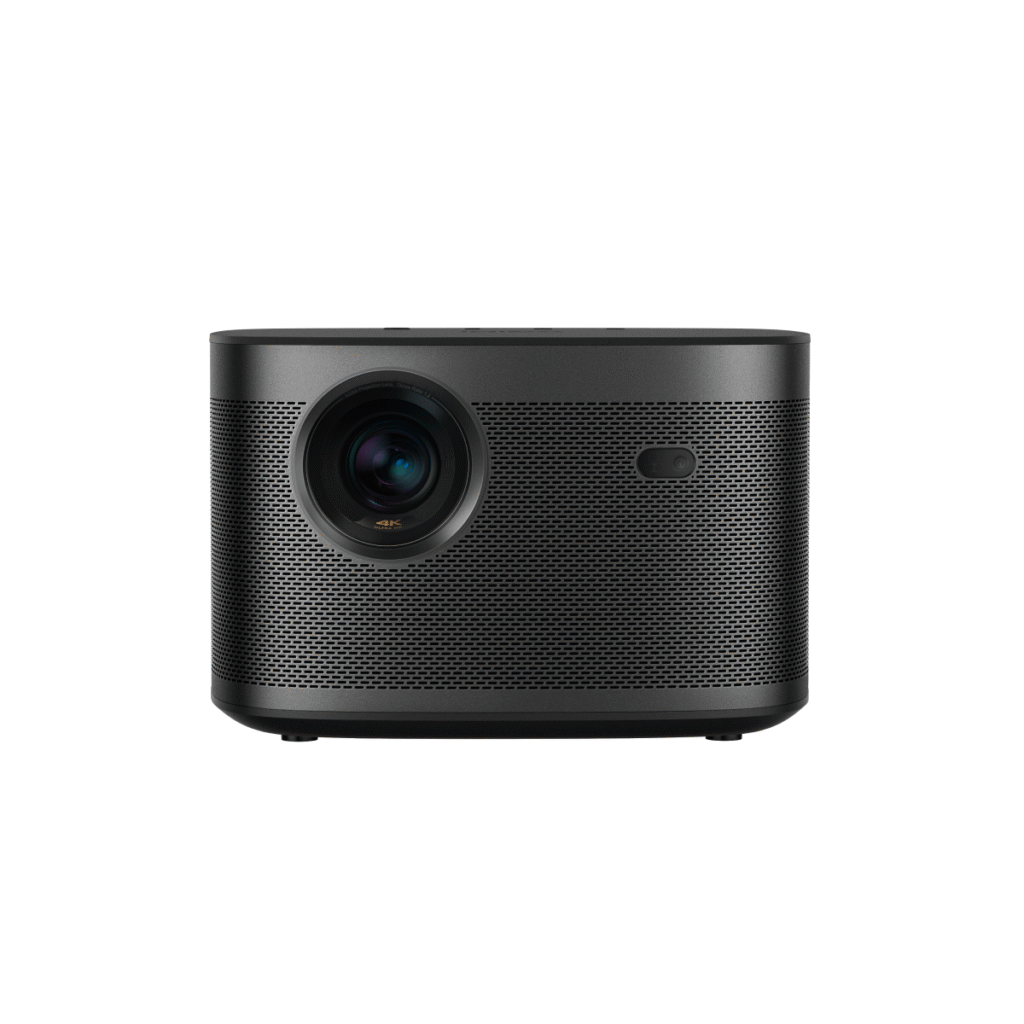
The Horizon Pro is the home theater projector for people who hate fiddling with projectors. Pixel-shifted 4K, 1,500 ISO lumens, Android TV with properly licensed apps, Harman Kardon speakers that are genuinely good, and XGIMI’s automatic setup — autofocus, auto keystone, screen alignment — that squares the image in seconds even when the projector sits at an angle.
For movie watching, the image is sharp and colorful, and the sheer convenience factor is enormous: one box, one remote, no streaming stick, no soundbar required for casual viewing, no 15-minute setup ritual. It’s the closest thing to a big-screen smart TV experience in projector form.
The value case is about total cost and friction, not raw specs: add up a basic projector plus a streaming stick plus a soundbar, and the Horizon Pro’s all-in-one proposition starts looking very sensible. The honest caveats: 1,500 ISO lumens means dark rooms only, it’s pixel-shift rather than native 4K, and brightness-per-dollar lags the lamp-based bruisers. But for hassle-free movie nights, it’s superb.
Key specs: 4K (pixel-shift) · 1,500 ISO lumens · Android TV (licensed) · Harman Kardon audio · auto setup
✓ Pros
- True all-in-one: smart apps, good sound, auto setup
- Sharp, colorful 4K image
- Effortless operation — great for non-technical households
- Compact, living-room friendly
✗ Cons
- Dark-room only — modest brightness
- Pixel-shift, not native 4K
- Premium for the brightness on offer
Why buy it: The easiest path to big-screen movie nights — no extra boxes, no setup fuss.
10. Anker Nebula Cosmos 4K SE — Best Value Smart 4K Laser
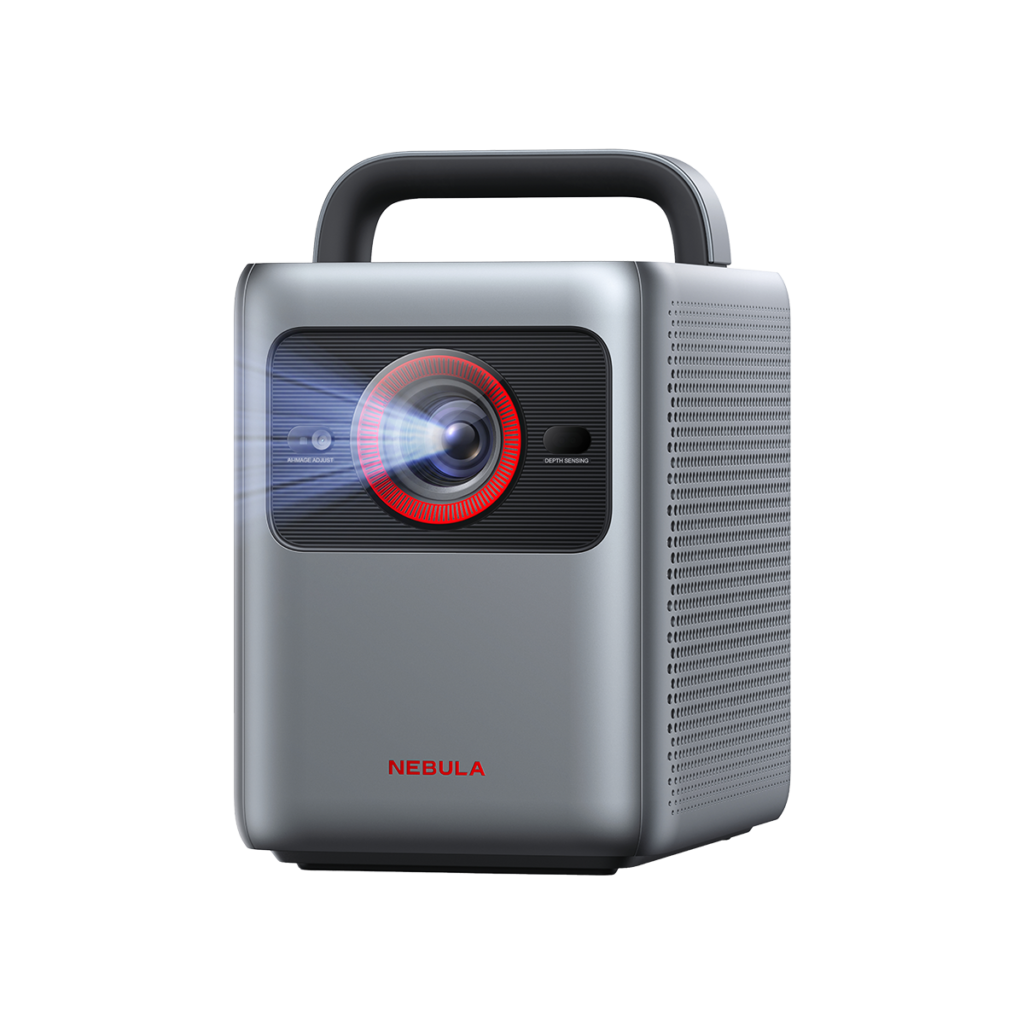
The Cosmos 4K SE is what happens when laser technology trickles down to sane budgets: a hybrid Laser+LED light engine (Anker’s HybridBeam) delivering around 1,800 ANSI lumens of 4K image with the instant-on, long-life benefits of solid-state lighting — no lamp to replace, ever, with brightness that stays consistent for years.
For home theater, the laser advantage is real: better color volume than lamp rivals, excellent longevity (25,000+ hours), and Google TV with licensed apps including proper Netflix support. Setup is automatic, and the image is sharp 4K with good HDR handling.
As a value proposition, it’s the “buy it and forget it for a decade” pick — the total cost of ownership story is compelling when you factor in zero lamp replacements. The trade-offs: brightness is moderate (dark rooms), it’s not the contrast champion, and Anker’s projector pricing sits above the budget lamp brigade. But for a smart, maintenance-free 4K theater, it’s the value sweet spot in the laser category.
Key specs: 4K UHD · ~1,800 ANSI lumens · Laser+LED HybridBeam · 25,000+ hr life · Google TV (licensed)
✓ Pros
- Laser longevity — no lamp costs, ever
- Sharp 4K with good color volume
- Proper Google TV with licensed Netflix
- Automatic setup, quiet operation
✗ Cons
- Moderate brightness — dark rooms
- Not the deepest black levels
- Costs more than budget lamp models
Why buy it: The maintenance-free 4K theater — laser longevity and smart features in one value package.
How We Selected the Best Home Theater Projectors for the Money in 2026
Value in home theater isn’t the lowest sticker price — it’s the most cinematic image per dollar over the projector’s life. We judged every pick on contrast and black levels (what actually makes movies look like movies), color accuracy, brightness matched to realistic rooms, fan noise (silence matters in quiet scenes), total cost of ownership (lamp replacements vs laser/LED longevity), and 2026 availability. No discontinued models, no ultra-premium flagships, no projectors that only shine in a test lab.
Home Theater Projector Buyer’s Guide 2026
Contrast and black levels matter more than resolution
Here’s the secret the spec sheets bury: for movies, contrast beats resolution. A 1080p projector with deep blacks and good shadow detail looks more cinematic than a washed-out 4K projector — because movies are mostly dark scenes, dialogue in dim rooms, and letterbox bars. When comparing projectors for home theater, look at contrast ratio and, better yet, reviewer impressions of black levels. The BenQ HT3560 and Epson 3800 earn their places on this list primarily through contrast, not pixel counts.
3LCD vs DLP: the rainbow effect question
Two technologies dominate home theater: 3LCD (Epson) uses three chips for red, green, and blue — no rainbow effect, superb color brightness. Single-chip DLP (BenQ, Optoma, ViewSonic) uses a spinning color wheel — sharper native 4K, but a small minority of viewers see brief rainbow flashes in high-contrast scenes. If you’ve never noticed rainbows on a DLP, you’ll be fine. If you’re sensitive, or buying for family viewing where anyone might be, 3LCD (Epson 3800, 2350) is the safe choice.
Fan noise: the forgotten home theater spec
In a quiet dialogue scene, a loud projector fan is as distracting as a bad seat. Lamp-based projectors run hotter and louder; LED and laser models run cooler and quieter. Check the eco-mode noise rating before buying for a dedicated room — and know that “eco mode” also extends lamp life, so it’s worth using. The BenQ HT2060’s quiet LED operation is a genuine home theater advantage that never shows up in a spec-sheet shootout.
Throw distance: measure your room first
The most common buyer’s mistake is skipping the tape measure. Standard home theater projectors need roughly 10–13 feet for a 100–120 inch image — check each model’s throw ratio against your room. Lens shift (Epson 3800, 2350; BenQ HT2060) is worth real money: it lets you mount off-center without keystone distortion, which degrades the image. If your room is shallow, look at our short throw guide instead.
Lamp vs laser vs LED: the real cost of ownership
The sticker isn’t the full price. A lamp projector needs a replacement bulb every 3,000–6,000 hours — over a decade of heavy use, that’s several bulbs. Laser (25,000–30,000 hours) and LED (20,000–30,000 hours) effectively never need replacement, with brightness that stays consistent instead of dimming as the lamp ages. When a laser or LED model costs somewhat more upfront, do the decade math before calling it expensive.
Frequently Asked Questions
What is the best home theater projector for the money in 2026?
For most buyers, the Epson Home Cinema 3800 — 4K PRO-UHD, superb 3LCD color with no rainbow effect, and flexible placement. Dedicated dark room? The BenQ HT3560 delivers the most film-like image. Tightest budget? The Optoma HD146X is the classic entry-level theater projector.
Is 4K worth it for a home theater projector?
Yes, with a caveat: on screens 100 inches and up at normal seating distances, 4K (including good pixel-shifting like Epson’s PRO-UHD) is visibly sharper. But never sacrifice contrast for resolution — a high-contrast 1080p projector looks more cinematic than a washed-out 4K one.
How many lumens do I need for a home theater?
In a light-controlled room, 1,500–2,500 lumens is plenty — more isn’t better in the dark, it just washes out blacks. For rooms with some ambient light, 3,000+ lumens (Epson 3800, Optoma UHD38, BenQ TH575) keeps the image punchy.
Do I need a projector screen, or is a white wall fine?
A smooth white wall works surprisingly well in a dark room, but a dedicated screen improves brightness uniformity, contrast, and color — it’s the biggest picture upgrade after the projector itself. For a real theater, budget for one.
3LCD or DLP — which is better for movies?
Both can be excellent. 3LCD (Epson) gives better color brightness and zero rainbow effect — safest for family viewing. DLP (BenQ, Optoma) typically offers sharper native 4K and better motion. Choose 3LCD if anyone watching is rainbow-sensitive; otherwise pick on contrast and color.
How long do projector lamps last?
Lamp projectors typically run 3,000–6,000 hours per bulb (up to 15,000 in eco mode on some models). At 4 hours a night, that’s roughly 2–4 years per lamp. Laser and LED projectors last 20,000–30,000 hours — effectively a decade or more with no replacements.
Can I use a home theater projector for gaming too?
Absolutely — many picks here double as gaming projectors. Look for input lag under 20ms for casual play (all our gaming-capable picks qualify) and under 10ms for competitive. The ViewSonic PX701-4K (4.2ms) and Optoma UHD38 (4.2ms) are the standouts.
Should I buy a 1080p projector in 2026?
If the budget is tight and the room is dark, yes — a great 1080p projector (BenQ HT2060, Optoma HD146X) beats a mediocre cheap “4K” one every time. Spend the savings on a screen and sound. But if you can stretch to pixel-shift or true 4K, the extra sharpness on big screens is real.
Final Verdict
The best home theater projector for the money in 2026 is the Epson Home Cinema 3800 — the safest, smartest single purchase for most movie lovers. Dedicated dark room and chasing the most film-like image? BenQ HT3560. Bright living room? Optoma UHD38 or BenQ TH575. Gaming household? ViewSonic PX701-4K. Tightest budget? Optoma HD146X remains the entry-level benchmark.
One rule above all: match the projector to your room, not to a spec sheet. Contrast in your room beats lumens on paper, every time.