Best Projector for Church 2026 — Top 5 Picks for Sanctuaries
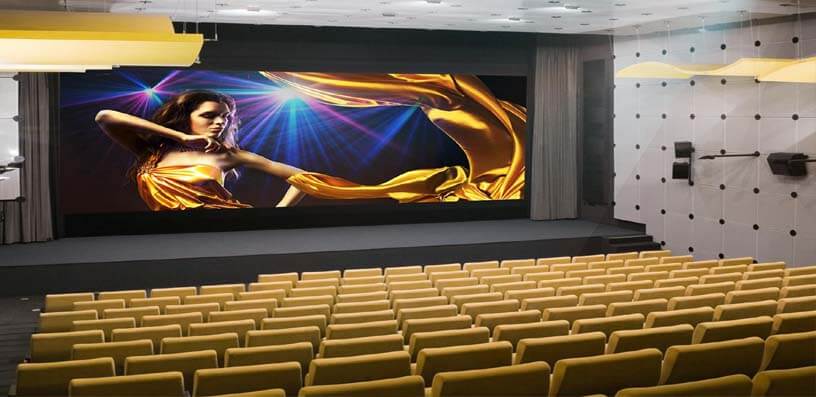
A church projector has a different job from every other projector on this site. A home theater projector gets a dark room. A sports bar projector gets a crowd that tolerates a washed-out corner. A church projector gets a sanctuary with the house lights up, a congregation that needs to read every word of every lyric and scripture verse from the back row, and a volunteer tech team that has to make it work every Sunday without a service call.
So the honest starting point is this: buy brightness, throw flexibility, and a laser engine — in that order. Lyrics and scripture are mostly bright text on a dark or image background, which means a dim projector does not just look worse, it becomes unreadable.
Every pick on this best projector for church list is laser, because a church projector runs several services a week plus rehearsals, weddings, funerals, and midweek events. A lamp projector at that pace means bulb swaps, gradual dimming, and a bill nobody budgeted for. A laser engine runs 20,000–30,000 hours with no bulb changes — roughly a decade or more of Sundays.
We ranked this 2026 lineup by what actually matters in a worship space: honest brightness that survives house lights, throw and lens-shift flexibility for ceiling mounts in rooms with balconies, beams, and high ceilings, a quiet fan that does not compete with prayer, and installation features (HDBaseT, edge blending, network control) that let one projector — or two matched ones — cover the whole room. Every pick is from an established manufacturer with published, measured specs.
Best Church Projectors 2026 — Comparison Table
| Projector | Resolution | Brightness | Throw Ratio | Best For | Buy |
|---|---|---|---|---|---|
| Epson PowerLite L265F | 1080p Full HD | 4,600 lumens (color + white) | 1.32–2.12 | Best for mid-size churches (150–400 seats) | Buy from Amazon |
| ViewSonic LS901-4K | 4K UHD (3840×2160) | 5,500 ANSI lumens | 1.2–2.04 | Best 4K for large sanctuaries | Buy from Amazon |
| Optoma ZU820T | WUXGA (1920×1200) | 8,800 lumens (7,400 ANSI) | 1.25–2.0 | Best large-venue value (lens included) | Buy from Amazon |
| BenQ LU935ST | WUXGA (1920×1200) | 5,500 ANSI lumens | 0.81–0.89 | Best short-throw (tight rooms, low ceilings) | Buy from Amazon |
| Epson EB-PU1008W | WUXGA + 4K enhancement | 8,500 lumens (color + white) | 1.44–2.32 (standard lens) | Best pro install (biggest sanctuaries) | Buy from Amazon |
How We Picked These
A church projector has five jobs, in this order:
Job one: beat the house lights. Sanctuaries are rarely dark. House lights stay up for hymn books, Bibles, and safety, and many sanctuaries have windows. For a mid-size room with controlled lighting, 4,600 lumens is the floor. For a large or bright sanctuary, budget 5,500–7,500. One critical rule: only compare ANSI/ISO lumens from established manufacturers, and for Epson’s 3LCD models, check that color brightness matches white brightness — lyrics in color on a worship background need color brightness, not just white.
Job two: fit the room you actually have. Sanctuaries are not rectangles on a spec sheet. Balconies, beams, chandeliers, and a 20–40 foot ceiling-to-screen distance decide the throw ratio and lens shift you need. A long zoom range and generous lens shift turn a difficult mount into a one-visit install. The short-throw pick exists for the opposite problem: a low ceiling or a projector mounted close to the screen.
Job three: survive the schedule. Sunday services plus rehearsals, midweek groups, weddings, and funerals add up to far more hours than a home projector ever sees. Laser engines (20,000–30,000 hours, sealed against dust) are the only sane choice for weekly church duty. We went all-laser, no exceptions.
Job four: stay quiet and stay readable. A loud fan is audible in prayer and in quiet moments. Every pick here runs mostly in the low-to-mid 30s dB at full brightness or quieter in Eco (the BenQ reaches 39 dBA at its loudest). And for readability, resolution matters less than brightness — 1080p/WUXGA is sharp enough for lyrics at 200+ feet on a large screen, while 4K earns its place when the screen is very large or the congregation sits close.
Job five: connect to the booth, not the ceiling. The projector lives on the ceiling; the sources live in the tech booth. HDBaseT (video over a single network cable up to 100m), multiple HDMI inputs, and network control (Crestron/Extron, Epson Projector Management) separate installed projectors from portable ones. If your run from booth to projector is over 25 feet, HDBaseT or a fiber HDMI run is not optional — it is the install.
Best Projector for Church 2026 — Detailed Reviews
1. Epson PowerLite L265F — Best for Mid-Size Churches (150–400 Seats)
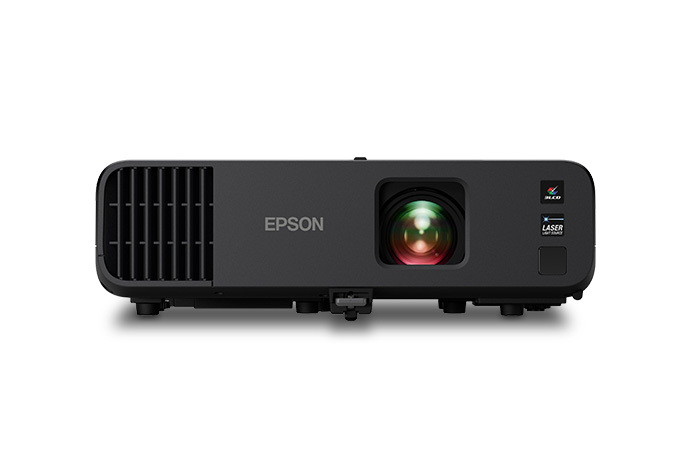
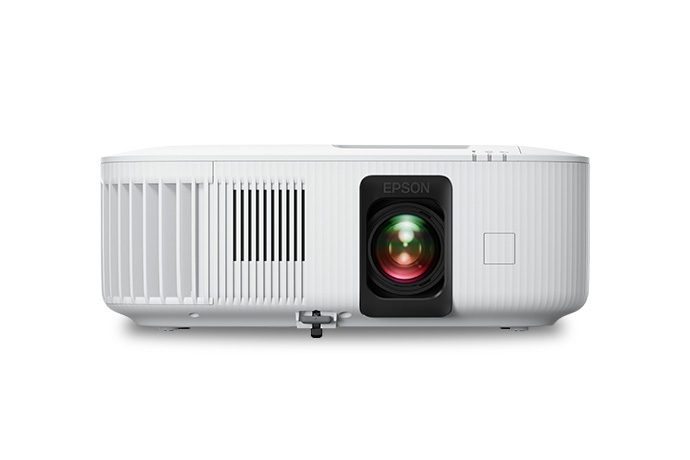
The L265F is the projector we would spec for a typical mid-size church sight unseen: 4,600 lumens of both color and white brightness from a 3LCD laser engine, 1080p resolution, and a 1.32–2.12 throw ratio with 1.6x zoom. That combination covers the most common church install — a ceiling mount 12–25 feet from a 120–180 inch screen — with room to spare, and the 3LCD design means no rainbow effect during long services and no color-brightness gap behind the headline number.
What makes it a church projector rather than just a bright business projector is the low-maintenance, volunteer-friendly package. The laser light source is rated 20,000 hours (30,000 in Eco), so nobody on the tech team is tracking bulb hours. Built-in wireless with Miracast and Epson iProjection lets a laptop or tablet cast without running a cable to the front — handy for guest speakers and funeral slideshows. Built-in edge blending and split-screen support multi-projector setups if the room grows, and 360-degree placement plus Epson Projector Management (monitor up to 2,000 networked projectors) covers the day the church adds a second room.
The honest caveats: there is no lens shift, so the mount position has to be right — do the throw math before drilling (see the buying guide below). At 37 dB on full brightness, it is audible directly overhead in a quiet chapel, so mount it over the congregation, not over the pulpit, and use Eco when the room allows. And 4,600 lumens is the right number for a mid-size room with controlled lighting, not for a sunlit sanctuary with a glass wall — if that is your room, step up to the 5,500+ lumen picks below.
✓ Pros
- Equal color and white brightness — lyrics stay punchy, not washed out
- Laser, no lamps — years of Sundays with no bulb budget
- Built-in wireless casting — guest laptops, no cable run to the front
- Edge blending + network management — grows with the church
✗ Cons
- No lens shift — mount position must be exact
- 37 dB at full brightness — noticeable in a very quiet chapel
- 4,600 lumens is not enough for a very bright, sunlit sanctuary
2. ViewSonic LS901-4K — Best 4K for Large Sanctuaries
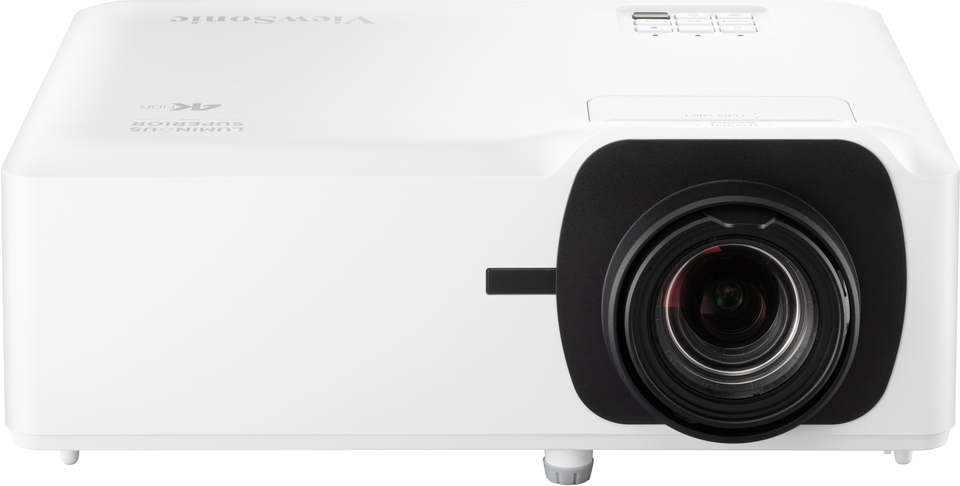
The LS901-4K is the pick for the large sanctuary that wants the sharpest possible lyrics and scripture on a very big screen. It pairs 5,500 ANSI lumens with true 4K (3840×2160) resolution, a laser engine rated 20,000 hours (30,000 in SuperEco), and a 1.2–2.04 throw ratio with 1.7x optical zoom. On a 200–300 inch screen, the 4K resolution is not a luxury — it is what keeps small text readable from the back row.
The install features are what justify it over a cheaper bright projector. Vertical lens shift, H/V keystone, 4-corner adjustment, 360-degree projection, and curved-screen support forgive the awkward mount positions that old sanctuaries impose. Two HDMI 2.0 inputs cover the main feed and a backup, LAN + RS-232 join the venue control system, and the dual 15W speakers cover announcements in a fellowship hall even though the sanctuary will use the house sound system. The sealed laser engine and 30,000-hour SuperEco rating mean the same decade-of-Sundays longevity as the rest of this list.
The honest caveats: the vertical lens shift range is limited (0% / −21%), so it does not forgive as much vertical offset as the Optoma or Epson pro models below — check the offset against your mount height before committing. 4K also demands a 4K-capable feed chain; if your switcher and cabling are still 1080p, you will not see the full benefit until the rest of the chain catches up. And like every pick here, the built-in speakers are a backup, not a substitute for the house PA.
✓ Pros
- True 4K — sharpest text on this list for very large screens
- 5,500 ANSI lumens — holds up with house lights on
- 1.7x zoom + 4-corner + 360-degree — flexible in old buildings
- 30,000-hour SuperEco laser — very low long-term cost
✗ Cons
- Limited vertical lens shift — check mount height carefully
- Needs a 4K feed chain to show its full advantage
- Built-in speakers are a backup, not a PA replacement
3. Optoma ZU820T — Best Large-Venue Value (Lens Included)
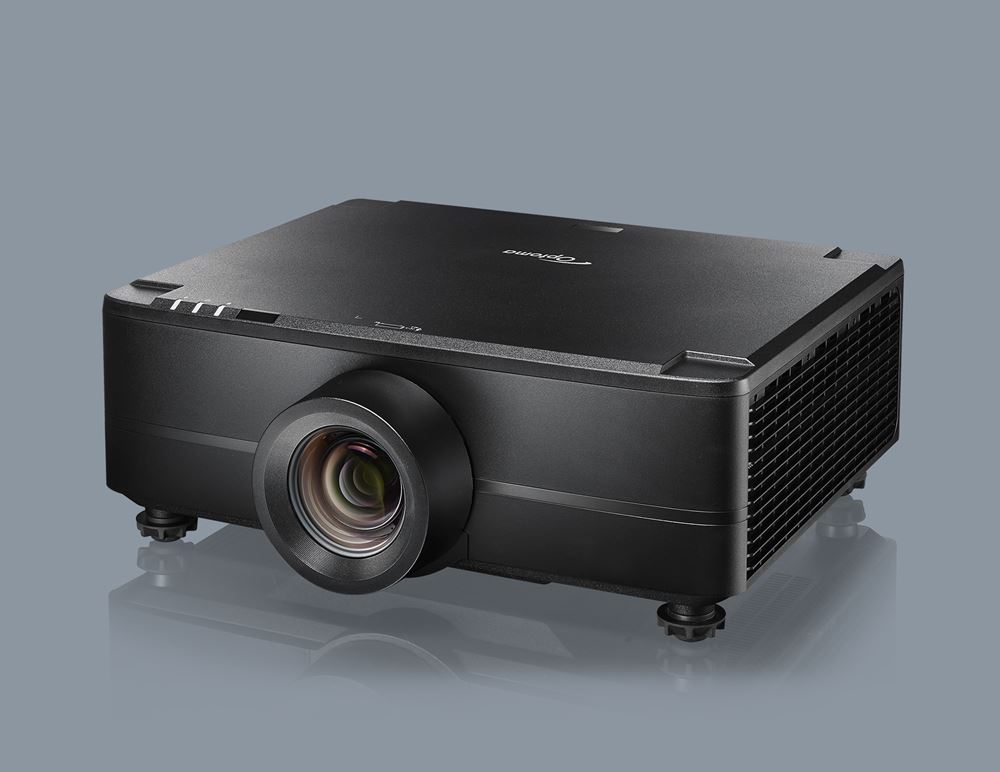
The ZU820T is the large-venue pick that does not punish the budget with a separate lens purchase. It is a ProScene installation projector: 8,800 lumens (7,400 ANSI), WUXGA (1920×1200) resolution, and a fixed lens with 1.6x motorized zoom (1.25–2.0 throw) that reaches screens from the back of a large room. The WUXGA resolution is a quiet bonus for churches that also run announcement slides, song schedules, or sermon notes on the same display — the extra vertical pixels fit 16:10 content natively.
The install features are what you are really buying. Full motorized lens shift (±55% vertical, ±25% horizontal) and four-corner correction forgive imperfect mount positions. HDBaseT carries video, audio, and control over a single Cat6 cable up to 100 meters — one clean run from the tech booth to the ceiling, no HDMI extenders.
Built-in edge blending and warping support multi-projector widescreen setups. The DuraCore laser is sealed (IP5X) against dust, rated for 24/7 operation, and good for 30,000 hours. It accepts 4K signals and is HDR10 compatible.
The honest caveats: at nearly 31 pounds, this is a two-person mount job — budget for a proper ceiling mount and a second pair of hands on install day. The fixed lens, generous as it is, still has limits — for a very short or very long throw, the interchangeable-lens Epson below is the answer. And at this brightness, the projector deserves a proper screen (see the buying guide) — a painted wall wastes 8,800 lumens.
✓ Pros
- 8,800 lumens with lens included — strongest value per lumen here
- Motorized lens shift + HDBaseT — cleanest long booth-to-ceiling run
- Edge blending + warping — multi-projector widescreen ready
- Sealed 24/7-rated laser, 30,000 hours — built for all-day church use
✗ Cons
- Nearly 31 lbs — needs a proper mount and a two-person install
- Fixed lens — extreme throws need the interchangeable-lens pick below
- Needs a proper screen to show its brightness advantage
4. BenQ LU935ST — Best Short-Throw (Tight Rooms, Low Ceilings)
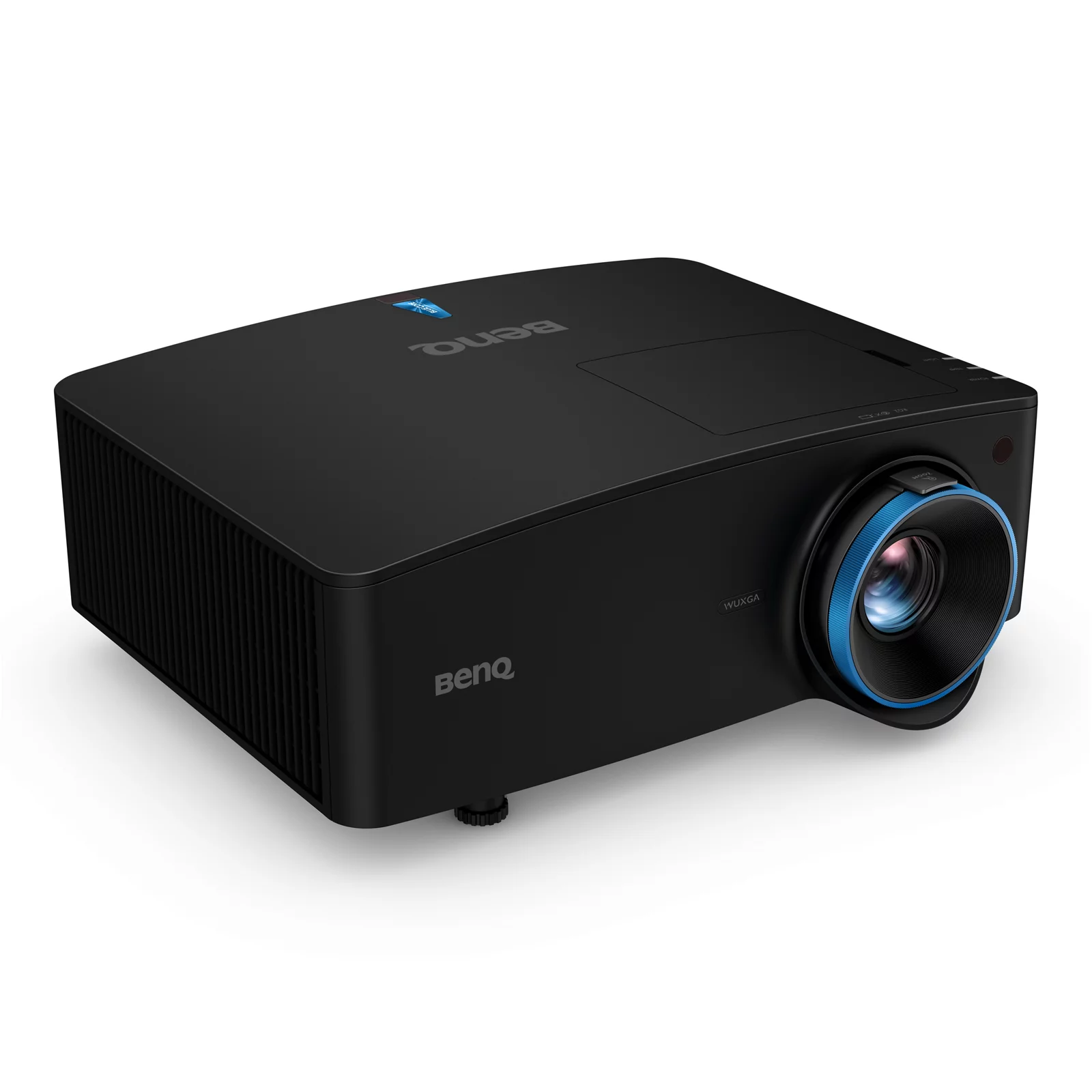
Not every worship space has a 30-foot ceiling run. Chapels, fellowship halls, classrooms, and churches with low ceilings or a projector tucked above the back pew need a short throw — and the LU935ST is the short-throw pick that does not sacrifice brightness to get it. Its 0.81–0.89 throw ratio fills a 100-inch image from roughly 6 feet away, with 5,500 ANSI lumens from a WUXGA laser engine behind it.
The install flexibility is unusually generous for a short throw. Manual lens shift (±60% vertical, ±23% horizontal) plus 2D keystone (±30° each way) forgive off-center mounts, and 360-degree + portrait projection cover the odd installs — a side-wall display, a foyer sign, a youth-room vertical screen. HDBaseT, dual HDMI, LAN, and RS-232 cover the booth run and the control system, and the 20,000-hour laser means the same no-bulb longevity as the rest of this list.
The honest caveats: the 1.1x zoom is narrow, so screen size is mostly set by mounting distance — measure twice, mount once. Short-throw projectors are also more sensitive to screen flatness; a wavy pull-down screen shows its flaws more at short throw, so budget for a fixed-frame or tensioned screen if the room is a permanent install. And 5,500 lumens, while strong, is a step below the 7,500–8,500 lumen picks — for a very large or very bright sanctuary, the long-throw picks pull ahead.
✓ Pros
- 0.81–0.89 short throw — big image from a few feet away
- 5,500 lumens — brightest short-throw pick on this list
- Generous lens shift + 360-degree / portrait — fits awkward rooms
- HDBaseT + LAN control — booth-friendly
✗ Cons
- Narrow 1.1x zoom — mounting distance sets screen size
- Sensitive to screen flatness — needs a good fixed or tensioned screen
- Not the pick for a very large or very bright sanctuary
5. Epson EB-PU1008W — Best Pro Install (Biggest Sanctuaries)
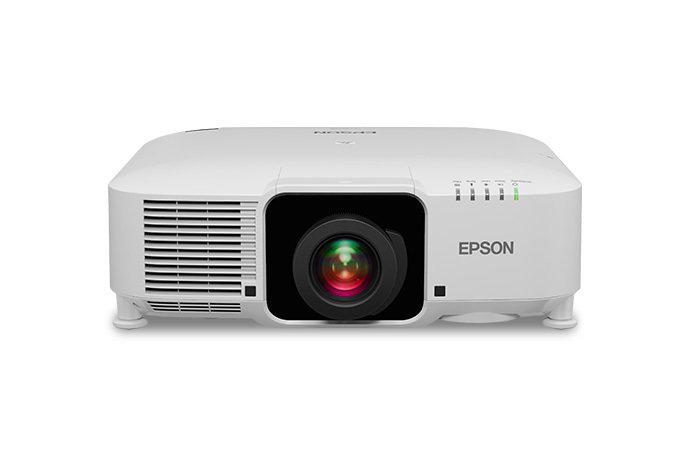
The EB-PU1008W is the professional answer for the biggest sanctuaries — the room with 800+ seats, a balcony, a 300-inch-plus screen, and a throw distance that defeats fixed-lens projectors. It delivers 8,500 lumens of both color and white brightness from a 3LCD laser engine, WUXGA resolution with 4K enhancement, and — the reason it is on this list — interchangeable powered lenses (11 optional lenses) that adapt to almost any throw distance in the building.
The pro-install feature set is complete: powered zoom, focus, and lens shift (±67% vertical, ±30% horizontal with the standard lens), HDBaseT, a built-in media player for lobby and pre-service content, Epson Projector Management for network monitoring, and a filterless, dust-resistant design. The laser is rated 20,000 hours (30,000 in Extended), and the projector supports multi-projection blending for widescreen or dual-screen sanctuaries.
The honest caveats, stated plainly because they decide the purchase: the standard lens (ELPLM08) is sold separately, so the real installed cost is projector + lens + mount + pro install — this is a quote-from-an-integrator purchase, not a buy-and-hang purchase. At 16.3 kg plus lens, it needs a proper rated mount and a structural check on old ceiling timbers. And for any church under ~500 seats, this is more projector than the room needs — the L265F or LS901-4K above will do the same job for far less.
✓ Pros
- 8,500 lumens — brightest pick, for the biggest rooms
- Interchangeable lenses — fits almost any throw distance
- Powered everything — zoom, focus, shift from the ground
- Pro control + media player — full install-grade feature set
✗ Cons
- Lens sold separately — real cost is projector + lens + install
- Heavy (16.3 kg + lens) — needs a rated mount and structural check
- Overkill under ~500 seats — smaller picks do the job for less
Best Church Projector 2026 – Buying Guide
1. Brightness first: match lumens to room size and light
Use this as a starting point, then adjust for windows and screen size: up to ~200 seats with controlled lighting → 4,600 lumens (L265F). 200–500 seats or a bright room → 5,500 lumens (LS901-4K, LU935ST). 500+ seats, a balcony, or a very bright sanctuary → 7,400–8,500 lumens (ZU820T, EB-PU1008W). If you are unsure, go one step brighter — a bright projector can always be dimmed in Eco, but a dim projector cannot be made brighter. For the full brightness explainer, see How Many Lumens Do I Need for a Projector?
2. Throw distance and lens shift decide the install
Before you buy anything, measure two numbers: the distance from the planned mount point to the screen, and the screen width. Divide distance by width — that is your required throw ratio, and it must fall inside the projector’s throw range.
Then check lens shift: the bigger the vertical shift, the more the projector can sit above or below screen center without keystone distortion. Keystone correction is a last resort, not a plan — it softens the image and throws away pixels. If the room has a balcony rail, a chandelier, or a beam in the way, the short-throw or interchangeable-lens picks exist for exactly that reason.
3. Screen matters as much as the projector
A painted wall or a wrinkled pull-down screen wastes a good projector. For a permanent sanctuary install, a fixed-frame screen with a matte white or low-gain surface gives the most even brightness across the room. For a multipurpose hall that also shows movies, an ambient-light-rejecting (ALR) screen helps when the house lights stay up. For hanging and placement, see How to Hang a Projector Screen from the Ceiling.
4. Sound, control, and the booth run
Every projector on this list has built-in speakers, and none of them replaces the house PA — run audio to the sound system, not to the projector. For control, a single Cat6 HDBaseT run from the booth beats a long HDMI cable (which fails past ~25 feet without an extender).
If the church already runs ProPresenter, EasyWorship, or similar worship software from a booth PC, confirm the projector’s control protocol (Crestron, Extron, PJLink, Epson Projector Management) matches the room controller before the install day.
5. Budget for the whole install, not just the box
The projector is roughly half the installed cost in a pro job. Budget for: a rated ceiling mount, the cable run (HDBaseT or fiber HDMI), a screen, a power drop at the mount point, and — for the interchangeable-lens pick — the lens itself. For a volunteer install of the L265F or LS901-4K, the extras are a mount, a cable, and a screen. For the EB-PU1008W, get an integrator quote first; the lens choice alone decides whether the install works.
Frequently Asked Questions
How many lumens do I need for a church projector?
For a mid-size sanctuary (150–400 seats) with controlled lighting, 4,600 lumens is the floor. For a large or bright sanctuary, budget 5,500–7,500, and for the biggest rooms with balconies, 8,500. Always compare ANSI/ISO lumens from real manufacturers — inflated numbers from no-name brands are meaningless in a lit room.
Should a church buy a laser or lamp projector?
Laser. A church projector runs several services a week plus events, so a lamp projector means regular bulb swaps and gradual dimming. A laser engine runs 20,000–30,000 hours with no bulb changes — roughly a decade or more of Sundays — and holds its brightness far better over that life.
Is 4K worth it for a church?
On a very large screen (200+ inches) where the back row reads small text, yes — 4K keeps lyrics and scripture sharp at a distance. On a 120–150 inch screen at typical sanctuary distances, 1080p/WUXGA is already sharp enough, and brightness and throw flexibility matter more than extra pixels.
Can one projector cover a sanctuary with a balcony?
Often yes, if the throw ratio and lens shift fit — the balcony usually means a longer throw and a higher mount, which favors the long-throw and interchangeable-lens picks. For very wide rooms or a center aisle that blocks one image, two matched projectors with edge blending (supported by the L265F, ZU820T, and EB-PU1008W) give a cleaner result than one oversized image.
How far should the projector sit from the screen?
Divide your mount-to-screen distance by the screen width to get the throw ratio you need, then match it to the projector’s throw range in the table above. For a 150-inch-wide screen at 20 feet, you need a throw ratio near 1.6 — inside the range of the L265F, LS901-4K, and ZU820T, but not the short-throw LU935ST.
The Bottom Line
For most churches, the Epson PowerLite L265F is the right answer: bright enough, laser, wireless-friendly, and priced for a real church budget. If the sanctuary is large and the screen is very big, step up to the ViewSonic LS901-4K for 4K sharpness or the Optoma ZU820T for maximum brightness per dollar with the lens included.
If the room is tight or the ceiling is low, the BenQ LU935ST solves the geometry no long-throw projector can. And for the biggest sanctuaries, get an integrator quote around the Epson EB-PU1008W — it is the only pick here that adapts to almost any throw in the building.
If you are also planning the rest of the room, compare the install-focused picks in Best Projector for Sports Bar 2026 and the brightness-first picks in Best Daylight Projector 2026 — the same brightness and throw logic applies, with different room constraints.