Best Projector for Living Room 2026 — Top 10 Picks for Bright Multi-Use Spaces
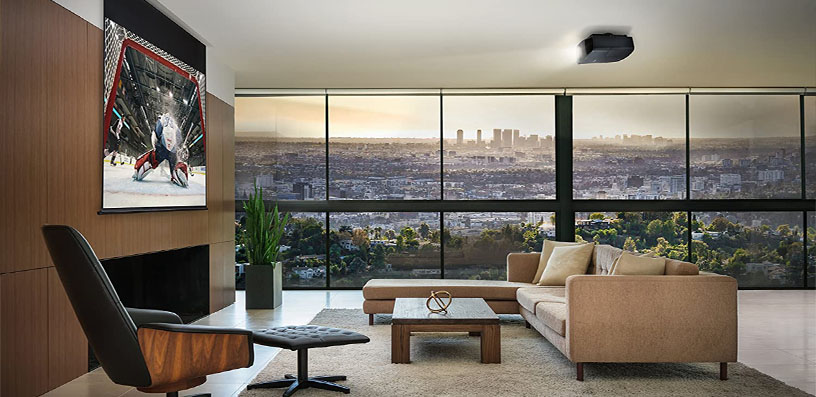
The living room is the hardest in the house for a projector. A dedicated theater lets you kill the lights and mount everything perfectly. A living room gives you windows you can’t fully cover, white ceilings, lamps, and a projector that must handle Sunday football at 2 PM and movie night at 9 PM.
Most “best projector” lists fail here because they rank by home-theater criteria—black levels in darkness, calibrated color—when what you need is a best projector for living room with brightness that survives daylight, a smart OS your family will use, quiet fans, and a flexible setup. Every pick below meets a minimum brightness floor for ambient light. On a tight budget? See our best projectors under $1000 guide.
Top 10 Living Room Projectors — Quick Comparison
| Product | Brightness | Resolution | Smart OS | Best For | Buy |
|---|---|---|---|---|---|
| XGIMI Horizon Ultra | 2,300 ISO lumens | 4K UHD | Android TV 11 | Best overall | Buy from Amazon |
| Hisense-Vidda C3 Pro | 3,000 ANSI lumens | 4K UHD | VIDAA | Bright rooms | Buy from Amazon |
| Dangbei Mars Pro 2 | 2,450 ISO lumens | 4K UHD | Google TV | 4K laser value | Buy from Amazon |
| JMGO N1S Pro | 2,250 ISO lumens | 4K UHD | Google TV | Flexible placement | Buy from Amazon |
| Epson Home Cinema 2350 | 2,800 lumens | 1080p + 4K shift | Android TV | 3LCD color | Buy from Amazon |
| BenQ TH685P | 3,500 ANSI lumens | 1080p | None (add stick) | Sports & gaming | Buy from Amazon |
| Anker Nebula Cosmos Laser 4K | 2,200 ANSI lumens | 4K UHD | Android TV 10 | Smart features | Buy from Amazon |
| ViewSonic PX701-4K | 3,200 ANSI lumens | 4K UHD | None (add stick) | Budget 4K brightness | Buy from Amazon |
| Optoma UHD38 | 4,000 lumens | 4K UHD | None (add stick) | Daylight viewing | Buy from Amazon |
| Epson EpiqVision Mini EF22 | 1,000 lumens | 1080p | Google TV | Compact & quiet | Buy from Amazon |
Best Projector for Living Room 2026 — Detailed Reviews
1. XGIMI Horizon Ultra — Best Overall Living Room Projector
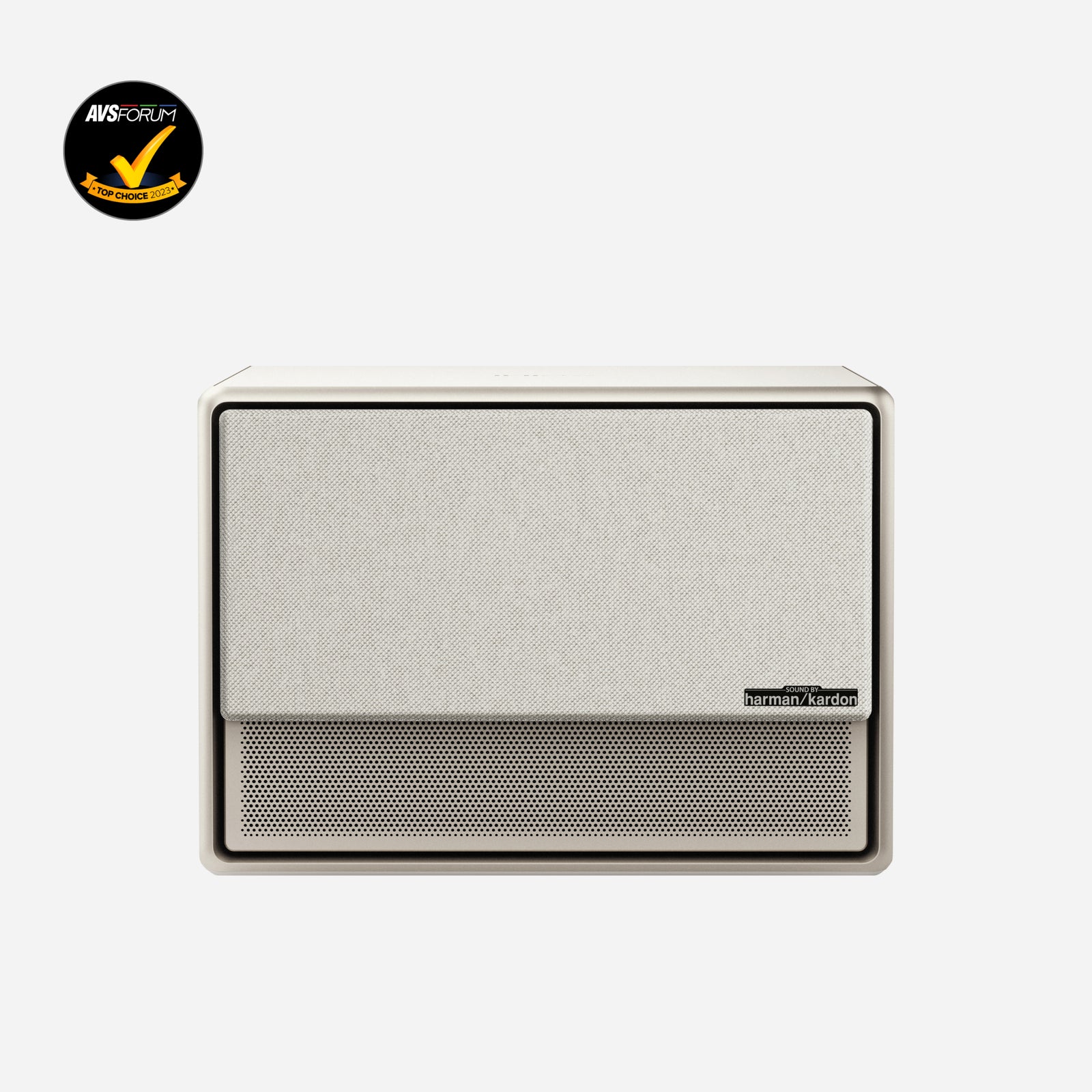
The Horizon Ultra wins by getting the living-room balance right. Its dual LED+laser light source avoids the speckle and rainbow artifacts cheaper triple-laser units show on light walls, while 2,300 ISO lumens holds up with curtains drawn. Dolby Vision gives HDR content a depth single-laser rivals can’t match. See the official Horizon Ultra specs for the full sheet.
Day-to-day livability seals it: ISA 3.0 handles focus, keystone, and fitting the image around furniture without endless fiddling, and the Harman Kardon speakers are good enough that many buyers skip a soundbar. The Netflix workaround is the real annoyance — budget a Fire Stick if that’s your main service.
- Brightness: 2,300 ISO lumens (Dual Light: LED + laser)
- Resolution: 4K UHD, Dolby Vision + HDR10
- Smart OS: Android TV 11 with Chromecast built-in
- Noise: Under 28 dB
- Audio: Dual 12W Harman Kardon, DTS Studio Sound
✓ Pros
- Dual-light engine: strong brightness without triple-laser speckle
- Dolby Vision — rare at this level, visibly better HDR
- ISA 3.0 auto setup (focus, keystone, screen fit) actually works
✗ Cons
- No native Netflix app on Android TV 11 — needs a streaming stick
- Needs curtains for afternoon viewing; not a daylight projector
- ~18ms game lag is fine for casual, not competitive play
2. Hisense-Vidda C3 Pro — Best for Bright Living Rooms
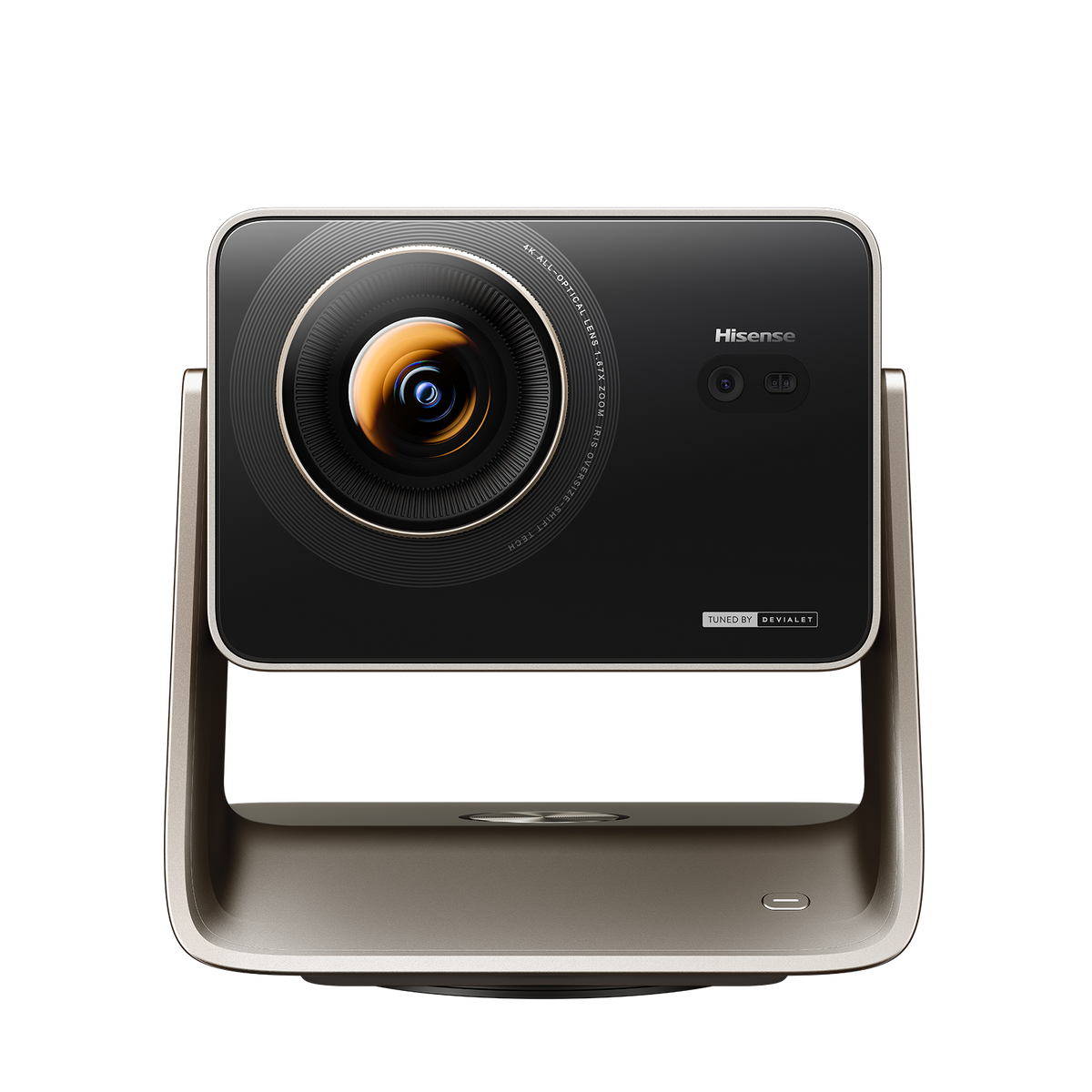
For big windows and daytime viewing, the C3 Pro is the answer. 3,000 ANSI lumens from a triple-laser engine keeps sports and cartoons punchy where 2,000-lumen lifestyle projectors wash out — and unlike brute-force business projectors, the 118% BT.2020 color stays rich. The 0.9–1.5:1 throw with optical zoom does 100 inches from about 6.5 feet, solving the small-room problem outright.
Compromises are ecosystem, not image. VIDAA covers the big apps, but the long tail lives on Google TV. Speckle can appear on matte white screens, though an ALR screen eliminates it while boosting daytime contrast further. For a bright multi-use room, nothing here combines this much light with this much color.
- Brightness: 3,000 ANSI lumens (tri-color laser)
- Resolution: 4K UHD, Dolby Vision + HDR10+
- Smart OS: VIDAA with voice control
- Optics: 0.9–1.5:1 throw, 1.67x optical zoom
- Audio: JBL-tuned speakers, Dolby Audio
✓ Pros
- 3,000 ANSI triple-laser lumens with genuinely great color (118% BT.2020)
- Real optical zoom + lens shift — placement flexibility rivals lack
- HDMI 2.1 with 240Hz support for high-refresh gaming
✗ Cons
- VIDAA app selection is thinner than Google TV
- Laser speckle possible on some screens — pair with an ALR screen
- Heavy unit that wants a permanent spot, not a portable
3. Dangbei Mars Pro 2 — Best 4K Laser Value
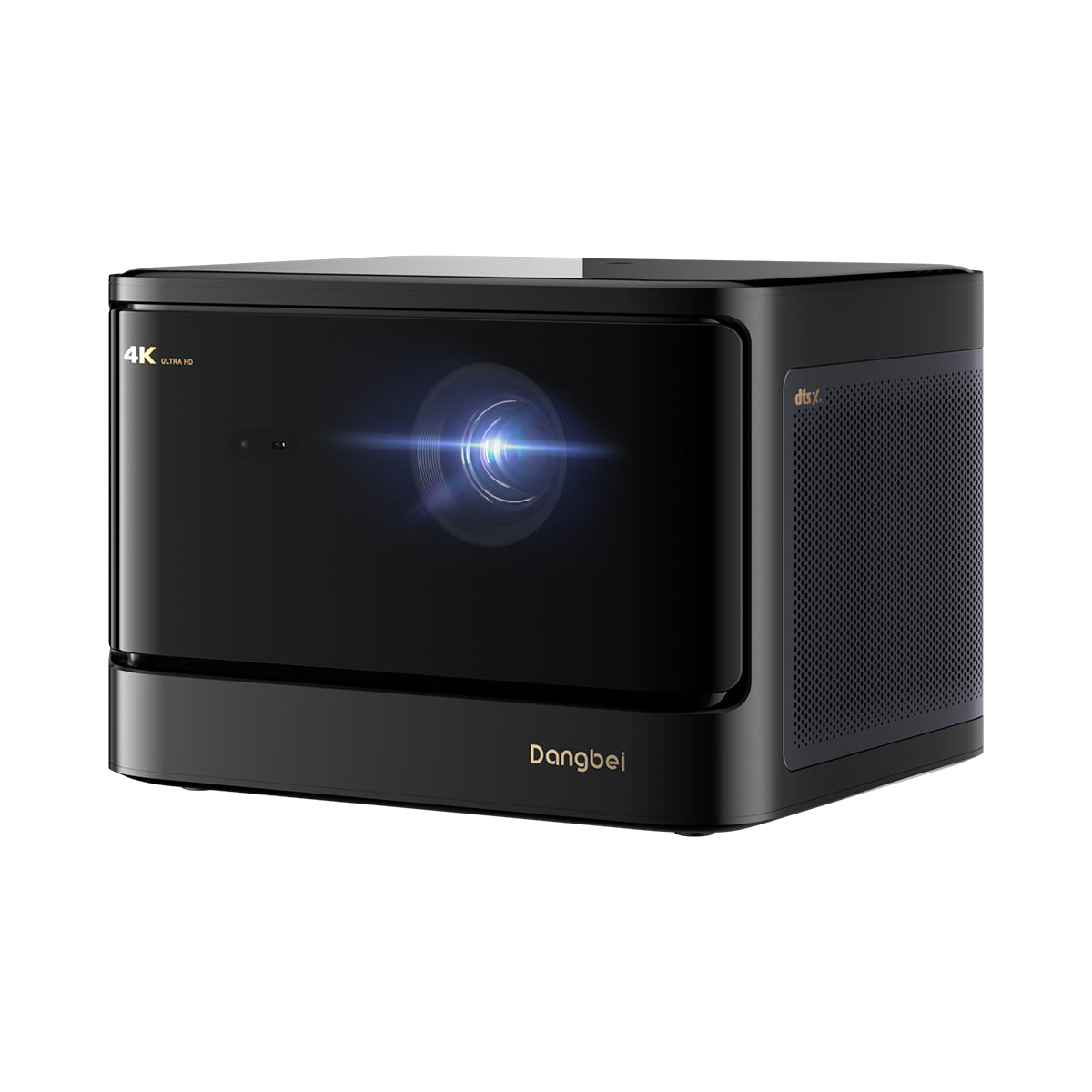
The Mars Pro 2 is the lifestyle projector for buyers who want the XGIMI experience without the XGIMI price. The headline win is properly licensed Netflix on real Google TV — it just opens and plays, which is exactly what a family room needs. The ALPD laser (the tech behind most laser cinemas) is bright, uniform, and free of RGB triple-laser speckle.
Versus the Horizon Ultra, you trade Dolby Vision and some brightness for a lower price and better smart TV software — a reasonable trade for most living rooms. Just know the support story can’t match Epson’s decades-deep network; if after-sales peace of mind tops your list, the Epson picks below are safer.
- Brightness: 2,450 ISO lumens (ALPD laser)
- Resolution: 4K UHD, HDR10+
- Smart OS: Google TV with licensed Netflix
- Audio: Dual 12W, DTS:X and Dolby Audio
- Laser life: 30,000 hours
✓ Pros
- Licensed Netflix on Google TV — no sideloading workarounds
- ALPD laser: bright, speckle-free, cinema-grade tech
- Excellent auto-setup; genuinely point-and-watch
✗ Cons
- No Dolby Vision — HDR10+ only
- 2,450 lumens is good, not great, for sunlit rooms
- Thinner US support network than Epson or BenQ
4. JMGO N1S Pro — Best Flexible Placement (Gimbal Design)
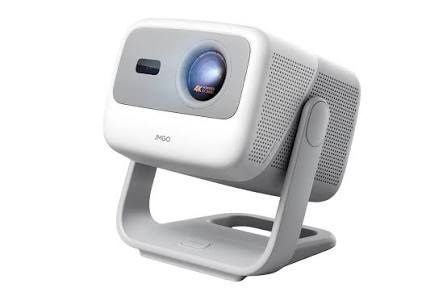
The N1S Pro solves the problem every other projector here ignores: living rooms don’t have projector shelves. The integrated gimbal tilts from a side table to the wall — or straight to the ceiling — with auto keystone cleaning up geometry. For renters who can’t drill mounts, this matters more than 200 extra lumens. Triple-laser color at 110% BT.2020 is genuinely rich, and Google TV with licensed Netflix keeps software painless.
The honest caveat is brightness: 2,250 ISO lumens is the least bright laser here, and it shows in uncontrolled daylight. This is an evening-and-curtains projector that’s brilliant at placement flexibility — not a daytime sports machine. If your room faces the sun all afternoon, step up to the C3 Pro or UHD38.
- Brightness: 2,250 ISO lumens (triple RGB laser)
- Resolution: 4K UHD, HDR10
- Smart OS: Google TV with licensed Netflix
- Design: Gimbal — 135° vertical, 360° horizontal
- Gaming: ~17ms latency, HDMI 2.1
✓ Pros
- Gimbal aims anywhere — ceiling movie nights with zero setup
- Triple-laser color (110% BT.2020) at a mid-range price
- Licensed Netflix + Google TV; 17ms latency for casual gaming
✗ Cons
- Dimmest laser here — needs light control
- HDR10 only, no Dolby Vision
- 20W speakers are fine; plan a soundbar for movies
5. Epson Home Cinema 2350 — Best 3LCD Color Accuracy
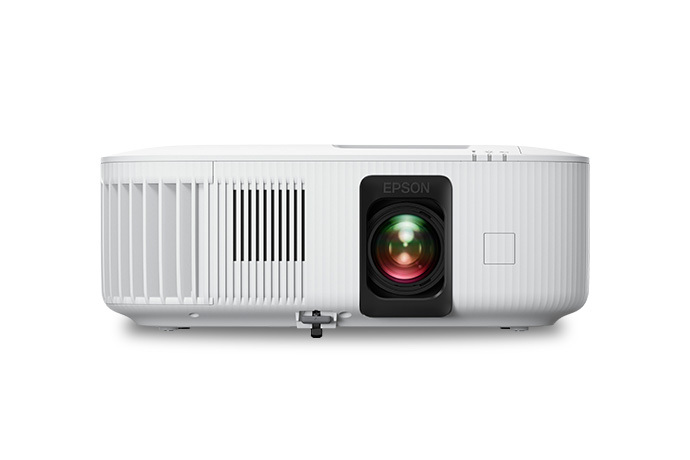
The 2350 is the thinking buyer’s pick. Epson’s 3LCD architecture delivers what DLP specs hide: equal color and white brightness. Single-chip DLPs quote big white-lumen numbers while color brightness lags 30–40% behind — which is why sports look fine, but movies wash out. The 2350’s 2,800 lumens are honest across the spectrum, with zero rainbow effect. See Epson’s projector lineup for the full range.
The trade is resolution honesty (1080p chip, pixel-shifted) and lamp maintenance in a laser world. At 10+ feet on a 100-inch screen, movies look convincingly sharp. What you get back is the most reliable ownership experience here — Epson’s warranty and support are the industry benchmark, and for a daily-driver family room, that counts.
- Brightness: 2,800 lumens (equal color + white, 3LCD)
- Resolution: 1080p with 4K PRO-UHD pixel shifting
- Smart OS: Android TV with Chromecast
- Gaming: Under 20ms input lag
- Warranty: 2 years, best-in-class support
✓ Pros
- 3LCD: color brightness equals white brightness — no DLP white-segment washout
- Zero rainbow effect — safest pick for sensitive viewers
- 4K PRO-UHD shifting looks sharp at normal viewing distances
✗ Cons
- Pixel-shifted, not native 4K
- Lamp-based: ~4,500-hour lamp life in bright modes
- Bulkier and less “lifestyle” than laser portables
6. BenQ TH685P — Best for Sports & Gaming
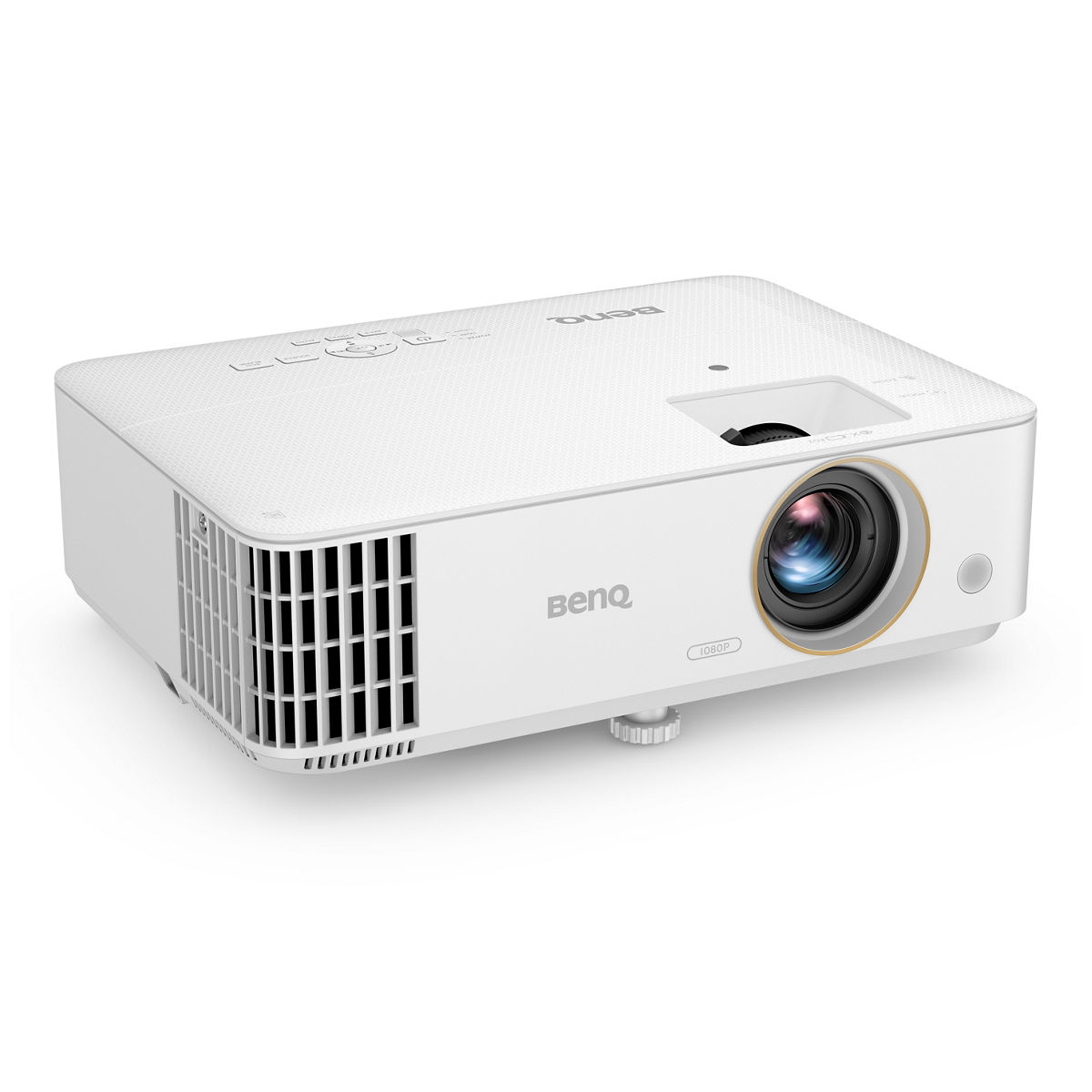
The TH685P is the pragmatic pick for households that watch more football than films. 3,500 ANSI lumens is unmatched at this level, and for daytime sports — where motion and brightness beat pixel density — it’s superb. The 8.3ms lag at 120Hz makes it the best competitive-gaming projector here. Check BenQ’s official TH685P page for specs.
You trade resolution and smarts for light and speed: 1080p is fine for sports but softer than the 4K picks for cinema. Add a streaming stick, and use eco mode (29 dB) for evening movies. If your projector doubles as a gaming display, this is the one.
- Brightness: 3,500 ANSI lumens (lamp)
- Resolution: 1080p Full HD, HDR10
- Smart OS: None — add a streaming stick
- Gaming: 8.3ms input lag at 1080p/120Hz
- Noise: 35 dB normal / 29 dB eco
✓ Pros
- 3,500 ANSI lumens — best lumens-per-dollar on this list
- 8.3ms lag at 120Hz is competitive-gaming grade
- Proven reliability; a best-seller for years
✗ Cons
- 1080p only — no 4K
- No smart OS built in
- Audible 35 dB fan in bright mode (eco mode helps)
7. Anker Nebula Cosmos Laser 4K — Best Smart Features
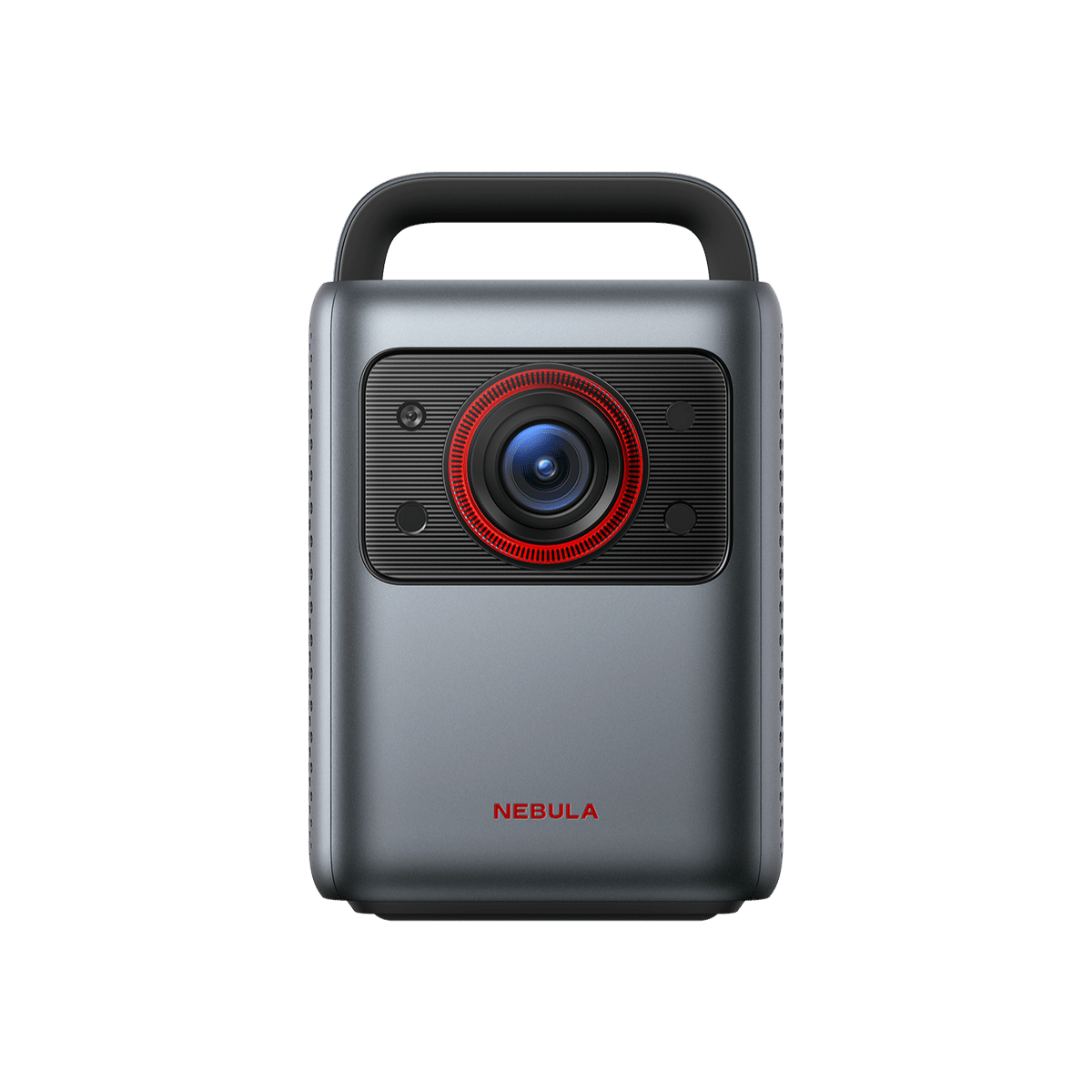
The Cosmos Laser 4K is the “it just works” pick. Anker’s Nebula team refines the software side bigger brands treat as an afterthought: guided setup, reliable autofocus and keystone, an interface that doesn’t generate support calls from your family. The laser engine means no lamp anxiety and instant on/off like a TV.
The limit is light output — 2,200 ANSI lumens asks for curtains in a way the 3,000+ lumen picks don’t. You’re paying for polish and convenience over raw image muscle. For a light-controlled living room where ease of use beats ultimate brightness, it’s excellent.
- Brightness: 2,200 ANSI lumens (laser)
- Resolution: 4K UHD, HDR10
- Smart OS: Android TV 10.0
- Audio: Dual 10W, Dolby Digital Plus
- Laser life: 25,000+ hours
✓ Pros
- Polished software — setup even non-technical family members can handle
- Laser: instant on/off, consistent brightness for years
- Compact, good-looking hardware
✗ Cons
- 2,200 lumens needs a dimmed room
- HDR10 only, no Dolby Vision
- Netflix licensing has the usual Android TV caveats
8. ViewSonic PX701-4K — Best Budget 4K Brightness
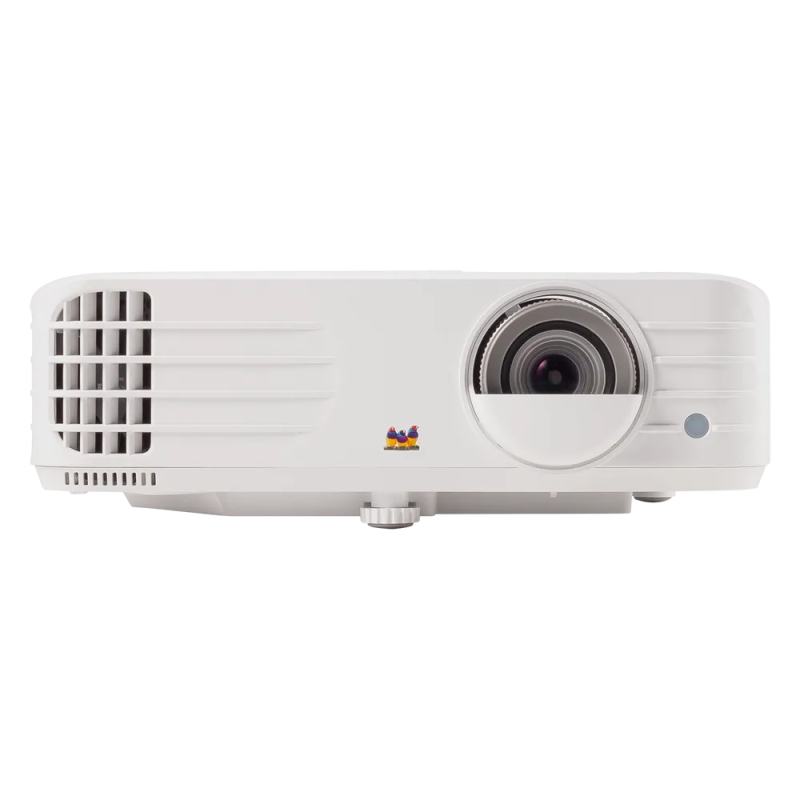
The PX701-4K exists for one reason: maximum 4K brightness per dollar. 3,200 ANSI lumens with a true 4K chip undercuts every lifestyle brand, and where the projector doubles as the daytime TV replacement, that matters more than Dolby Vision badges. The 4.2ms lag also makes it a sleeper gaming pick.
This is deliberately a no-frills box: no smart OS, no auto-setup wizardry. Mount it, plug in a Fire Stick, get a huge bright 4K image. Spend ten minutes warming up the color settings before judging movies. The value-TV equivalent in projector form — big, bright, sharp, no fuss.
- Brightness: 3,200 ANSI lumens (lamp)
- Resolution: 4K UHD, HDR/HLG
- Smart OS: None — add a streaming stick
- Gaming: 4.2ms input lag at 1080p/240Hz
- Throw: 1.13–1.47:1
✓ Pros
- True 4K + 3,200 ANSI lumens at a mid-range price — rare combo
- 4.2ms lag is among the fastest of any projector
- Bright enough for daytime without a dark room
✗ Cons
- No smart OS — bring your own streaming stick
- Fan noise is noticeable in bright mode
- Default color runs cool; needs a quick settings tweak for movies
9. Optoma UHD38 — Brightest Pick for Daylight Viewing
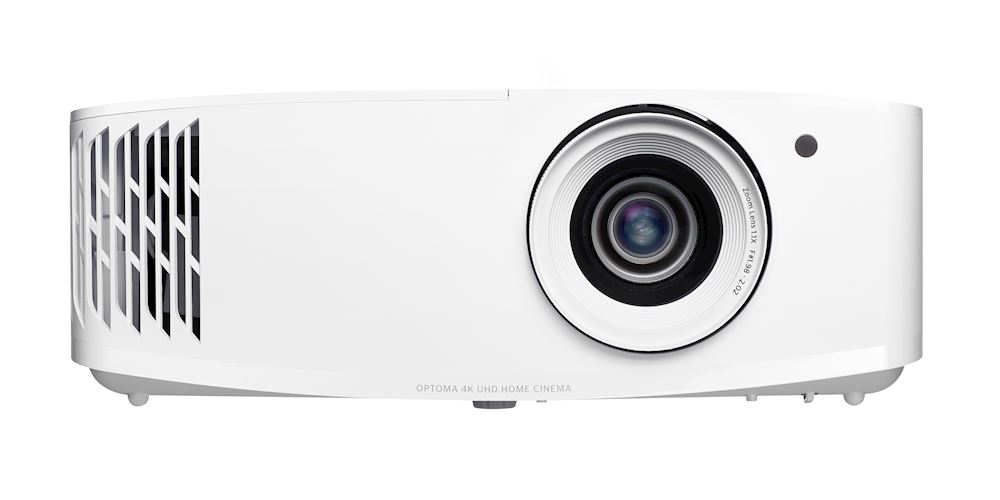
The UHD38 is for the living room that never gets dark. South-facing windows, kitchen light spilling in — 4,000 lumens punches through conditions that reduce everything else here to a gray rectangle. It’s also a legitimate gaming monitor replacement: 240Hz at 1080p with 4.2ms lag beats most gaming TVs, and the ISF day/night presets let you switch between punchy daytime and calmer evening modes.
The honest trade: blacks look gray next to the Horizon Ultra or C3 Pro in a dark room, and the fan is the loudest here at full tilt — mount it behind seating or use eco mode in the evenings. Buy this for daylight dominance and gaming speed, not cinematic blacks.
- Brightness: 4,000 lumens (lamp)
- Resolution: 4K UHD, HDR10 + HLG
- Smart OS: None — add a streaming stick
- Gaming: 240Hz refresh, 4.2ms lag at 1080p
- Modes: ISF day/night calibration presets
✓ Pros
- 4,000 lumens — brightest on this list, full stop
- 240Hz with low lag: elite for PC and console gaming
- True 4K sharpness holds up even at 150 inches
✗ Cons
- Black levels suffer — brightness-first tuning can’t do both
- Loudest fan here in bright mode
- No smart features; purely a display
10. Epson EpiqVision Mini EF22 — Best Compact & Quiet
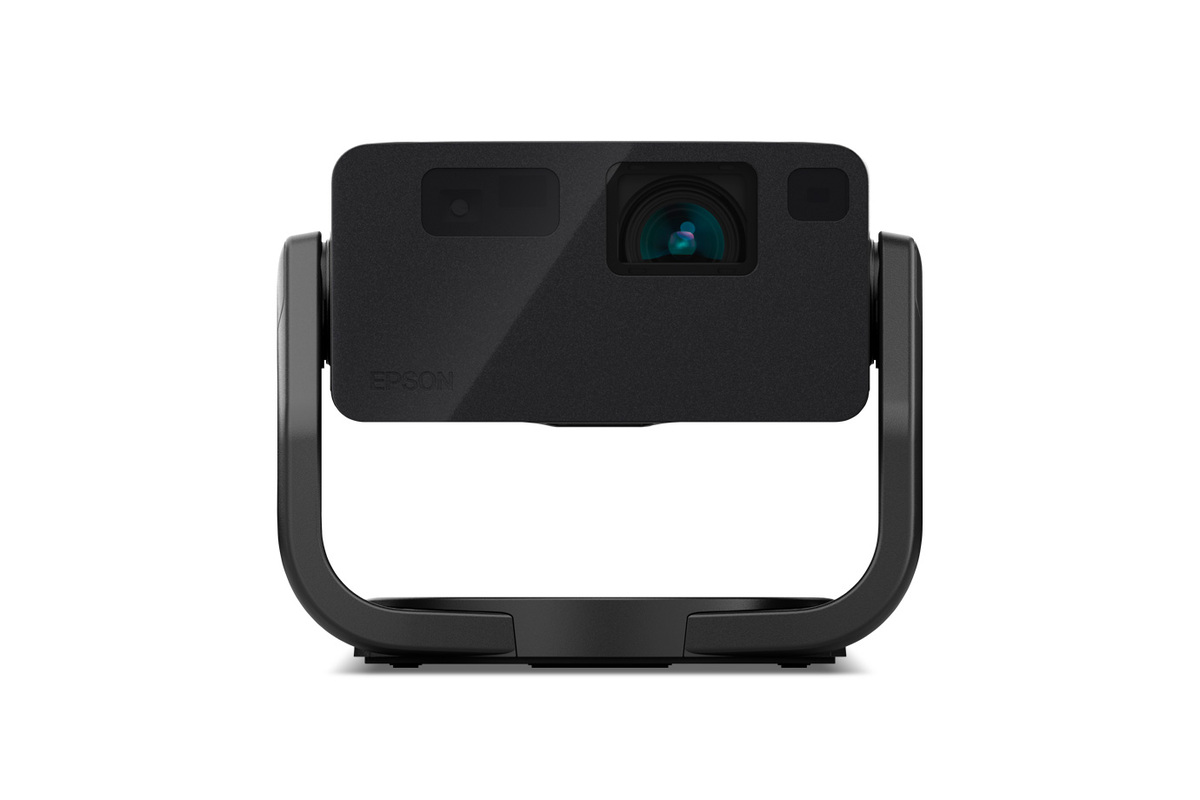
The EF22 is deliberately the odd one out. Not every living room needs 3,000 lumens; apartments and evening-only setups are better served by something small, silent, and simple. At 22 dB, the fan is quieter than a whisper — late-night dialogue never competes with hardware noise. The 3LCD laser keeps colors honest, and Google TV with licensed Netflix makes it a true all-in-one.
The swivel stand (360° rotation plus tilt) works on a nightstand or bookshelf with zero mounting. Be realistic: 1,000 lumens demands a dimmed room. This is the secondary-room champion and the best pick for noise-sensitive viewers — not the main-event replacement. For that, start at the top of this list.
- Brightness: 1,000 lumens (3LCD laser)
- Resolution: 1080p Full HD, HDR10 + HLG
- Smart OS: Google TV with licensed Netflix
- Noise: 22 dB normal / 18 dB eco
- Design: Swivel stand, 6.6 lbs
✓ Pros
- 22 dB — the quietest projector here by far
- 3LCD laser: accurate colors, no rainbow, 20,000-hour life
- Google TV with licensed Netflix in a tiny chassis
✗ Cons
- 1,000 lumens — evening/controlled light only
- 1080p caps useful screen size around 100–110 inches
- Single HDMI port; no optical audio out
Best Living Room Projector 2026 – Buyer’s Guide
How much brightness do you actually need?
Think about your room, not the showroom: 2,000–2,500 lumens works for evenings with curtains, 2,800–3,500 handles daytime with blinds, and only 4,000+ truly survives direct daylight. One nuance: single-chip DLPs quote white brightness while color brightness can lag 30–40% behind — which is why Epson’s 3LCD picks punch above their spec sheets. For brightness-first daylight picks, see our best daylight projector guide.
Throw distance in small rooms
Measure before buying. Standard throw needs ~10–13 feet for 100 inches; at 8 feet you’ll get a smaller image unless you go short-throw. The C3 Pro’s 0.9–1.5:1 throw with optical zoom does 100 inches from ~6.5 feet. The JMGO N1S Pro’s gimbal is the other escape hatch when the room won’t cooperate.
Fan noise matters more than you think
Under 30 dB disappears under normal content; 35 dB+ intrudes on quiet dialogue. Lamp projectors run louder in bright modes — use eco mode in the evenings (quieter and longer lamp life) and full brightness only for daytime. The EF22 at 22 dB is the benchmark; if you’re noise-sensitive, weight this as heavily as brightness.
Get the smart OS right
The interface is what your household touches daily. Google TV (Dangbei, JMGO, Epson EF22) has the best app coverage, including licensed Netflix. Projectors with no OS (BenQ, ViewSonic, Optoma) aren’t worse — they’re displays, and a cheap streaming stick gives you a better, upgradable platform anyway. Don’t overpay for built-in smarts you’ll bypass.
Pair it with an ALR screen
The biggest image upgrade isn’t a brighter projector — it’s an ambient light rejecting (ALR) screen. ALR microstructures reflect projector light toward viewers while absorbing ambient light. A 2,300-lumen projector on ALR routinely beats a 3,500-lumen one on a white wall in daytime. If your room can’t go dark, budget for one — it’s the highest-ROI accessory in projection.
Living room vs. dedicated theater: If you can fully darken a room and want the ultimate cinematic image, contrast beats raw brightness. See our best home theater projector picks for that scenario.
Frequently Asked Questions
Can I use a projector in a bright living room?
Yes, with the right brightness and expectations. Choose 3,000+ lumens (C3 Pro, TH685P, UHD38) and pair with an ALR screen. Curtains still help enormously — no projector beats direct sun on the screen. For evening-dominant use, 2,200–2,800 lumens is plenty.
Is 4K worth it over 1080p for a living room?
At 100+ inches from 10 feet, yes — the difference is visible. But brightness and color matter more in ambient light; a bright, sharp 1080p image beats a dim, washed-out 4K one every time. If budget forces a choice, prioritize lumens first, resolution second.
Do I need a soundbar with these projectors?
Depends on the model. The Horizon Ultra’s Harman Kardon speakers and the C3 Pro’s JBL tuning are good enough for casual viewing. The Epson 2350, ViewSonic, and Optoma have basic speakers — plan on a soundbar or use the eARC/ARC HDMI port with your existing audio.
Lamp vs. laser for daily living room use?
Laser wins for daily drivers: 20,000–30,000 hour life, instant on/off, no brightness fade. Lamp projectors are brighter per dollar but need replacement lamps every few thousand hours in bright modes. At 4+ hours daily, laser’s total cost of ownership is lower despite the higher upfront price.
Conclusion
The living room asks more of a projector than any other room. The XGIMI Horizon Ultra answers most completely — Dolby Vision, honest brightness, quiet operation, and setup automation for rooms not built around projectors. If daylight is your reality, the Hisense-Vidda C3 Pro‘s 3,000 triple-laser lumens justify the step up. Gamers should shortlist the BenQ TH685P and Optoma UHD38; the Epson EF22 is the perfect second-room pick.
Two force multipliers, whatever you choose: measure throw distance before ordering, and budget for an ALR screen if the room can’t go dark. Do those, and even a mid-range pick beats a flagship fighting the wrong room. Building a darkened cinema instead? Our home theater projector guide ranks picks for that job.