How Many Lumens Do I Need For A Projector – Perfect Lumens Guide 2026
If you have ever looked at projector specs and felt confused by the lumens number, you are not alone. One projector claims 3,000 lumens, another claims 10,000, and a third says 500 ANSI lumens. Which one is actually brighter? And how many lumens do you actually need for your room?
The short answer: it depends on your room, not the projector.
A projector that looks stunning in a dark home theater can look washed out and unwatchable in a bright living room. This guide walks you through exactly how many lumens you need for each room type, what the different lumen standards mean in 2026, and the other factors that matter just as much as brightness.
What Are Lumens, Really?
A lumen is a unit of light output. In simple terms, it tells you how much light the projector throws at your screen. More lumens means a brighter image — but only if you are comparing numbers measured the same way, which is where things get tricky.
Think of lumens like horsepower in cars. Two cars can both claim 200 horsepower, but if one measured it at the wheels and the other at the engine, the numbers are not directly comparable. Projector lumens work the same way.
ANSI vs ISO vs CVIA vs LED Lumens: The 2026 Cheat Sheet
As of 2026, you will see at least four different lumen standards on projector listings. Understanding the difference will save you from buying a projector that is far dimmer than you expected.
ANSI Lumens
ANSI lumens are the honest standard. Developed by the American National Standards Institute, this measurement uses a defined 9-point test pattern across the screen. When a reputable brand like Epson, BenQ, or Optoma says 3,000 ANSI lumens, you can trust that number. Always look for the word ANSI before the number.
ISO Lumens
ISO lumens are the international equivalent of ANSI lumens. The test method is nearly identical, and the numbers are roughly 1:1. If a projector claims 2,500 ISO lumens, treat it as about 2,500 ANSI lumens. Most Japanese and European brands use ISO.
CVIA Lumens
CVIA is a Chinese standard used by many budget brands (XGIMI, Dangbei, JMGO, and others). CVIA numbers run roughly 80–85% of ANSI. So a projector rated at 3,000 CVIA lumens is roughly 2,400–2,550 ANSI lumens. Still a real measurement, just on a different scale.
“LED Lumens” — Ignore These
Some budget projectors advertise eye-catching numbers like 15,000 or even 25,000 “LED lumens.” This is not a real standard. LED lumens are often 2–3 times the ANSI equivalent, which means that 15,000 LED lumens might only be 5,000 ANSI lumens — or less. If a listing does not say ANSI, ISO, or CVIA, treat the number with extreme skepticism.
The Two Factors That Matter More Than Lumens
Ambient Light
Ambient light is any light in your room that is not coming from the projector — sunlight through windows, ceiling lights, lamps, even light bouncing off white walls. It is the single biggest factor in how bright your projector needs to be.
A projector in a pitch-black room needs far fewer lumens than the same projector in a room with the lights on. That is because ambient light competes with the projector’s light. The more ambient light, the more lumens you need to overcome it.
Before you spend money on a brighter projector, try controlling the light first. Close blinds, dim lamps, and paint the wall behind the screen a matte neutral color. These free steps can make a bigger difference than upgrading to a projector with 500 more lumens.
Screen Size
Brightness is relative to screen size. The same 3,000 lumens spread over a 150-inch screen looks noticeably dimmer than over a 100-inch screen, because the light is spread thinner. If you are projecting a very large image in a bright room, you need more lumens to compensate.
As a rough guide: doubling the screen area (for example, going from 100 inches to 140 inches diagonal) roughly halves the perceived brightness. Keep this in mind if you plan to go big.
How Many Lumens Do I Need for a Projector? Room-by-Room Guide
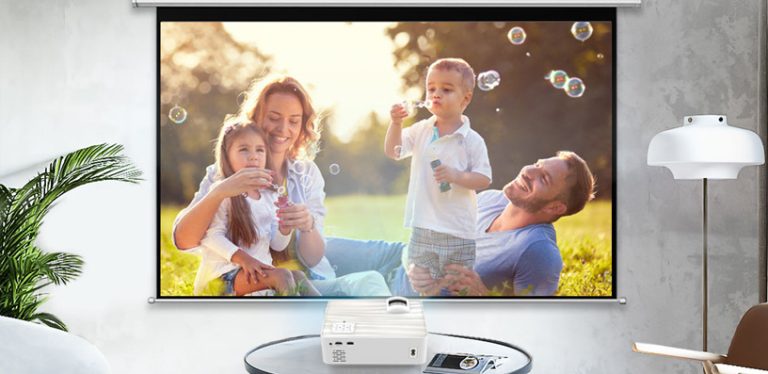
Living Room (Some Ambient Light)
Most living rooms have windows, ceiling lights, and light-colored walls. You will watch with at least some light in the room, even in the evening.
Recommended: 2,500–3,500 ANSI lumens.
At this brightness, you can watch with curtains drawn and a lamp on without the image washing out completely. If your living room gets direct sunlight, aim for the higher end or pair the projector with an ambient light rejecting (ALR) screen. For specific picks, see our guide to the best projector for living room setups.
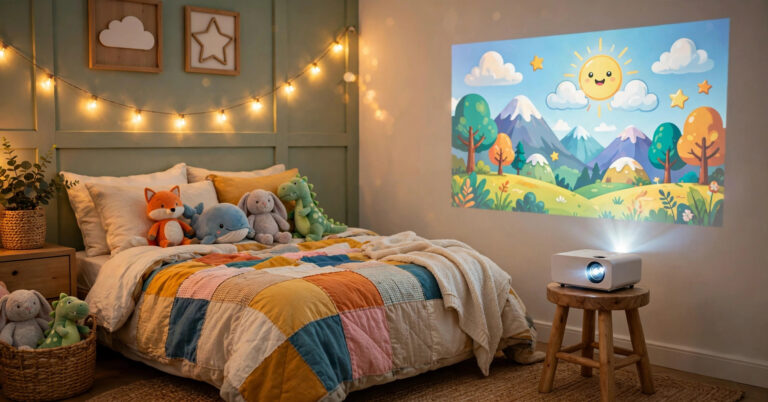
Bedroom (Low to Moderate Light)
Bedrooms are usually smaller and easier to darken. You will mostly watch at night with the lights off or low.
Recommended: 1,500–2,500 ANSI lumens.
A 2,000-lumen projector in a dark bedroom produces a bright, punchy image on a 100-inch screen. Going brighter is not necessary and can actually cause eye fatigue when watching in the dark. Save your money and put it toward a better screen or sound setup instead.
Dedicated Home Theater (Dark Room)
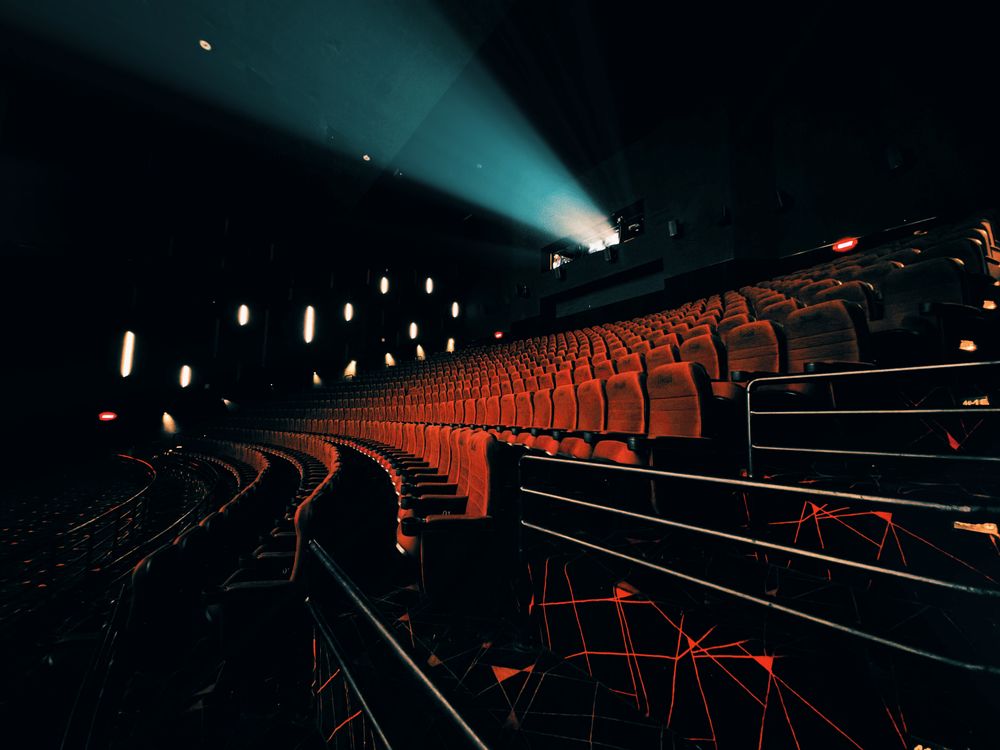
A true home theater is a light-controlled room — dark walls, blackout curtains, no windows, or windows fully covered. This is where projectors shine (literally).
Recommended: 1,500–2,500 ANSI lumens.
Outdoor / Backyard (Night)
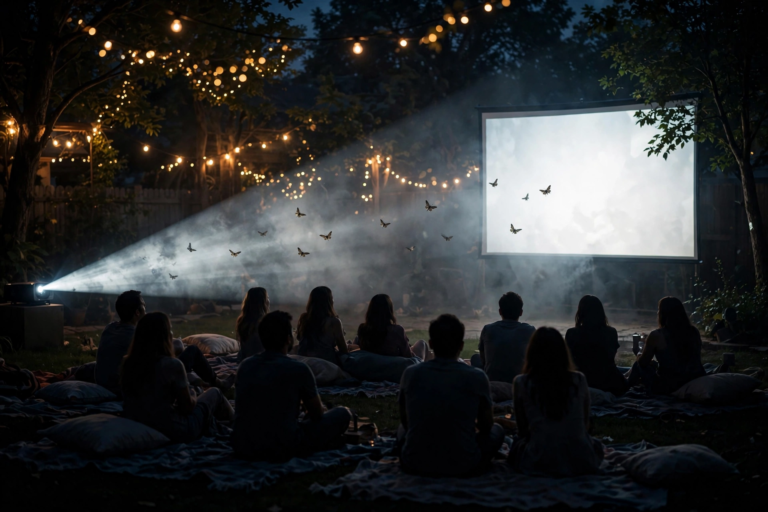
Outdoor movie nights happen after sunset, but you still have moonlight, porch lights, neighbors’ lights, and light pollution to deal with. True darkness is rare outdoors.
Recommended: 2,500–3,500 ANSI lumens.
Start the movie after full dark (not twilight) and keep any nearby lights off. If you plan to start earlier in the evening, go for 3,000+ lumens. For a full breakdown of outdoor setups, check our guide to the best outdoor projectors.
Outdoor / Daytime (Bright Light)
Watching a projector in daylight outdoors is the hardest scenario. Direct sunlight will overpower almost any consumer projector.
Recommended: 3,500+ ANSI lumens, plus shade.
Even a 4,000-lumen projector will struggle in direct sunlight. If you must watch during the day, use a shaded area, a gazebo, or a covered patio — and set realistic expectations. No projector at a sane price will match a TV in direct sunlight. For bright-room picks that handle ambient light best, see our guide to the best daylight projector options. See how to make your projector brighter outside for more tips.
Classroom / Office / Conference Room (Lights On)
Classrooms and meeting rooms almost always have the lights on. People need to see each other, take notes, and read the screen at the same time.
Recommended: 3,000–4,000 ANSI lumens.
For presentations, brightness matters more than contrast. Text and slides need to be readable with overhead lights on. A 3,500-lumen projector on a white or light-gray screen handles this well. If the room has large windows, add blackout shades or aim for 4,000 lumens.
Gaming (Mixed Lighting)
Gaming setups vary widely — some gamers play in dark rooms, others in living rooms with lights on. The room matters more than the game.
Recommended: 2,500–3,500 ANSI lumens for a lit room; 1,500–2,500 for a dark room.
For gaming, also pay attention to input lag (under 30ms is good, under 16ms is great for competitive play). Brightness alone will not make a gaming projector good — low lag and a high refresh rate matter just as much.
Quick Reference Table
| Room Type | Recommended Lumens (ANSI) | Notes |
|---|---|---|
| Dedicated home theater (dark) | 1,500–2,500 | Prioritize contrast over brightness |
| Bedroom (mostly dark) | 1,500–2,500 | Brighter is not better in the dark |
| Living room (some light) | 2,500–3,500 | ALR screen helps a lot |
| Outdoor at night | 2,500–3,500 | Wait for full dark, kill nearby lights |
| Classroom/office (lights on) | 3,000–4,000 | Text readability is the priority |
| Gaming (lit room) | 2,500–3,500 | Also check input lag < 30ms |
| Daylight / bright rooms | 3,500+ | Plus shade, curtains, or ALR screen |
Brightness vs Contrast: What Actually Matters?
Beginners tend to fixate on lumens, but contrast ratio is equally important — and in dark rooms, more important. Contrast ratio measures the difference between the brightest white and the darkest black a projector can produce.
A projector with high brightness but poor contrast will produce a washed-out, grayish image in a dark room. The blacks will look like dark gray, and the image will feel flat. A projector with moderate brightness but excellent contrast will produce deep blacks, rich colors, and an image that feels three-dimensional.
For bright rooms, brightness wins. For dark rooms, contrast wins. For mixed-use rooms, you need a balance of both — which is why the best all-round projectors tend to sit in the 2,500–3,500 lumen range with a contrast ratio of at least 20,000:1 (dynamic) or 2,000:1 (native).
Common Mistakes to Avoid
- Comparing different lumen standards. A 10,000 “LED lumen” projector is not brighter than a 3,000 ANSI lumen projector. Always check which standard is being used.
- Buying too bright for a dark room. A 4,000-lumen projector in a pitch-black home theater will cause eye strain and wash out blacks. More is not always better.
- Ignoring the screen. A white wall reflects light in every direction, including back at your eyes. A proper screen — especially an ALR screen in a bright room — can be worth more than an extra 1,000 lumens.
- Forgetting about lamp/laser life. Lamp projectors dim over time. A projector rated at 3,000 lumens when new may only output 2,000 after 2,000 hours of use. Laser projectors hold brightness far longer.
Frequently Asked Questions
Is 3,000 lumens enough for a bright living room?
Yes, for most living rooms. 3,000 ANSI lumens handles moderate ambient light well, especially with curtains drawn. If your room gets direct sunlight on the screen wall, you will also need light control (curtains, blinds) or an ALR screen to get the best results.
Can I use a projector in a room with the lights on?
Yes, if the projector is bright enough (2,500+ ANSI lumens) and you manage the light. Keep overhead lights off or dimmed, avoid light hitting the screen directly, and use a screen with some ambient light rejection. Full overhead fluorescent lighting will wash out even a bright projector.
How many lumens do I need for a 120-inch screen?
For a 120-inch screen in a dark room, 1,800–2,200 ANSI lumens is plenty. In a room with some ambient light, aim for 2,800–3,500. In a bright room, 3,500+. Remember that larger screens spread the same light over a bigger area, so bigger screens need more lumens for the same perceived brightness.
Do lumens affect picture quality?
Not directly. Lumens measure brightness, not sharpness, color accuracy, or contrast. A high-lumen projector with poor contrast and bad color will look worse than a moderate-lumen projector with great contrast and accurate colors. Lumens tell you how bright the image will be — nothing more.
The Bottom Line
There is no single “right” number of lumens for everyone. Start with your room: how much light can you control? Then pick a lumen range from the table above. If you are between two ranges, go higher — you can always dim a projector or use eco mode, but you cannot make a dim projector brighter.
And remember: the lumen number on the box is only part of the story. The standard it was measured with, your screen, your room lighting, and the projector’s contrast ratio all matter just as much. Get those right, and you will end up with an image that actually looks good — not just a big number on a spec sheet.