AWOL VISION 4K UST Review 2026 — Best Triple Laser TV Projector
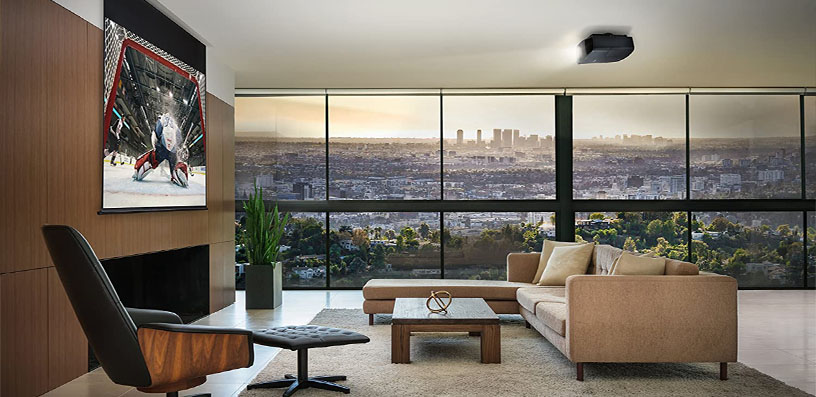
The AWOL Vision LTV-3500 is an ultra-short-throw laser TV projector that sits a few inches from the wall and fills an 80- to 150-inch screen from a media console.
This AWOL Vision 4K UST review examines the model sold under that name, the AWOL Vision LTV-3500, and asks a simple question: does its triple laser engine, Dolby Vision support, and unusually complete feature list make it the right TV replacement for your room?
The headline hardware is serious. A pure RGB triple laser light source feeds a TI 0.47-inch ECD DMD chip, with no colour wheel in the light path, and the laser is rated for 25,000+ hours of use.
Around that engine, AWOL Vision has fitted the formats living-room buyers actually ask for: Dolby Vision and HDR10+, Dolby Atmos sound from a 36W stereo speaker system, Active 3D, and a Turbo Mode that drops input lag to 8ms for gaming.
The headline figure is brightness: the official specification rates it at 3,300 ANSI lumens (3,500 peak), a big step up from the 2,000 ANSI lumens of the LTV-2500 it replaces.
Read the Performance and Setup sections closely if your room is bright, because this is a projector that pairs strong brightness with a very wide colour gamut — and the right screen still matters.
AWOL Vision LTV-3500 Review: The Verdict in Brief
The AWOL Vision LTV-3500 is a feature-complete laser TV for film lovers who want a bright, colourful picture in a real living room.
Its RGB laser delivers 107% of the BT.2020 colour space, Dolby Vision brings dynamic HDR tone mapping that is still rare on projectors, and the 36W Atmos speaker system is strong enough that a soundbar becomes optional. Gamers are properly served too, with 15ms lag at 4K/60Hz and 8ms at 1080p/120Hz.
Choose it for colour, brightness, formats, and convenience. It holds a 100- to 150-inch picture with the lights on, so a bright living room is no longer a reason to look elsewhere.
Think twice only if you want the projector’s own smart platform to do everything, because the streaming heavy lifting here is handled by an included streaming stick rather than the built-in system.
AWOL Vision LTV-3500: Key Specifications
- Model: AWOL Vision LTV-3500 (sold as the AWOL Vision 4K UST)
- Display technology: TI 0.47-inch ECD DMD, DLP with pixel shifting, 4K UHD 3840 × 2160
- Light source: Tri-colour pure RGB laser, no colour wheel, laser life 25,000+ hours
- Brightness: 3,300 ANSI lumens (3,500 peak lumens)
- Colour: 107% BT.2020 colour space, Wide Colour Gamut support
- Contrast: 2,500:1
- HDR: Dolby Vision, HDR10+, HDR10, HLG, plus MEMC motion processing and a dedicated 24fps film mode
- Lens: Customised Ricoh F2.0 pure glass lens, electric focus, 8-point keystone correction
- Throw: 0.25:1 throw ratio, 80–150-inch image from a console below the screen
- Input lag: 15ms at 4K/60Hz, 8ms at 1080p/120Hz in Turbo Mode
- 3D: Active 3D supported (glasses required)
- Audio: 36W stereo speakers, Dolby Atmos, DTS Virtual:X, Bluetooth speaker mode, noise rated at 30dB or lower
- Smart platform: Android 9.0 (3GB RAM, 128GB storage) with a Fire TV Stick 4K Max included in the box and a dedicated compartment to house it
- Connections: 3 × HDMI (eARC on HDMI 2), 2 × USB 2.0, Ethernet LAN, S/PDIF optical audio out, AV input, dual-band Wi-Fi, Bluetooth, wireless screen mirroring
- Control and safety: Auto brightness adjustment, eye safety protection, laser outlet blocked detection, IP control (PJLink, Control 4, Savant and Crestron)
- Power: 175W consumption, 0.5W standby, 100–240V supply
- Dimensions and weight: 599 × 353 × 145mm, 10.8kg
All figures above are taken from the specification published by AWOL Vision for the LTV-3500, and they frame the sections that follow: a colour-led, format-rich laser TV whose brightness is a strength, not a limit.
✓ Pros
- 3,300 ANSI lumens — bright enough for a lit living room and a 150-inch picture
- Pure RGB triple laser with no colour wheel, so no rainbow artefacts and 107% BT.2020 colour
- Dolby Vision and HDR10+ dynamic HDR, still rare on UST projectors
- Proper gaming figures: 15ms at 4K/60Hz, 8ms at 1080p/120Hz Turbo Mode
- 36W stereo speakers with Dolby Atmos and DTS Virtual:X built in
- Active 3D support, which most modern rivals have dropped
- Quiet on paper at 30dB or under, with a 25,000+ hour laser life
- Streaming stick included and hidden in its own compartment, with eARC for a soundbar later
✗ Cons
- Dolby Vision arrived by a software update after launch, not on day one — check the firmware is current
- Built-in Android 9.0 platform is dated; the included stick does the real streaming work
- No optical zoom or lens shift, so placement accuracy is down to you and the furniture
- 2,500:1 contrast is fair rather than class-leading for dark-room films
- At 599mm wide and 10.8kg, it needs a deep, sturdy console
- A UST-specific ALR screen still lifts the picture in a bright room, an extra purchase to plan for
Design & Build: A Wide, Low Console Centrepiece
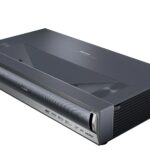
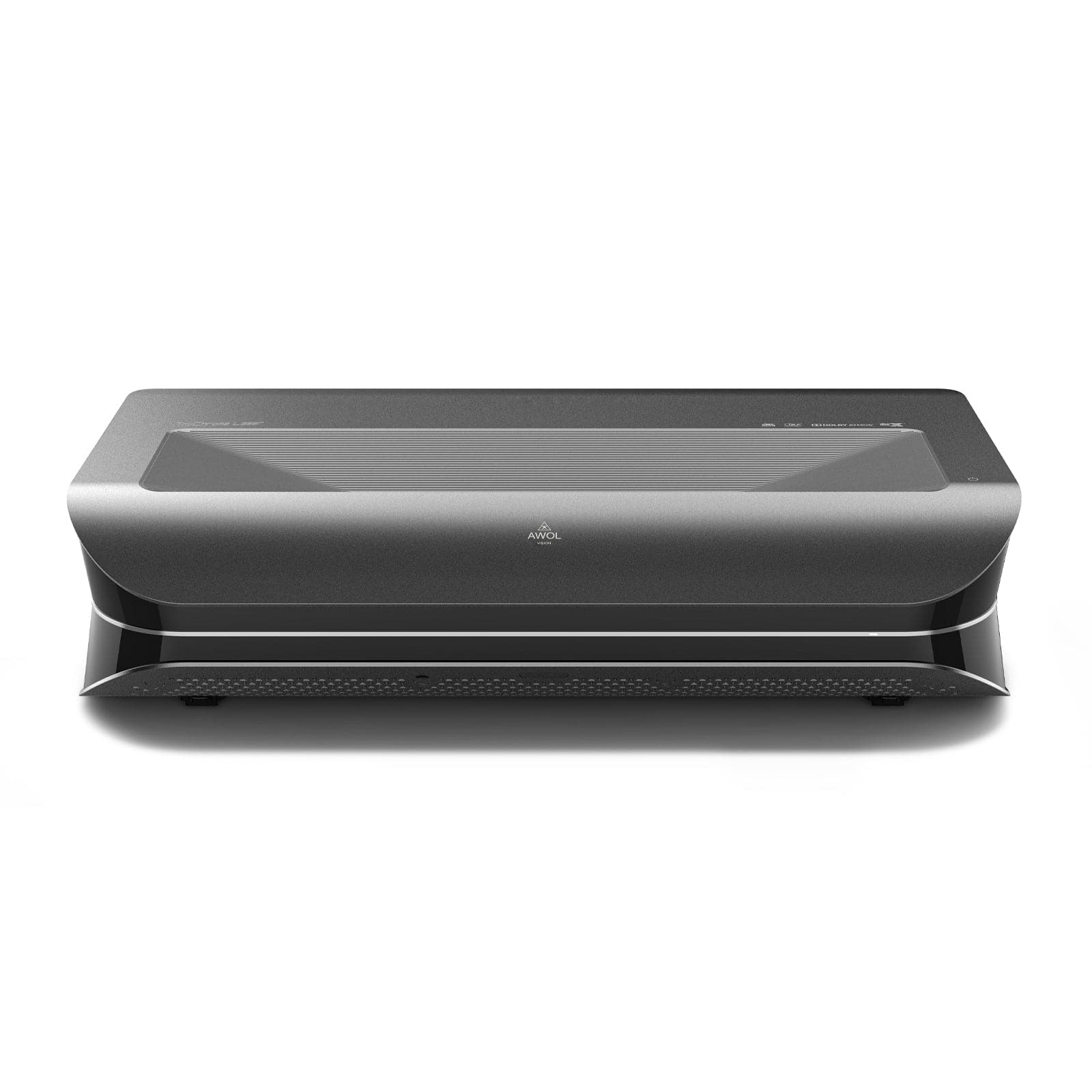
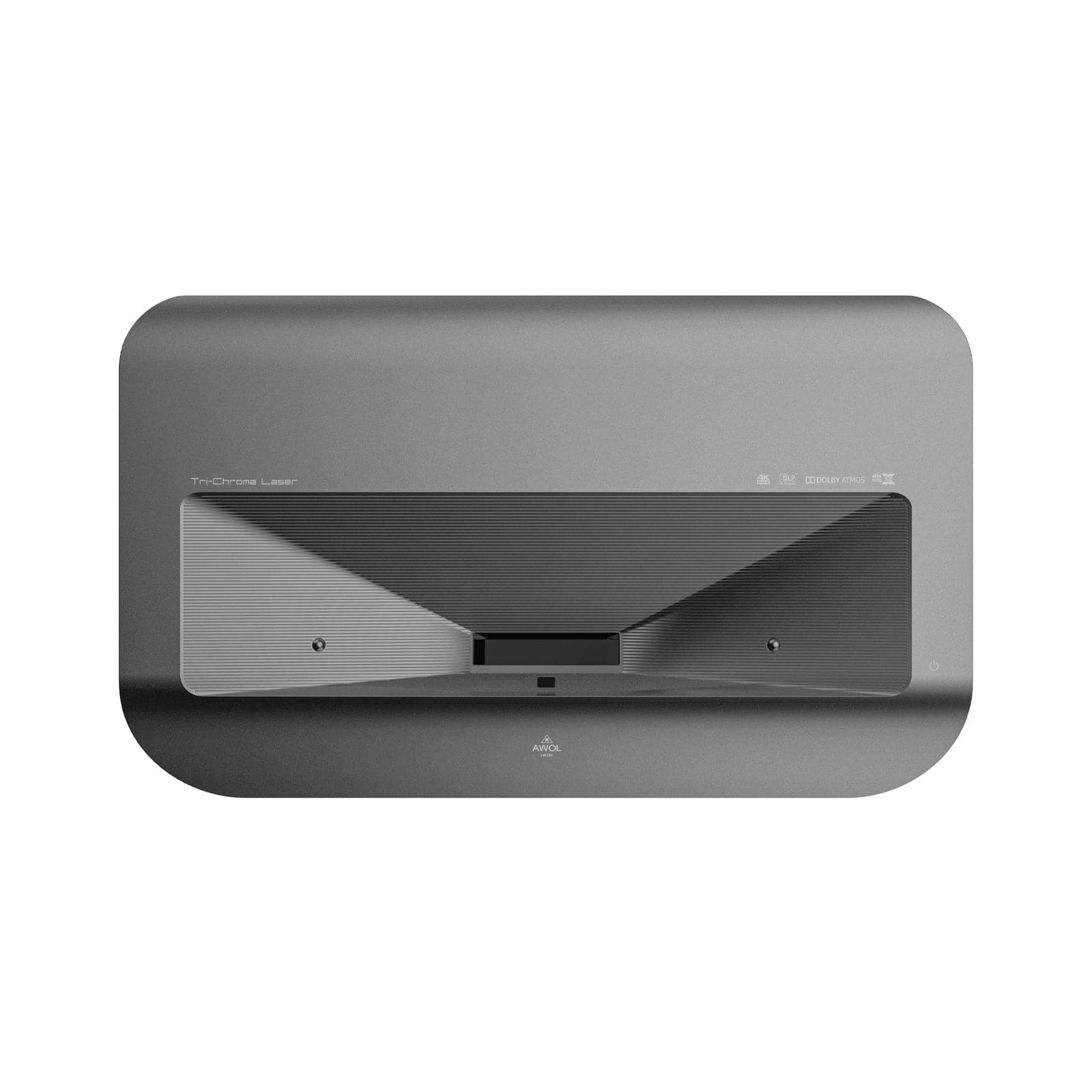
The LTV-3500 follows the classic laser TV shape: a wide, low slab designed to live on a media console, not to be ceiling-mounted or hidden away.
At 599mm wide, 353mm deep and 145mm tall, it has roughly the footprint of a large centre-channel speaker, and at 10.8kg it is a two-person lift onto a high shelf and a careful one-person lift onto a low console.
The top surface carries the recessed lens in the centre, flanked by the eye-safety sensors that dim the laser output if someone approaches the beam. That is not a marketing flourish: at this throw distance the lens sits close to eye level when you bend over the unit.
That protection matters in a living room, because the projector sits at coffee-table height where children and pets move through the beam path. The sensor system cuts the laser when it detects an approach, then restores it once the path is clear, and it does so without a visible flicker or a long recovery.
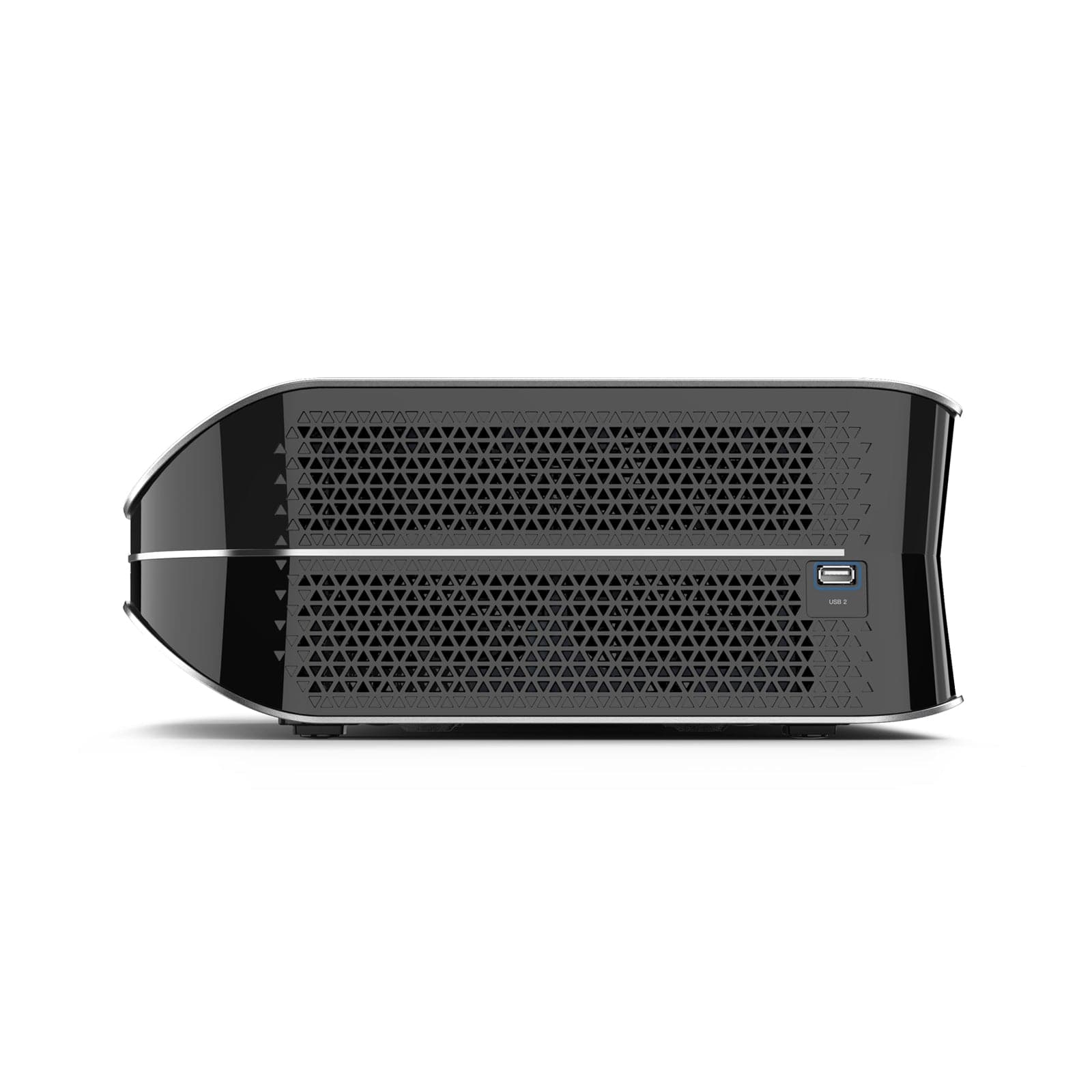
Cooling vents are worked into the sides in a triangular pattern, and the rated noise figure of 30dB or under is low enough to disappear behind dialogue at normal viewing distance. It is a quiet box for a bright one, which matters when the unit sits a metre from your knees.
Build details are practical rather than luxurious. Focus is electric, adjusted from the remote, which is how you will use it once the unit is placed, and the 8-point keystone correction can straighten a slightly imperfect placement without moving the furniture.
There is no lens shift and no zoom, so the image is positioned by physically placing the unit square to the wall and at the right distance. That is the trade-off for the compact design: you trade adjustment for simplicity, and you need a console that gives you room to slide the unit by a centimetre at a time.
Picture Modes: Tuning for Films, Sport and Games
Picture settings matter on the LTV-3500 because every mode spends the light budget differently — and with 3,300 ANSI lumens to spend, there is more of it to go around.
The mode you choose decides whether those 3,300 ANSI lumens go on brightness, on colour accuracy, or on motion handling. Treat the modes as room presets rather than decoration, and the projector rewards you for it.
For films after dark, the cinema-style tuning is the right home: colour tracks the widest gamut the RGB laser can produce, and the dedicated 24fps mode handles film-frame cadence without judder.
Dolby Vision content adds dynamic metadata on top, adjusting tone mapping scene by scene, which is the single biggest picture advantage this projector holds over HDR10-only rivals. Dolby Vision arrived on the LTV-3500 by a software update after launch, so check the firmware is current.
Brighter, more saturated tuning suits sport and daytime series viewing, where punch matters more than reference colour. MEMC motion processing can be added for sport to smooth camera pans across a pitch, though film purists should leave it off for movies, where it creates the over-smooth look that flattens cinematic motion.
The honest summary is that the accurate modes are dimmer, as they are on almost every projector, but with this much light to start from, even the accurate modes stay bright enough for a lit room.
HDR10+ content from compatible streaming services gets the same dynamic treatment as Dolby Vision, and standard HDR10 and HLG broadcast material are also supported.
Few projectors at any level cover both dynamic formats, and for households split between streaming services, it removes a whole category of compromise. Games get their own low-latency path, covered in the Gaming section below.
Features & Smart Platform: Android Inside, a Streaming Stick Doing the Driving
The LTV-3500 runs Android 9.0 with 3GB of RAM and a generous 128GB of storage, and it works as a basic smart platform for settings, inputs, and media playback. It is not the part of this projector you will enjoy using every day, though: Android 9.0 is an old base, which is precisely why the box contents matter so much here.
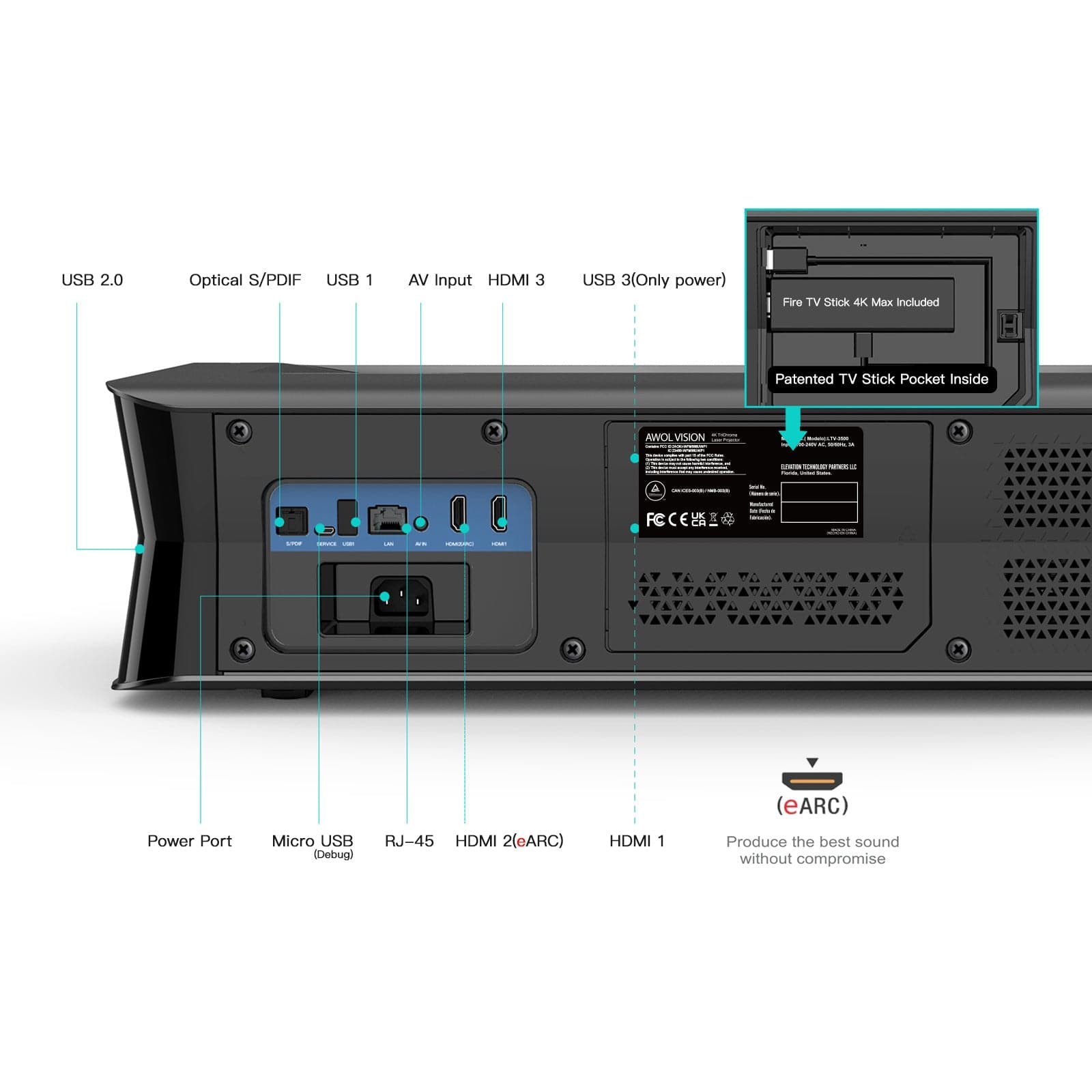
AWOL Vision includes a Fire TV Stick 4K Max in the box, and the projector is designed around it. A dedicated compartment inside the unit houses the stick, with a power-only USB connection feeding it, so the stick lives out of sight and the whole setup keeps a clean, TV-like front.
Through the stick, you get the full modern streaming catalogue in 4K with Dolby Vision and Atmos passthrough, which quietly solves the platform problem the built-in system cannot.
Connections are complete for a living-room hub. Three HDMI inputs cover a console, a disc player and the stick’s slot, with eARC on HDMI 2 for sending full-quality audio out to a soundbar or AV receiver.
There are two USB 2.0 ports, a wired Ethernet socket for stable streaming, an S/PDIF optical output, an AV input for legacy sources, dual-band Wi-Fi and Bluetooth. Wireless screen mirroring is supported for showing phone and laptop content without a cable.
Audio deserves its own paragraph, because it changes the buying maths. The 36W stereo system with Dolby Atmos and DTS Virtual:X is built to fill a room rather than merely accompany the picture, and it supports a Bluetooth speaker mode that lets the projector double as a wireless speaker when the screen is off.
Many owners will still add a soundbar eventually through eARC, but unlike most projectors, this one does not demand one on day one.
Smaller features round out the package thoughtfully. Auto brightness adjustment adapts output to the room, IP control support (PJLink, Control 4, Savant and Crestron) lets installers fold the projector into whole-home systems, and the dual-mode remote works without line of sight.
Active 3D support is the nostalgic extra: owners with a shelf of 3D discs and compatible glasses can still use them.
Performance: Colour and Brightness Together
Start with the strength. The pure RGB laser produces colour that single-laser and lamp projectors simply cannot reach: 107% of BT.2020 means the projector can display deep shades, particularly deep reds and greens, that sit outside the palette of most televisions.
Because there is no colour wheel, there are also no rainbow artefacts for sensitive viewers, a structural advantage of the triple laser design that never shows up in a specification headline.
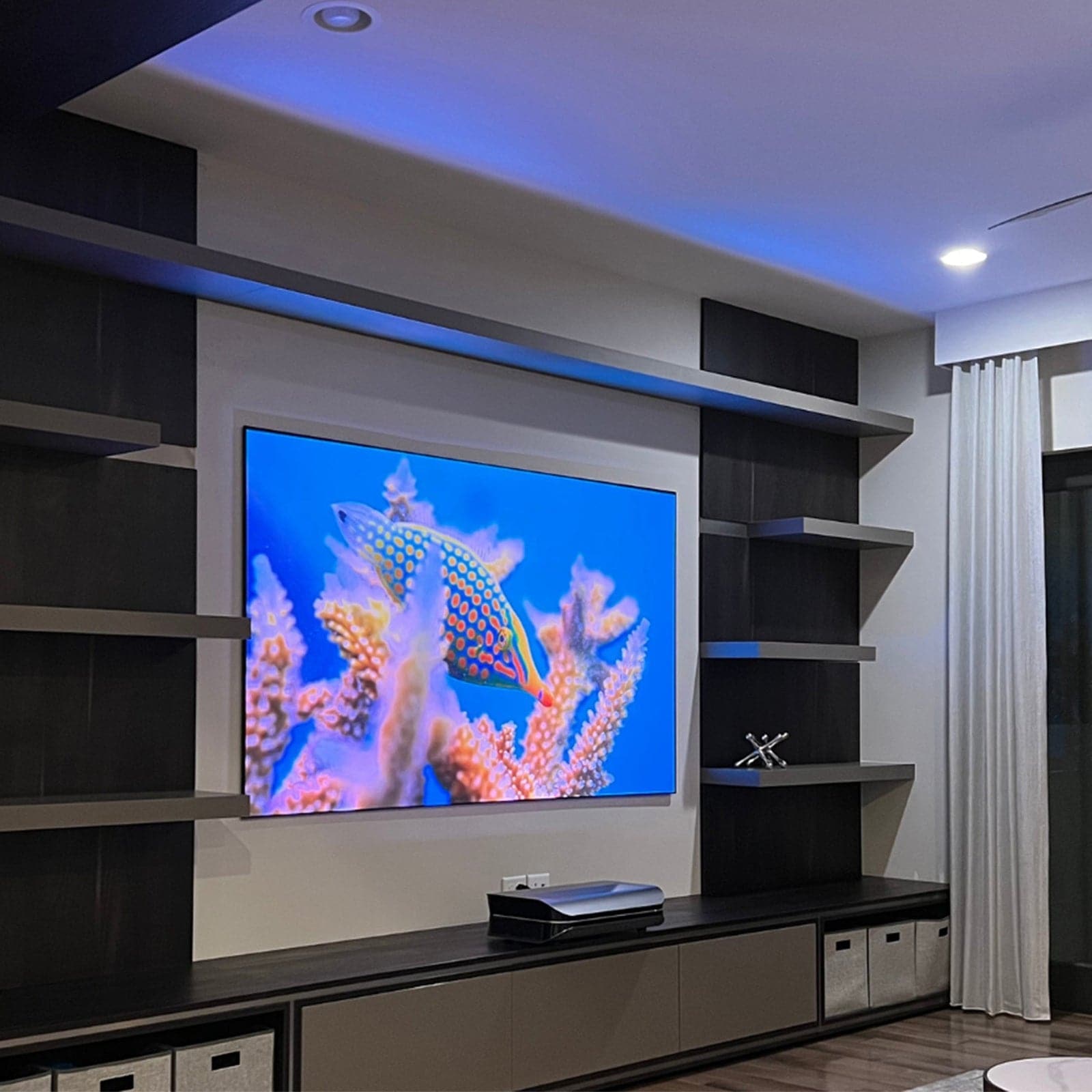
Now the brightness. At 3,300 ANSI lumens, the LTV-3500 is a big step up from the 2,000 ANSI lumens of the LTV-2500 it replaces in this line-up, and it shows: it holds a convincing 100- to 150-inch picture in a lit living room, and in a dark room it has light to spare.
Direct daylight across the screen wall will still wash any projector out, but ordinary lamps and a late afternoon no longer call for drawn curtains. If you are working out what your room needs, our guide to how many lumens you need for a projector sets out the room-by-room figures honestly.
Contrast is rated at 2,500:1, which is respectable rather than exceptional. In practice, that means dark film scenes hold together well in a dark room, with blacks that read as deep grey-black rather than the inky depth of the very best home cinema projectors.
Dolby Vision’s scene-by-scene tone mapping does a lot of quiet work here, preserving shadow detail and highlight shape that a static HDR curve would crush or clip.
Sharpness is a genuine plus. The customised Ricoh F2.0 pure glass lens is specified to stay sharp out to a 150-inch image, and glass keeps edge focus more consistent than the plastic optics on cheaper UST models.
Fan noise, rated at 30dB or under, should be a non-issue at normal listening distances, which suits a projector that sits in front of you rather than behind you.
Gaming: Turbo Mode Makes It a Real Big-Screen Games Machine
Most laser TVs treat gaming as an afterthought. The LTV-3500 does not. Its published input lag is 15ms at 4K/60Hz, which is responsive enough for almost everything outside tournament-level competitive play, and Turbo Mode drops that to 8ms at 1080p/120Hz for fast shooters and racing games where frame rate matters more than resolution.
That 120Hz path is the meaningful detail. A console or PC can feed 1080p at 120Hz and get a genuinely fluid, low-delay image on a screen up to 150 inches, something very few UST projectors offer at all.
For single-player adventures, sports titles and co-operative games, the 4K/60Hz mode at 15ms is the better-looking choice and still feels direct and connected.
The supporting hardware keeps up. HDMI eARC passes full audio to an external system when you want it, the 36W Atmos speakers give game soundtracks real width when you do not, and the eye-safety system means a player standing up mid-session will not take a laser beam at full power.
Setup & Throw: Inches From the Wall, Zero Tolerance for Guesswork
Ultra-short-throw setup is simple in concept and fussy in execution. The 0.25:1 throw ratio means the LTV-3500 builds its picture from directly below the screen, but the distances are small enough that a centimetre of error visibly changes image size and focus.
AWOL Vision’s own placement figures, converted below, are the ones to plan your console around.
| Screen size (diagonal) | Wall to rear of projector | Wall to front of projector | Image bottom above projector base |
|---|---|---|---|
| 80 inches | 6 in (15cm) | 19.9 in (51cm) | 12.9 in (33cm) |
| 100 inches | 9.8 in (25cm) | 23.7 in (60cm) | 15.1 in (38cm) |
| 110 inches | 12.4 in (31cm) | 26.6 in (68cm) | 15.9 in (40cm) |
| 120 inches | 13.6 in (35cm) | 27.5 in (70cm) | 17 in (43cm) |
| 150 inches | 20.2 in (51cm) | 34.1 in (87cm) | 19 in (48cm) |
Two planning points follow from that table. First, your console must be deep: even a 100-inch image needs the projector’s front 23.7 inches (60cm) from the wall, so a shallow console will leave the unit hanging over the edge.
Second, those figures are the starting point, not the finished setup: use them to choose the console and the screen size, then fine-tune with electric focus and the 8-point keystone.
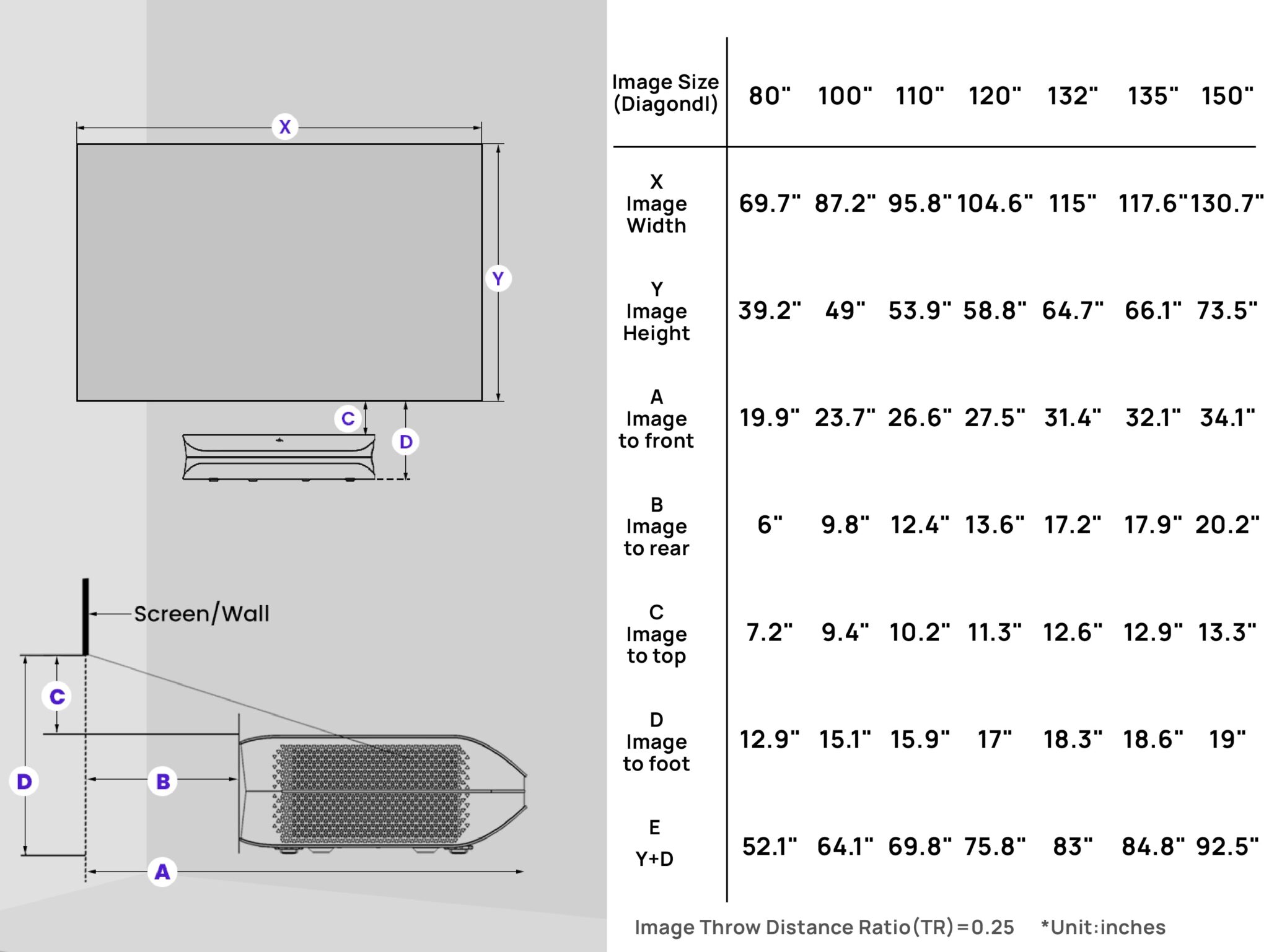
Alignment technique matters more than alignment tools. Place the projector square to the wall, level it, use electric focus to sharpen the top of the image, and only then reach for the 8-point keystone correction to tidy the corners.
Heavy keystone use costs sharpness, so the closer the physical placement is to perfect, the better the picture stays.
Screen pairing is the other half of setup, and it deserves honesty. A UST projector fires light upward at a steep angle, so it needs a flat, rigid surface; a wrinkled pull-down screen shows every ripple at this angle.
A fixed-frame UST ALR screen, designed to accept light from below and reject ceiling light from above, lifts perceived contrast and keeps blacks deep when the room has light in it.
Projecting onto a plain white wall works well in a dim room, and with 3,300 ANSI lumens behind it, the wall is a genuinely usable option — but the proper screen still earns its keep in a bright room, because with this model the screen is half the picture.
Who Should Buy the AWOL Vision 4K UST — and Who Should Skip It
Buy the AWOL Vision 4K UST if…
You are replacing a television in a living room that gets real daylight, and you want colour quality and brightness together.
It suits film and series viewers who will use Dolby Vision and HDR10+ weekly, households that want strong sound without an immediate soundbar purchase, gamers who want a genuinely low-lag 120Hz option on a huge screen, and 3D disc collectors who refuse to give the format up.
Skip it if…
Your room is a dedicated blacked-out cinema and a deep, inky native contrast figure is your single deciding measure. Skip it if you need lens shift or zoom to fit an awkward room, or if you want the very brightest UST image money can buy for sport with the lights fully on — this one is bright, but brighter models exist above it.
One honesty note on when not to choose it: if you want the deepest possible blacks in a fully blacked-out room, the 2,500:1 native contrast is fair rather than class-leading, and a dedicated home cinema projector will do better in the dark. In a normal living room, this is the right trade.
Alternatives to Consider
Hisense PX3-PRO
A triple laser rival with a strong gaming specification and a more modern built-in smart platform. The sensible alternative if you want a newer smart system but still want RGB laser colour; the LTV-3500 counters with its included streaming stick arrangement, Active 3D, and its wider published format support.
Epson EpiqVision Ultra LS800
A 3LCD ultra-short-throw model built for bright rooms, with substantially higher light output and no possibility of rainbow artefacts. Choose it for sport and daytime viewing in a lit living room; choose the AWOL for Dolby Vision, wider laser colour and lower gaming lag at 120Hz.
AWOL Vision LTV-3500 Pro
The step-up model in the same family, with the same 3,300 ANSI lumens and triple laser colour, adding Dolby Vision from launch, smart-home integration (Control4 and PJLink) and an Auto Center Channel Mode that turns the projector’s speakers into a powered centre channel.
If you want the projector to double as your centre speaker, this is the upgrade; if you only want the picture, the LTV-3500 already has it.
Frequently Asked Questions
What model is the AWOL Vision 4K UST?
It is the AWOL Vision LTV-3500, the brand’s 4K UHD ultra-short-throw model. It uses a TI 0.47-inch ECD DMD chip with pixel shifting, a pure RGB triple laser, and a Ricoh F2.0 glass lens, and it is sold as the AWOL Vision 4K UST.
Is the AWOL Vision 4K UST bright enough for a living room?
It is rated at 3,300 ANSI lumens, which is enough for a strong 100- to 150-inch picture in a lit living room. Direct daylight will wash any projector out, but ordinary lamps and late afternoon are no problem, and a UST ALR screen lifts the picture further.
Does the AWOL Vision 4K UST support Dolby Vision and 3D?
Yes to both. It supports Dolby Vision, HDR10+, HDR10, and HLG, and it also offers Active 3D for compatible discs and glasses. Note that Dolby Vision arrived on the LTV-3500 via a software update after launch, so check that the firmware is current.
How good is the AWOL Vision 4K UST for gaming?
Very good by laser TV standards. Published input lag is 15ms at 4K/60Hz, and Turbo Mode reduces it to 8ms at 1080p/120Hz, which suits fast shooters and racing games on a big screen.
Do I need a special screen for the AWOL Vision 4K UST?
A screen is strongly recommended. Because the projector fires light upward at a steep angle, it needs a flat, rigid surface, and a fixed-frame UST ALR screen also rejects ceiling light and lifts perceived contrast.
What streaming does the AWOL Vision 4K UST include?
The projector runs Android 9.0, and a Fire TV Stick 4K Max is included in the box, with a dedicated compartment to house it. Through the stick, you get the full modern streaming catalogue in 4K with Dolby Vision and Atmos passthrough.
Bottom Line
The AWOL Vision 4K UST (LTV-3500) is the colour specialist of the laser TV world: a pure RGB triple laser, 3,300 ANSI lumens, Dolby Vision and HDR10+, and a 36W Dolby Atmos speaker system in one wide, low box.
Its Android 9.0 platform is best left to the included Fire TV Stick 4K Max, and its 2,500:1 contrast is fair rather than class-leading in a blacked-out room. Give it a proper screen, and it rewards you with a picture dimmer rivals cannot match for colour or brightness.