How to Fix an Air Leak in an Inflatable Projector Screen 2026 – Complete Guide
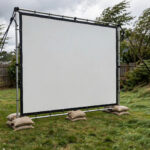
An inflatable screen has no frame holding it up. A blower runs constantly, pushing air in faster than it escapes, and that pressure is the only thing keeping the screen tall and firm.
So before you learn how to fix an air leak in an inflatable projector screen? It helps to know when you actually have one. A little air always seeps through the seams and stitching, and the blower is designed to make up for it. A real leak is when air escapes faster than the blower can replace it, and the screen starts to sag.
First, Rule Out the Three Simple Causes
Not every soft screen has a hole. Three quick checks solve a large share of apparent leaks without any repair work at all, so work through them before you start hunting for a puncture.
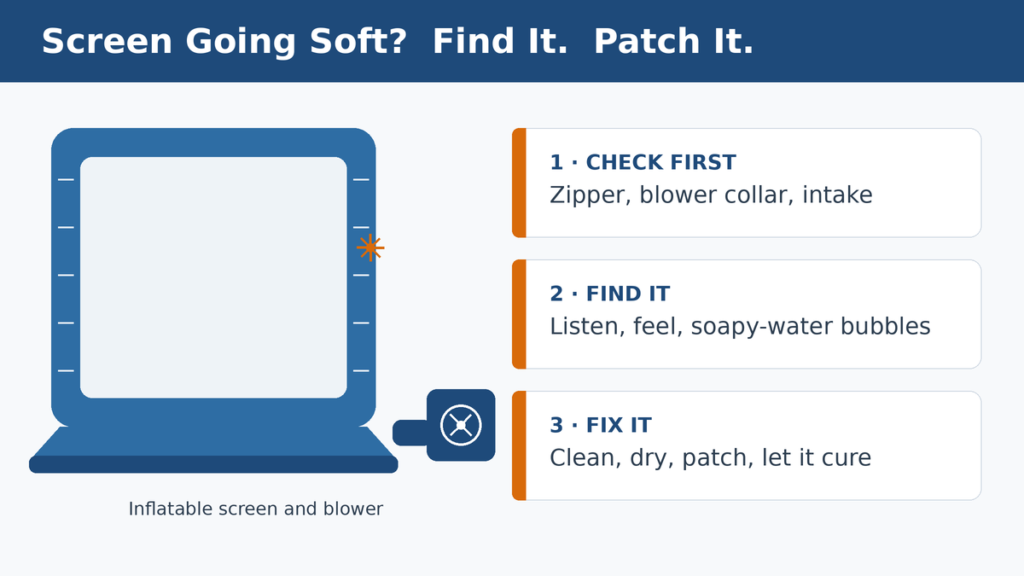
Start with the deflation zipper. Most inflatable screens have a zippered opening used to let the air out fast at pack-up time, and if it is even slightly open, air pours out far faster than any puncture would release it. Run it fully closed and check the whole length.
Next, check the blower tube and collar where the blower connects to the screen. A loose, kinked, or twisted collar leaks air at the joint and also starves the screen of pressure. Straighten the tube, seat the collar evenly, and tighten its strap or drawstring.
Finally, look at the blower intake. Leaves, grass, and dust clog the intake screen and cut the airflow, which looks exactly like a leak from the outside. Clear any debris, and if the screen firms up again, there was never a hole to fix.
How to Fix an Air Leak in an Inflatable Projector Screen
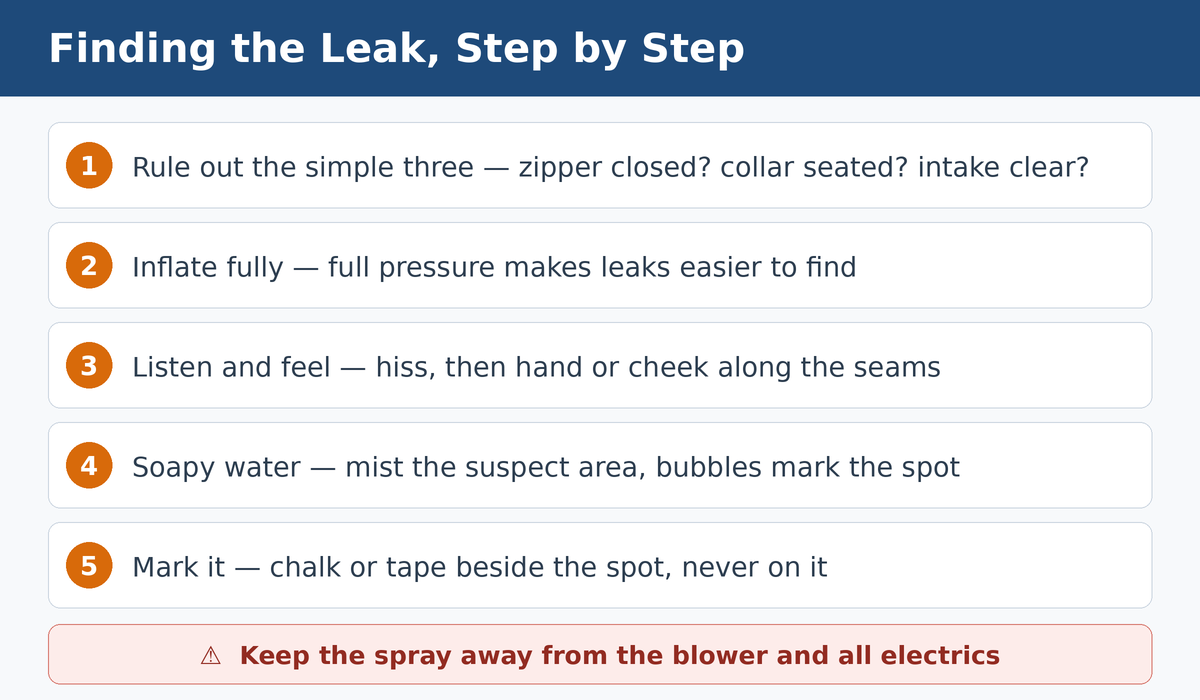
If the simple checks change nothing, inflate the screen fully and let the blower keep running. A firm screen under full pressure pushes air out of a leak at its fastest, which makes the leak far easier to find.
Work in the quietest conditions you can. Walk slowly around the screen and listen for a hiss, which is usually loudest near seams and fittings. Then run the back of your hand — or your cheek, which is even more sensitive — slowly along the seams, around the zipper, and around the blower collar, feeling for a thin stream of escaping air.
For a leak you can suspect but not pinpoint, mix a little dish soap into water in a spray bottle and mist it over the suspect area. Escaping air blows the soap film into growing bubbles at the exact spot, even for a pinhole.
Work section by section, and keep the spray pointed at the fabric only — never spray toward the blower or any electrical part.
When you find the spot, mark it straight away with chalk or a small piece of tape placed beside it, not on it. A marked leak is easy to lose once the screen deflates, and you do not want to hunt for it twice.
Patching the Leak With a Repair Kit
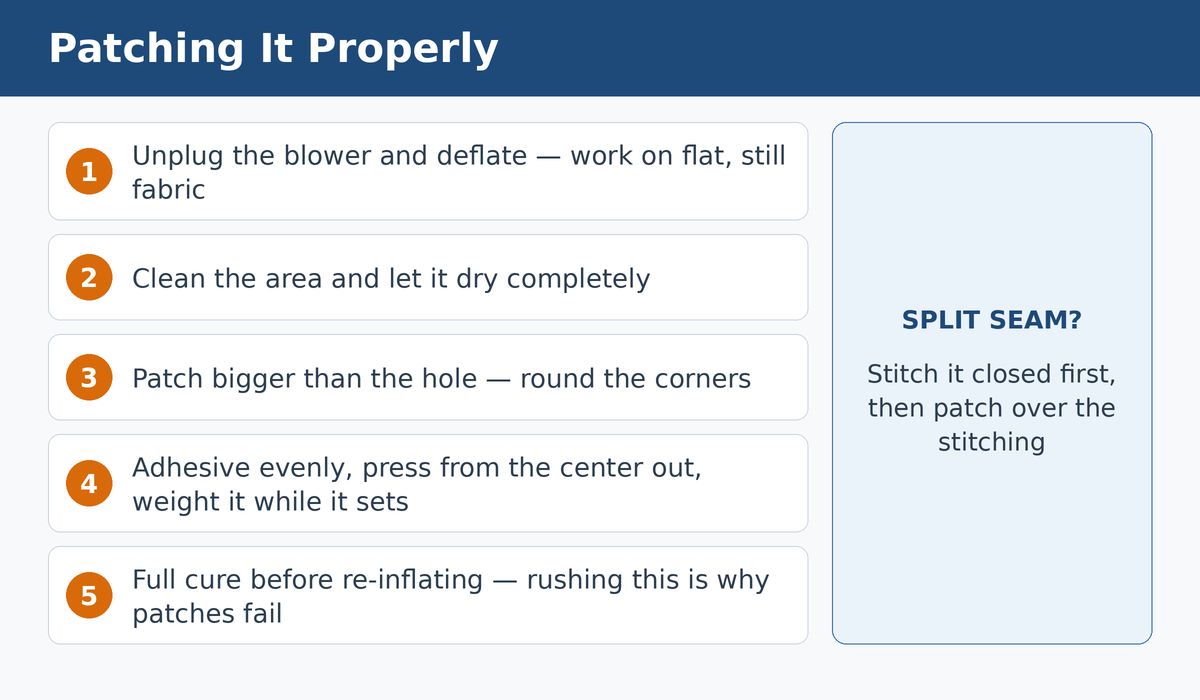
Unplug the blower and let the screen deflate before you start any repair. Work on the marked area with the fabric laid flat and still, because a patch applied to moving or stretched material rarely seals well.
Clean the area around the leak and let it dry completely. Dirt, moisture, and sunscreen residue all stop patch adhesive from bonding, and a patch that lifts at the edges within a week almost always traces back to a dirty or damp surface.
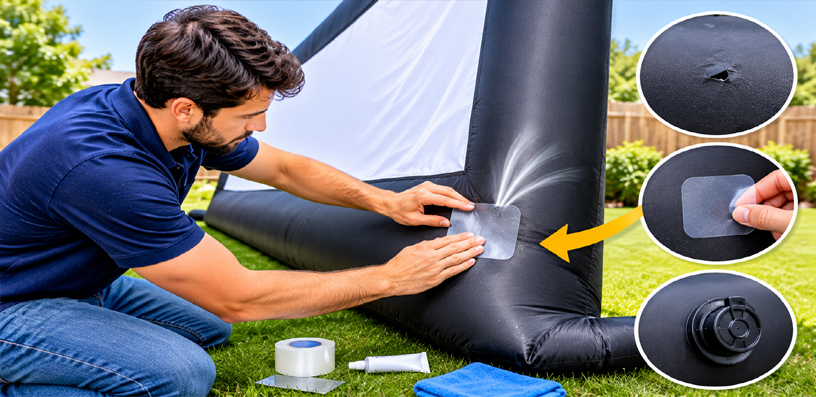
Most inflatable screens are repaired with a vinyl repair kit — a patch plus adhesive made for flexible PVC and vinyl fabrics. Cut or choose a patch noticeably larger than the hole, with a clear margin of sound material on every side, and round the corners so they are less likely to catch and peel.
Spread the adhesive evenly, following the kit’s instructions, and press the patch down firmly from the center outward so no air pockets sit under it. Then keep steady weight on the patch while it sets, and let the adhesive cure fully — for as long as the kit states — before you re-inflate. Re-inflating too early is the most common reason a patch fails.
Fixing a Split Seam
A seam that has split open needs more than a patch alone, because the two edges are under tension every time the screen inflates. A patch placed over an open split will be pulled apart from underneath.
Stitch the split closed first, pulling the edges back together with strong thread, then seal the repair with a patch centered over the stitching. The stitching restores the strength; the patch restores the air seal. Small splits respond well to this two-step fix, but a long seam failure is a different job — see below.
When a Repair Is No Longer the Right Answer
Some damage is beyond a home repair kit. A seam that has failed along a long run, several separate tears, or fabric that has gone brittle and keeps splitting beside each new patch are all signs the screen is at the end of its life.
Professional repair is worth considering for a large, otherwise sound screen with one bad seam. For everything else, replacement is usually the honest call — and if you end up shopping, the inflatable models in our best outdoor projector screen roundup show what current screens offer.
Do not keep running a badly leaking screen in the meantime: the blower has to work flat-out to hold it up, and that constant strain shortens the blower’s life too.
Stopping the Next Leak Before It Starts
Most punctures happen at ground level, so sweep the setup area for sharp stones, twigs, and debris before you unroll the screen. The few minutes this takes — as part of the same careful routine covered in our guide to how to set up an inflatable projector screen — prevents the most common leak of all.
Tether with some give rather than maximum tightness. Ropes pulled drum-tight strain the seams every time the wind gusts, and the anchoring approach in our guide to keeping an outdoor projector screen from blowing in the wind shows how to hold a screen steady without overloading the stitching.
At pack-up, let the screen dry fully before folding it away, and store it clean, dry, and loosely folded. Mildew and grit ground into damp folds quietly weaken fabric and seams between seasons.
Frequently Asked Questions
Is it normal for air to escape through the seams?
Yes. A small amount of air always seeps through seams and stitching on an inflatable screen, and the blower is designed to run constantly to replace it. It only becomes a problem when the screen starts to sag.
Why does my inflatable screen keep deflating?
Air is escaping faster than the blower replaces it. Check the deflation zipper, the blower collar, and the intake for debris first — those three cause most deflation problems. If none of them is at fault, there is a hole or a split seam to find.
Can I fix a leak with duct tape?
Only as an emergency measure to get through one evening. Duct tape peels as the fabric flexes, leaves sticky residue that ruins later patch adhesion, and is not an airtight fix. A vinyl repair kit patch is the proper repair.
How do I find a leak without soapy water?
Inflate the screen fully, then listen for a hiss and run the back of your hand or your cheek slowly along the seams to feel escaping air. That finds most leaks; soapy water is simply the most reliable way to pinpoint a very small one.
How long does a patch on an inflatable screen last?
A vinyl patch applied to a clean, fully dry surface and allowed to cure completely can last for years — often the remaining life of the screen. Patches that fail early almost always went onto a dirty or damp surface, or were re-inflated before the adhesive cured.
Can a leaking screen damage the blower?
It can. The blower already runs constantly by design, and a large leak forces it to work at full load without relief to hold the screen up. Running a badly leaking screen for event after event shortens the blower’s working life.
How long should I wait before re-inflating after patching?
As long as your repair kit states — follow its cure time rather than guessing. The adhesive needs to be fully cured before air pressure starts pushing on the patch from inside, and cutting the wait short is the most common cause of a failed repair.
Should I repair or replace a torn inflatable screen?
Repair single punctures and short seam splits — they patch well. Consider professional repair for one long seam failure on an otherwise sound screen. Replace the screen when there are multiple tears or the fabric itself has gone brittle.
Bottom Line
Most apparent leaks turn out to be an open zipper, a loose blower collar, or a clogged intake, so check those before anything else.
For a genuine hole, the fix is methodical rather than difficult: find it with your ears, your hand, and soapy water, then patch it on a clean, dry surface and respect the cure time.
Look after the screen at setup and storage, and a good patch should keep it standing firm for many more movie nights.