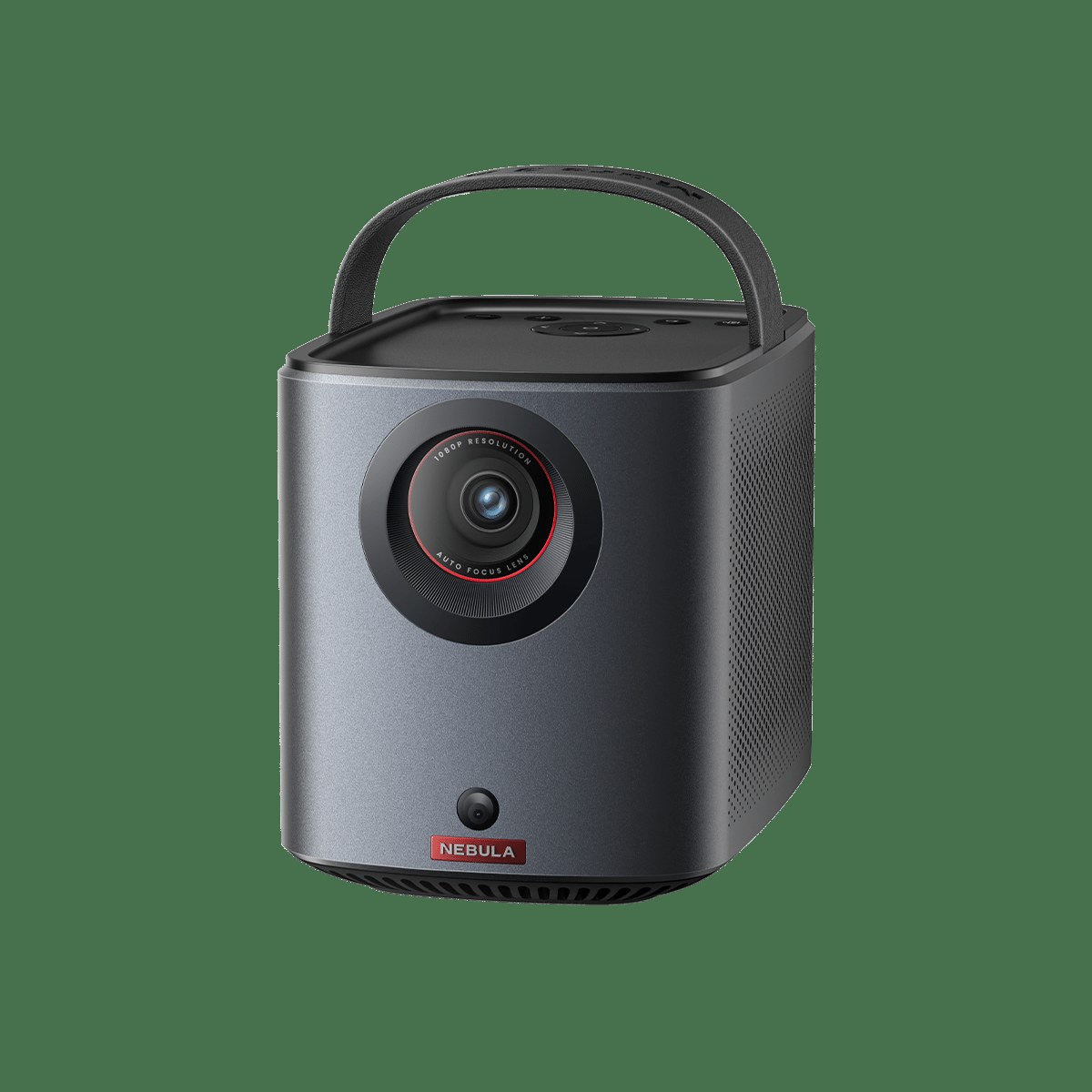
Anker Nebula Mars 3 Air Review (2026) — Portable Outdoor Projector
Most portable projectors ask you to believe two numbers at once: the brightness on the box and the battery life underneath it.
This Nebula Mars 3 Air review starts by separating them, because on the Anker Nebula Mars 3 Air those two numbers never happen at the same time — and that one trade-off tells you most of what you need to know.
Anker Nebula Mars 3 Air Review That Starts With the Battery
The Mars 3 Air is a battery-powered 1080p portable projector built around Google TV with an officially licensed Netflix app, a 400 ANSI lumen LED light engine, and dual 8W Dolby Audio speakers.
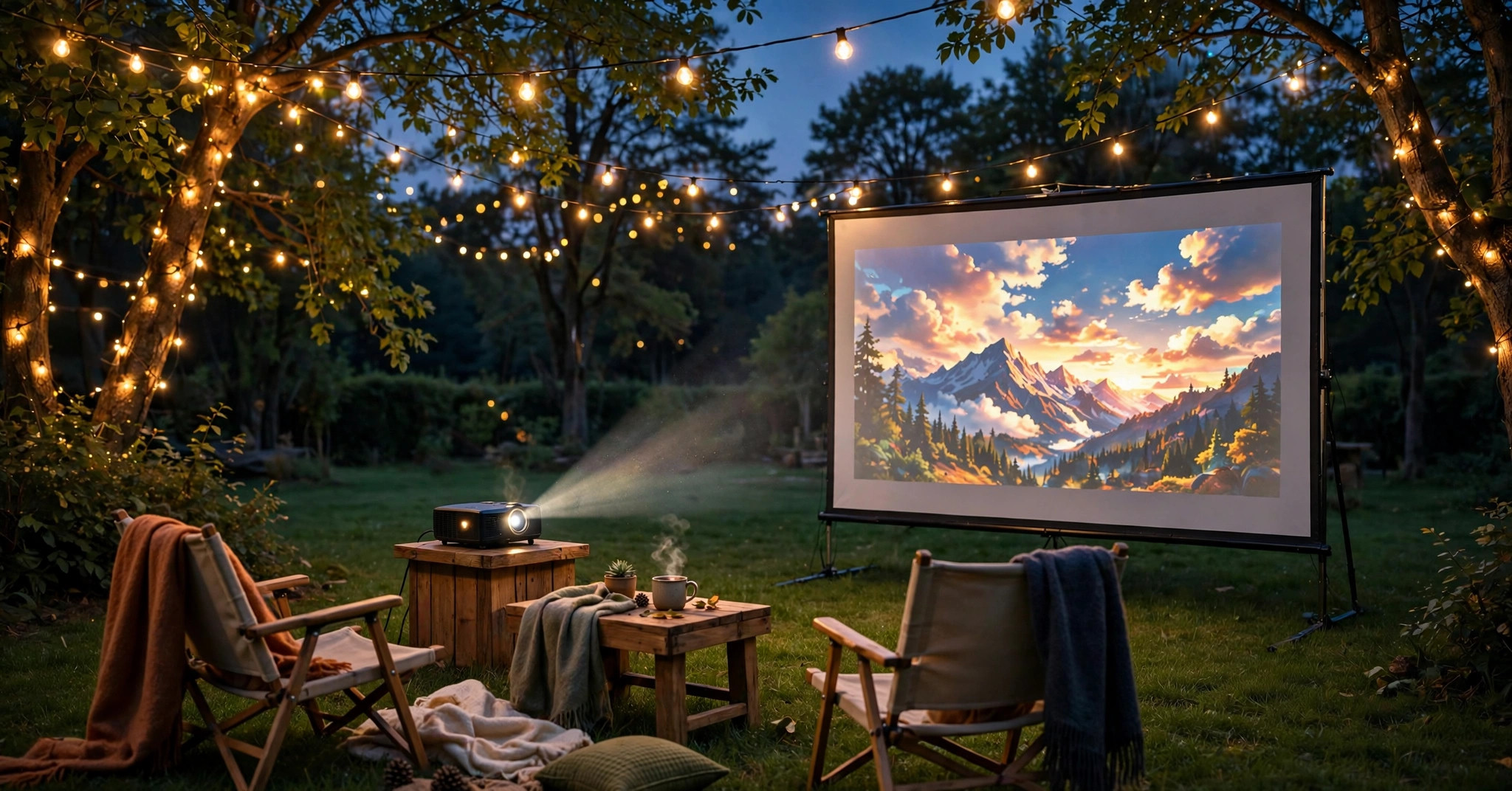
Its job: point it at a wall or screen after dark — bedroom, hotel, campsite, or backyard — and start a film in under a minute, with no streaming stick, cable hunt, or separate speaker.
Based on verified specifications from Anker’s official page and measured data, it does that job unusually well for its size.
It is for renters who cannot install a fixed projector, families who want backyard movie nights without cables across the lawn, and travelers who need a self-contained screen — not for midday viewing, true HDR, or competitive gaming.
The short verdict: measured brightness lands almost exactly on its rating, Netflix support is real rather than a workaround, and the speakers are strong enough to leave a Bluetooth speaker at home.
Its limits are equally real — Eco mode drops output to roughly a third of full brightness, contrast is modest, and there is no USB-C or weather rating.
This review is based on verified specifications and independently measured data, not hands-on testing claims. Wider context is in our guide to the best outdoor projectors.
Anker Nebula Mars 3 Air: Key Specifications
- Model: Anker Nebula Mars 3 Air (D2325)
- Display: Single-chip DLP, 0.23-inch DMD; native 1920 x 1080, 16:9
- Brightness: 400 ANSI lumens rated; 399 measured at peak, 383 in Standard mode
- Light source: RGB LED, rated 30,000 hours; contrast 400:1
- HDR: HDR10 accepted; does not accept a 4K input signal
- Throw: 1.2:1 fixed, digital zoom (shrink) only; image 30–150 inches; distance 0.8–4.0 m
- OS: Google TV interface (listed by Anker as Android TV 11.0 in some regions); 2GB RAM, 16GB storage
- Streaming: Licensed Netflix at 1080p, Prime Video, Disney+, YouTube; built-in Chromecast
- Auto setup: Intelligent Environment Adaptation 3.0 — autofocus, auto keystone (±40°), screen fit, obstacle avoidance in about 3 seconds
- Audio: Dual 8W speakers, Dolby Audio; Bluetooth speaker mode
- Battery: Rated 2.5 hours of video in Eco, up to 8 hours of music; measured 3 hours 10 minutes in Eco at 145 lumens
- Fan noise: Rated under 28 dB (ISO 7779); measured 40.3 dBA at 36 inches in a real room
- Input lag: 44.1 ms measured at 1080p/60Hz
- Ports: HDMI, USB-A 2.0, 3.5mm audio out, DC inlet (19V/4.74A); no USB-C
- Wireless: Dual-band Wi-Fi, Bluetooth 5.1
- Size and weight: 178 x 122 x 133 mm; 1.69 kg
✓ Pros
- Measured brightness matches the rating: 399 ANSI lumens peak, 383 in Standard
- Licensed Netflix at 1080p on Google TV — no stick, no sideloading, no standard-definition trap
- Three-second auto setup: autofocus, keystone, screen fit, obstacle avoidance
- Strong dual 8W Dolby Audio speakers; up to 8 hours as a Bluetooth speaker
- Over 3 hours measured battery playback in Eco, with a four-LED charge gauge
- Picture modes cost almost no brightness; wide colour coverage for the class
- Sealed LED engine rated 30,000 hours, no filter maintenance
✗ Cons
- Eco mode, needed for longest battery life, drops output to a measured 145 lumens
- 400:1 contrast: grey blacks and flattened shadow detail in dark scenes
- No USB-C: no USB-C video and no power-bank charging; DC adapter only
- No weather resistance rating, despite the outdoor positioning
- HDR10 is compatibility, not impact, at this brightness; no 4K input
- 44.1 ms input lag rules out competitive gaming
- No lens cap, tilt foot, or optical zoom
Two lines matter most: brightness uniformity measured at 88 percent is excellent for a portable, and the 400:1 contrast is honest in practice — black reads as dark grey, especially in letterboxed films.
Design & Build
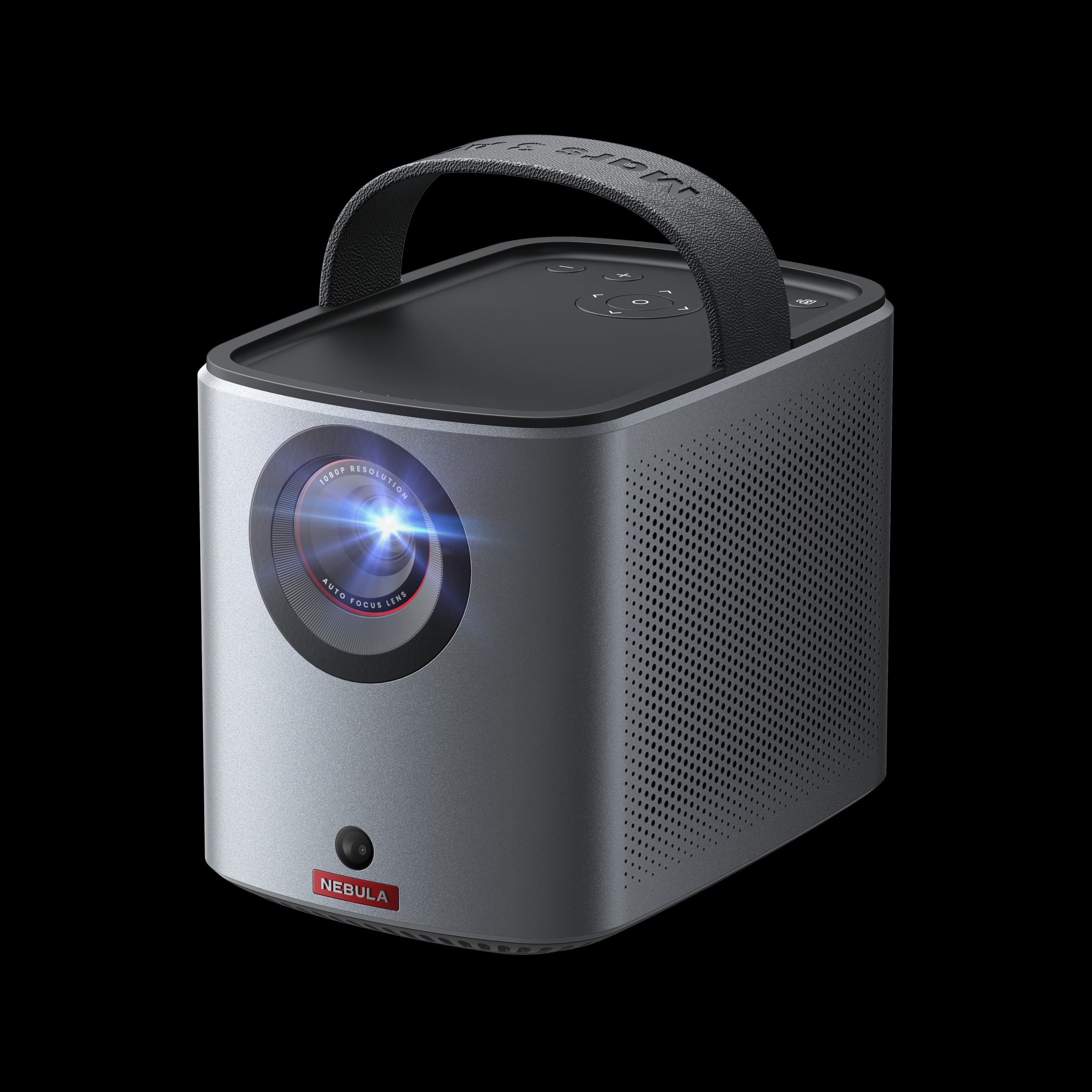
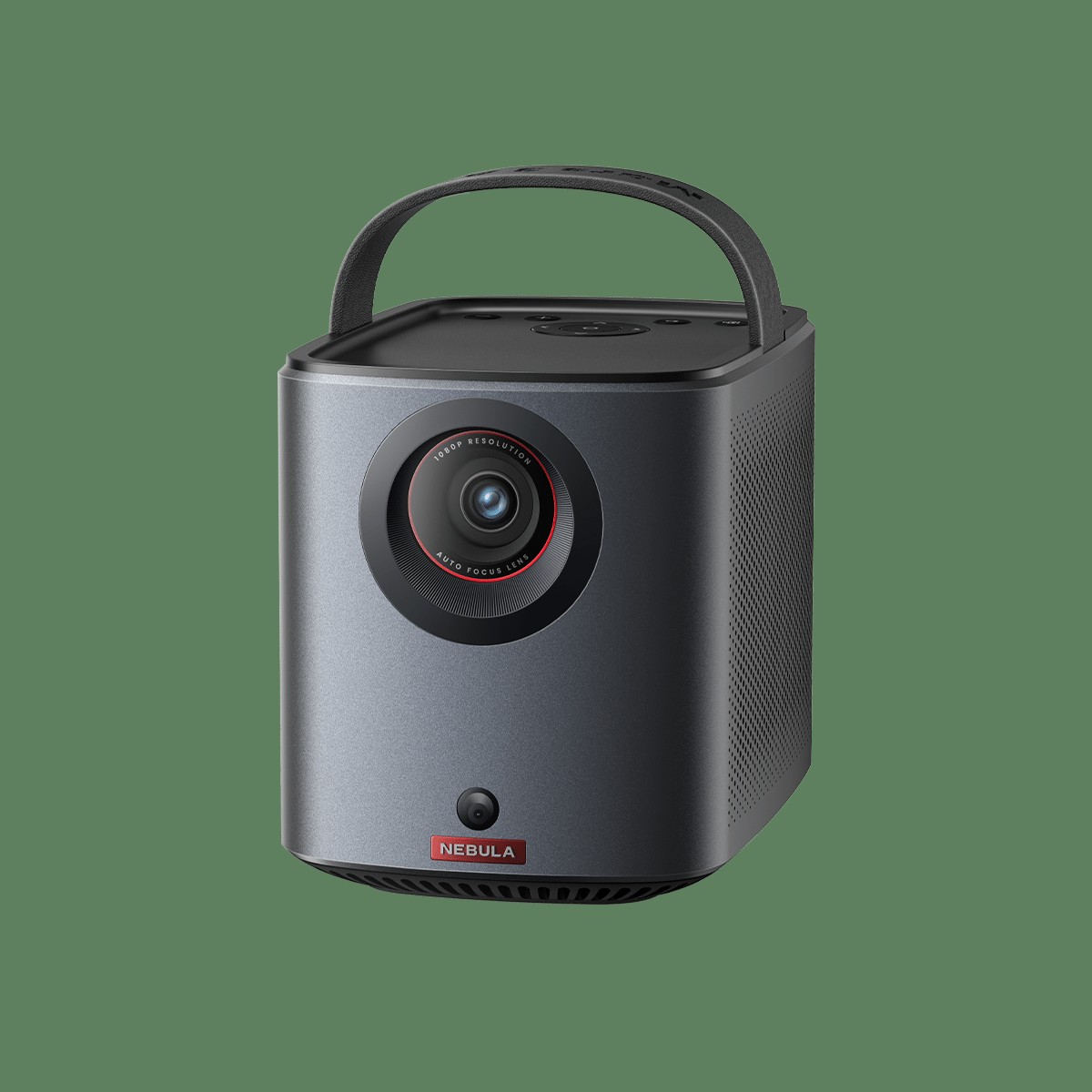
The Mars 3 Air takes the rectangular route rather than the soda-can shape of smaller portables.
At 178 x 122 x 133 mm and 1.69 kg, it resembles a small lunchbox, and the extra volume buys larger speakers, a bigger battery, and a lens set about four inches above the base — high enough that on many tables the image clears the table edge without propping the unit on books.
The perforated grey case carries a faux-leather handle on top — at under two kilos this is a one-handed carry from shelf to garden. Around the back are some of the widest exhaust vents in the class, and they need clearance, as independent testing found the chassis runs warm.
On top sit a four-way controller, volume keys, a Bluetooth speaker button, and a four-LED battery gauge — minor until the remote slides down a sofa in the dark. The remote adds Netflix and Prime Video keys and a microphone for Assistant voice search.
The omissions are honest: no lens cap, tilt foot, or levelling adjustment, so height is solved with the threaded tripod mount underneath, a stand, or books. There is also no IP rating, unlike the larger Mars 3 — treat this as a dry-evenings projector, not an all-weather one.
The sealed optical engine never needs a dust filter change, a real long-term advantage for a projector packed and unpacked repeatedly.
Anker Nebula Mars 3 Air: Features
Intelligent Environment Adaptation 3.0: Setup in About Three Seconds
On power-up, the Mars 3 Air projects checkerboard patterns and reads them back with a front camera and sensor, then sets focus, corrects keystone, fits the image to a detected screen, and shrinks it to avoid obstacles such as switches or frames.
Anker quotes about three seconds, and independent reviews confirm it really is that fast. The value is highest away from home — a hotel wall you do not control — but it also removes the nightly coffee-table nudging ritual. Manual overrides exist for patterned wallpaper or dark walls.
One caution: digital keystone scales the image and costs a little sharpness, so place the projector as square as you can.
Google TV With a Licensed Netflix App
The most important feature here is not optical. The Mars 3 Air runs Google TV with an officially licensed Netflix app streaming at full 1080p, with profiles and a dedicated remote button.
Many portables fail exactly here, running unlicensed Android builds where Netflix plays only in standard definition or needs a mirroring workaround. Google TV also brings a unified home screen, Assistant voice search, and built-in Chromecast.
Apple users face a gap — full iPhone mirroring is not native — covered under Smart Features below.
Battery, Power Modes, and the Auto Switch
The battery is rated for 2.5 hours of video in Eco and up to 8 hours of music. There are two brightness levels — Standard and Eco — plus an Auto setting: unplug the projector, and it drops into Eco to protect runtime.
Eco is no small trim — measured output is 145 ANSI lumens in Eco against 383 at full power. Performance below gives the full runtime picture.
For off-socket viewing generally, see our guide on how to power a projector outdoors without an outlet — though this model charges only from its DC adapter.
Connectivity: Capable, With One Clear Gap
Connections are HDMI (listed with ARC support by Anker), USB-A 2.0 for flash-drive media, a 3.5mm audio output, and the DC inlet. The clear gap is USB-C: there is none — no USB-C video, no USB-C charging — so laptop viewing goes through HDMI, often with an adapter. Count this as a real cost if your setup is single-cable USB-C.
Performance
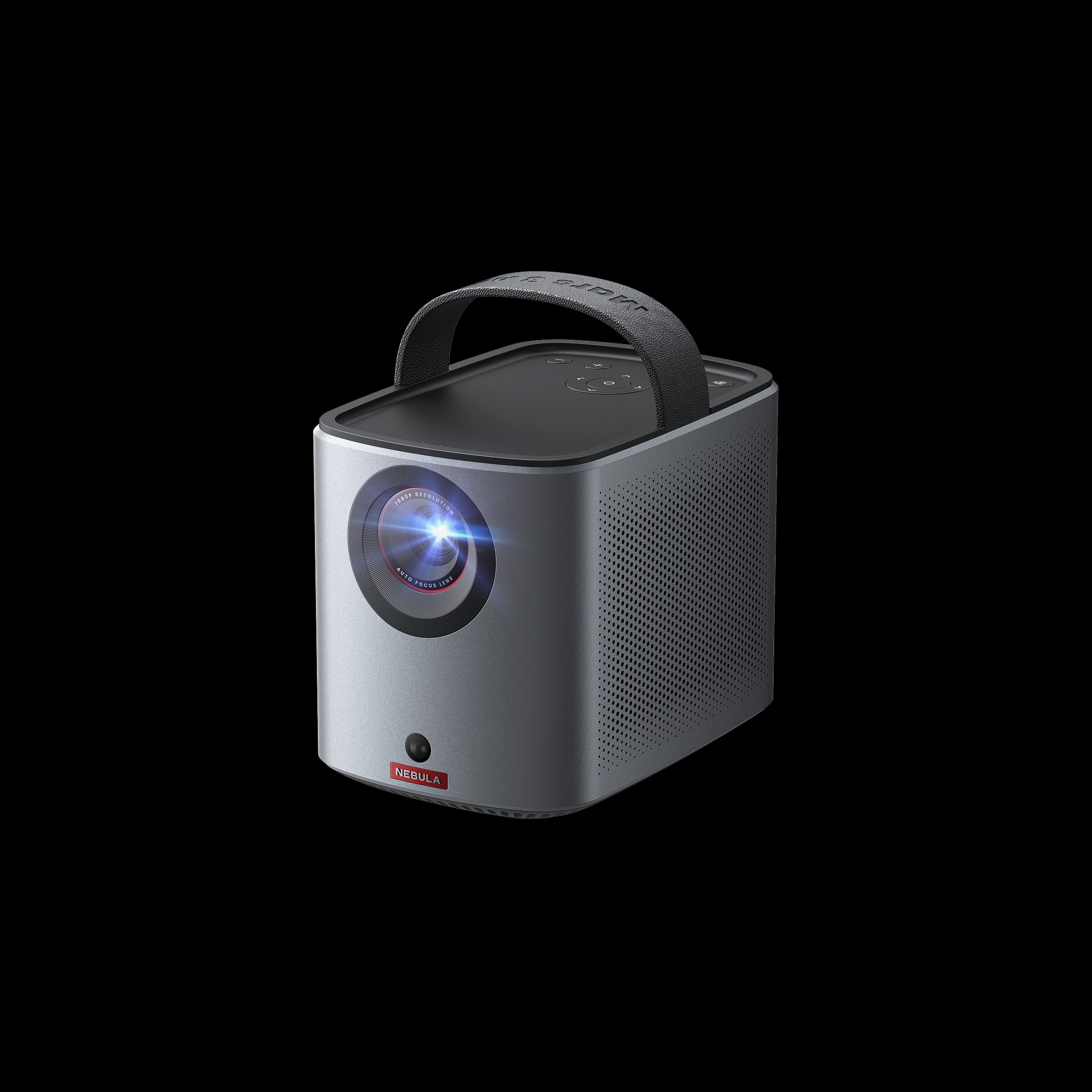
Anker rates 400 ANSI lumens, and measured output is 399 in Conference mode, 383 in Standard, 372 in Movie, and 382 in Game. Landing within one lumen of the rating at peak is rare in this category: the number on the box exists, in the brightest mode, on mains power.
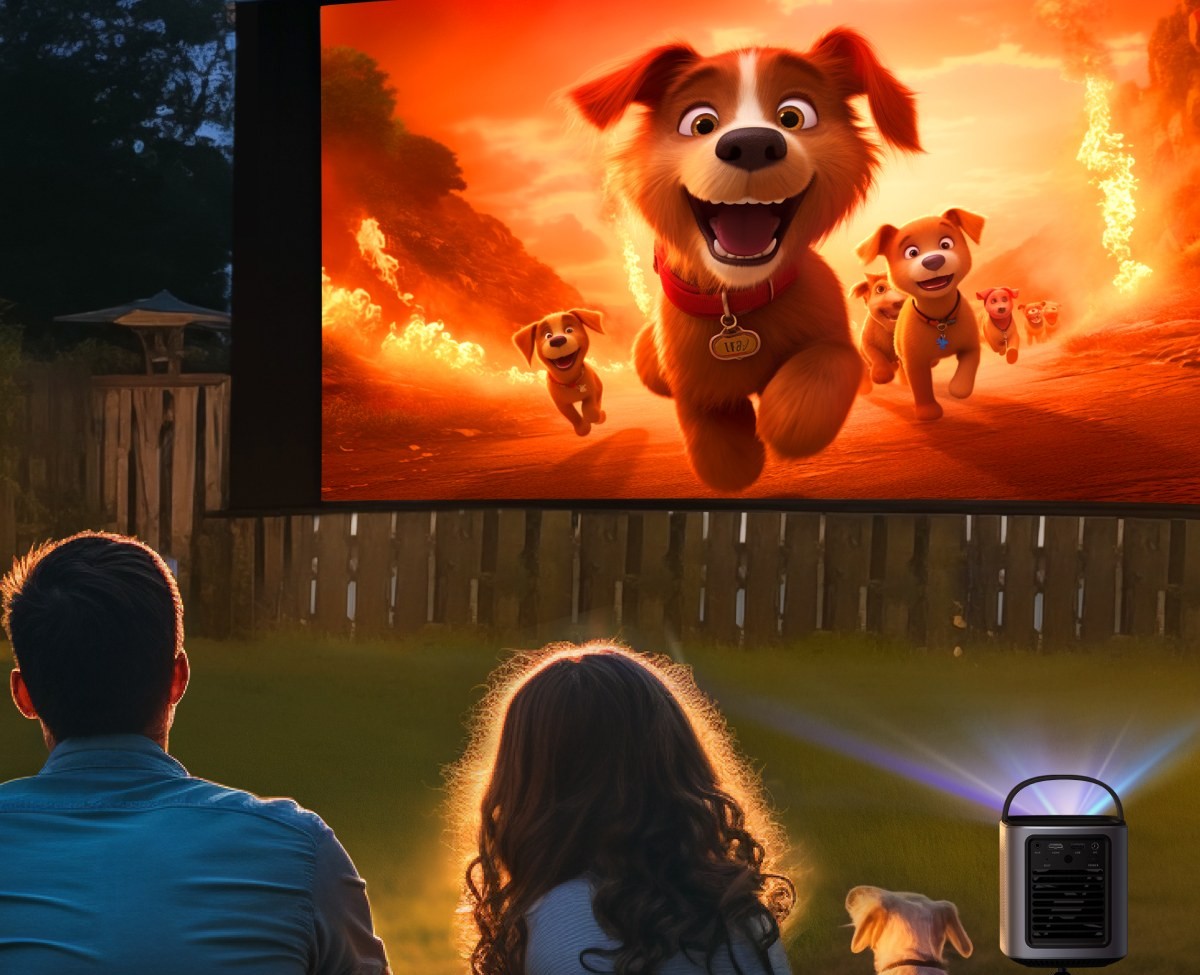
What does that buy? In a dark room or outdoors after sunset, a punchy image at 60 to 80 inches, and a good one at 100 inches in proper darkness. With a lamp on, pull back to around 80 inches to stop colours washing out.
In genuine daylight it gives up, as every projector at this brightness does, and beyond roughly 80 to 100 inches the image dims past what most viewers will accept.
Sharpness holds up within those sizes: the 0.23-inch DLP chip uses pixel-shifting for its 1080p image, and text and faces stay crisp. Colour is a highlight — measured around 90 percent of DCI-P3, which is why animation looks notably lively.
Contrast is the counterweight: at 400:1, letterbox bars glow dark grey and dark thrillers lose shadow detail, while bright content hides this completely.
Throw Distance: How Far Back for Each Screen Size?
Most reviews skip this table; it is the first thing a real room needs. The fixed 1.2:1 ratio sets distance by image width, and with no optical zoom — digital zoom only shrinks — you move the projector, not the lens.
| Screen size | Throw distance | Best use |
|---|---|---|
| 40 inches | 1.1 m / 3.5 ft | Bedroom, caravan |
| 60 inches | 1.6 m / 5.3 ft | Hotel room, small living room |
| 80 inches | 2.1 m / 7.0 ft | Sweet spot with some ambient light |
| 100 inches | 2.7 m / 8.7 ft | Dark room or backyard after sunset |
| 120 inches | 3.2 m / 10.5 ft | Full darkness recommended |
| 150 inches | 4.0 m / 13.1 ft | Maximum; ideal conditions only |
Work backwards from your space — measure to where a projector can actually sit — and see our guide to what size screen you need for a backyard movie night.
Battery Runtime: Eco Versus Full Brightness
Here is the gap most coverage glosses over. In Eco mode, measured runtime is 3 hours 10 minutes from a full charge — better than the 2.5-hour rating — but at only 145 lumens.
At full brightness, expect roughly two hours; a long epic on battery at full power is a risk, not a plan. Recharging takes about two hours with the projector off.
In practice, Eco at 70 to 80 inches on a proper screen looks genuinely good after dark and finishes a film with charge to spare, while in a room with light leakage you will want mains power and full brightness.
Choose deliberately — 145 versus 383 lumens is the difference between a cinema and a compromise.
Fan Noise: Rated Figure Versus Room Figure
Anker rates noise under 28 dB under ISO 7779 controlled conditions. In a real room with a 38.9 dBA noise floor, the recorded level was 40.3 dBA at 36 inches from the vent in the brightest mode, with near-identical figures in Movie and Eco.
These do not contradict each other; they measure different things in different rooms. Reviewers consistently call the Mars 3 Air quiet for its class — dialogue masks it easily — and heat at the vents is the bigger comfort issue.
Picture Modes
There are four presets plus a Custom mode, and unusually, switching modes costs very little brightness: where many portables lose a third of their output outside the brightest mode, the drop from Conference to Standard here is about four percent. Game mode appears only with an HDMI source connected.
Standard Mode — 383 Lumens
The mode most owners should live in: it removes Conference’s green cast, keeps colours bright and rich, and runs a touch warm. Nearly all the brightness, none of the obvious colour errors.
Movie Mode — 372 Lumens
Movie warms the image further, with a slight orange tilt that flatters skin tones in a dark room. Start here for films after dark — and as the natural partner to Eco power mode on battery nights.
Conference Mode — 399 Lumens
The brightest mode and the least accurate, with a noticeable green tinge that makes people look unwell. Reserve it for its name: presentations, spreadsheets, and text in rooms you cannot darken. For anything with faces, the four percent given up in Standard is always worth it.
Game Mode — 382 Lumens
Available only over HDMI, Game runs cooler than Movie and is the mode tied to the measured 44.1 ms input lag. It locks out keystone correction, so position the projector squarely before playing. See Gaming below for where that lag figure draws the line.
Custom Mode and Expert Settings
Custom saves your own brightness, contrast, saturation, sharpness, and colour temperature, with RGB gain controls, three gamma options, wall-colour compensation, and noise reduction in Expert Settings.
There is no Rec.709 or sRGB reference mode, which purists will miss, but most viewers will settle on Standard or Movie and stop thinking about it.
HDR Tone-Mapping: What HDR10 Means Here
The Mars 3 Air accepts HDR10, widely oversold across this category, so plainly: at around 400 lumens and 400:1 contrast, it cannot reproduce the highlight punch or deep blacks HDR mastering assumes.
HDR is tone-mapped down into its range — explosions lose their flash, and dark HDR scenes can look flatter than the same title in SDR. It accepts no 4K input at all. Buy it for its SDR picture, which is genuinely good, and treat HDR as compatibility, not a feature.
Audio
Dual 8W speakers with Dolby Audio put the Mars 3 Air near the top of its class for built-in sound — a main reason to choose this larger body over a pocket-sized rival. Reputable reviews describe loud, clear, wide sound with real stereo separation and dialogue that stays intelligible outdoors.
Presets include Music, Movie, and Outdoors, plus Custom with bass, treble, and balance.
The limits are expected: bass is light, so action films lack rumble. Most viewers will not miss an external speaker; for larger groups, connect a Bluetooth speaker — with an adjustable delay for lip-sync — or wired speakers via the 3.5mm output. As a standalone Bluetooth speaker, rated runtime stretches to 8 hours of music.
Smart Features & OS
Google TV runs over Android TV 11.0, as Anker lists it in some regional specifications, on an MT9629 processor with 2GB RAM and 16GB storage. The home screen will be familiar from any Google TV television: content-first rows, Live TV, Apps, and Library.
App coverage is the platform’s strongest argument: Netflix licensed at 1080p, plus native Prime Video, Disney+, Apple TV+, Hulu, and YouTube. Assistant handles voice search, and the Nebula Connect phone app adds a touchpad and mouse mode, though reviewers note it stays shallow.
The gaps deserve naming. There is no native full-screen AirPlay mirroring; Chromecast covers Android and Chrome, and iOS users rely on app-level casting or Nebula Cast. As a certified build — exactly why Netflix works — open APK freedom is not the design goal. Keep firmware updated over Wi-Fi.
Full specifications are on the official Nebula Mars 3 Air product page, and lab measurements are presented here.
Gaming
Input lag measured 44.1 ms at 1080p/60Hz with a Bodnar lag tester — fine for a large slice of gaming, wrong for another, and the line is genre. Story adventures, RPGs, platformers, casual racing, sports, and party games feel responsive enough, helped by Game mode keeping a bright 382 measured lumens.
Competitive shooters, serious fighting games, and rhythm games are where 44.1 ms shows; dedicated gaming projectors target under 20 ms. Game mode requires an HDMI source and disables keystone, so set up square before you play. Verdict: very good for casual gaming, not competitive, and no setting changes that.
Who Should Buy / Who Should Skip
Buy It If You…
Watch mostly after dark and want a complete system — screen, streamer, and speakers in one carry. Stream mainly from Netflix and the major services and are tired of projectors where the headline app does not work properly. Host backyard nights on dry evenings at 80 to 100 inches.
Travel, tour in a caravan, or move between rentals where three-second setup on an unknown wall is worth real money. Play games casually on a big screen.
Skip It If You…
Need daylight or bright-room viewing — that takes a fundamentally brighter, mains-powered projector. Care most about dark, cinematic HDR and deep blacks, which need higher contrast than this class offers.
Play competitive shooters or fighting games where lag decides outcomes. Need USB-C power-bank charging or single-cable laptop connection.
Or plan outdoor use where rain is realistic — look for a model with an actual water resistance rating and accept the extra size that usually brings.
Alternatives to Consider
Anker Nebula Mars 3
The step up if brightness and outdoor toughness beat compactness: substantially higher rated brightness, a much larger battery, a far more powerful speaker, and an IPX3 water resistance rating, in a bigger, heavier body. Choose it if movie nights are primarily outdoors.
XGIMI MoGo 2 Pro
The closest rival: 1080p, strong auto setup, good speakers, and the USB-C connectivity the Mars 3 Air lacks, balanced against a power arrangement that leans on external power. Choose it if USB-C video and charging are central to your use.
Samsung The Freestyle (2nd Gen)
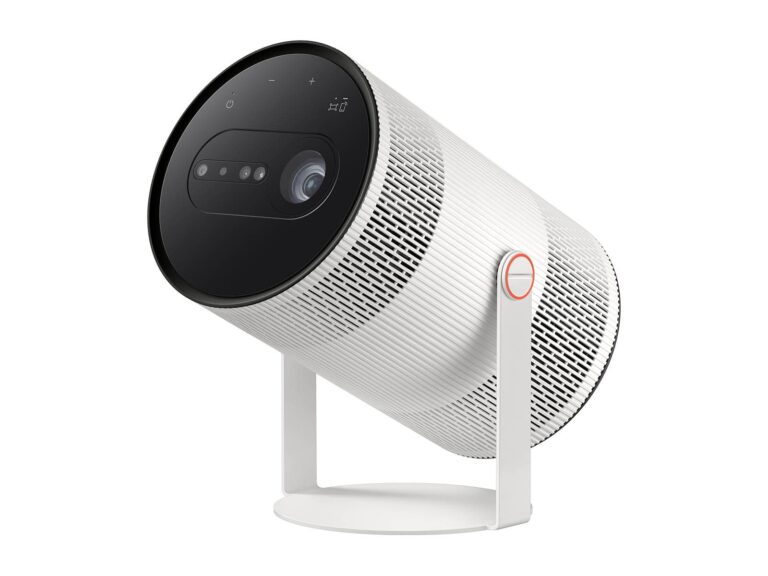
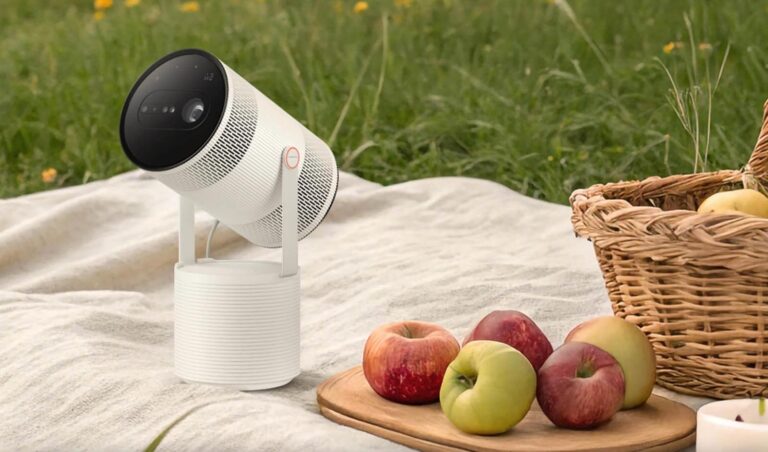
A different take on portability: dramatically smaller and lighter, with a tilting cradle that makes angled and ceiling projection easy, on Samsung’s Tizen platform. It gives up brightness and speaker power to get that size. Choose it if packing light and pointing the image anywhere matter more than punch and battery endurance.
Anker Nebula Capsule 3
The smaller Nebula for travelers who prioritise pocketability, keeping the Google TV and licensed Netflix formula with lower brightness and smaller speakers. Choose it if the projector lives in a carry-on; choose the Mars 3 Air if it lives at home and visits the garden.
Frequently Asked Questions
How long does the Nebula Mars 3 Air battery really last?
Anker rates 2.5 hours of video in Eco and up to 8 hours of music. Independent measurement found 3 hours 10 minutes in Eco, but at only 145 lumens. At full brightness, plan on roughly two hours, or plug into mains power for long films.
Can you use the Nebula Mars 3 Air in daylight?
Not meaningfully. At 400 ANSI lumens, it needs a darkened room or outdoor darkness. With curtains closed and a 60 to 80 inch image, daytime television is watchable, but direct daylight washes out every projector in this class.
Does the Mars 3 Air have a proper Netflix app?
Yes — Google TV with an officially licensed Netflix app at full 1080p, with profiles and a dedicated remote button. That is its biggest advantage over cheaper portables, where Netflix is often standard definition only.
Is the Nebula Mars 3 Air good for gaming?
For casual gaming, yes. Measured lag is 44.1 ms at 1080p/60Hz, suiting story games, RPGs, racing, and party titles. Competitive players should choose a projector rated under 20 ms. Game mode requires HDMI and disables keystone.
How far away should the Mars 3 Air be for a 100-inch screen?
About 2.7 metres, or 8.7 feet, from its fixed 1.2:1 throw ratio. There is no optical zoom, only digital shrink, so distance is set by placement. At 100 inches, use a dark room or a backyard after sunset.
Can you charge the Mars 3 Air with a USB-C power bank?
No. It charges through its included DC adapter and has no USB-C port, so a power bank cannot extend runtime. Plan around the Eco and full-brightness runtimes, or watch near a mains socket.
Bottom Line
The Mars 3 Air earns its recommendation the unfashionable way: its headline numbers survive measurement. Four hundred ANSI lumens became 399 in the lab, Netflix is licensed at full resolution, the speakers are as good as promised, and three-second auto setup works on imperfect walls.
For streaming after dark — bedroom, rental, caravan, or dry backyard at 80 to 100 inches — it is one of the most complete portable projectors available as a single box.
Its limits are the physics of a 1.69 kg battery projector, stated more transparently than most: over three hours measured comes at 145 lumens, full brightness roughly halves your time off a socket, contrast is modest, HDR is a compatibility tick, lag suits casual play only, and the missing USB-C port will annoy anyone standardised on it.
If your movie nights happen after sunset, your content lives on the major streaming services, and you value a projector that sets itself up and sounds good without accessories, this is the right tool and a confident buy.
If your room is bright, your films are dark and HDR-led, or your gaming is competitive, it is the wrong tool. Judged on what it claims to be, it delivers.