Dangbei N3 Max Review (2026) — Smart Portable Projector
Most compact projectors make you negotiate. Streaming, but only through a dongle. A bright picture, but only after you buy a tripod, balance the projector on books, and square the image by hand.
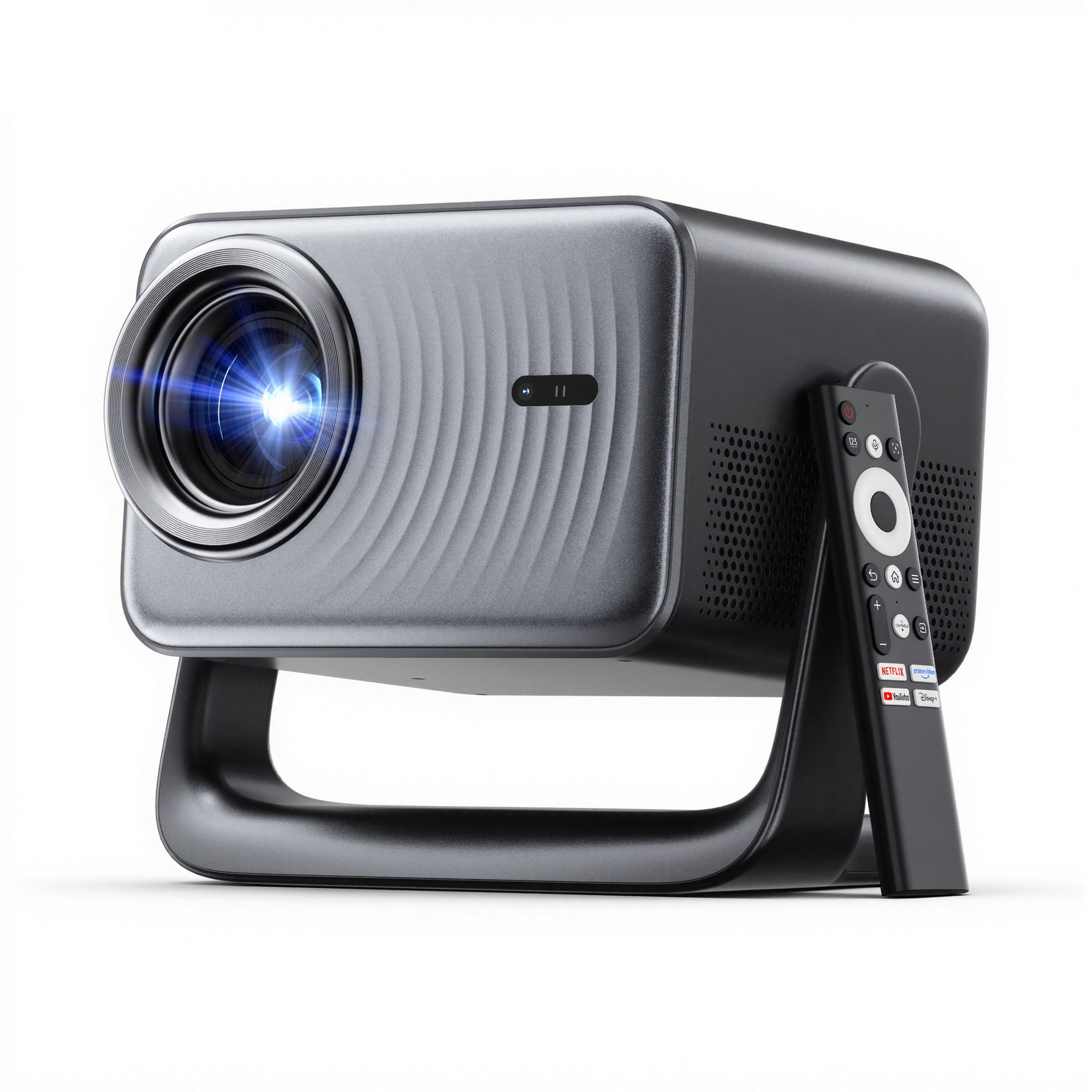
This Dangbei N3 Max review looks at a machine designed to end that negotiation: a native 1080p smart projector with built-in, licensed Netflix, a sealed optical engine, an internal power supply, and a gimbal that tilts from wall to ceiling with no extra hardware.
Dangbei N3 Max: A Projector Built to Remove Excuses
The N3 Max targets renters, bedroom viewers, families who move one big screen between rooms, and first-time owners who want to press power and watch.
It is not a home-theater projector, not native 4K, and has no battery, so it will not replace a television in a sunny living room. Within those limits, the specification is unusually complete for a single-LCD design.
Dangbei N3 Max Review: The Verdict in Brief
Based on verified specifications from Dangbei’s official stores and specification sheet, the N3 Max is one of the more thoughtfully assembled portables in its class. Its strengths are setup speed, genuine streaming licensing, and placement flexibility.
Its weaknesses are just as clear: modest native contrast, no optical zoom, no published input-lag measurement, and a VIDAA platform that is fast but smaller than Google TV’s ecosystem.
The sections below separate what is verified from what is still unproven.
Dangbei N3 Max: Key Specifications
- Display technology: Single LCD (4.45-inch panel), LED light source, fully sealed optical engine, IP5X dust resistance
- Native resolution: 1920 × 1080 Full HD; MT9660 decodes 4K sources, displayed at 1080p
- Brightness: 1,000 ISO lumens (manufacturer rating)
- Contrast ratio: 1,500:1
- HDR support: HDR10 and HLG
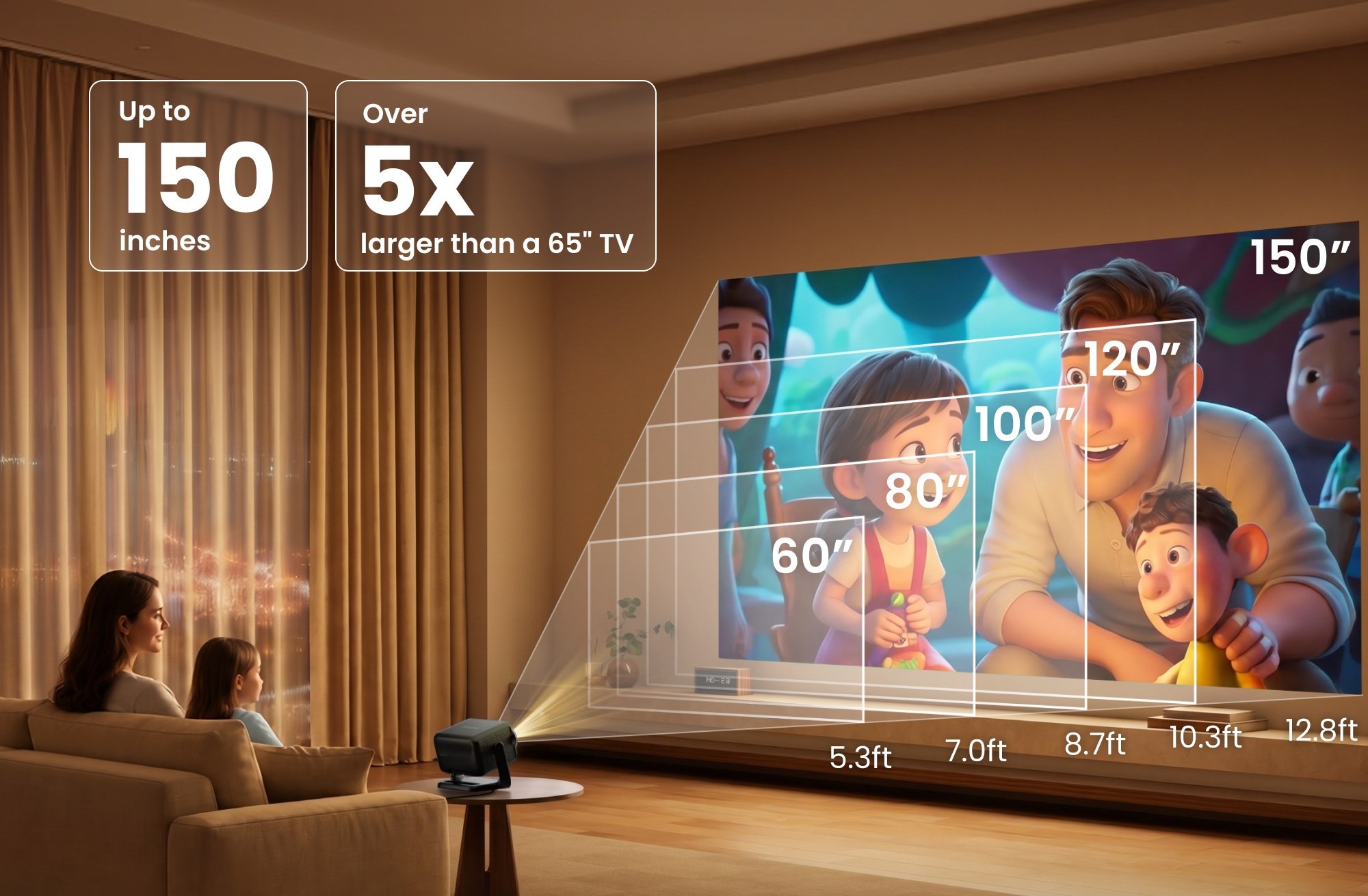
- Projection size: 60–150 inches; 80–120 inches recommended
- Throw ratio: 1.25:1, fixed lens — no optical zoom
- Stand: Integrated gimbal, 180° tilt range (−45° to +135°)
- Image setup: InstanPro AI — auto focus, auto keystone, screen fit, obstacle avoidance
- Operating system: VIDAA OS, with officially licensed Netflix, YouTube, Prime Video, Disney+, and Apple TV+
- Processor/memory: MediaTek MT9660, 1GB RAM, 8GB storage
- Audio: 2 × 6W speakers (12W total), Dolby Audio, Bluetooth speaker mode
- Connections: HDMI 2.0 ×1 (eARC), USB 2.0 ×2, 3.5mm audio out; Wi-Fi 5, Bluetooth 5.0, AirPlay
- Refresh rate: Up to 1080p at 60Hz, dedicated Game Mode
- Light source life: Up to 30,000 hours claimed
- Dimensions / weight: 264 × 202 × 218 mm; 3.6 kg (7.95 lb)
- In the box: Projector, power cable, remote control, user manual, AAA batteries ×2
✓ Pros
- Officially licensed Netflix built into VIDAA — no dongle, no sideloading workarounds
- 1,000 ISO lumens is genuinely useful brightness for a portable LCD projector
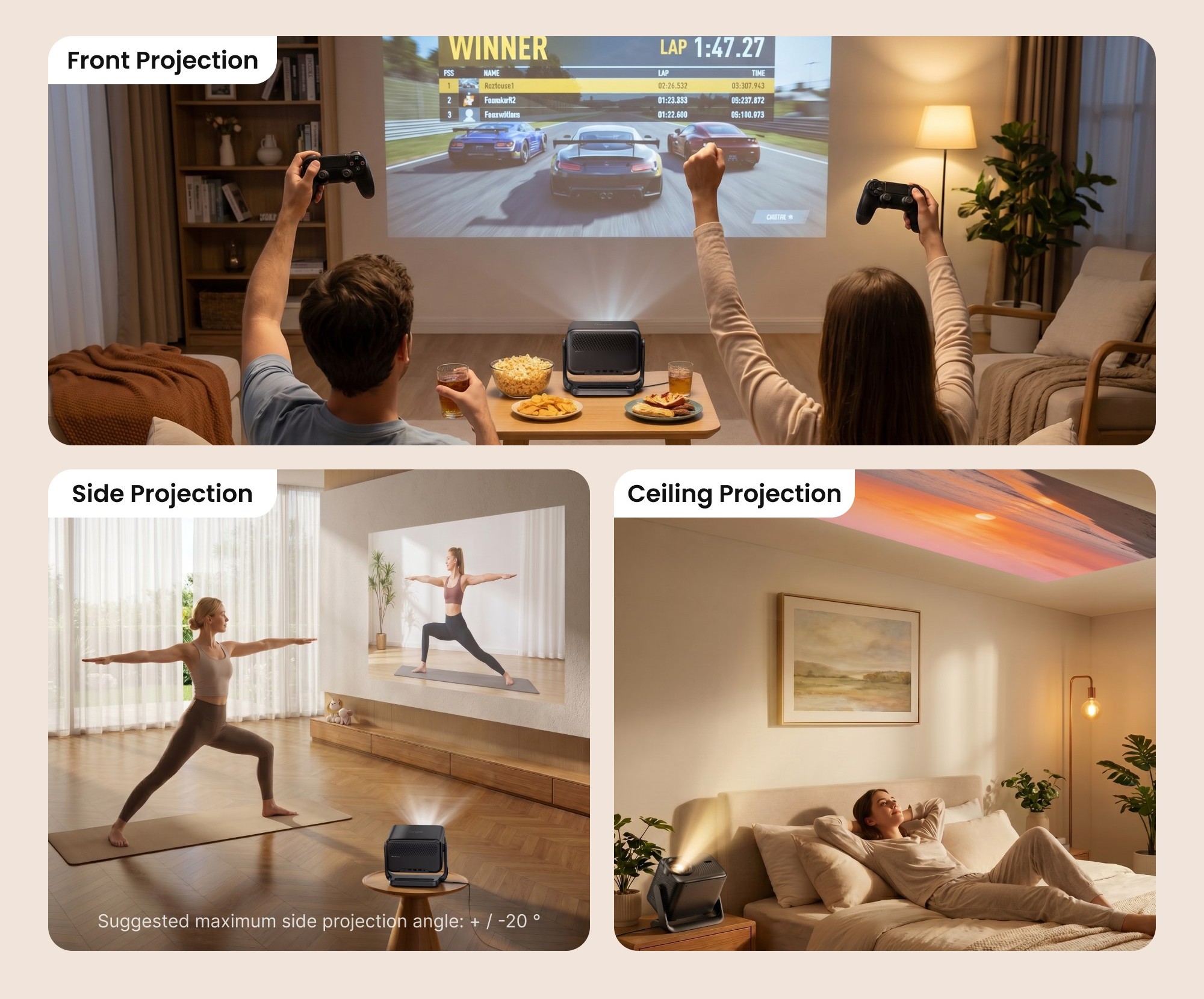
- 180° integrated gimbal covers wall and ceiling projection with no mount or tripod
- InstanPro auto focus, keystone, screen fit, and obstacle avoidance make setup nearly automatic
- Sealed IP5X optical engine should resist the dust spots that age this class
- Built-in power supply — one cable, no external brick to lose or hide
- Proper 12W Dolby Audio stereo speakers, plus eARC for a soundbar upgrade
- Fast, light smart platform with AirPlay and Apple Home support
✗ Cons
- Native 1080p only — “4K support” means 4K input decoding, not a 4K image
- Modest 1,500:1 native contrast; blacks are visibly grey in dark scenes
- No optical zoom and a single HDMI input; size is set by moving the projector
- No published input-lag measurement in milliseconds for Game Mode
- No internal battery — mains power is always required
- VIDAA app catalogue is smaller than Google TV’s and varies by region
- Eye protection and wall color adaptation were promised via OTA update, absent at launch
- Rear-bottom ports can restrict gimbal tilt when stiff cables are connected
Two details deserve clarification, because listings blur both. First, “4K support” means the MT9660 decodes a 4K signal; the image is always native 1080p — sharp at the recommended sizes, but not 4K. Second, brightness uses the ISO standard.
Some retailers show a different, lower ANSI-style figure for the same projector; ISO and ANSI lumens are measured differently and are not interchangeable, so compare like with like.
If you are still deciding how much brightness your room needs, our guide to how many lumens you need for a projector walks through the room-light maths in plain language.
Design & Build: Chunkier Than a Mini, Easier Than a Mount
The N3 Max does not pretend to be pocket-sized.
At 3.6 kg it is closer to a small appliance than to a palm-sized mini, and an owner review published on Dangbei’s own Canadian store describes it honestly as a little chunkier than expected — roughly 15 cm tall for the projection module alone, with the full unit measuring 264 × 202 × 218 mm.
That mass cuts both ways: more to carry, but once placed it sits planted instead of skittering when a cable is nudged.
The defining design decision is the gimbal. The head tilts through 180 degrees, from −45° to +135°, so one placement covers a low wall, a high wall, and the ceiling.
For renters who cannot drill, and for anyone who watches in bed, that hinge replaces a tripod, a mount, and the pile of books most portables end up balanced on.
One catch from the same owner review: the HDMI and USB ports sit at the rear-bottom of the head, so a stiff cable there can limit tilt. The power inlet is in the base, keeping the main cable out of the way.
The second defining decision is invisible: the optical engine is fully sealed. On open-design LCD projectors, dust settles into the light path as dark spots, yellowing, and gradual brightness loss; Dangbei rates the sealed engine at IP5X in its launch materials, keeping the picture cleaner for longer with no maintenance.
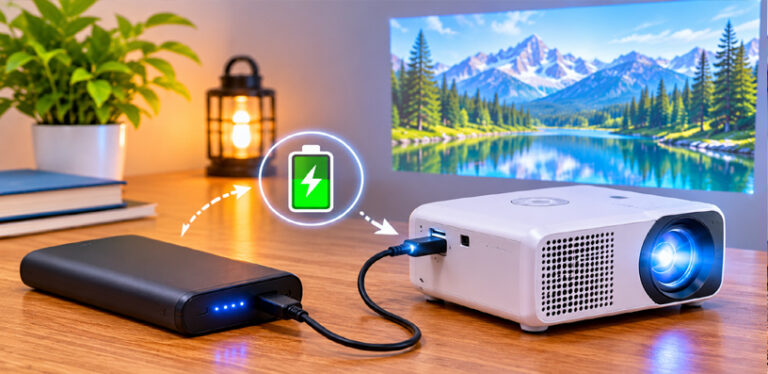
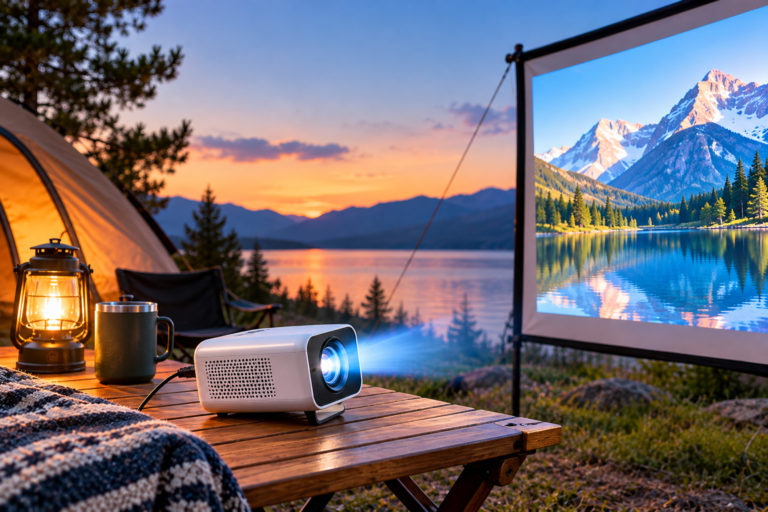
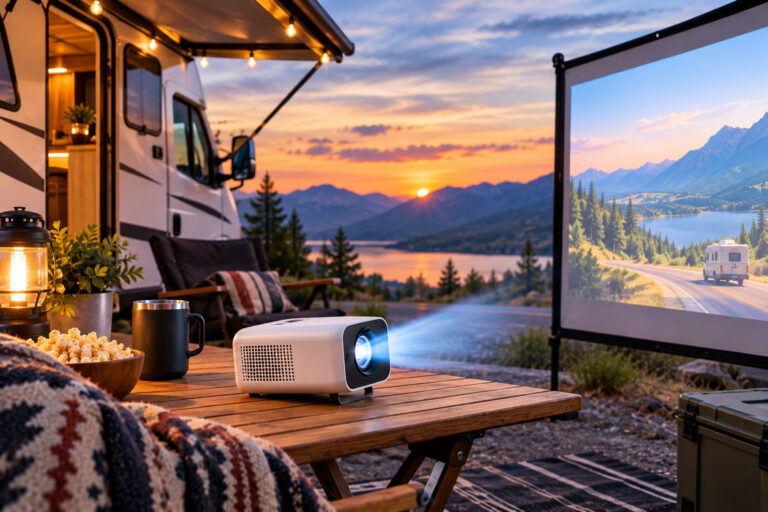
The built-in power supply completes the brief — no external brick; one cable connects projector to socket. With no battery, outdoor use means planning power first, as we explain in our guide to powering a projector outdoors without an outlet.
Dangbei N3 Max: Features in Depth
InstanPro AI Image Setup
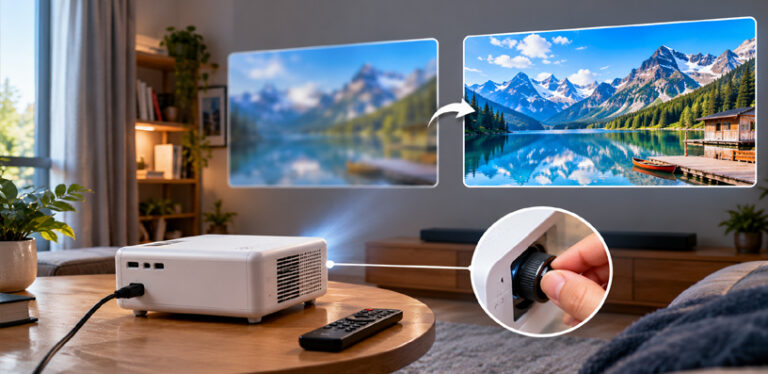
Every time the N3 Max moves, InstanPro re-runs its routine: auto focus, auto keystone, screen fit, and obstacle avoidance. Screen fit resizes the image to a screen’s borders; obstacle avoidance shifts the picture around a frame or plant in the way.
It is what makes the gimbal genuinely useful — flexibility would mean little if every tilt meant five minutes of manual adjustment.
Two caveats from owner experience on Dangbei’s Canadian store: autofocus can land slightly soft, rewarding a quick manual nudge, and keystone correction is digital, trimming usable resolution as you push it.
Sealed Optical Engine and Cooling
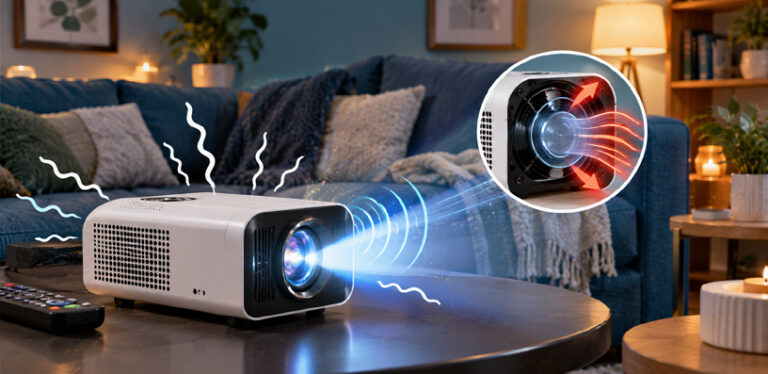
The sealed engine is a longevity feature, not a day-one picture feature — which is why most reviews skip it. Dust ingress is this class’s slow failure mode: it does not break the machine; it gradually dirties it.
Cooling still matters, since a sealed engine must shed heat without opening the light path.
Dangbei quotes fan noise in the high-20s decibel range — 26 to 28 dB appears across official-channel listings and spec databases — and the Canadian-store owner review describes the fan as constantly running, relatively quiet but noticeable, with the body warm on one side.
Treat that figure as best-case: no independent laboratory noise measurement had been published at the time of writing.
Wall Color Adaptation and Eye Protection — Promised by Update
Two features carry an asterisk that listings bury.
Dangbei’s own specification sheet marks wall color adaptation and eye protection as not supported at launch, arriving via an over-the-air update scheduled for the third quarter of 2026; its reported Eye Protection Mode is planned for September 2026, not available at publication.
The idea is sound — sensors dim the light when someone passes the lens — but if either feature is a reason you are buying, verify it is in current firmware rather than buying a promise.
Connectivity: One HDMI, Used Well
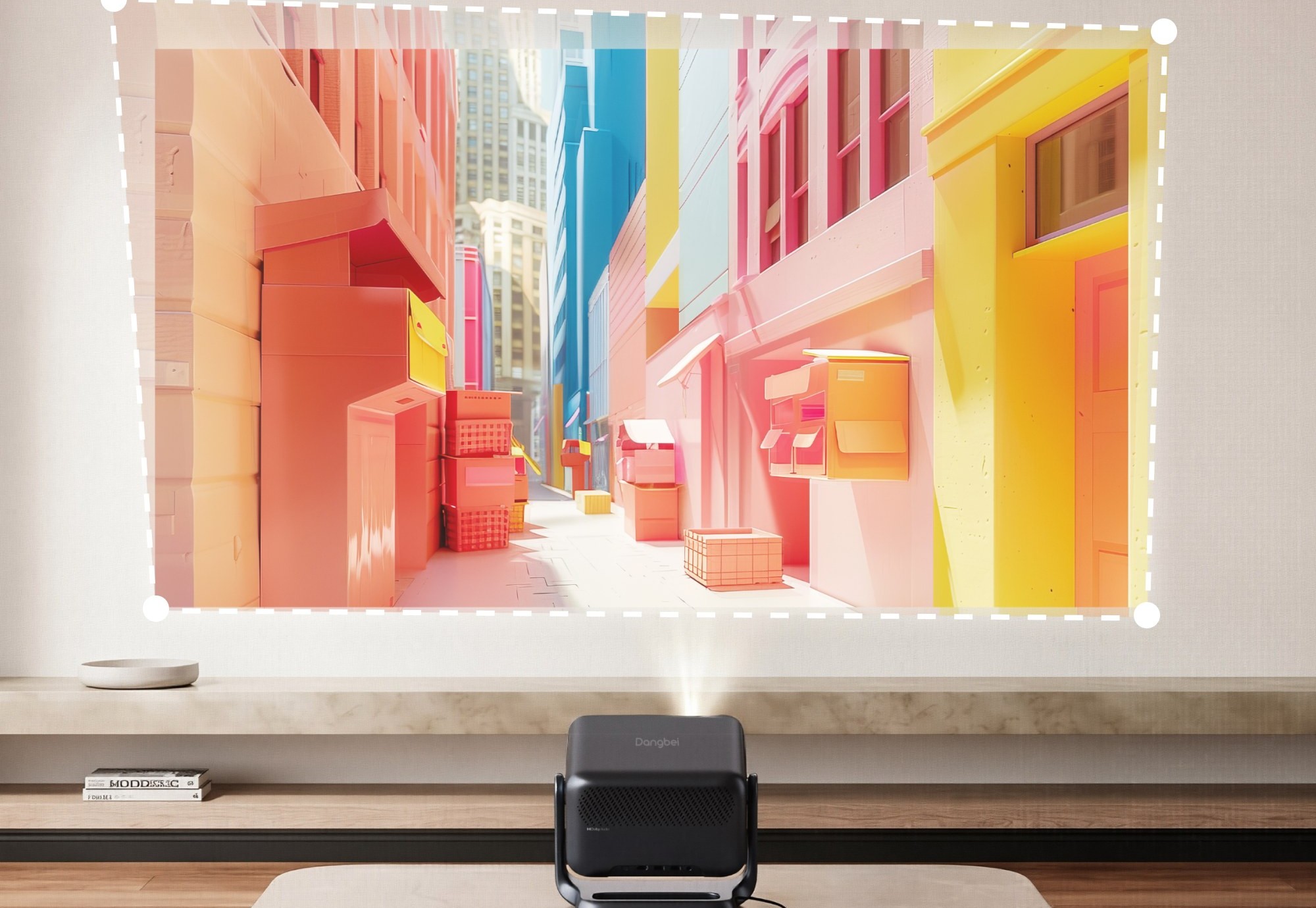
The port selection is compact: one HDMI 2.0 input with eARC, two USB 2.0 ports, a 3.5mm audio output, and the AC input in the base.
A single HDMI feels tight if a console, Blu-ray player, and streaming box all live connected, but eARC makes it work harder, sending audio to a soundbar over the same cable. Wirelessly: dual-band Wi-Fi 5, Bluetooth 5.0, AirPlay, and Miracast-style casting.
Wi-Fi 5 rather than Wi-Fi 6 is a fair criticism on a 2026 model, though no practical bottleneck for streaming.
Performance: What 1,000 ISO Lumens Really Buys You
Brightness is where this class usually overpromises, so here is the grounded version. A 1,000 ISO lumen rating is genuinely strong for a portable single-LCD projector — several times the output of the smallest battery minis — and Dangbei positions it for rooms with moderate ambient light, not pitch-black theaters.
viewing with some light in the room is workable, while direct sunlight washes out contrast and color.
The recommended 80–120 inch window exists for a reason: at 80 inches the image is punchy; at 150 inches the same light spreads over nearly twice the area and needs a dark room.
Contrast is the honest weak point on paper. The 1,500:1 native figure is modest, reflecting the technology: a single LCD panel cannot block light as completely as DLP or laser designs.
The owner review agrees from the viewing chair — bright, well-saturated images, but blacks that are not perfectly black. In practice, the N3 Max flatters bright, mid-tone content — sports, animation, comedies — more than murky night scenes.
HDR10 and HLG widen source compatibility, but here HDR means better tone handling, not the highlight punch of a good television.
Sharpness is unambiguous. Native 1080p looks properly crisp at the recommended sizes, the MT9660 downscales 4K sources cleanly, and motion runs at up to 1080p/60Hz.
Outdoors after dark, the brightness is workable — it sits in the range we cover in our roundup of the best outdoor projectors — provided, again, that mains power is part of the plan.
Throw Distance Table (Calculated from the 1.25:1 Throw Ratio)
Most coverage never tells you how far back this projector needs to sit, so here is the table, calculated from the verified 1.25:1 throw ratio for a 16:9 image. With no optical zoom, these distances are how you set picture size — move the projector, not a lens ring.
- 60 inches: about 1.66 m (5 ft 5 in) from the screen
- 80 inches: about 2.21 m (7 ft 3 in)
- 100 inches: about 2.77 m (9 ft 1 in)
- 120 inches: about 3.32 m (10 ft 11 in)
- 150 inches: about 4.15 m (13 ft 7 in)
In a typical bedroom, a side table two to three metres from the wall lands you in the 80–110 inch sweet spot — precisely the use case the gimbal was designed around.
Picture Modes: Which One, When, and What It Costs You
Dangbei publishes no per-mode brightness or accuracy measurement for the N3 Max, and no lab had released one at the time of writing — treat any review quoting exact per-mode figures with suspicion.
What can be described accurately is how the VIDAA picture menu behaves, though options vary by input, signal, and region.
Standard
It is the balanced default: near-full brightness, neutral color, processing left on — the right home for news, drama, and everyday streaming, and the mode in which the brightness claims are most nearly true.
Cinema Day and Cinema Night
(labeled Cinema on some VIDAA builds) warm the color temperature, pull back sharpening and saturation, and trade punch for accuracy.
Cinema Night, for dark rooms, is where films look most natural and the panel’s contrast limits are least obvious; Cinema Day keeps more brightness in reserve for a lamp-lit room.
Dynamic
Dynamic pushes brightness, contrast, and saturation hardest; colors overshoot and highlight detail is sacrificed — a “curtains are open” mode, not an accuracy mode.
Sports
Sports prioritizes motion clarity and a cooler, brighter look for daytime broadcasts; expect some motion smoothing, which helps football and hurts film.
Game
It strips processing out of the chain rather than tuning color, and is covered below.
With an HDR10 signal, the menu switches to HDR variants of the main presets; here the practical effect is gentler highlight roll-off rather than brighter peaks.
The working rule: Standard for daily viewing, Cinema Night for films in the dark, Dynamic only when ambient light forces your hand, Sports for live broadcasts, Game with a controller connected.
Audio: 12 Watts That Actually Belong in the Room
Two 6-watt speakers give the N3 Max 12 watts of stereo output with Dolby Audio — double or more the audio hardware of many portables. The Canadian-store owner review is complimentary, describing good bass response and a respectable volume range.
Note: because the speakers fire from the head, gimbal tilt changes where sound projects. For a bedroom or casual viewing, the built-in system removes the soundbar question entirely.
For a 120-inch movie night in a larger room, the upgrade path is clean — eARC to a soundbar, 3.5mm to speakers or headphones, or Bluetooth out. It also works as a standalone Bluetooth speaker with the picture off.
Smart Features & OS: VIDAA, Licensed Netflix, and the Fine Print
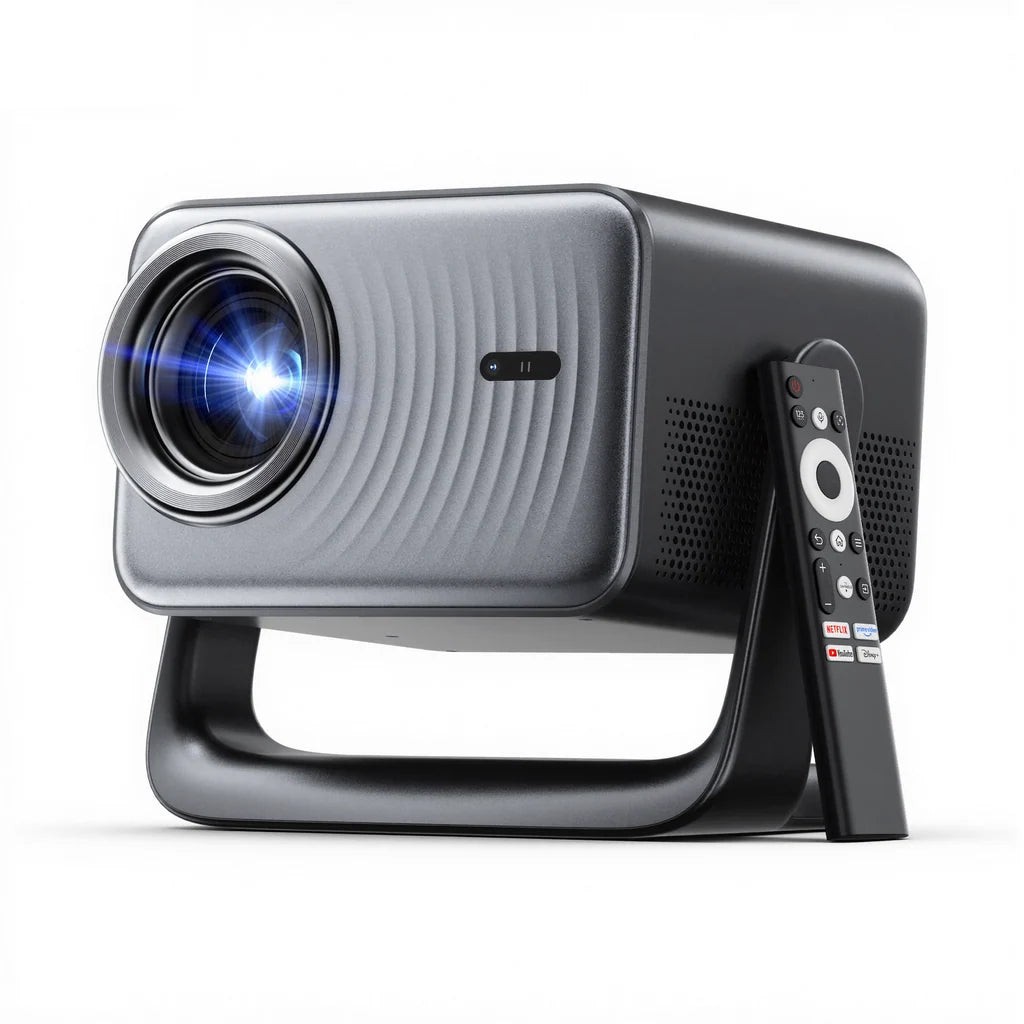
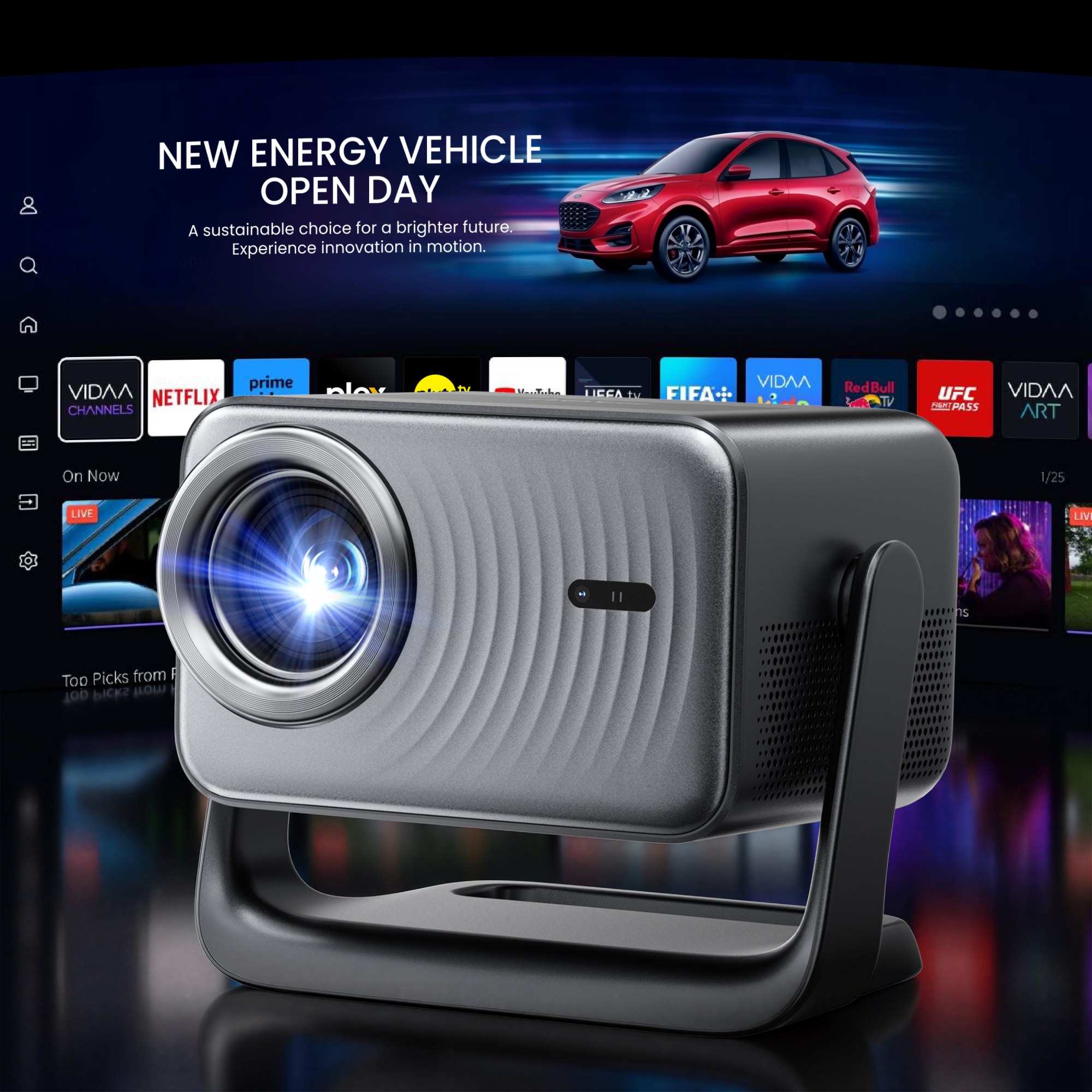
The most important software fact is licensing. Netflix here is officially licensed and built into VIDAA OS, alongside YouTube, Prime Video, Disney+, and Apple TV+, with more than a thousand apps claimed for the platform.
That matters because the low end of this market is full of projectors where Netflix is sideloaded, blocked, or resolution-limited. Here it simply works from the remote’s dedicated buttons, with VIDAA Voice search across services.
VIDAA itself — Hisense’s television platform — is light on its feet. The Canadian-store owner review reports roughly ten seconds from a cold start and about two seconds from standby, with a responsive interface and a good built-in media player.
The N3 Max was the first projector sold in Japan to run VIDAA, per Dangbei’s launch announcement there. Apple households get AirPlay and Apple Home compatibility, and US families get Kidoodle.TV out of the box, with screen-time and bedtime controls.
Now the fine print, where most coverage goes quiet.
VIDAA’s app catalogue is smaller than Google TV’s, there is no Chromecast built in, and availability varies by region — if a niche service is essential, confirm it exists on VIDAA before buying, or keep a streaming stick for the single HDMI port.
The hardware is modest too: 1GB of RAM and 8GB of storage suit a lean platform, not a large app library. Dangbei delivers OTA firmware and has committed specific features to an OTA release, but publishes no long-term update policy — no promised years of OS upgrades or security patches.
Finally, one Canadian-store reviewer flagged VIDAA’s enhanced-viewing and personalized-ad settings as worth switching off if you prefer not to share viewing data.
Gaming: Capable for Consoles, Unproven on the Stopwatch
Connect a console over HDMI 2.0 and the N3 Max runs at up to 1080p/60Hz with a dedicated low-latency Game Mode — the right specification for a Switch, a PlayStation or Xbox in Full HD mode, or a living-room PC.
Dangbei’s materials call the mode ultra-low latency and pitch it at casual and party gaming. Here is the gap almost every write-up glosses over: neither Dangbei nor any independent reviewer had published a measured input-lag figure in milliseconds at the time of writing.
“Low latency” is a claim, not a number. The sensible read: for party games, platformers, and single-player adventures, a 60Hz pipeline with a processing-bypass mode is unlikely to be the limiting factor. For ranked fighting games or competitive shooters, buy on measured data — this model has none yet.
Note too that Game Mode and heavy keystone correction don’t mix, since digital correction adds processing; place the projector square to the wall for gaming.
Who Should Buy the Dangbei N3 Max — and Who Should Skip It
Buy it if…
you are a renter or bedroom viewer who wants a big picture without installing anything; a family moving one projector between rooms; a first-time owner who values a projector that focuses and squares itself; or an Apple household that will use AirPlay.
It also suits mostly series, sports, animation, and casual gaming in a room where lights can be dimmed.
Skip it if…
you are building a dedicated theater and care about deep blacks and HDR impact — a laser model with far higher native contrast is the right tool.
Skip it if you need a battery away from sockets, if you play competitive games where a measured lag figure is non-negotiable, if your streaming depends on Google TV-only apps, or if you need several HDMI devices connected without a switcher.
And skip it, for now, if eye protection or wall color adaptation is the deciding feature — confirm the promised update has landed on the unit you receive.
Alternatives Worth Comparing
Dangbei Atom — the Atom swaps the LCD engine for ALPD laser light, raises brightness to 1,200 ISO lumens, and slims the body dramatically — the natural step if laser color and portability outrank ceiling projection.
Dangbei Freedo — the battery sibling. The Freedo runs Google TV with licensed Netflix and carries its own power for untethered sessions, but at 450 ISO lumens it is far dimmer. Choose it when the battery matters more than brightness; choose the N3 Max when the picture matters more than the cable.
XGIMI MoGo series — XGIMI’s portable line is the ecosystem alternative: Android-based platforms with a deep app catalogue in compact, battery-equipped bodies, at brightness well below the N3 Max’s rating — more platform, less light.
JMGO N1 series — JMGO’s gimbal projectors are the closest design rivals, pairing a tilting stand with laser engines and Google TV. They answer the VIDAA app question and add laser contrast in a similar format.
Frequently Asked Questions
Is the Dangbei N3 Max a 4K projector?
No. The MT9660 accepts and decodes 4K content, so you never need to hunt for a 1080p version of a stream, but the projected image is always native 1920 × 1080 Full HD — sharp at the recommended 80–120 inch sizes, but not native 4K detail.
Does the Dangbei N3 Max have Netflix built in?
Yes — officially licensed Netflix is built into VIDAA OS, with YouTube, Prime Video, Disney+, and Apple TV+, so no streaming stick is required. Availability varies by region, and VIDAA’s catalogue is smaller than Google TV’s, so check any niche service you rely on.
Can the Dangbei N3 Max project onto the ceiling?
Yes. The gimbal tilts through 180 degrees, from −45° to +135°, aiming from wall to ceiling without a tripod or mount, and InstanPro re-squares the image after you tilt it. Note that the rear-bottom HDMI and USB ports mean stiff cables can limit tilt in some positions.
How far away should the Dangbei N3 Max be for a 100-inch screen?
About 2.77 metres (roughly 9 feet), from its fixed 1.25:1 throw ratio. With no optical zoom, size is set by placement: 2.21 m for 80 inches, 3.32 m for 120 inches, 4.15 m for 150 inches.
Does the Dangbei N3 Max have a battery?
No. The power supply is built in, and it runs from a single AC cable with no external brick — tidy between rooms, but it always needs a mains socket. Outdoors away from an outlet, you would need a portable power station.
Is the Dangbei N3 Max good for gaming?
For casual console gaming, yes: HDMI 2.0 at up to 1080p/60Hz plus a low-latency Game Mode suits party games, sports titles, and single-player games well. However, Dangbei has published no measured input lag figure in milliseconds and no independent measurement was available at the time of writing, so competitive players should treat the latency claim as unverified.
Bottom Line
The Dangbei N3 Max succeeds at the job it was designed for.
It is not the brightest projector you can buy, not the sharpest, and not the one with the deepest blacks — and this review has flagged where its evidence is still thin: no measured input lag, no independent brightness or noise verification, and two features dependent on a promised update.
What it is, on verified specifications and early owner and press reporting, is one of the least frictional ways to get a large, licensed, properly set-up picture onto a wall or ceiling.
The gimbal removes the mount, InstanPro removes the setup ritual, the sealed engine removes the dust anxiety, the built-in supply removes the power brick, and VIDAA removes the streaming stick.
For a bedroom or rental that dims rather than darkens, that stack of removals is the product — a confident recommendation for those buyers, an honest pass for others.
Full specifications: official Dangbei N3 Max product page.