Can Mini Projectors Work in Daylight in 2026 – Complete Guide
Can mini projectors work in daylight? Yes, but only in the right kind of daylight. A mini projector can give you a perfectly watchable picture in a shaded room, on a cloudy afternoon, or under a covered patio in the evening light.
What it cannot do is beat direct sunlight. When sun falls straight onto the screen or wall, even a bright projector loses the fight. The picture turns pale, colours drain away, and dark scenes disappear into a grey haze.
Can Mini Projectors Work in Daylight in 2026?
The good news is that most daytime viewing is not a direct-sun situation. It is a living room with curtains half-drawn, a bedroom with the blinds down, or a garden gathering that starts before sunset. In those settings, the right brightness and a few setup tricks make a real difference.
Why Daylight Washes Out a Projected Picture
A projected picture is reflected light. The projector throws light onto a wall or screen, and your eyes read the light that bounces back. Daylight does the same thing to that surface, from every direction at once.
So the picture you see is always a contest: projector light versus room light. In a dark room, the projector wins easily, and blacks look black. As room light rises, the blacks lift first. Shadows turn grey, then the whole image looks faded.
This is why brightness alone does not tell the whole story. A projector rated at a high lumen count still struggles if the room is flooded with sun, because sunlight on a surface is vastly brighter than any portable projector. The trick is not to outshine the sun. It is to cut the room light down to a level your projector can beat.
Two things make the contest harder. A bigger picture spreads the same light over a larger area, so it looks dimmer. And a white wall scatters room light in every direction, including back at your eyes, which adds to the washout.
How Much Brightness Do You Actually Need?
Brightness is usually given in ANSI lumens, the standard way of measuring projector light output. Figures vary by model and by picture mode, so treat these ranges as honest guidance, not exact promises.
In a dark or dim room, even a modest mini projector is plenty. Roughly 100 to 300 ANSI lumens gives a clear picture up to a medium size when the lights are off. This is the classic bedroom movie-night scenario, and it is where small pocket projectors shine.
In a shaded room or on a cloudy day, aim higher. Around 500 to 1,000 ANSI lumens keeps cartoons, sports, and presentations watchable with curtains drawn and no direct sun on the screen. This is the sweet spot for most portable projectors used during the day.
In a bright room with daylight coming through windows, you need more still. Roughly 1,000 ANSI lumens and up is the realistic starting point, and even then the picture will look softer than it does at night. Closing curtains or blinds matters more than any extra lumens at this level.
In direct sunlight, no mini projector copes. Full sun on a surface is tens of thousands of times brighter than a portable projector’s output. No consumer projector, mini or otherwise, produces a satisfying picture with sun falling directly on the screen.
One warning about lumen numbers: not every maker measures the same way. Some listings quote inflated figures based on the light source rather than the light that actually reaches the screen.
ANSI lumens, and the newer ISO lumens standard, are the figures worth comparing. If a listing only says “lumens” with no standard attached, treat the number with caution.
Pocket, Portable, and Larger Portable: What Changes in Daylight
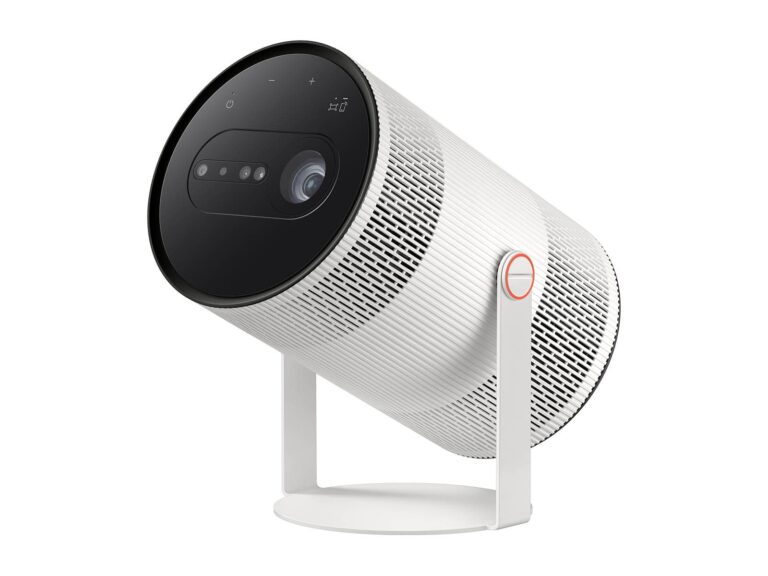
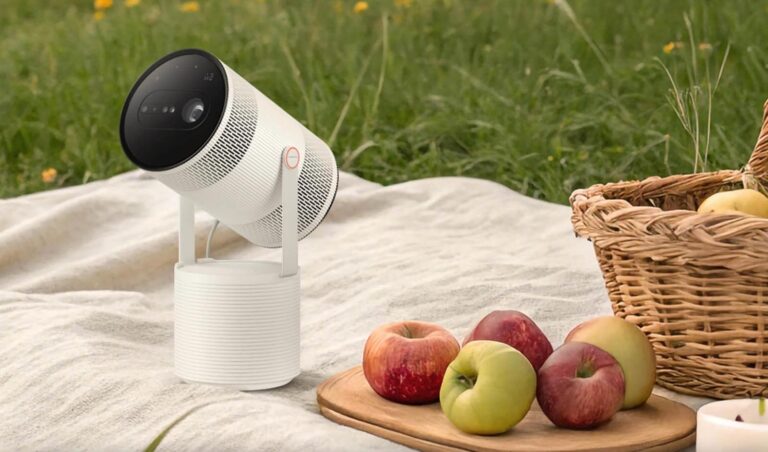
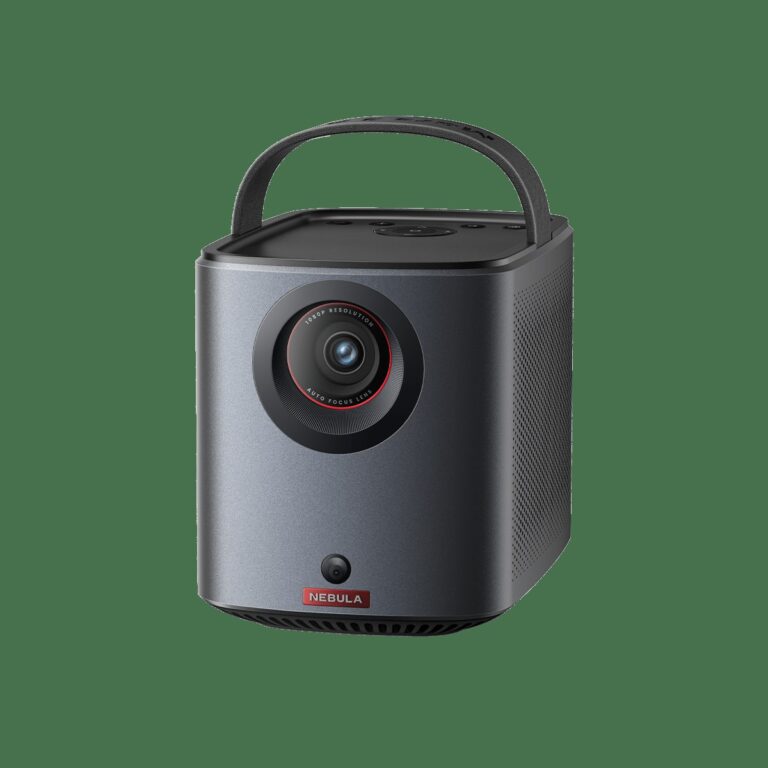
Mini projectors are not one size. Pocket models are the smallest, roughly phone-sized, and usually the dimmest. They are built for dark rooms and travel convenience, not for fighting daylight.
Mid-size portable projectors are the daylight workhorses of the mini world. They are bigger, often with a built-in battery and a brighter light source, and they are the ones most likely to manage a shaded room or a cloudy afternoon.
Larger portable models blur the line with home projectors. They are heavier and usually need mains power, but they bring the highest brightness in the portable class. If daytime viewing is a regular habit rather than an occasional treat, this class is the realistic choice.
The trade-off is simple. Smaller means easier to carry and easier to set up anywhere, but dimmer. Bigger means brighter, but heavier and less spontaneous. Daylight viewing pushes you toward the bigger end of that trade-off.
What Helps Most: Six Fixes That Actually Work
1. Cut the light at the source. This is the single biggest win. Close curtains or blinds, move the screen away from windows, and never let sun fall directly on the picture surface. Sheer curtains that soften the light help more than you might expect.
2. Shrink the picture. A smaller image concentrates the projector’s light. If the picture looks washed out at 100 inches, try 60 or 70 inches. The image gets brighter and punchier at once, and for daytime viewing that trade is almost always worth it.
3. Move the projector closer. A shorter throw distance means less light lost on the way to the screen. Short-throw models are handy here, because they make a big picture from a short distance. Either way, keep the projector as close as the picture size allows.
4. Use a proper screen, not a bare wall. A dedicated screen reflects projected light toward the viewers more efficiently than a painted wall. A plain white wall scatters light in all directions, including room light back at your eyes.
5. Consider an ALR screen for bright rooms. ALR stands for ambient light rejecting. These screens use a special surface that reflects the projector’s light toward the viewers while absorbing or deflecting light arriving from other angles, such as ceiling lights or windows.
They can make a dramatic difference in a bright room, but they work best when the projector sits in the position the screen is designed for. A screen made for a table-top projector will not suit a ceiling-mounted one, and ultra-short-throw projectors need their own ALR type.
6. Switch to the brightest picture mode. Most projectors have an eco mode that dims the lamp to save power and quiet the fan. Turn it off for daytime viewing. Also look for a bright or vivid picture preset, which boosts brightness at the cost of some colour accuracy — a fair trade when the alternative is a washed-out image.
Two smaller habits help too. Darker wall colours around the screen cut stray reflections, and a clean lens keeps every lumen working. Dust on the lens scatters light and quietly dims the picture over time.
What About Outdoors in Daylight?
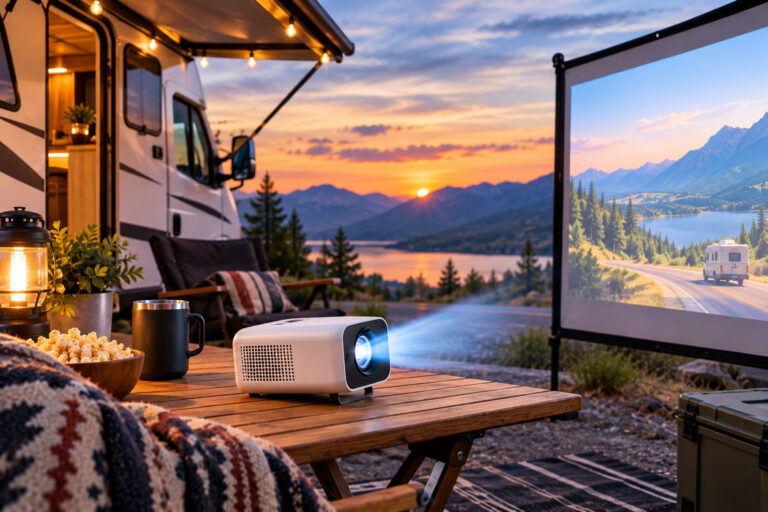
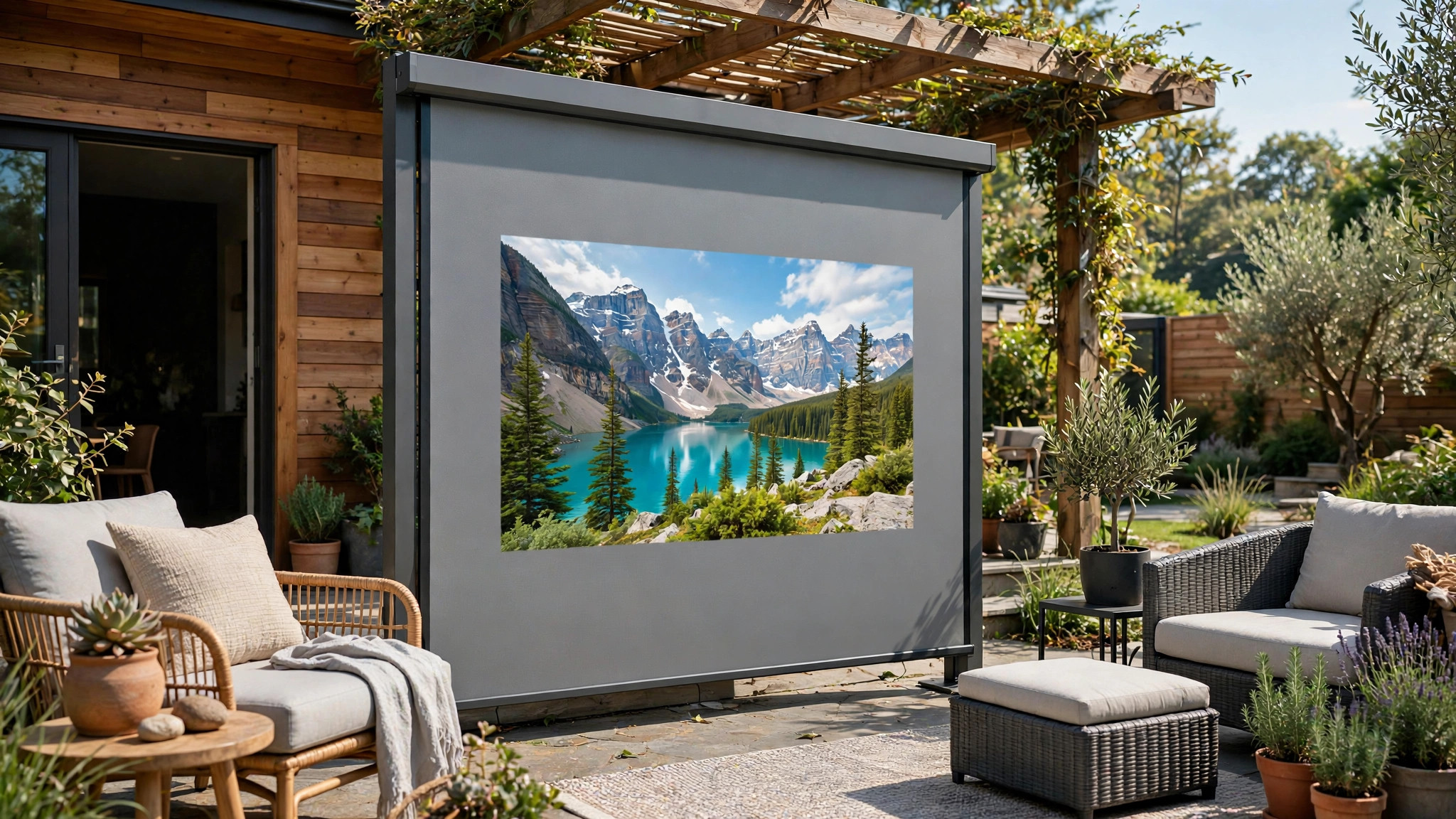
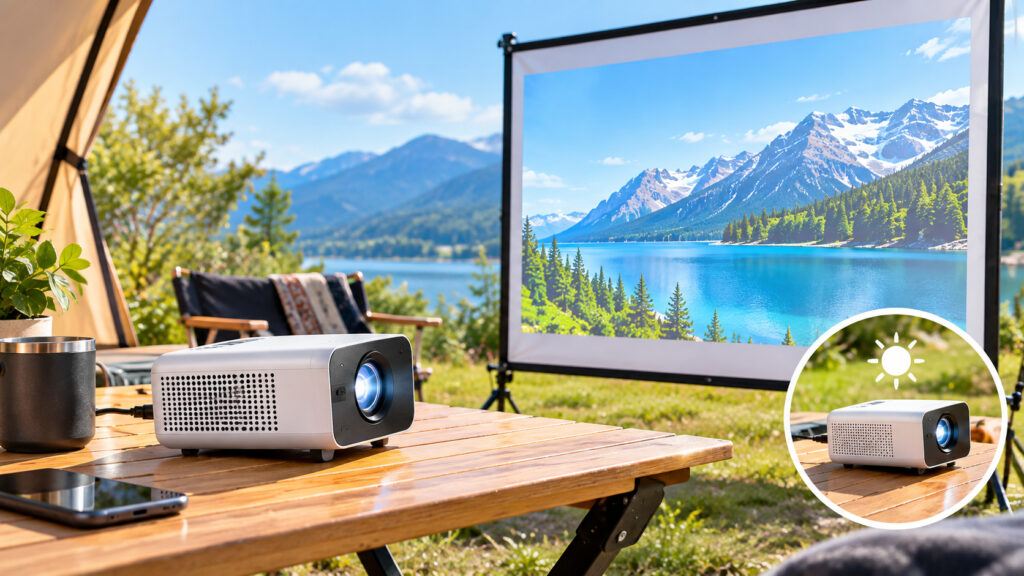
Outdoors, the same rules apply, only stricter. A shaded patio, a gazebo, or a garden after the sun has dropped behind the trees can work well with a bright portable projector. An open lawn in full afternoon sun will not.
Timing is the outdoor viewer’s best friend. A film that starts at dusk looks completely different from the same film attempted at midday. If your event must happen in daylight, pick the shadiest spot you can find, face the screen away from the sun, and keep the picture small.
For more on the practical side of outdoor setups, including power and sound, see our guides on powering a projector outdoors without an outlet and connecting speakers to a projector.
And if you want to get a phone picture onto the big screen, our guide to connecting a phone to a projector for a backyard movie covers the wired and wireless routes.
Daylight Viewing: A Quick Reality Check
Before you plan a daytime screening, run this quick check. Is the sun falling directly on the screen? If yes, move the screen or wait. Can you close curtains or pick a shaded spot? If yes, you are most of the way there.
Is the picture still pale? Shrink it, switch off eco mode, and try a screen instead of a wall. Each step adds a little brightness back, and together they often turn an unwatchable picture into an enjoyable one.
And set expectations honestly. A daytime picture will rarely match a night-time one. Colours will be a little softer, blacks a little greyer. For sport, cartoons, and presentations, that is usually fine. For a dark, atmospheric film, wait for nightfall.
Frequently Asked Questions
Can you use a mini projector during the day?
Yes, in shaded or dim conditions. A mini projector works well in a room with curtains drawn, on a cloudy day, or in a shaded outdoor spot. It does not work well in direct sunlight or a fully sunlit room.
How many lumens do you need for daylight viewing?
As a rough guide, around 500 to 1,000 ANSI lumens covers shaded rooms and overcast days, while bright rooms with daylight through windows realistically need 1,000 ANSI lumens or more. Figures vary by model and picture mode, and controlling room light matters at least as much as the lumen count.
Do mini projectors work outdoors in daylight?
Only in shade. A bright portable projector can work under a gazebo, on a shaded patio, or at dusk. Open sun on the screen washes the picture out no matter how bright the projector is, so timing and shade are essential outdoors.
Does a screen help a projector in daylight?
Yes. A dedicated screen reflects the projected image toward viewers more efficiently than a plain wall. An ALR (ambient light rejecting) screen goes further by absorbing light from other angles, which preserves contrast in bright rooms — provided it matches your projector type and position.
Can you watch a projector in a bright room with the curtains open?
It depends on where the light falls. Indirect daylight with curtains partly drawn is manageable with a bright projector and a smaller picture. Direct sun on the screen, or a room flooded with light from large uncovered windows, will wash the picture out.
Why does my projector picture look washed out?
Because room light is competing with projector light on the same surface. Ambient light lifts the black levels first, so shadows turn grey and colours fade. Cutting room light, shrinking the picture, and switching off eco mode are the fastest fixes.
What is an ALR screen?
ALR stands for ambient light rejecting. It is a screen with a special surface that reflects the projector’s beam toward the viewers while absorbing or deflecting light arriving from other directions, such as lamps or windows. It helps most in rooms where light cannot be fully controlled.
Is there any projector that works in direct sunlight?
Not really, at the consumer level. Direct sun on a surface is far brighter than any home or portable projector can overcome. Professional venue projectors with many thousands of lumens can cope better, but they are a different class of machine entirely, and even they prefer shade.
Bottom Line
Can mini projectors work in daylight? In shade, yes. In direct sun, no. That one sentence covers most of it. A bright portable projector, a shaded room or patio, a smaller picture, and curtains doing their job will give you a genuinely enjoyable daytime screening.
Chase brightness if you watch during the day often, but chase shade first. No lumen count rescues a sunlit screen, while a shaded screen rescues almost any projector. Set the room up right, keep the picture modest, and daytime viewing stops being a compromise and starts being a normal way to watch.