How to Power a Projector Outdoors Without an Outlet in 2026 – Top 5 Ways
The best way to power a projector outdoors without an outlet is a portable power station — silent, safe, and sized by the hour.
A high-capacity USB-C power bank works if you have a small portable projector; a car battery plus inverter works in a pinch; a gas generator works, but its noise will fight your movie’s dialogue. Here’s how to pick the right one and the math to make sure it lasts the whole film.
Whatever you choose, start from one number: your projector’s power draw in watts. Small portable LED projectors sip 30–65W. Full-size lamp or laser projectors for big backyard screens pull 150–300W. That single number decides everything below — including whether a power bank is even an option.
How to Power A Projector Outdoors Without An Outlet? – 5 Options That Actually Work
1. Portable power station — the best all-rounder
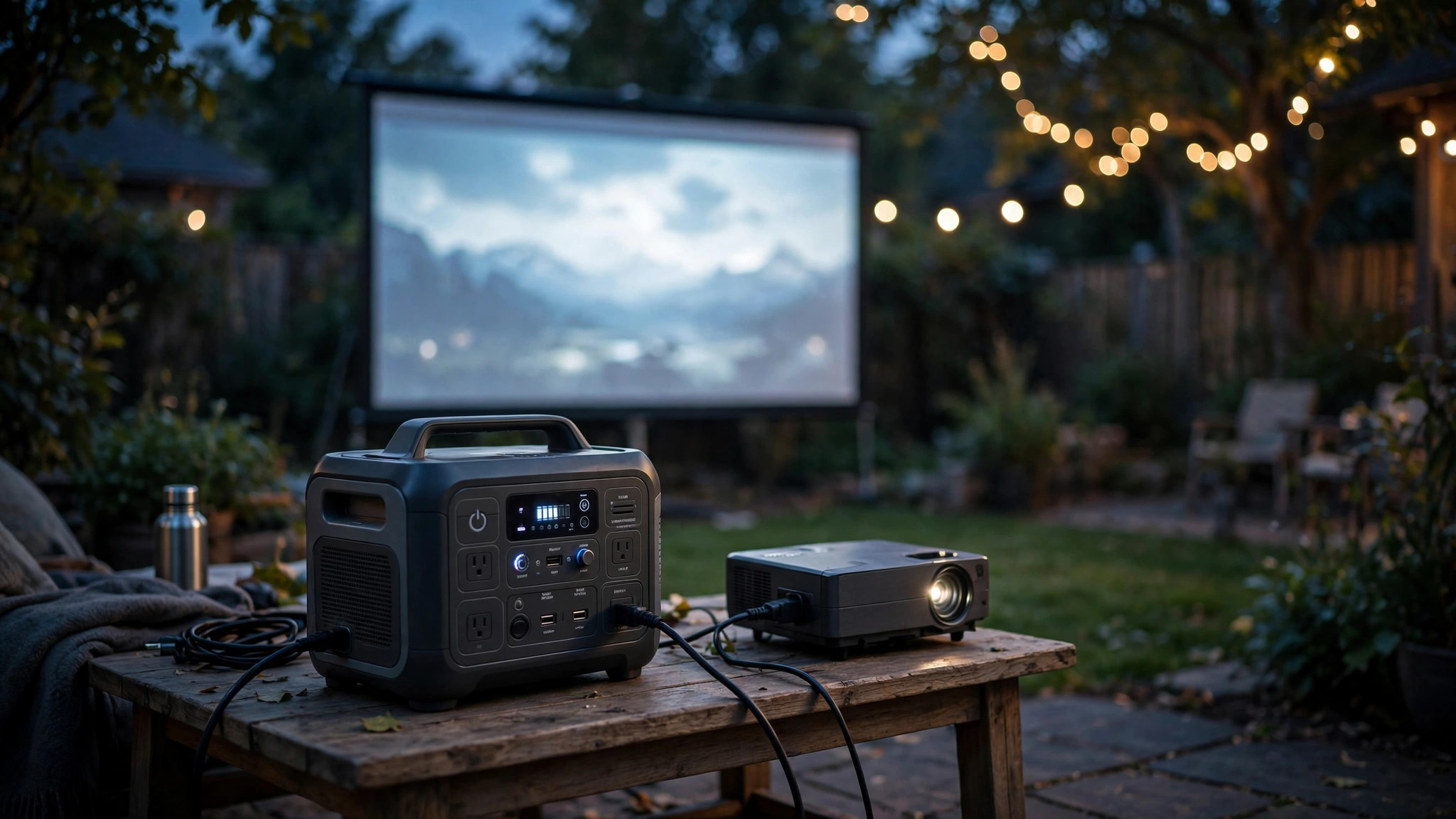
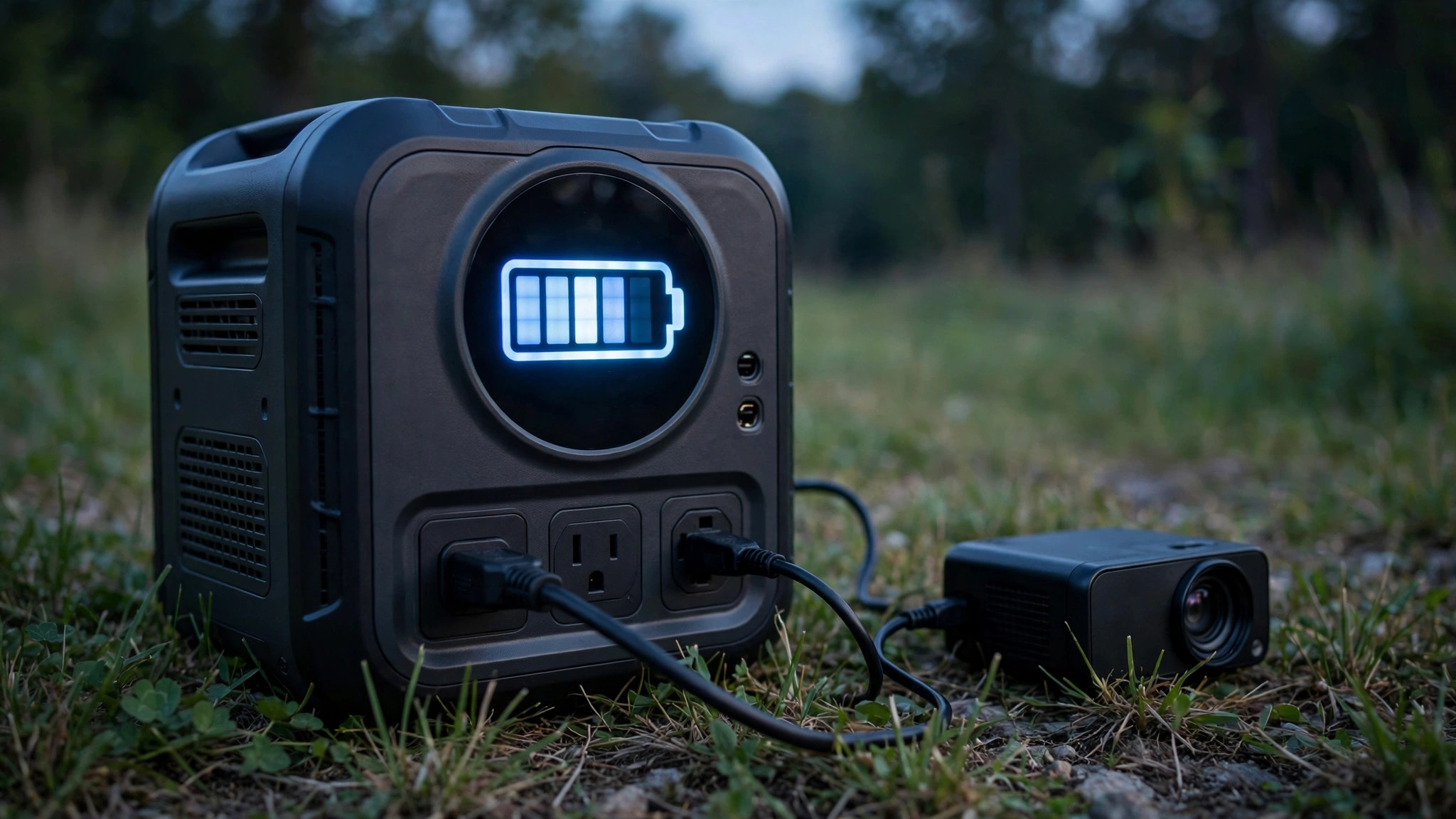
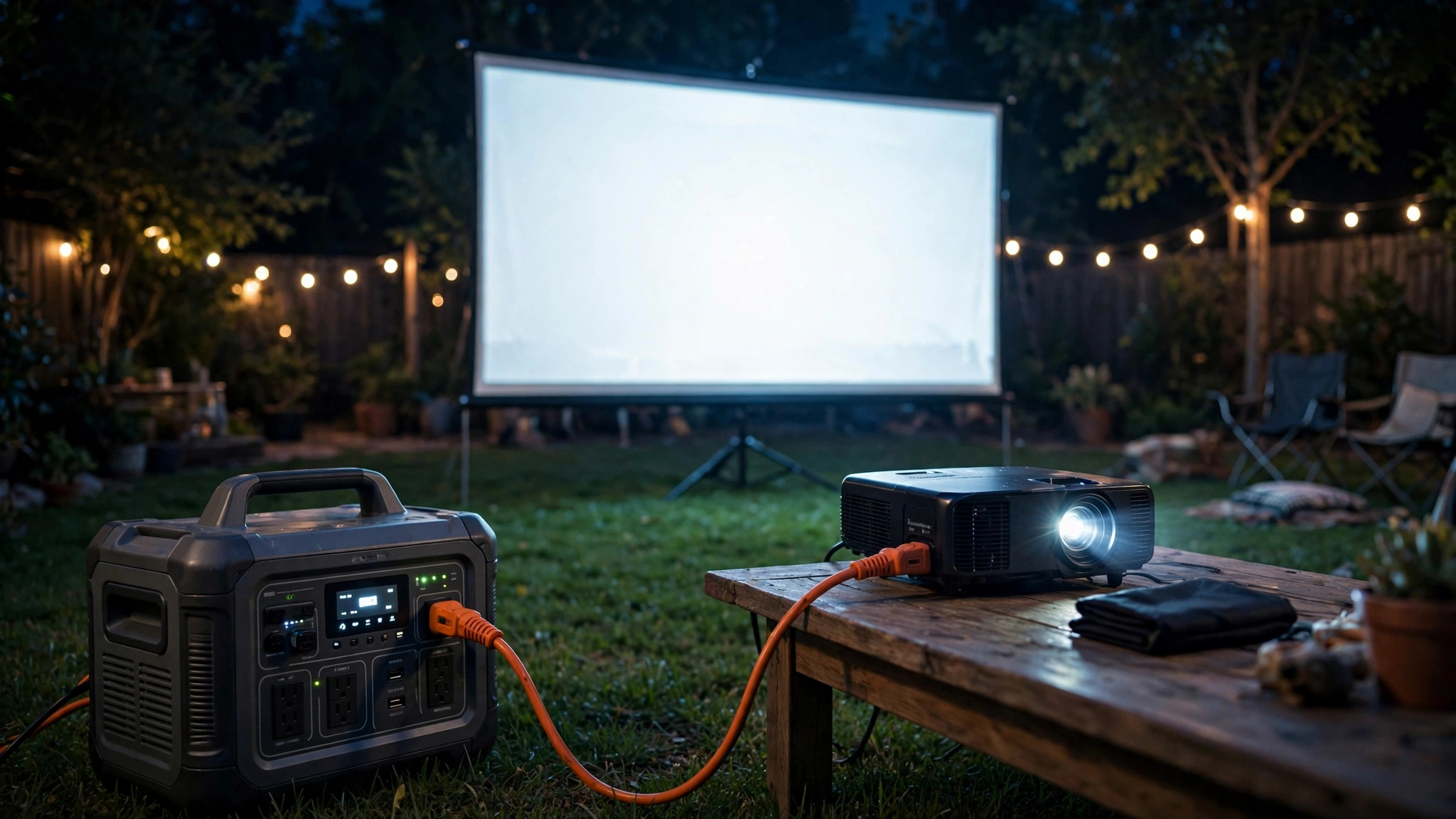
This is the answer for most people. A portable power station is essentially a big lithium battery with AC outlets, USB ports, and a built-in pure sine wave inverter in one quiet box. No fumes, no noise, no idling car — you charge it at home, carry it outside, plug in the projector, and press play.
Sizing is straightforward once you know the runtime formula: runtime (hours) ≈ (station’s watt-hours × 0.85) ÷ projector watts. The 0.85 accounts for inverter losses — you never get 100% of the rated capacity.
A 500Wh station running a 150W projector gives you roughly (500 × 0.85) ÷ 150 ≈ 2.8 hours: enough for most movies with a little margin. A 1000Wh station on the same projector stretches past 5.5 hours — movie plus pre-show plus the streaming stick and a speaker, all from the same box.
Two buying rules. First, the station’s continuous AC output (watts) must exceed your projector’s draw — a 300W-output station can’t run a 280W projector once you add a streaming stick.
Second, if you’re projecting in daylight, you need a brighter projector, and brighter means thirstier — check our guide on using a projector outside during the day before sizing, because a 4,000-lumen unit can draw twice what a 2,500-lumen one does.
2. USB-C power bank — portable projectors only
Yes, you can run a projector off a power bank — but only the small ones. A 20,000mAh bank holds about 74Wh of energy, and after conversion losses you’re looking at roughly an hour on a 50W portable projector, less if it’s brighter. That’s a tight window for a full movie, so this option works best for short sessions, presentations, or as a top-up rather than the main event.
What matters: the bank must support USB-C Power Delivery at the wattage your projector demands (many portables want 45–65W), and the projector itself must accept USB-C power input — not all do. Turn on the projector’s Eco mode to stretch the runtime; dropping brightness 20–30% is barely noticeable after dark and can buy you an extra half hour.
3. Car battery + inverter — the budget workaround
A car battery and a standalone inverter are the classic DIY route: clamp the inverter to the battery terminals, plug the projector into the inverter’s AC outlet. It works, and the parts are cheap — but the details matter.
Use a pure sine wave inverter, not the cheaper modified-sine kind: projector lamps and power supplies run hotter and buzz on dirty power, and some units simply refuse to start. A power inverter rated for at least 1.5× your projector’s wattage gives you safe headroom.
The big caution: a standard car starter battery isn’t designed for deep discharge. Draining it to run a two-hour movie can leave you with a car that won’t start — use a deep-cycle or marine battery instead if you go this route, keep the battery ventilated and off wet ground, and never idle the car in an enclosed space to “recharge” while you watch (carbon monoxide is odorless and it pools).
4. Gas generator — maximum power, maximum noise
A small inverter generator will run any projector, plus speakers, plus string lights, all night. It’s also the loudest option at 50–70 decibels — roughly conversation volume sitting right next to your audience, which means dialogue scenes become a competition.
If you must use one, place it at least 20 feet from the seating area, downwind, with a long outdoor-rated extension cord back to the projector, and point the exhaust away from everyone. Inverter generators (not conventional contractor units) produce cleaner power that’s safer for electronics.
5. Solar panels — a supplement, not a solution
A 100W solar panel in good sun harvests roughly 400–500Wh across a full day — useful for recharging your power station before movie night, but not for running a 200W projector directly in real time (a passing cloud = a black screen).
Think of solar as the daytime charging crew for option 1, not a standalone power source. For an evening movie, charge the station all afternoon, and you’re set.
Sizing It Right: The Watt-Hour Math in 60 Seconds
Do this before you buy or borrow anything:
- Find your projector’s draw. Check the label near the power inlet or the manual — use the “max” or “typical” watts, not the standby figure. Add ~10W for a streaming stick and ~20–30W for a powered speaker if they’ll share the source.
- Decide your runtime. Movie length plus 30 minutes of buffer. A 2-hour film means planning for 2.5 hours.
- Apply the formula. Needed watt-hours = (total watts × hours) ÷ 0.85. Example: a 180W projector + stick + speaker ≈ 220W total × 2.5 hours ÷ 0.85 ≈ 650Wh. So a 700Wh-class station covers you; a 500Wh one doesn’t.
- Check the output rating too. Capacity (Wh) is the fuel tank; continuous output (W) is the engine. Both must clear your load.
One more lever: Eco mode. Most projectors have a lamp/brightness saver that cuts draw by 20–40%. After dark, on a properly sized screen (see our backyard screen size guide), the difference is subtle, and the runtime gain is real — it can shrink a 650Wh requirement down to ~450Wh.
Outdoor Power Safety Rules
Electricity and backyards demand respect. Non-negotiables:
- Outdoor-rated cords only. Indoor extension cords crack and degrade outside; use cords marked for outdoor use, and keep every connection off wet grass — a plastic bin flipped upside down makes a fine rain shield for a power strip.
- Ventilate everything. Inverters, generators, and power stations all make heat. Never bury them under blankets or run a generator in a garage or tent.
- Pure sine wave for projectors. Worth repeating: lamp and laser light sources are sensitive to dirty power. If your inverter or generator doesn’t say “pure sine wave,” assume it isn’t.
- Generator placement. 20+ feet away, downwind, exhaust pointed away from people. Carbon monoxide kills quietly — this rule has no exceptions.
- Cool-down before unplugging. Lamp projectors need their fans to run after shutdown. Kill the power at the station, and you’ll trap heat in a thousand-dollar bulb. Power down via the remote, wait for the fan to stop, then disconnect.
- Don’t daisy-chain. One power strip per source, no strip-into-strip. Overloading is how breakers trip mid-climax.
Frequently Asked Questions
Can I run a projector off a power bank?
Only if it’s a small portable projector with USB-C power input. A 20,000mAh bank (≈74Wh) gives roughly an hour on a 50W portable in Eco mode — fine for a short session, tight for a full movie. Full-size lamp or laser projectors drawing 150W+ are completely out of power-bank territory; they need a portable power station.
How long will a portable power station run my projector?
Use the formula: (station watt-hours × 0.85) ÷ projector watts = hours. A 500Wh station on a 150W projector lasts about 2.8 hours; a 1000Wh station on the same projector lasts about 5.6 hours. Remember to add the streaming stick and speaker draw to the projector’s watts before calculating.
Can I power a projector with my car battery?
Yes, with a pure sine wave inverter rated at 1.5× the projector’s wattage — but use a deep-cycle battery, not your car’s starter battery, or you may not be driving home. Keep the battery dry and ventilated, and never idle the car in an enclosed space to recharge while watching.
Is a gas generator too loud for a movie night?
Usually, yes, if it sits near the audience — 50–70 dB competes directly with dialogue. It works if you place it 20+ feet away, downwind, and run a long outdoor-rated cord back to the projector. For most backyards, a silent power station is the better movie-night choice.
Do I really need a pure sine wave inverter?
For projectors, yes. Lamp ballasts and laser power supplies are sensitive electronics; modified sine wave power can cause buzzing, overheating, or refusal to start. Portable power stations include pure sine wave inverters by default, which is one more reason they’re the simplest option.
The Bottom Line
For most backyard movie nights, a portable power station sized with the watt-hour formula is the entire answer: silent, safe, and done. Power banks cover small portables, car batteries cover emergencies, generators cover “power everything” events if you can live with the noise.Size it before movie night, keep it dry, and let the lamp cool before you unplug — then enjoy the show.
If you’re still choosing the projector itself, our best outdoor projectors guide covers which models are worth powering in the first place.