Can You Paint A Wall Instead of Buying A Projector Screen 2026 – Complete
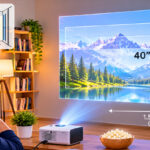
So, can you paint a wall instead of buying a projector screen and still get an image worth watching? Yes. A painted wall is a legitimate projection surface, and plenty of dedicated home theaters use nothing else.
The catch is that a screen is engineered to be flat, smooth, and predictable, while a wall is none of those things by default.
Paint works when you bring the wall up to a screen’s standard first — and fails, sometimes badly, when you skip that work.
A Plain Wall Can Project a Fine Picture — Under the Right Conditions
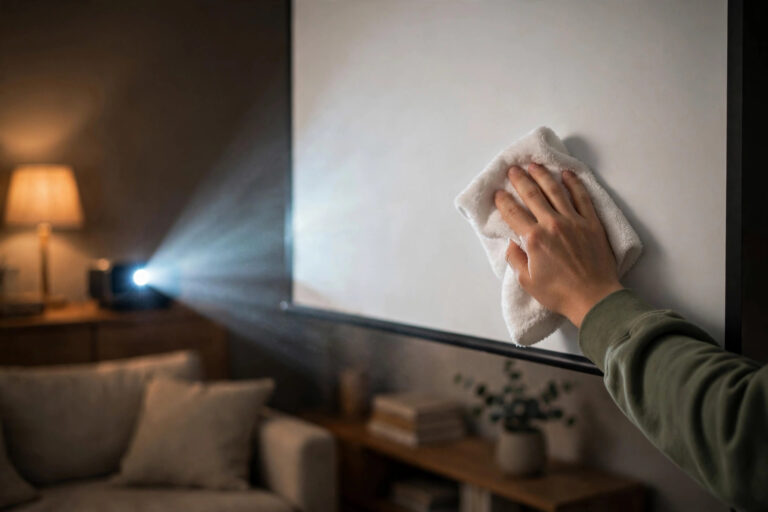
The first condition is smoothness. A projector throws light across the wall at a shallow angle, and that raking light exposes every bump, ripple, nail pop, and patch of orange-peel texture. Flaws you never notice in daylight will telegraph straight through the picture.
The second condition is the finish. The paint must be matte or flat, because anything with a sheen — satin, eggshell, or gloss — reflects light unevenly and creates hotspots and glare. A matte surface scatters light evenly, which is exactly what a basic screen does.
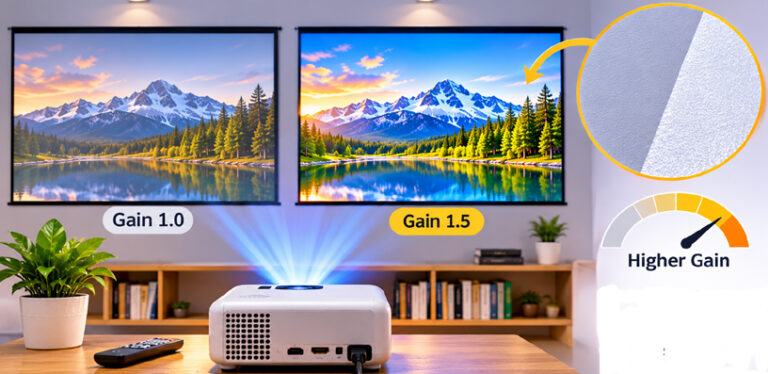
The third condition is the room. A painted wall behaves like a plain matte white screen with a gain of roughly 1.0, so it gives its best results in a room you can darken. The darker the room, the less the wall’s simplicity matters.
A quick test settles most doubts before you open a tin: project a bright scene onto the unpainted wall one evening and look closely. If texture and marks already show through, they will show through paint too, and the wall needs real preparation — or a screen.
Paint vs a Real Screen, Side by Side
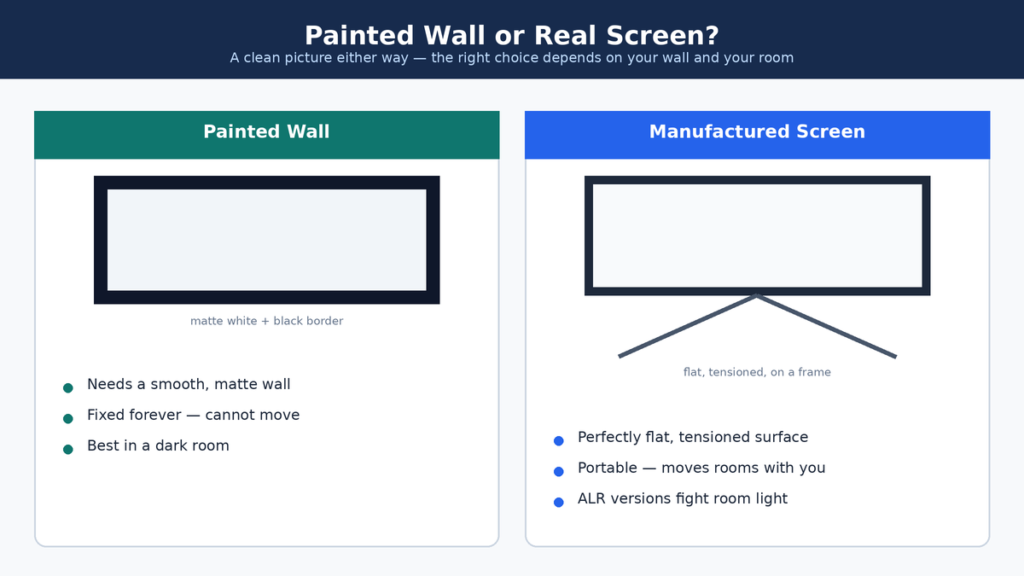
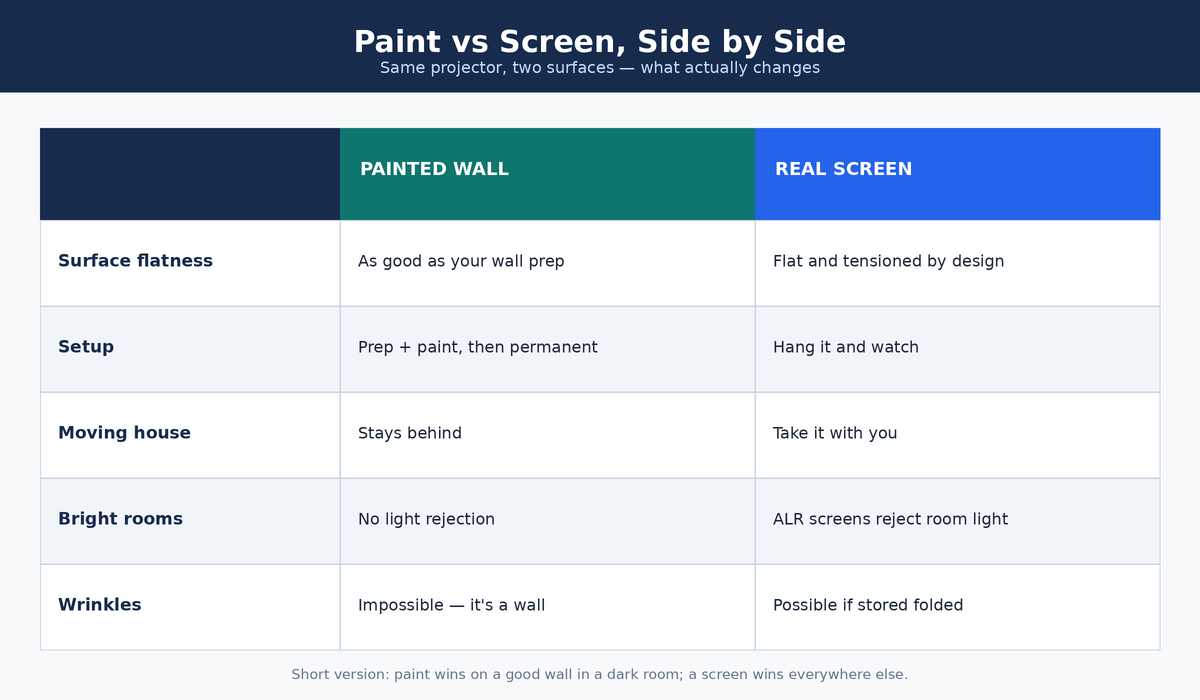
Paint wins on size and simplicity. It costs a fraction of a screen per inch of image, it can fill almost any wall, and when the projector is off, there is nothing hanging in the room at all. It is also permanently ready — no unrolling, no wrinkles, no setup.
A manufactured screen wins on surface quality. Its material is tensioned or fixed perfectly flat, its coating is made for projection rather than adapted to it, and specialist versions reject ambient light in ways ordinary paint cannot. You are paying for a controlled surface, not just a white rectangle.
Neither option is the “real” one, and the other one is a shortcut. Paint is a fixed installation that trades flexibility for simplicity, while a screen is an appliance you can move, upgrade, or take with you. The better choice depends on the wall and the room, not on budget alone.
Paint also has limits a screen does not. The image area is fixed by the wall itself; the surface cannot move to another room, and if the wall is later damaged or redecorated, the screen is gone with it. Those limits are the price of simplicity.
Ordinary Wall Paint vs Dedicated Screen Paint
Standard matte white wall paint is the budget route, and honestly it performs close to a basic matte white screen. Its gain sits near 1.0, its color is neutral enough for most projectors, and in a dark room many viewers would struggle to tell it apart from an entry-level screen.
Dedicated projector screen paint costs more because it is not just white paint. It contains fine reflective additives that are tuned for projection, which can nudge brightness and contrast beyond what ordinary paint manages.
Our guide to what projector screen gain is and why it matters explains how those small gain differences change the picture.
What screen paint cannot do is fix the wall underneath it. The additives improve reflection, not flatness, so every hour of preparation described below matters just as much with a premium paint as with a basic one.
Whichever paint you choose, keep the color honest. Bright white suits dark rooms, while a light grey tint trades a little peak brightness for deeper-looking blacks — a swap worth considering if your room never gets fully dark.
Preparing and Painting the Wall, Step by Step
Preparation decides the result far more than the paint does. Rush it, and the finest screen paint available will still show you every flaw in the plaster.
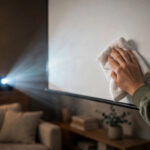
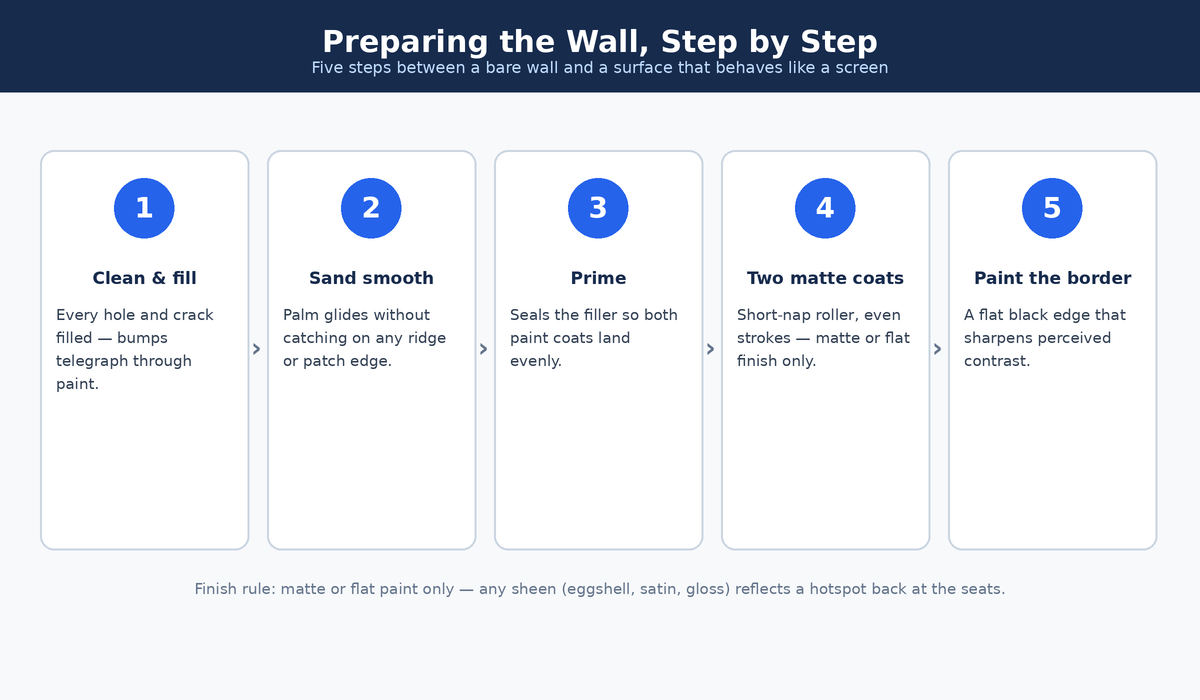
Start by cleaning the wall and filling every hole, crack, and dent with filler, then let it dry fully. Sand the filled spots and the whole image area smooth, working until your palm glides over the surface without catching on anything. Wipe the dust away before going further.
Next, apply a coat of primer. Primer seals the filler and bare plaster so the topcoat lands evenly instead of soaking in patchily. Without it, repaired areas can show through the finished image as dull spots.
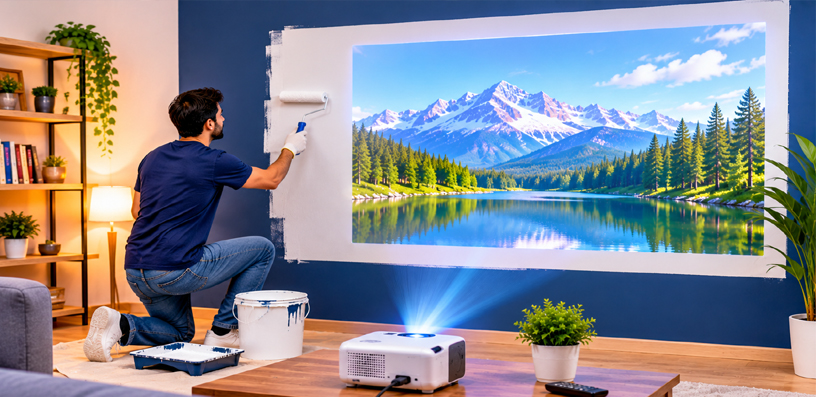
Finish with two even coats of your matte paint, letting each coat dry completely before the next. Use a short-nap roller and steady, overlapping strokes to keep the texture as fine as possible. Roll the final coat in one direction for the most uniform finish you can get.
The Painted Border That Makes the Image Look Sharper
Once the white area is done, paint a black border around it — or fit a simple frame — before you call the job finished. A dark edge gives your eyes a true black reference right next to the picture, and perceived contrast jumps noticeably. It is the cheapest upgrade in the whole project.
Mark out the image area before you paint the border, and get the size right first: our guide to how to choose a projector screen size for your room walks through matching image size to seating distance. Paint the border to that outline, in flat black, with clean taped edges.
If painting a crisp border sounds fiddly, black velvet tape or a slim wooden frame achieves the same effect and hides slightly uneven edges. Either way, leave the border until the white coats are fully dry, so tape does not lift fresh paint.
When a Real Screen Still Wins
Paint loses when the wall itself is the problem. Rough, textured, or damaged walls show everything, and if you rent your home, a permanent painted rectangle is usually off the table entirely. A screen also wins the moment you need the setup to move rooms or come down.
Ambient light is the other decider. A painted wall has no answer to daylight or lamps beyond darkening the room, while an ambient light rejecting screen is built for exactly that fight. If your viewing happens in a bright living room, a screen earns its money.
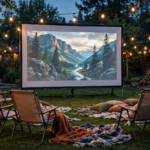
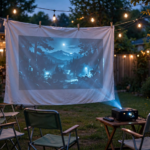
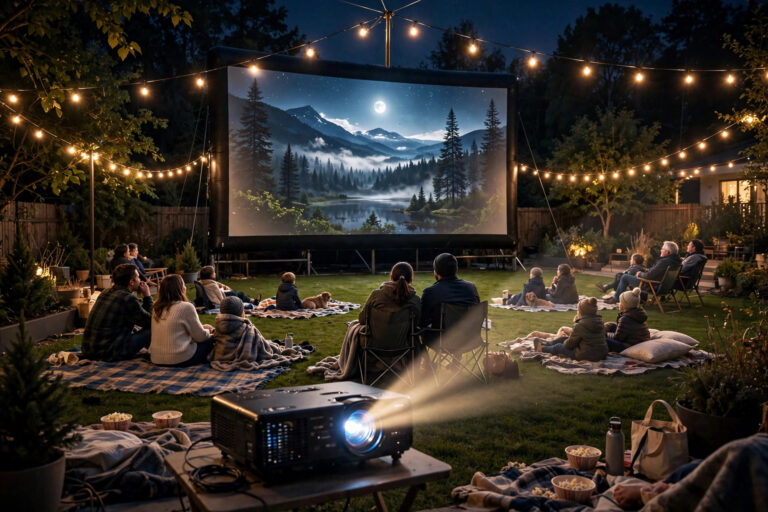
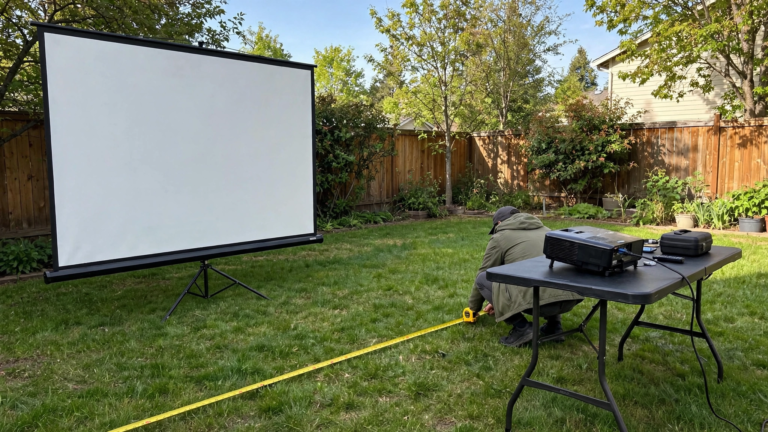
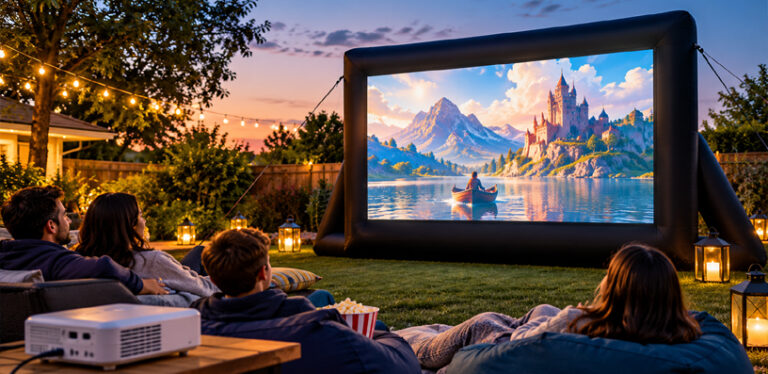
Portability settles it for some people, too. The models in our roundup of the best outdoor projector screen options exist because a painted wall can never be carried into the garden for a movie night. Fixed room, fixed wall, dark space — paint; anything else, buy the screen.
Frequently Asked Questions
Can I use regular wall paint for a projector?
Yes, as long as it is matte or flat white. Ordinary matte paint performs close to a basic matte white screen, though it lacks the reflective additives found in dedicated screen paint.
Matte or gloss paint — which is better for projection?
Matte, every time. Gloss and satin finishes reflect light unevenly, producing hotspots and glare that wash out parts of the image. A flat matte finish scatters light evenly, like a standard screen.
Does the wall have to be white?
No. Light grey is a popular alternative because it deepens perceived black levels and tolerates a little ambient light. Very dark colors absorb too much light, so keep the shade light and neutral.
How smooth does the wall need to be?
Smoother than you think. Run your palm across the image area: if you can feel bumps, seams, or texture, they will show in the picture. Fill, sand, and prime until the surface feels uniformly flat.
Is a painted wall better than a cheap screen?
It can be. A well-prepared painted wall is perfectly flat and wrinkle-free, while cheap screens often ripple at the edges. A cheap screen still wins on portability, and on walls that cannot be painted.
Can you paint over a textured wall for projection?
Not successfully. Texture telegraphs straight through the projected image, especially in bright scenes and slow pans. The texture has to be skim-coated and sanded smooth first, or a screen is the better answer.
Does dedicated screen paint really make a difference?
A modest one. Its reflective additives are tuned for projection and can improve brightness and contrast slightly over ordinary matte paint. It cannot fix a rough wall, so preparation still matters more.
What if I rent and cannot paint a whole wall?
Look at a portable or pull-down screen, a removable screen panel, or a large smooth board painted and hung like a picture. All give you a proper surface without a permanent change your landlord has to approve.
Bottom Line
Painting a wall instead of buying a projector screen is a sound choice when the wall is smooth, the finish is matte, the room can be darkened, and the setup never needs to move. Do the preparation properly — clean, fill, sand, prime, then two even coats — and finish with a dark border, and the result rivals a basic screen.
Choose a real screen when the wall is rough or rented, the room stays bright, or you want the image to travel. Neither answer is a compromise; they are simply two tools for two different rooms.