Can You Use a White Sheet as an Outdoor Projector Screen?
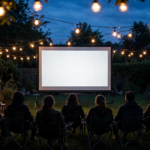
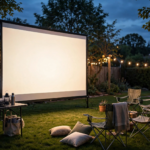
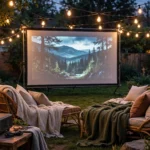
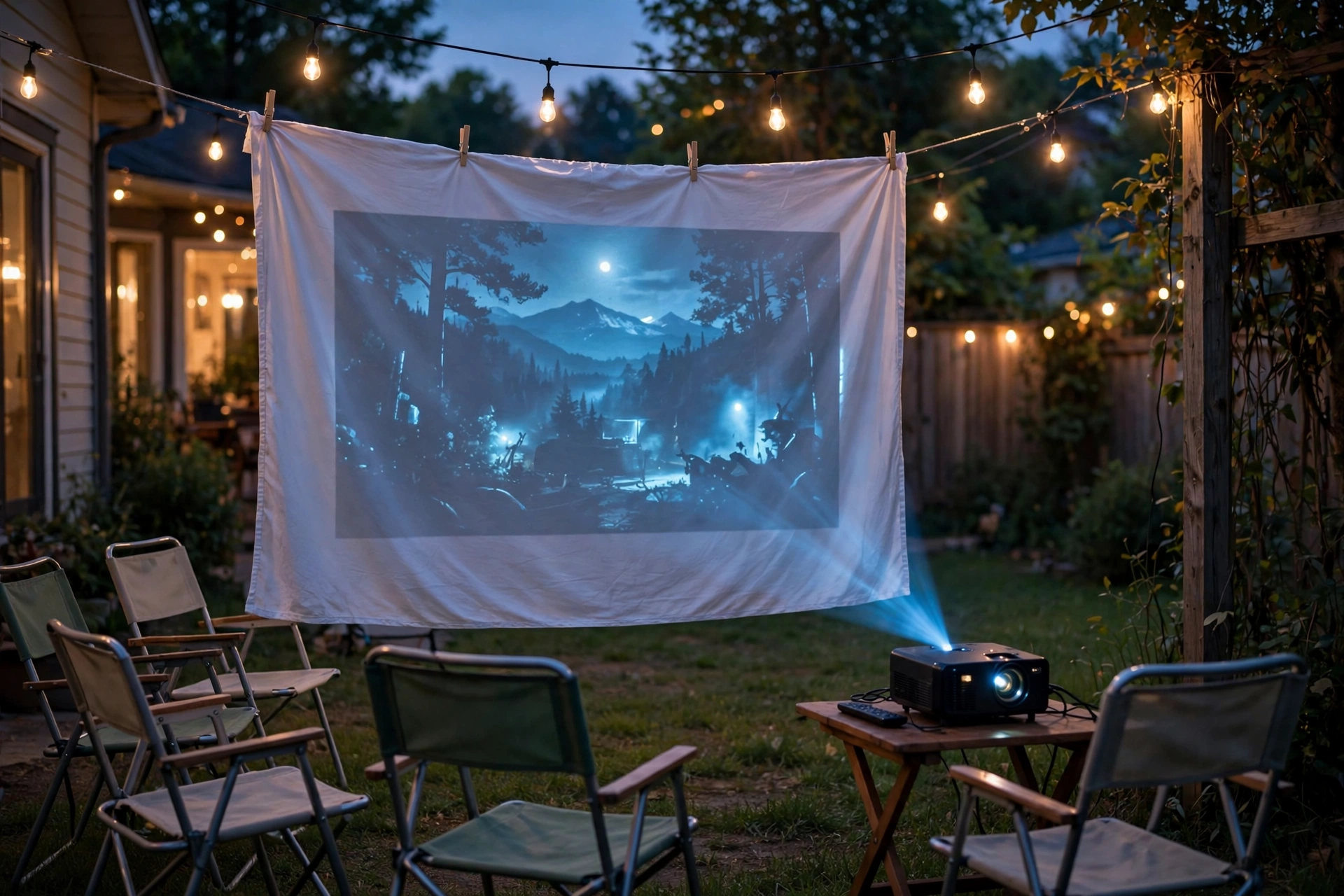
Can you use a white sheet as an outdoor projector screen? Technically, yes — and on a warm night with friends already in the backyard, a bedsheet strung between two trees will absolutely show a movie.
But here’s the honest verdict from someone who’s done it both ways: a sheet works in a pinch, and it will also quietly sabotage your picture quality in ways you don’t notice until you’ve seen the alternative.
The problems aren’t subtle once you know what to look for. Wrinkles turn into visible distortions, light bleeds straight through the thin fabric and washes out the image, and the slightest breeze turns your “screen” into a sail.
None of this means you shouldn’t do it — it means you should do it with your eyes open, hang it properly, and know exactly when it’s worth upgrading to a real screen.
The Short Answer
A white sheet is a fine emergency screen and a mediocre permanent one. For an impromptu movie night tonight, grab the biggest white flat sheet you own and go enjoy yourself.
For a backyard cinema you plan to use all summer, a dedicated outdoor screen — even an inexpensive one — will look dramatically better for reasons that come down to physics, not snobbery.
Below: what actually goes wrong with a sheet, how to hang one so it looks its best, how it compares to a real screen, and the clear signs it’s time to upgrade.
Can You Use a White Sheet as an Outdoor Projector Screen? 5 Problems to Expect
A sheet reflects light, which is the only thing a screen strictly has to do. But a good screen does several other jobs a sheet simply can’t:
1. Wrinkles distort the image. This is the big one. Every fold and crease in the fabric catches light differently, creating visible lines and soft spots across the picture.
Your projector’s focus can only be sharp on one plane; a wrinkled sheet is a dozen different planes. Ironing helps (more on that below), but the moment there’s any slack, gravity and breeze bring the wrinkles back.
2. Light bleeds through. A bedsheet is thin and semi-transparent. A meaningful amount of your projector’s light passes right through the fabric instead of bouncing back to your eyes, which murders brightness and contrast.
Dark scenes turn gray and muddy, and you’ll find yourself squinting at dialogue scenes that would look crisp on a real screen. Hanging the sheet against a dark background — a fence, a dark tarp behind it — helps, but it can’t fully fix bleed-through.
3. Zero screen gain. Real projector screens are engineered with gain — a measure of how efficiently the surface reflects light back toward the audience. A matte white screen has a gain of 1.0; higher-gain screens concentrate more light toward the viewers.
A bedsheet has unpredictable, uneven reflectivity. Whites look dingy, colors look flat, and the whole image lacks the pop you’d get from even a basic dedicated screen.
4. It moves. A sheet hung outdoors is a sail. Even a light breeze makes it billow and ripple, and every ripple moves the image. On a windy night, the picture can become genuinely hard to watch. A real outdoor screen is tensioned — stretched tight on a frame or weighted at the bottom — specifically to solve this.
5. Size and shape are awkward. A king flat sheet is roughly 108 by 102 inches, which sounds generous until you realize it’s the wrong aspect ratio for 16:9 video and you can’t get it perfectly rectangular once hung.
You’ll end up projecting onto a slightly trapezoidal blob and using the projector’s keystone correction to compensate — and heavy keystone correction softens the image and eats resolution.
None of these are dealbreakers for a fun night. They’re just the trade-off of a free setup. Understanding them helps you set expectations — and explains why the upgrade feels so dramatic when you finally make it.
How to Hang a Sheet So It Looks Its Best
If tonight’s the night and the sheet is the screen, do it right. Fifteen minutes of prep makes a visible difference.
Start with the right sheet. Use the largest white flat sheet you own — king size if you have it. White only; any color tint shifts your entire image. A higher thread count is actually better here: tighter weave means less light bleed-through. And wash it first if it’s been in the linen closet — dust dulls the image more than you’d think.
Iron or steam it. This is the single highest-impact step. Every wrinkle you remove now is a distortion you won’t see tonight. If you own a handheld garment steamer, it’s perfect for this. No steamer? A hot iron on a flat surface works fine.
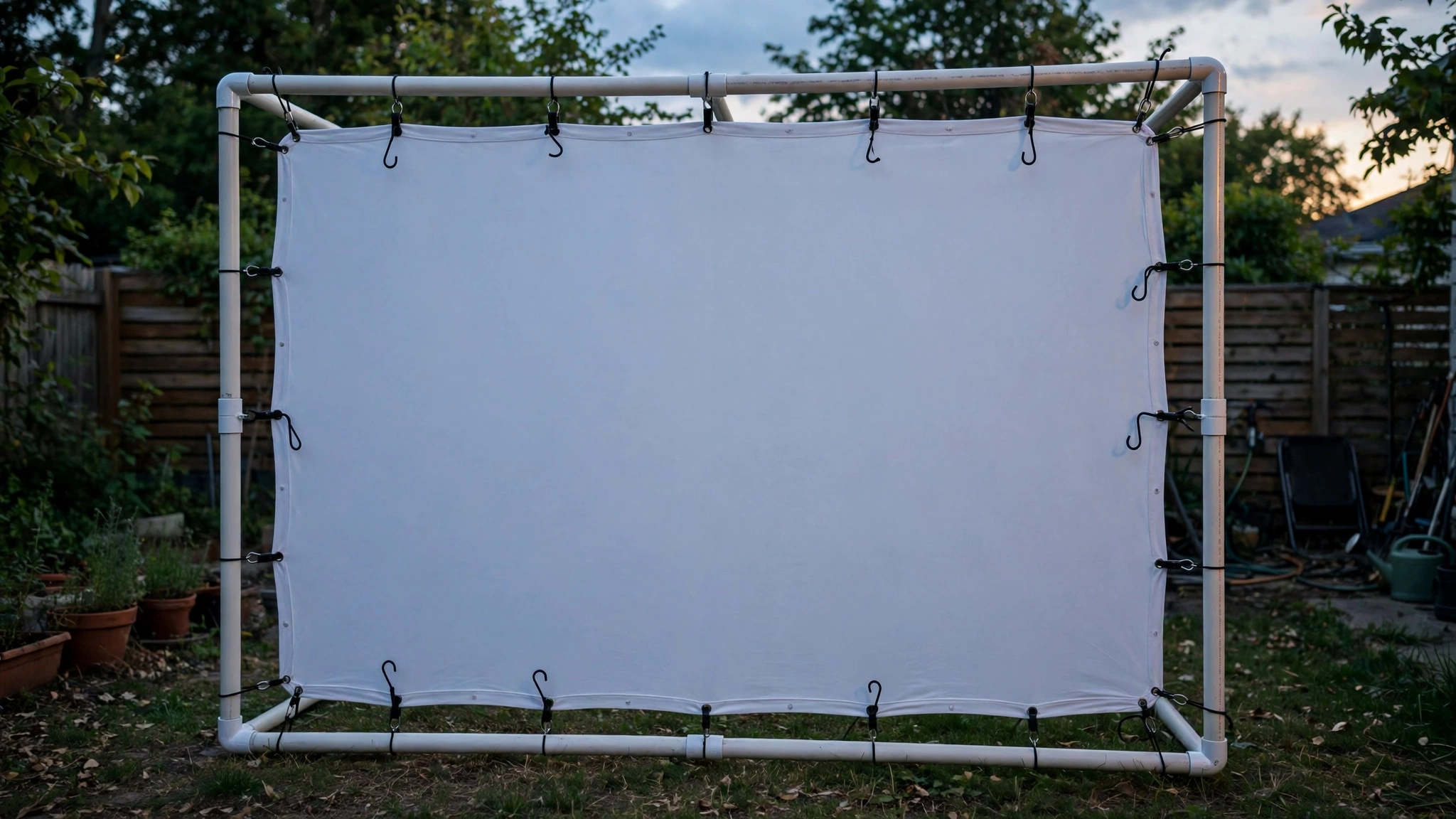
Build a PVC frame. The best free-screen upgrade is a simple rectangle of 1-inch PVC pipe and corner elbows from the hardware store. Size it to your sheet, stretch the sheet over it, and secure it with spring clamps or binder clips every foot or so. A rigid frame is what keeps the surface flat — it’s the difference between a screen and a curtain.
Tension it like you mean it. If you’re hanging the sheet between trees or posts instead, use bungee cords at the corners rather than rope. Bungees maintain constant tension as the fabric shifts, keeping the surface taut. Pull it tighter than feels necessary — it will relax. Weigh or stake the bottom edge so it can’t billow.
Put something dark behind it. A dark tarp, a black bedsheet, or even positioning the screen in front of a dark fence cuts bleed-through noticeably. This one trick recovers a surprising amount of contrast.
Double it up. Hanging two sheets layered together roughly halves the light passing through. It’s not as good as a proper opaque backing, but it’s free, and it works.
Set the projector’s keystone correction only as a last resort — get the projector level and centered on the sheet first, since digital keystone correction softens the picture.
For help dialing in the geometry, our guide to choosing the right screen size for a backyard movie night covers throw distance and seating layout too.
White Sheet vs. a Real Outdoor Screen: What Changes
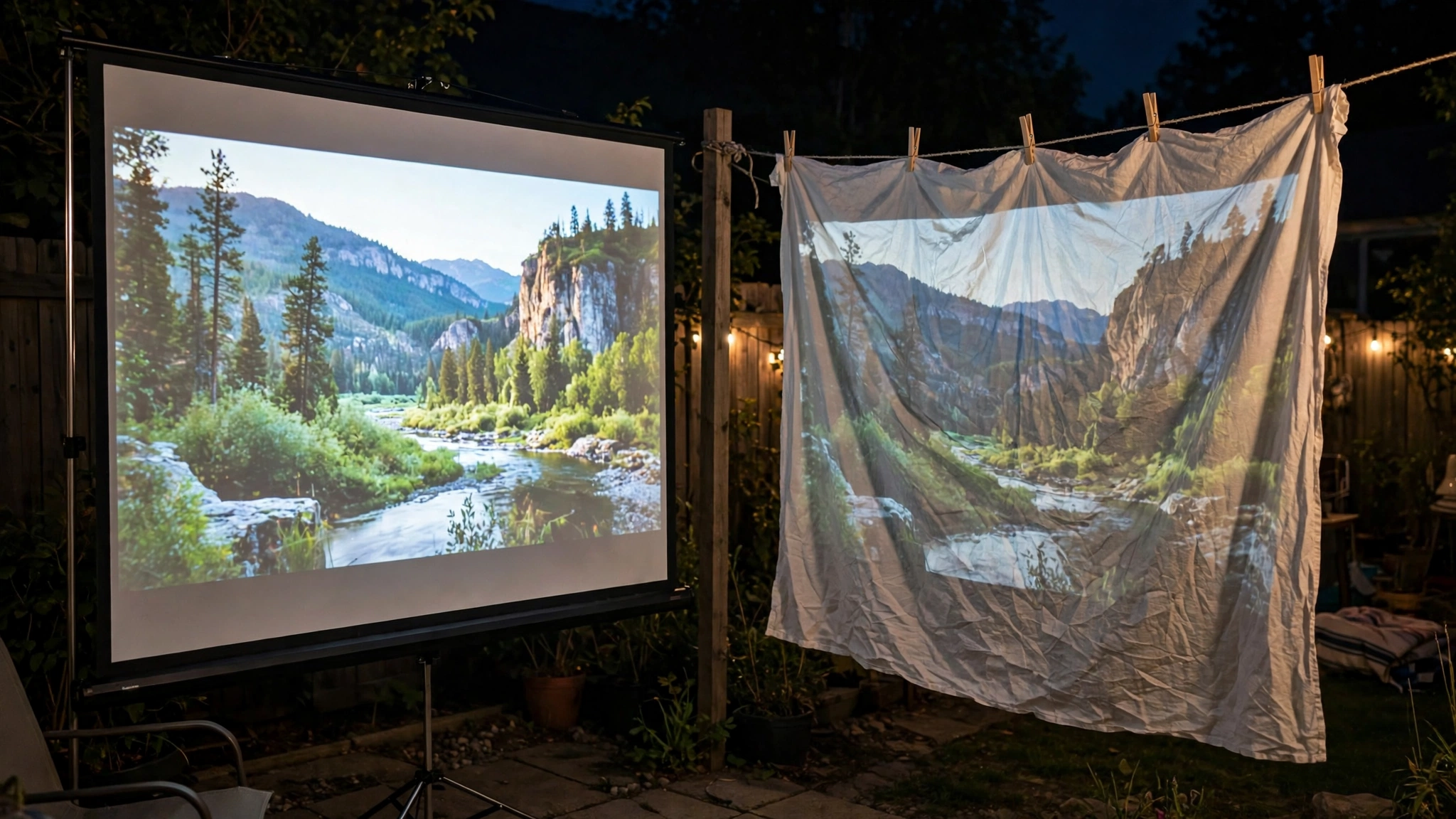
So what does your money actually buy? A dedicated outdoor screen improves on a sheet in four specific ways:
Tensioned flatness. Fixed-frame and pull-up screens hold the viewing surface drum-tight permanently. No wrinkles, no billowing, no re-ironing before every movie. This alone is the most visible upgrade — a flat surface lets the projector’s focus stay razor-sharp edge to edge.
Engineered gain and color. Screen manufacturers design the surface coating for a specific gain and neutral color temperature. Even an entry-level matte white screen reflects light more evenly than fabric, so whites look white and colors look like the director intended.
Some outdoor screens add ambient light rejection, which helps enormously if your backyard has string lights or a neighbor’s porch light you can’t kill. Screen makers like BenQ publish approachable explainers on how gain works if you want the deeper physics.
Black borders. Real screens have a black frame or border around the viewing area, which does more than look professional — it tricks your eyes into perceiving deeper blacks and higher contrast in the image itself. It’s a genuine optical effect, and it’s free with any real screen.
Weather resistance. Outdoor-rated screens use materials that handle dew, humidity, and the occasional surprise drizzle without staining or sagging. A bedsheet left out overnight comes back damp, spotted, and needing a wash — and moisture plus a hot projector lamp nearby is not a combination you want to repeat.
When It’s Time to Upgrade
Keep the sheet for spontaneous nights, but consider a real screen when any of these sound familiar: you’re hosting movie nights more than a couple of times a month; you’re tired of ironing and re-hanging; wind has ruined at least one evening; or you’ve seen a proper screen somewhere and can’t unsee the difference.
The good news: you don’t need to spend much. A basic pull-up or tripod outdoor screen costs less than a single nice dinner out and will outperform any sheet setup on every metric above.
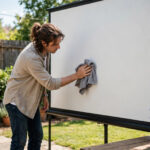
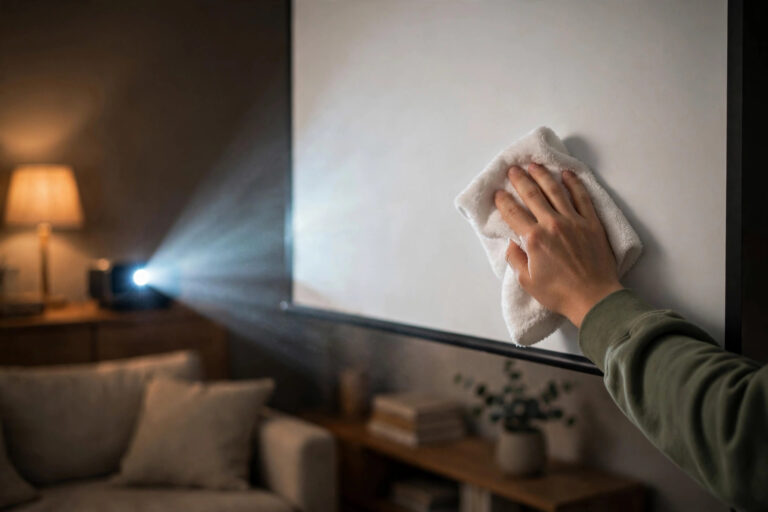
Our roundup of the best outdoor projector screens covers the options worth buying, from budget-friendly portables to big fixed-frame setups. And once you own a real screen, a little maintenance goes a long way — here’s how to clean a projector screen without damaging the coating.
Frequently Asked Questions
Can you use a white sheet as a projector screen indoors?
Yes, and it actually works better indoors — no wind, and you can hang it against a wall, which eliminates bleed-through. The wrinkle and gain issues remain, so iron it well and keep expectations modest.
What color sheet works best as a projector screen?
Plain white. Any color tint — cream, beige, gray — shifts the color balance of the entire image. Interestingly, a light gray sheet can slightly improve perceived black levels in a pinch, but it also dims the whole picture, so white is the safer choice.
How do I stop my sheet screen from blowing in the wind?
Tension is everything: use bungee cords instead of rope, stake or weigh the bottom edge, and consider a rigid PVC frame. On genuinely windy nights, though, even a well-hung sheet will move — that’s one of the strongest arguments for a tensioned real screen.
Can I paint a sheet to make it a better screen?
You can, but it’s rarely worth it. Standard paint cracks when the fabric flexes and creates an uneven surface that’s often worse than the plain sheet. If you’re going to invest effort, put it toward a budget dedicated screen instead.
Does a black backing really help a sheet screen?
Yes — it’s the single most effective contrast trick for a sheet setup. Hanging a dark tarp or black fabric directly behind the white sheet blocks light bleed-through and noticeably deepens dark scenes.
Bottom Line
A white sheet is a perfectly honorable projector screen for tonight’s impromptu movie night — hang it taut, iron out the wrinkles, put something dark behind it, and you’ll have a great evening.
Just don’t mistake it for the real thing. Wrinkles, bleed-through, zero engineered gain, and wind movement put a hard ceiling on picture quality that no amount of careful hanging fully removes.
When backyard cinema becomes a habit rather than a one-off, a dedicated outdoor screen is one of the highest-impact upgrades you can make — and you’ll wonder why you waited.