How to Keep Your Outdoor Projector Screen From Blowing in the Wind – 2026 Guide
A 120-inch outdoor projector screen catches wind like a sail — but you can keep it standing with three things: guy-lines staked into the ground at 45-degree angles, weight on every foot or leg (sandbags work best), and a sheltered position out of the direct wind path. If gusts pass 20 mph, no amount of staking is worth the risk: take the screen down and wait it out.
Wind is the number-one killer of backyard movie nights, ahead of rain and dead projector bulbs. It doesn’t just ruin the picture — a toppling screen can land on your projector, your guests, or your neighbor’s fence.
Here’s how to anchor every common screen type properly, what actually works versus what people wish worked, and when to call it off.
Why Your Screen Is a Sail (Know What You’re Fighting)
A 120-inch 16:9 screen presents roughly 43 square feet of flat surface to the wind. At just 15 mph, that surface catches around 40–50 pounds of lateral force — more than enough to walk a tripod screen across a lawn or fold an inflatable screen in half.
At 25 mph, the force roughly doubles, and gusts hit harder than sustained wind because the screen flexes, rebounds, and amplifies the load on its frame.
This matters because most portable screens are engineered for calm evenings, not weather. Tripod and frame screens typically assume winds under 10–12 mph. Inflatable screens handle a bit more since they’re flexible, but their blowers can’t compensate for a frame being shoved sideways.
Understanding the forces involved tells you why the fixes below work: you’re either redirecting the load into the ground (stakes and guy-lines) or adding mass the wind has to move (weights).
How to Keep Your Outdoor Projector Screen From Blowing in the Wind: 6 Proven Methods
These are ordered from most effective to situational. For a breezy evening (10–15 mph), methods 1 and 2 together are usually enough. For genuinely gusty conditions, stack all of them.
1. Guy-lines and ground stakes (the single best fix)
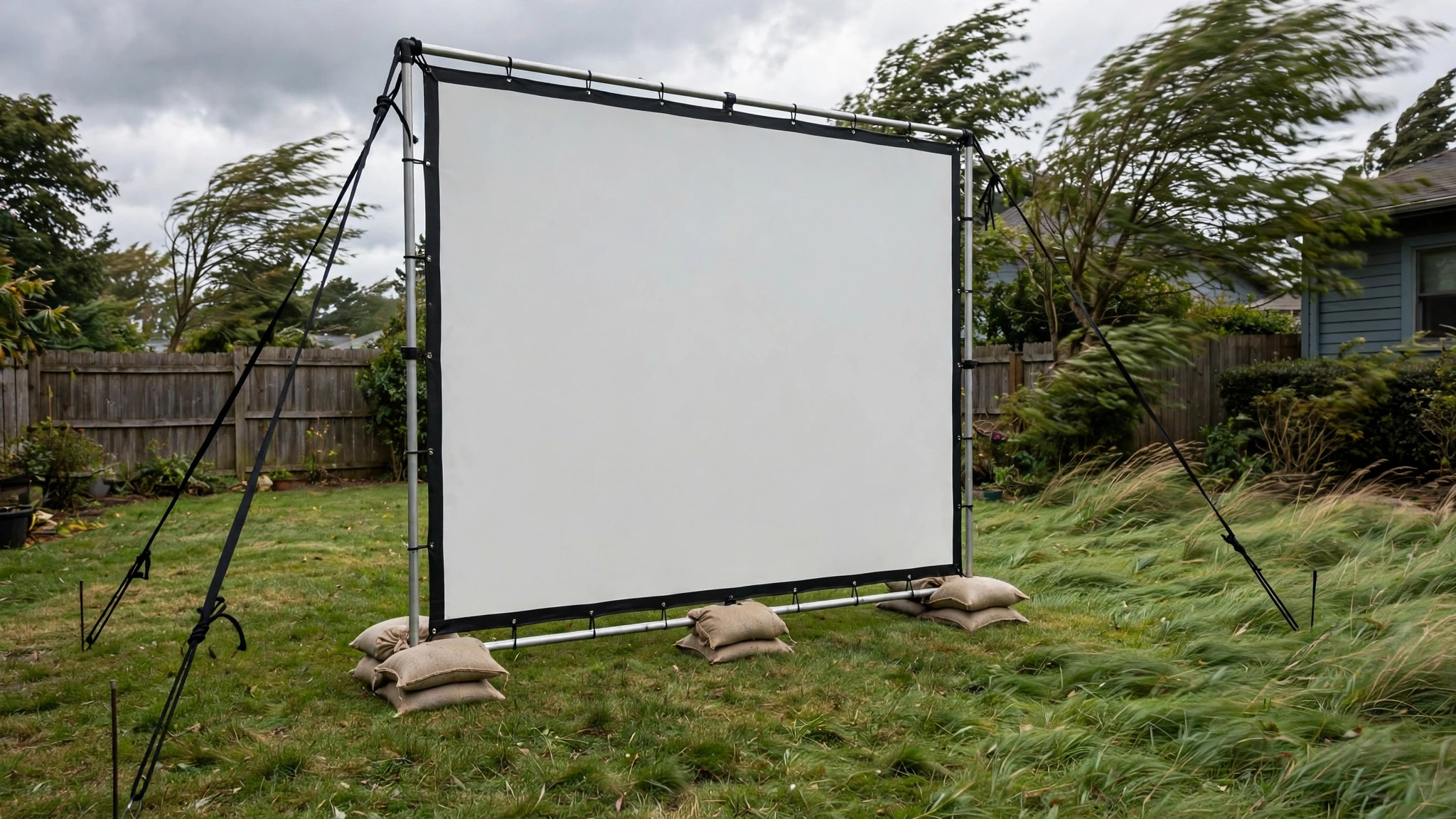
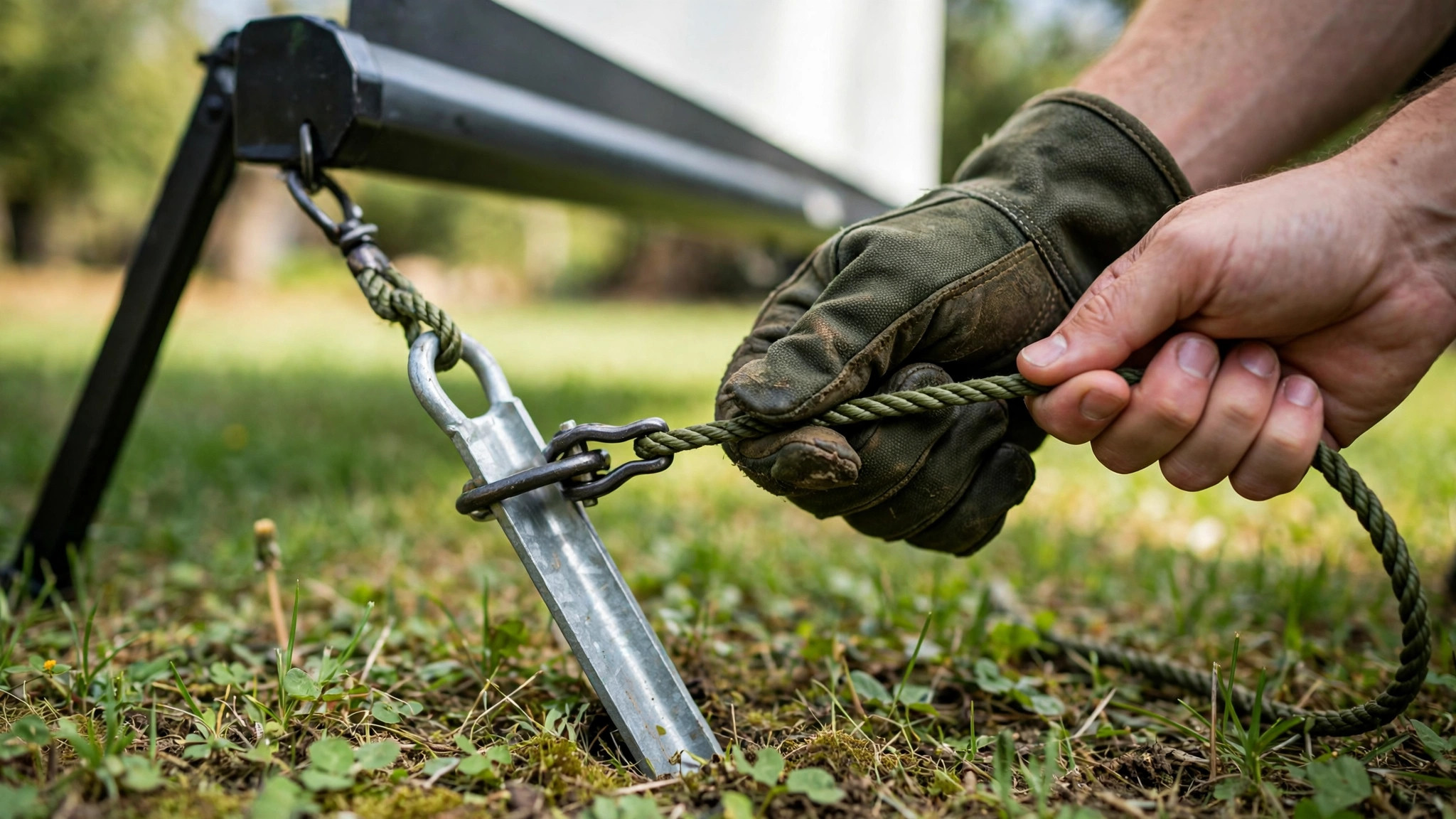
Guy-lines — ropes or straps running from the top corners of your screen frame down to stakes in the ground — are how tents, towers, and event screens survive wind. They convert sideways wind force into downward pull on the stakes, which the ground resists easily.
Set them at roughly 45 degrees from the screen frame, one from each top corner, plus a third from the top center on screens over 120 inches. Use proper tent stakes or 12-inch landscape staples driven fully into the ground — not the flimsy wire stakes that come in some screen kits.
Ratchet straps or paracord with a trucker’s hitch let you tension them drum-tight; slack guy-lines are decoration, not anchors. For a deeper explanation of the physics, guy-wires have stabilized structures for over a century on exactly this principle.
2. Sandbags on every foot and leg
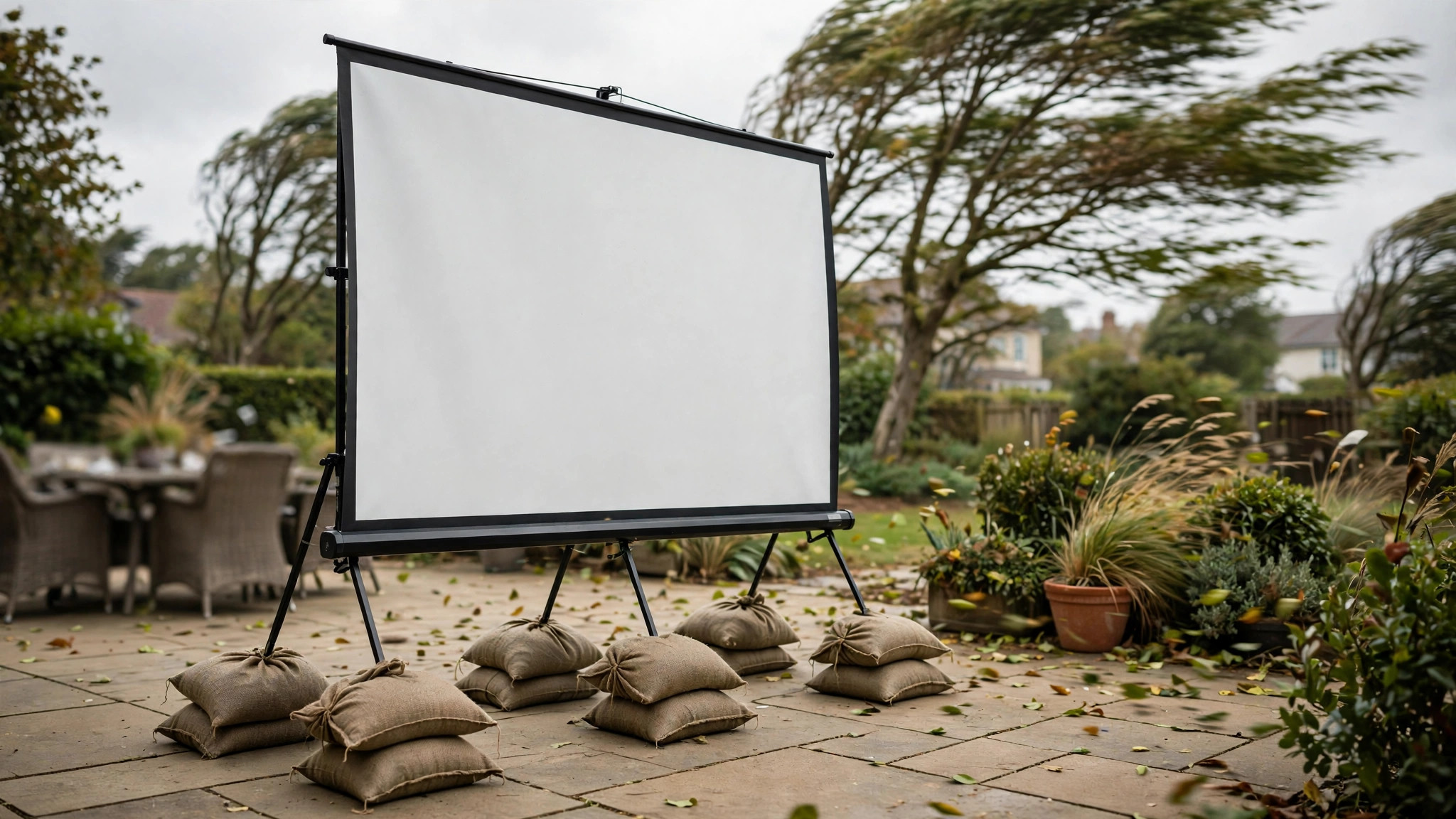
Weight the base. Purpose-made saddlebag-style sandbags that drape over tripod legs or frame feet are the cleanest option — a pair of 20–25 lb bags per side transforms a tippy tripod screen into something that shrugs off gusts.
In a pinch, regular sandbags, bags of play sand from the hardware store, or even filled water jugs strapped to the legs work.
Whatever you use, the weight must sit ON the feet, not beside them. A sandbag leaning against a leg does almost nothing; the same bag draped over the foot lowers the center of gravity and adds friction against the ground.
For hard surfaces like patios where stakes won’t go in, sandbags become your primary anchor — double the weight you’d use on grass.
3. Tether to fixed structures
If your yard has a fence, deck railing, pergola posts, or sturdy trees near the screen position, tie the screen frame to them. Run rope or ratchet straps from the frame’s upper corners to the fixed structure, keeping tension even on both sides so the screen doesn’t twist.
Never tether to anything that moves: patio umbrellas, lightweight trellises, or young trees will just become part of the problem. And never tie off to the projector table — if the screen goes, you don’t want it dragging your projector with it.
4. Weight the bottom bar
Many frame and pull-up screens have a bottom bar or dowel that the fabric hangs from. On windy nights, this bar swings and the fabric billows, which looks terrible even if the frame stays up. Clipping small weights (1–2 lb ankle weights, or purpose-made bar weights) to the bottom bar keeps the fabric taut and kills most of the flutter.
This is a picture-quality fix as much as a safety fix: a billowing screen makes the image ripple and blur at the edges, and viewers notice it within minutes.
5. Lower the screen
Wind speed increases with height — the breeze at 7 feet is measurably stronger than at 4 feet. If your screen stand is height-adjustable, drop it to the lowest setting that still clears your front row’s sightlines (bottom of the image roughly 24 inches off the ground). Every foot lower meaningfully reduces the load.
This pairs well with seating adjustments: have the front row sit a little closer and lower the screen, rather than keeping the screen tall for a far-back audience on a windy night.
6. Use a windbreak
Position the screen where the house, garage, a tall fence, or dense hedging blocks the prevailing wind. Even a partial windbreak cuts gusts dramatically — wind hitting a solid fence drops to a fraction of its speed for a distance of several times the fence’s height behind it.
Scout this during the day: tie a ribbon to a stick at screen height and walk your yard. Where the ribbon hangs limp, that’s your sheltered spot. If you’re choosing between screen sizes for a windy area, our guide to backyard screen sizing covers how size and placement interact.
Anchoring by Screen Type
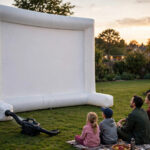
Inflatable screens: Keep the blower running the entire time — a partially deflated screen is far more vulnerable to wind. Use every tether tab the manufacturer sewed in (corners and top edge), staked with proper tent stakes, not the short pins from the kit. In sustained wind over 15 mph, inflatables become genuinely risky; their large flexible surface catches gusts unpredictably.
Tripod/pull-up screens: These are the tippiest design — tall, narrow base, top-heavy. Sandbags on the feet are mandatory; guy-lines from the top of the pole to stakes on both sides are strongly recommended. Never extend the pole to maximum height on a breezy night.
Frame screens (assembled tube frames): The most stable portable design once staked, because the wide rectangular base resists tipping. Stake all four corners, add guy-lines from the top bar, and weight the bottom bar against flutter.
DIY screens (fabric on PVC/lumber frames): Usually the least wind-resistant — light frames and loose fabric. Guy-line every corner, weight the bottom edge, and accept that DIY screens are fair-weather-only setups.
If wind is a regular problem in your yard, a manufactured screen with proper anchor points is worth the upgrade — see our outdoor projector screen guide for the sturdiest options.
When to Take It Down: Wind Speed Rules
There is a point where anchoring stops being brave and starts being foolish. Use these thresholds:
- Under 10 mph: Normal movie night. Basic staking or sandbags; enjoy the show.
- 10–15 mph: Full anchoring — guy-lines, weights, sheltered position. Watch for gusts.
- 15–20 mph: Marginal. Only with every method stacked, and keep watching the sky. One strong gust can still end the night.
- Over 20 mph sustained, or any gusting thunderstorm: Take it down. No movie is worth a screen through a window or onto a guest.
Check the hourly forecast, not just the daily summary — evening wind often drops after sunset as the ground cools, which is exactly when you’re watching.
But if storms are in the area, the gust front ahead of a thunderstorm can hit 40+ mph with almost no warning. When in doubt, take it down; setup only takes 15 minutes tomorrow.
What NOT to Do
Don’t leave any portable screen up overnight. Nighttime wind shifts direction and strengthens, dew adds weight unevenly, and you won’t be there to catch it. Every “my screen survived the night” story ends eventually.
Don’t use bungee cords as guy-lines. Bungees stretch, which means the screen builds momentum before the cord catches — that snap-loading can break frames. Use static rope or straps for anchoring; bungees are fine only for light tensioning of fabric edges.
Don’t pile loose weight on the fabric. Rocks or bricks set on the screen material to “hold it down” will stretch, stain, or tear it. Weight belongs on feet, legs, and bottom bars — never on the viewing surface.
Don’t anchor to the projector. Already said, worth repeating: the projector is the most expensive thing in your setup and the worst possible anchor.
Frequently Asked Questions
How much wind can an inflatable projector screen handle?
Most inflatable screens handle sustained winds of 10–15 mph with all tether tabs staked properly. Above that, the flexible surface starts catching gusts unpredictably, and the blower can’t keep the frame rigid. In gusty conditions over 15 mph, take it down — inflatables are the highest-risk screen type in wind because of their huge sail area.
Can I use my projector screen on a windy patio where I can’t drive stakes?
Yes, but you switch from stakes to mass. Use heavy sandbags (25+ lbs per foot) on every leg, tether the frame to railings or structural posts with ratchet straps, and keep the screen at its lowest height setting. On hard surfaces, friction plus weight is your whole anchoring system — double what you’d use on grass.
Will guy-lines damage my screen frame?
Not if you attach them correctly. Tie to the frame’s structural corners or designated anchor points — never to the fabric or the bottom bar alone. Pad the contact point with a cloth if the frame is painted and you care about scratches. The frame is designed to handle tension along its structural members; that’s what they’re for.
My screen survived a windy night unstaked. Do I really need all this?
You got lucky with steady wind from one direction. Gusts — sudden directional changes — are what topple screens, and one gust is all it takes. Anchoring takes ten minutes; replacing a torn screen or a projector it landed on takes weeks and real money. Stake it every time.
Should I just buy a heavier screen to solve wind problems?
Weight helps, but anchoring beats mass. A heavy unanchored screen still walks across a lawn in gusts — it just does it slower. A light screen with proper guy-lines and stakes will outlast a heavy screen sitting loose. Spend the money on stakes, straps, and sandbags before upgrading the screen itself.
The Bottom Line
Guy-lines at 45 degrees to real ground stakes, sandbags draped over every foot, and a sheltered position will hold your screen through any watchable evening.
Stack all three when it’s gusty, and respect the 20 mph rule — taking the screen down is always cheaper than replacing what the wind breaks. Ten minutes of anchoring buys you a whole movie night of not thinking about the weather.