How to Clean Outdoor Projector Screen (Mildew & Dirt) – 2026 Guide
Yes, you can clean an outdoor projector screen: wipe it with a soft microfiber cloth dampened with warm water and a few drops of mild dish soap, rinse with clean water, and let it air-dry completely before storing.
Never use harsh chemicals, abrasive pads, or a pressure washer — the screen’s optical coating is thinner and more fragile than it looks, and one wrong cleaner can permanently dull a section of your image.
Outdoor screens live hard lives: pollen, dust, bug splatter, dew, and the dreaded mildew spots that bloom after a humid week in storage.
The good news is that nearly all of it comes off with gentle methods. The bad news is that aggressive cleaning does permanent damage faster than dirt ever could. Here’s the safe method, how to handle mildew specifically, and the material-by-material rules.
How to Clean Outdoor Projector Screen? – The Safe Step-by-Step Method
This works for the vast majority of outdoor screens — PVC/vinyl, polyester fabric, and painted surfaces. (Glass-beaded and ALR screens have stricter rules; see the material section below.)
Step 1 — Dry dust first. Before any liquid touches the screen, remove loose dirt, pollen, and debris with a soft-bristled brush, feather duster, or dry microfiber cloth. Wiping grit across a wet screen is how micro-scratches happen — get the dry particles off first.
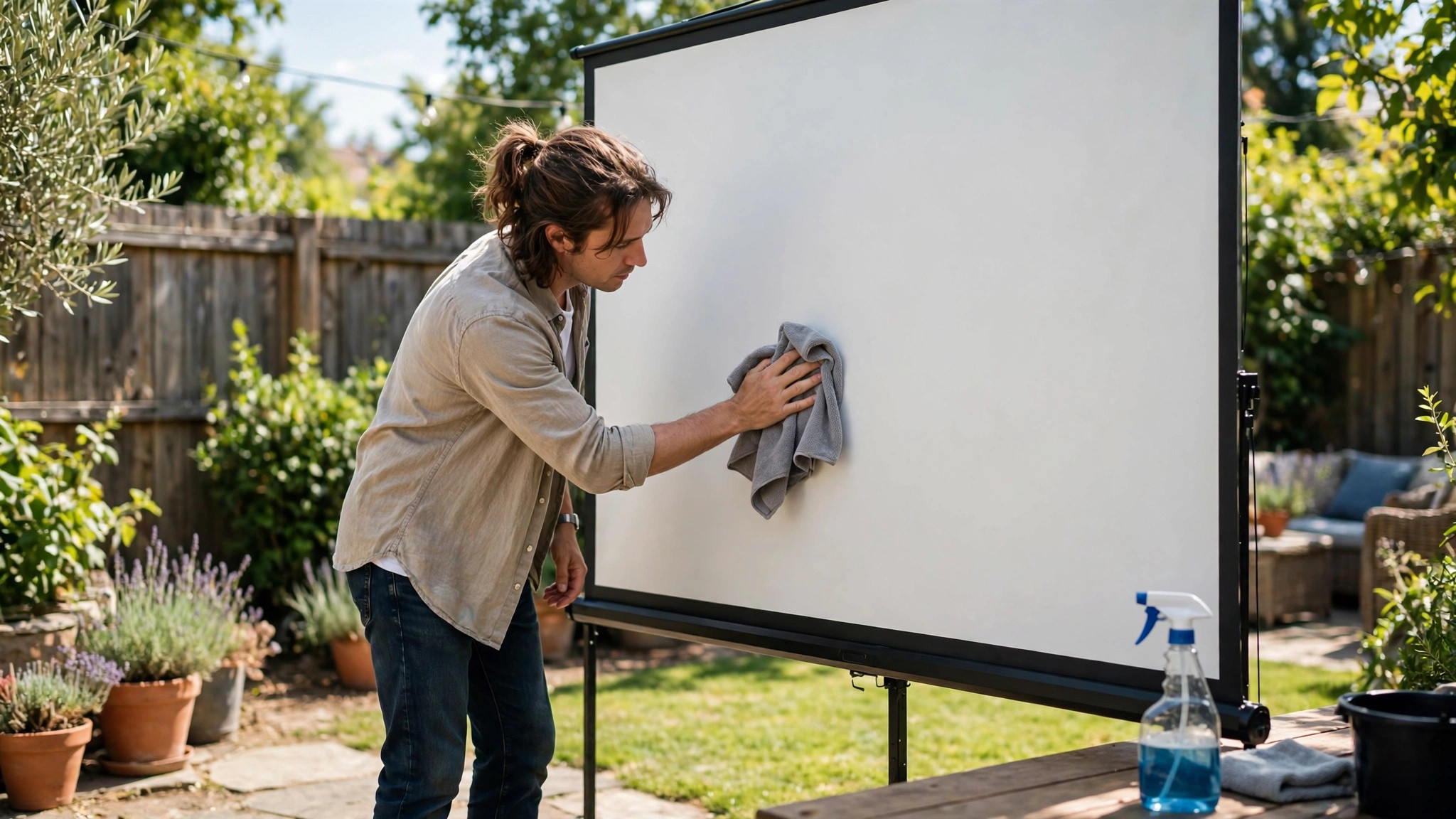
Step 2 — Mix a mild solution. A bucket of warm (not hot) water with a few drops of mild dish soap — roughly a 95:5 water-to-soap ratio. That’s it. No bleach, no vinegar, no all-purpose spray for the general wash.
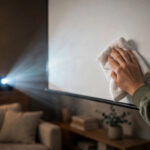
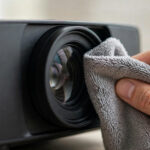
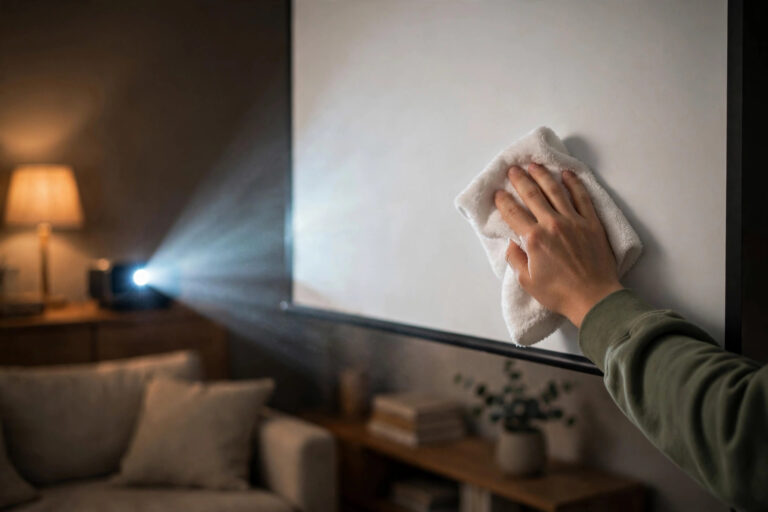
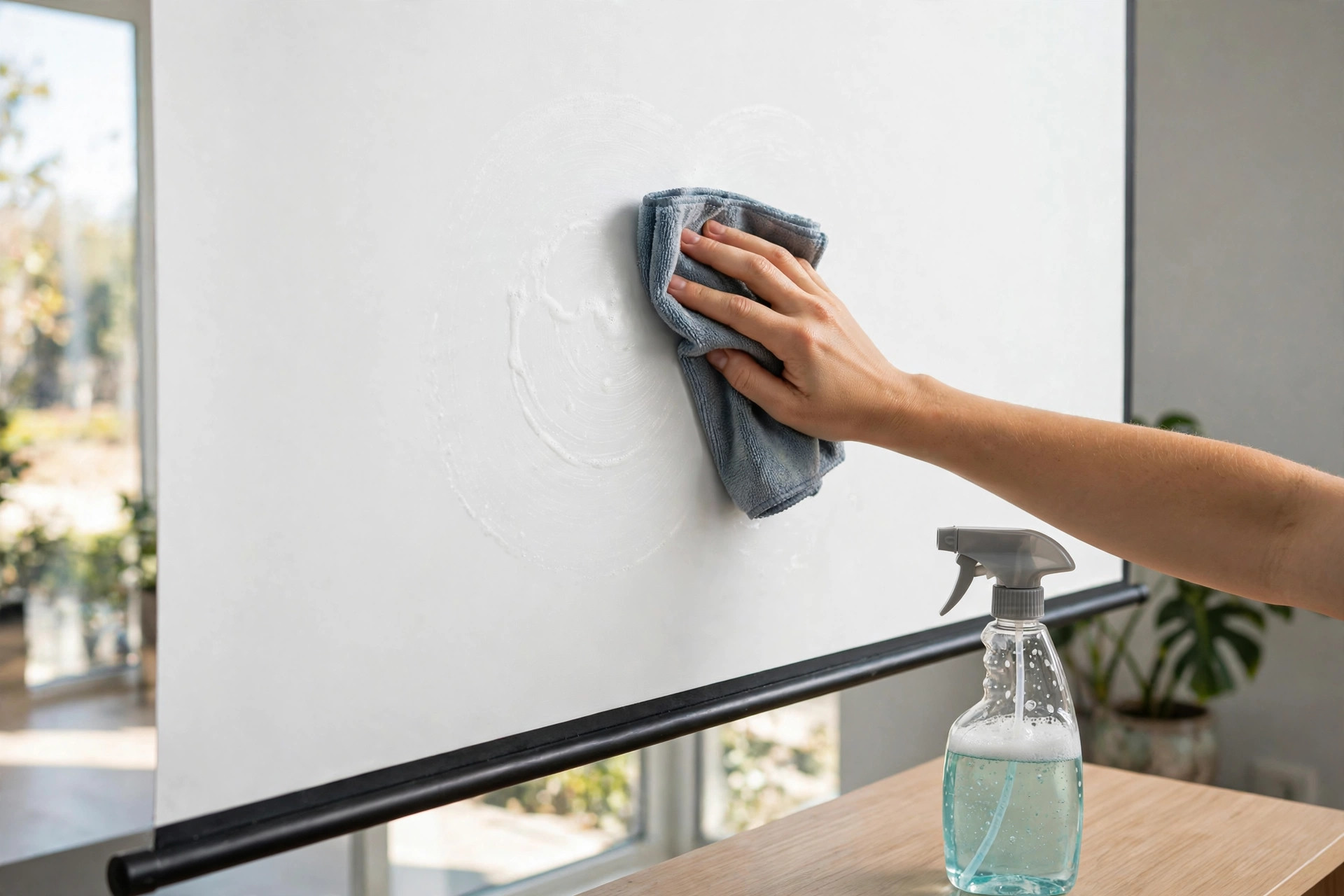
Step 3 — Wipe gently in one direction. Dampen a clean white microfiber cloth (white so no dye transfers), wring it until it’s just damp, not dripping, and wipe the screen in long straight passes — top to bottom or left to right. One direction only: circular scrubbing creates swirl micro-scratches that show up as dull patches in bright scenes.
Step 4 — Rinse. Go over the screen again with a cloth dampened in clean water only, to remove soap residue. Leftover soap film attracts dust and can yellow over time.
Step 5 — Air dry completely. Let the screen dry fully in shade before retracting, folding, or storing it. Storing a damp screen is the number-one cause of mildew — the cleaning is pointless if you pack it wet.
For a quick maintenance wipe between movie nights when there’s no visible grime, you can skip the soap: a cloth barely dampened with plain water is enough.
Know Your Screen Material Before You Clean
Not all screens tolerate the same treatment. Check what yours is made of before going beyond water:
PVC / vinyl screens (most portable and inflatable screens): the most forgiving. Mild soap and water is safe; diluted cleaners for spots are fine. Avoid solvents — acetone, benzene, and alcohol-based cleaners can permanently cloud vinyl.
Woven fabric screens (many frame and DIY screens): handle soap and water well and can even tolerate gentle hand-washing off the frame. Don’t machine-wash unless the manufacturer explicitly says so — agitation stretches the weave, and the screen never sits flat again.
Glass-beaded screens: clean by dusting only — very soft brush or dry cloth. No soap, no water, no solvents. The microscopic glass beads that give these screens their brightness are easily dislodged or dulled by any liquid cleaning.
ALR / optical screens (lenticular or Fresnel surfaces): the most delicate. Dust with a soft brush; if you must wet-clean, use water only on a lint-free cloth, wiped gently in one direction along the surface structure — never across it, never in circles.
No detergents, no alcohol, no solvents, ever. When in doubt, check the manufacturer’s care sheet before touching an ALR screen with anything wet. If you’re unsure what type you own, our outdoor projector screen guide breaks down the common materials.
Removing Mildew and Mold Spots
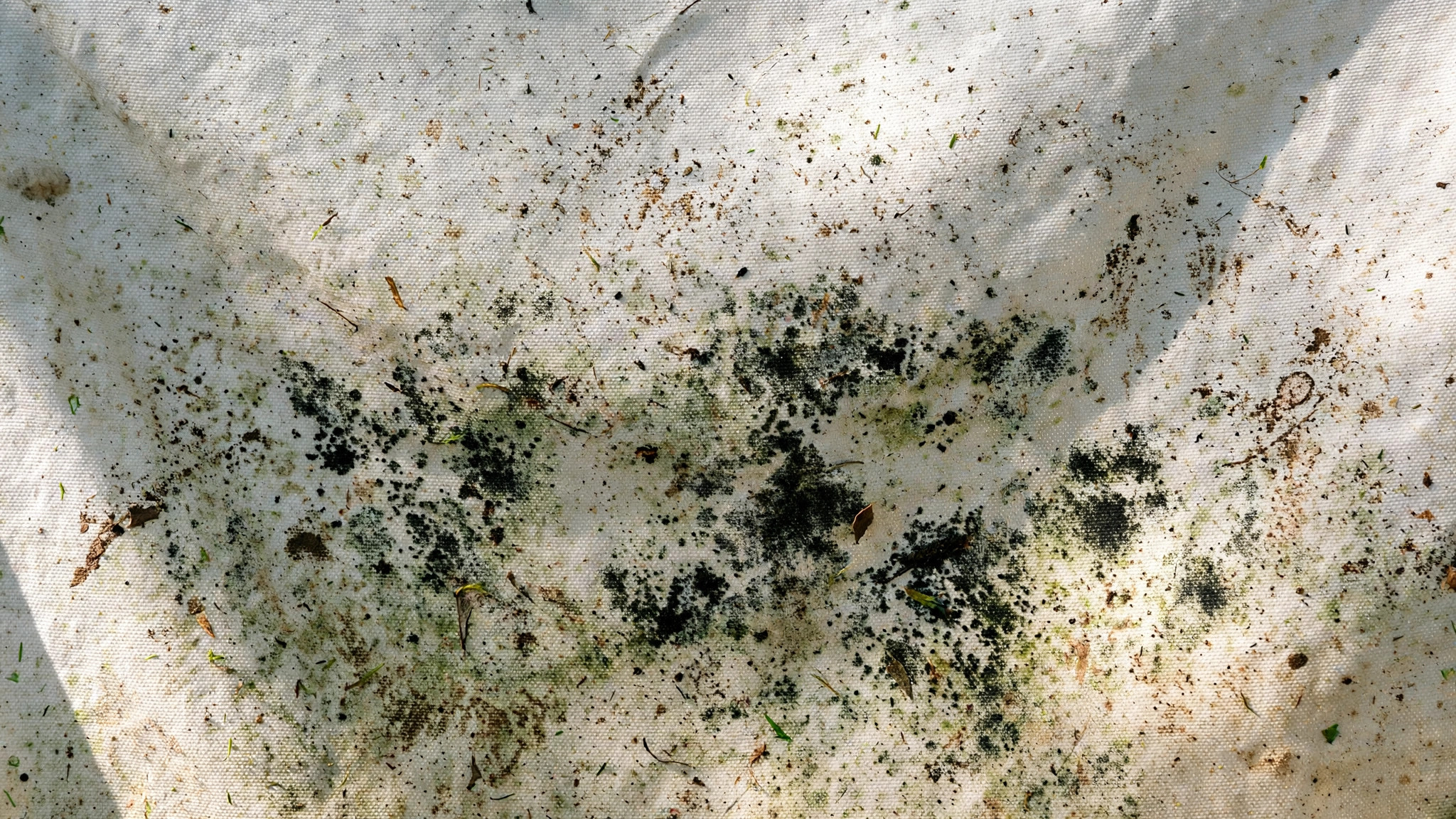
Mildew is the outdoor screen’s signature enemy: small dark or greyish spots that appear after the screen sat damp in storage or through a humid stretch.
Here’s the truth — surface mildew on PVC/vinyl screens usually cleans off completely; mildew that’s been growing into woven fabric for months may leave faint staining even after the mold itself is dead.
The method: mix a very dilute bleach solution — no more than 1 part household bleach to 10 parts water — and test it on a corner or the back of the screen first.
Stronger bleach concentrations yellow white screens, which looks worse than the mildew did. Dab (don’t scrub) the spots with a cloth dampened in the solution, let it sit for 2–3 minutes, then rinse thoroughly with clean water and air-dry completely.
Prevention beats removal: mildew needs moisture + still air + time. After every use in humid weather or after any rain exposure, wipe the screen dry before packing it. Store it somewhere with airflow, not sealed in a damp garage corner.
Silica gel packs in the storage bag are cheap insurance. Screens stored dry simply don’t grow mildew — mildew is a moisture problem first and a cleaning problem second.
What about “mildew-proof” screens? Some polyester screens are marketed as mildew-resistant. That means the material itself doesn’t feed mold — but the pollen, dust, and organic film sitting ON the screen absolutely does. A mildew-resistant screen stored dirty and damp will still spot. The label helps; it doesn’t replace drying.
Stubborn Spots: Bug Splatter, Sap, and Mystery Marks
For isolated spots that survived the general wash, spot-treat rather than re-washing the whole screen. Dampen a cotton swab with isopropyl (rubbing) alcohol and work the spot with small circular motions — circles are fine here because you’re treating a tiny area, not the whole surface.
The spot should lift within a minute. Immediately follow with the dry end of the swab (or a dry microfiber corner) to absorb the dissolved grime and alcohol residue so it doesn’t set into a ring.
Tree sap is the toughest common offender: let the alcohol sit on it for 30 seconds to soften it before wiping. If a spot doesn’t respond to alcohol, stop — escalating to stronger solvents risks the coating, and a single faint spot you only see on a pure-white test image is invisible during actual movies.
What NEVER to Use on a Projector Screen
Pressure washers. Even on “low,” the focused stream drives water behind coatings, stretches fabric, and can delaminate layered screen materials. This is the fastest way to destroy a screen.
Harsh chemicals: undiluted bleach, ammonia-based cleaners, acetone, benzene, and abrasive powders (including “soft scrub” type products) all attack screen coatings. Glass cleaner is fine on windows — it’s not fine on most screens unless the manufacturer specifically allows it for that model.
Abrasive pads and stiff brushes. Scouring pads, stiff bristle brushes, and even rough paper towels scratch the optical surface. Microfiber or 100% cotton only.
Excess water. Soaking the screen — especially around seams, edges, and any laminated layers — lets moisture wick inside where it can’t dry. Damp cloth, not wet; wring thoroughly.
Heat to “speed up” drying. Hair dryers and direct hot sun on a wet screen can warp vinyl and set wrinkles into fabric. Shade and airflow dry it just fine.
Frequently Asked Questions
Can you wash a projector screen with a hose?
A gentle rinse with a garden hose on a wide fan setting is acceptable for PVC/vinyl outdoor screens to knock off loose dirt before the hand-wash — but that’s rinsing, not cleaning, and never use a pressure washer or jet nozzle. Keep water away from seams and edges, and always follow with the microfiber hand-wash and full air-dry.
How do you get mildew smell out of a projector screen?
The smell means active mold — kill it first with the dilute bleach method above, rinse thoroughly, and dry completely in moving air.
If the odor persists after the spots are gone, it’s embedded in the fabric weave; a second treatment usually finishes it. Screens that still smell after two cleanings may need replacing — the mold has penetrated too deep.
Can I use Windex on my outdoor projector screen?
Generally no. Ammonia-based glass cleaners can damage the optical coatings on most projector screens. The exception is specific high-performance screen models whose manufacturers explicitly list a glass cleaner as acceptable — check your manual first. For everything else, mild dish soap and water are safer and just as effective.
How often should I clean my outdoor projector screen?
Dry-dust before every movie night (30 seconds with a microfiber cloth), soap-and-water wash whenever you see visible grime or every 4–6 uses in dusty/buggy conditions, and always wipe dry before storage. Screens used in pollen season or near trees need washing more often — pollen film dulls brightness noticeably.
Will cleaning damage the screen’s brightness or gain?
Gentle cleaning (microfiber, mild soap, one direction) doesn’t affect gain at all — it restores it by removing the film dulling the surface. Damage comes from abrasives, solvents, and harsh chemicals stripping the optical coating. If your screen looks dimmer after cleaning, check for soap residue (re-rinse with clean water) rather than assuming the coating is gone.
The Bottom Line
Warm water, a drop of dish soap, a white microfiber cloth, straight strokes, full air-dry — that’s 95% of outdoor screen cleaning. Treat mildew early with dilute bleach, spot-treat stubborn marks with rubbing alcohol, and never let a pressure washer or harsh chemical near the surface. Clean it gently, store it dry, and the screen will outlast the projector.