How to Protect Your Projector From Rain Outside in 2026
Do not turn on your projector in the rain, but you can absolutely protect it from surprise showers. A pop-up canopy over the setup is the best active protection, a ventilated weatherproof enclosure works for semi-permanent installs, and a simple waterproof cover handles storage and sudden downpours.
What kills projectors is not just rain falling on them; it is moisture sneaking inside, heat building up in sealed boxes, and owners powering a damp projector back on too soon.
Can a Projector Get Wet? What Rain Actually Damages
Projectors are indoor electronics wearing no raincoat. When water gets in, it attacks three things. First, the lens and optical path: moisture on or inside the lens scatters light, and a single rain spot baked on by lamp heat can permanently haze the image.
Second, the electronics: water bridges circuits that were never meant to touch, and even a small short can kill a mainboard. Third, the lamp or laser light source: thermal shock from cold water hitting a hot lamp can crack it, and moisture corrodes the contacts and reflectors over time.
The sneaky part is that damage is often delayed. A projector that “survived” a light drizzle may work fine that night and die two weeks later when corrosion finishes its work on a connector.
That is why “it got a little wet but still works” is not a clean bill of health. Treat any water exposure as an incident, dry the unit thoroughly, and inspect it before trusting it again.
How to Protect Your Projector From Rain Outside? – 7 Methods That Work
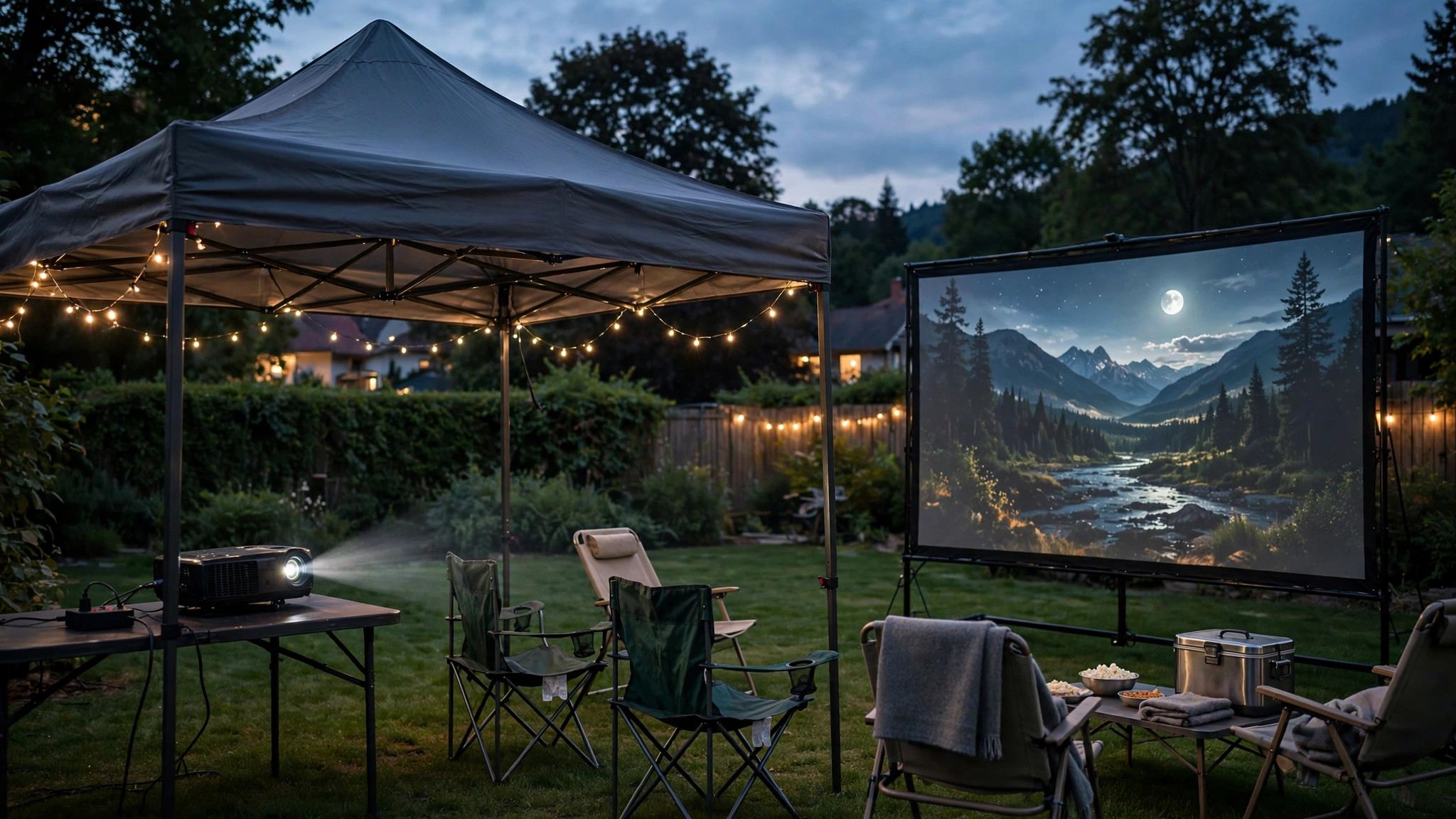
1. A pop-up canopy is the best all-rounder. A basic 10×10 pop-up canopy over the projector table and seating area keeps direct rain off everything while leaving all sides open for ventilation.
It is the only rain protection that works while the movie is actually playing, because the projector keeps breathing normally underneath it. Angle one corner slightly lower so water runs off away from your gear, and stake or weight the legs; a canopy becomes a sail in the wind.
2. Use a weatherproof enclosure for semi-permanent setups. If your projector lives outside for a whole season, a proper outdoor enclosure with a glass port for the lens, filtered vents, and sometimes a small fan is the professional answer. The critical feature is airflow: the enclosure must move air across the projector or heat builds up fast. Never seal a running projector in an airtight box.
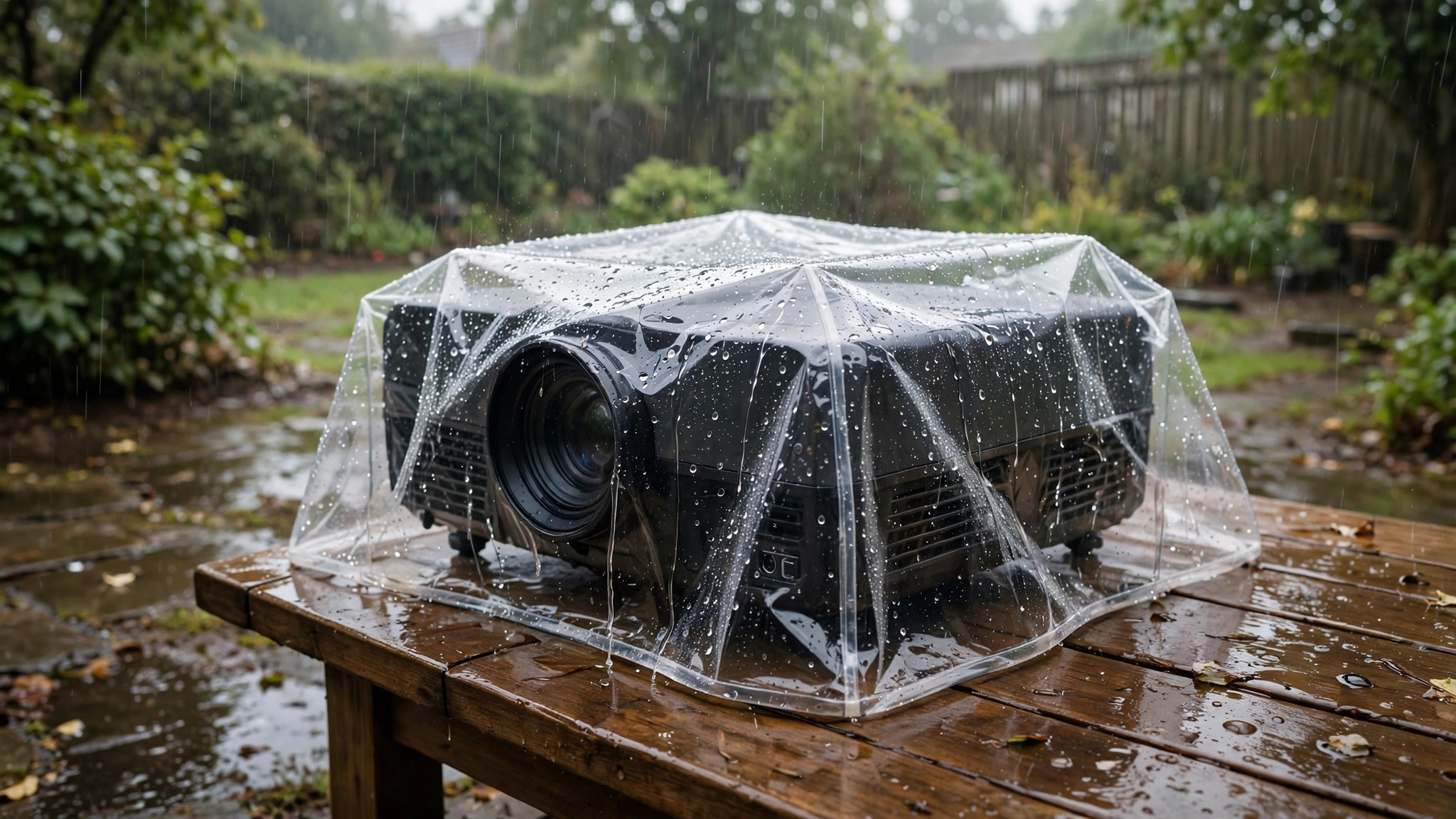
3. Keep a waterproof cover on standby. For portable movie nights, a fitted waterproof cover or even a quality dry bag large enough for the projector is your emergency parachute. When the radar turns ugly mid-movie, power down, unplug, cover the projector, and deal with the screen after. The cover buys you the five minutes you need without panic.
4. Position under existing shelter. A patio roof, deck overhang, gazebo, or even a large tree canopy keeps the worst off. This costs nothing and is often overlooked because people set up in the middle of the lawn for the “real outdoor” feel. A projector tucked two meters under a patio edge throws the same image as one sitting in the open.
5. Build a ventilated DIY rain shield. A large plastic storage tote flipped over the projector works as a rain roof if you cut a lens port in the front and leave the back fully open for exhaust. The open back is non-negotiable; projectors exhale serious heat, and a closed tote will cook one in under an hour. Think rain hat, not spacesuit.
6. Watch the sky like a projectionist. Check the hourly forecast before setup, keep a radar app open during the show, and set a rain alert. Most ruined projectors were not caught by unforeseeable storms; they were caught by owners who never looked up. If storms are likely, postpone. No movie night is worth a dead projector.
7. Have a shutdown drill. Decide in advance who grabs what when rain starts. Projector gets powered down properly (let the lamp cool if you have thirty seconds), unplugged, and covered or carried inside first. Cables and power strips come next. The screen can wait; it dries. Rehearse it once, and a surprise shower becomes a two-minute pause instead of a disaster.
The Ventilation Trap: Why Sealed Boxes Kill Projectors
This is the mistake that destroys more projectors than actual rain. Someone worried about moisture seals the projector in a plastic box or bag “to keep it dry,” and the projector overheats and shuts down, or worse, cooks its lamp and electronics. Projectors are space heaters that happen to make pictures; a typical unit exhausts air nearly hot enough to be uncomfortable on your hand.
The rule is simple: rain protection must never block airflow. Vents on the projector’s intake and exhaust sides must stay open to moving air at all times while it runs. A canopy works because it is open on all sides.
A proper enclosure works because it has filtered vents and often active fans. A sealed tote or a trash bag pulled tight works until the thermal protection trips, and if the thermal protection fails, until something melts.
If you are ever choosing between “might get damp” and “definitely cannot breathe,” choose breathing every time; dampness you can dry out, cooked electronics you cannot.
Can you leave a projector outside overnight? Only if it is fully powered off, unplugged, covered with a waterproof cover, and sheltered from direct rain, and even then dew is a concern. Never leave it running unattended in any enclosure you have not tested for heat buildup with a thermometer first.
Dew, Humidity, and Condensation: The Silent Killers
Rain gets the blame, but dew does quiet damage all season. On clear nights, surfaces cool below the dew point and moisture condenses directly onto and into your projector, no rainfall required.
A projector brought from an air-conditioned house into warm, humid night air will fog up inside exactly like cold glasses steaming up, and that internal condensation sits on the electronics.
Fight it three ways. First, let the projector acclimate: bring it outside 20 to 30 minutes before showtime while still powered off, so its temperature equalizes gradually.
Second, store it with silica gel packets in its case; they are cheap, and they genuinely pull moisture out of the air inside the bag.
Third, when you bring it back inside after the show, leave it in its case for a while rather than exposing the warm unit to cool indoor air immediately. These sound fussy; they are the difference between a projector that lasts five seasons and one that dies in two.
What to Do If Your Projector Gets Wet
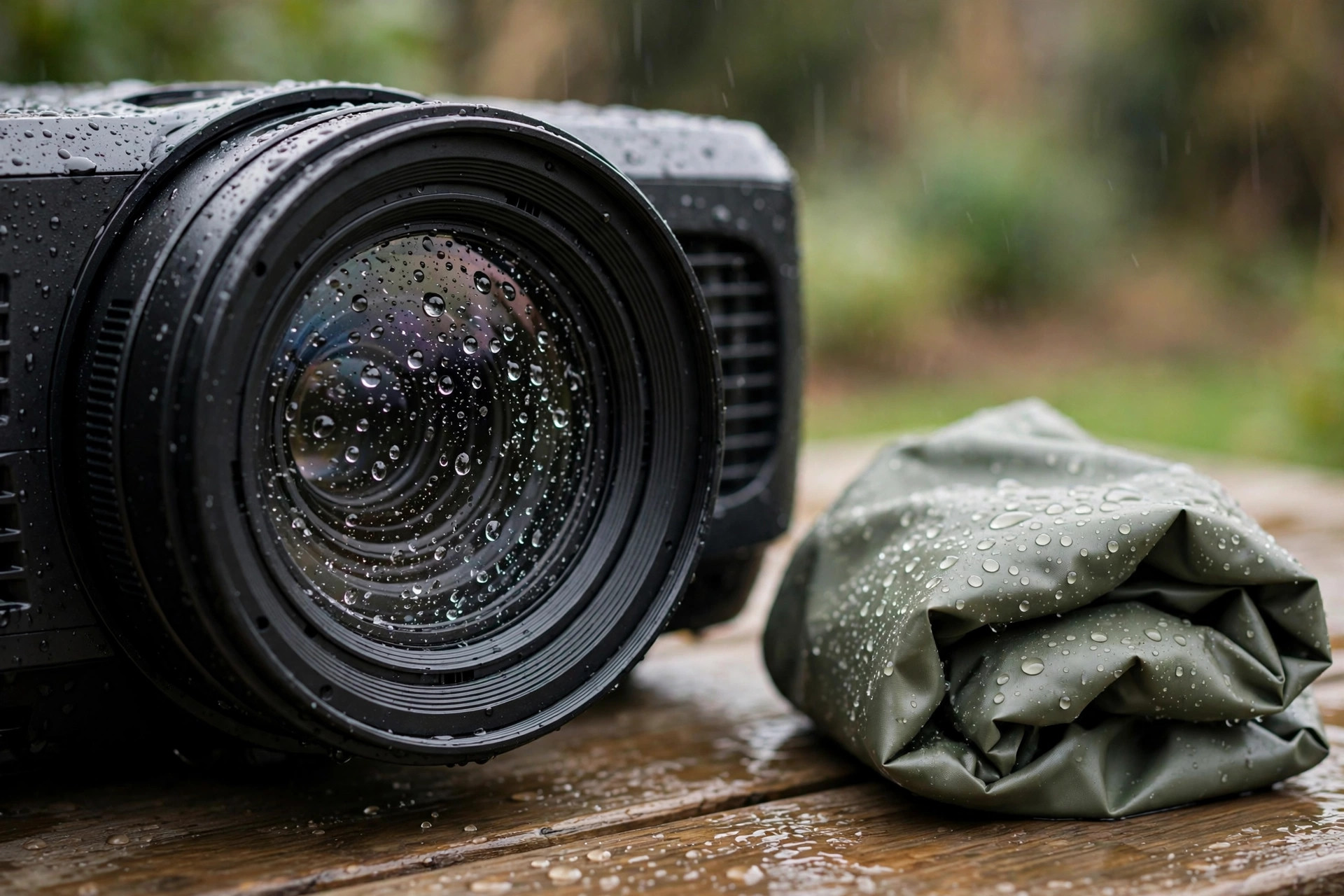
Act fast and resist the urge to “check if it still works.” Power it off immediately, or if it is already off, do not turn it on. Unplug everything, remove the lens cap so air can circulate, and if the model allows it, remove the lamp cover to let the interior breathe. Wipe down the exterior with a dry cloth.
Then dry it for at least 48 to 72 hours in a warm, dry, well-ventilated room before even thinking about powering it on. A fan blowing across it helps; direct heat from a hair dryer does not, because it can warp plastics and drive moisture deeper.
Skip the old “put it in rice” trick; rice dust gets into vents and the lens assembly, and silica gel or plain airflow works better with none of the mess.
After drying, inspect the lens for haze or spots and power it on only when you are confident it is fully dry inside. If it behaves oddly, flickers, or smells wrong, stop and take it to a repair shop; a shorted board only gets worse with repeated power cycles.
And be honest with yourself about warranties: most manufacturers exclude water damage, so prevention will always be cheaper than the repair bill.
If you are still choosing gear for outdoor use, brightness and weather resistance go hand in hand; our outdoor projector guide covers what to look for, and our daylight viewing guide tackles the other big outdoor enemy after rain, which is the sun.
Frequently Asked Questions
Can I use my projector in a light drizzle?
No, not safely. “Light” rain still puts water on the lens and into the vents, and wind can drive drizzle sideways under a canopy edge. If you see any precipitation, power down and cover the projector. A movie night paused for weather beats a projector replaced for water damage.
Are there waterproof projectors?
Truly waterproof projectors are rare. A few rugged portable models carry IPX water-resistance ratings, but those ratings mean splash resistance, not “run it in a rainstorm.” Even those should be treated as rain-tolerant, not rainproof. For any serious outdoor setup, assume your projector needs shelter regardless of its rating.
Will a plastic bag over the projector cause overheating?
Yes, if it is tight or sealed while the projector runs. A loose bag draped over a powered-off projector in a sudden downpour is fine as emergency protection. A bag sealed around a running projector traps heat within minutes and can trigger thermal shutdown or damage the lamp. Ventilation always comes first.
How long should I dry a wet projector before using it again?
At least 48 to 72 hours in a warm, dry, ventilated room, longer if water clearly got inside. Do not rush this; powering on a damp projector is how minor exposure becomes a dead mainboard. When in doubt, give it another day. Patience here is free; repairs are not.
Does rain damage void my projector’s warranty?
Almost always, yes. Standard manufacturer warranties exclude water and moisture damage as misuse or environmental damage. This is worth knowing before you gamble on “just one rainy night.” The cost of a canopy or cover is a fraction of an out-of-warranty repair.
The Bottom Line
Rain and projectors mix badly, but movie nights and rain forecasts can coexist. Put a canopy over the setup, never seal a running projector airtight, respect dew as much as downpours, and have a shutdown drill ready. Do that and a surprise shower costs you a ten-minute pause, not a new projector.